
Illinois
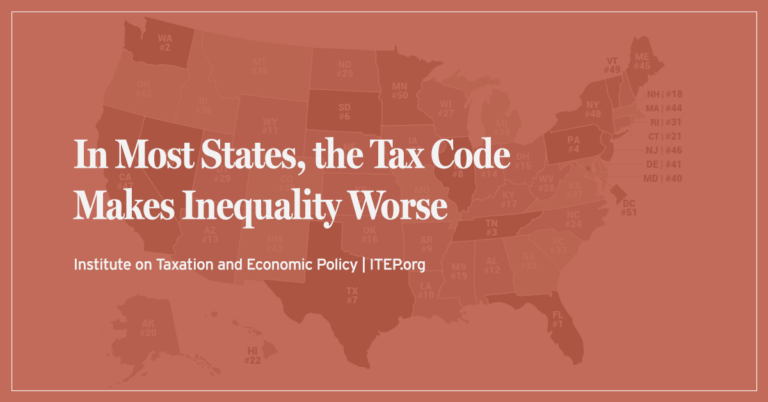
In Most States, the Tax Code Makes Inequality Worse
• By Carl Davis
The vast majority of state and local tax systems are upside-down, with the wealthy paying a far lesser share of their income in taxes than low- and middle-income families. Yet a few states have made strides to buck that trend and have tax codes that are somewhat progressive and therefore do not worsen inequality.
Tax Systems in 44 States Exacerbate Inequality, In-Depth ‘Who Pays?’ Study Finds
• By ITEP Staff
The vast majority of state and local tax systems are upside-down, with the wealthy paying a far lesser share of their income in taxes than low- and middle-income families. That’s according to the latest edition of the Institute on Taxation and Economic Policy’s Who Pays?, the only distributional analysis of tax systems in all 50 states and the District of Columbia.
Illinois: Who Pays? 7th Edition
• By ITEP Staff
Illinois Download PDF All figures and charts show 2024 tax law in Illinois, presented at 2023 income levels. Senior taxpayers are excluded for reasons detailed in the methodology. Our analysis includes nearly all (98.6 percent) state and local tax revenue collected in Illinois. State and local tax shares of family income Top 20% Income Group […]
State Rundown 12/14: Tax Policy Debates Ramp Up for 2024
• By ITEP Staff
Even as revenue collections slow in many states, some are starting the push for 2024 tax cuts early. For instance, policymakers in Georgia and Utah are already making the case for deeper income tax cuts. Meanwhile, Arizona lawmakers are now facing a significant deficit, the consequence of their recent top-heavy tax cuts. There is another […]
State Rundown 11/29: Thankful for Good Tax Policy
• By ITEP Staff
Though Turkey Day has passed, lawmakers in states across the U.S. have yet to get their fill of delicious tax policy goodness...
Local Earned Income Tax Credits: How Localities Are Boosting Economic Security and Advancing Equity with EITCs
• By Andrew Boardman, Galen Hendricks, Kamolika Das
Leading localities are using refundable EITCs to boost incomes and reduce taxes for workers and families with low and moderate incomes. These local credits build on the success of EITCs at the federal and state levels, reduce economic hardship and improve the fairness of the tax code.
State Rundown 10/26: Off-Year Ballot Measures and State & Local Tax Policy
• By ITEP Staff
November elections are creeping closer and closer and while that typically means a new batch of lawmakers are elected, it also means voters have another chance to help shape state and local tax policy...
State Rundown 9/27: Some States are Looking to Paint the Budgets Red
• By ITEP Staff
When it comes to investments, state lawmakers across the country are positioning their states to be in the red as they pass or debate further tax cuts that will overwhelmingly benefit the wealthy – and some states are now adding an additional coat of red paint...
State Rundown 9/13: The (Policy) Choices We Make
• By ITEP Staff
The U.S. Census Bureau released its annual assessment of poverty in America this week...

State Tax Credits Have Transformative Power to Improve Economic Security
• By Aidan Davis
The latest analysis from the U.S. Census Bureau provides an important reminder of the compelling link between public investments and families’ economic well-being. Policy decisions can drastically reduce poverty and improve family economic stability for low- and middle-income families alike, as today’s data release shows.

Boosting Incomes, Improving Equity: State Earned Income Tax Credits in 2023
• By Aidan Davis, Neva Butkus
Nearly two-thirds of states (31 plus the District of Columbia and Puerto Rico) have an Earned Income Tax Credit, an effective tool that boosts low-paid workers’ incomes and helps lower-income families achieve greater economic security. This year, 12 states expanded and improved EITCs.
State Rundown 8/23: Tax and Effect
• By ITEP Staff
While a number of state tax laws are debated, approved, and vetoed in any given year, many go unnoticed...
Sales Tax Holidays: An Ineffective Alternative to Real Sales Tax Reform
• By Marco Guzman
Nineteen states have sales tax holidays on the books in 2023, and these suspensions will cost nearly $1.6 billion in lost revenue this year. Sales tax holidays are poorly targeted and too temporary to meaningfully change the regressive nature of a state’s tax system. Overall, the benefits of sales tax holidays are minimal while their downsides are significant.
State Rundown 7/26: The Dog Days of Summer Tax News
• By ITEP Staff
The Dog Days of summer are upon us, and with most states out of session and extreme heat waves making their way across the country, it’s a perfect time to sit back and catch up on all your favorite state tax happenings (ideally with a cool drink in hand)...

States and Localities are Making Progress on Curbing Unjust Fees and Fines
• By Andrew Boardman
Too many state and local governments tap legal-system collections, rather than adequate tax systems, to fund shared essentials like public safety and education. But a growing number of states and localities are choosing a better approach. Momentum for change has continued to build in 2023, with no fewer than seven states enacting substantial improvements.
State Rundown 7/12: The Mid-Year Legislative Session Roundup
• By ITEP Staff
Most state legislatures have adjourned for 2023, and that means it’s a perfect time to look at the tax policy trends that have formed thus far...
State Rundown 6/14: Summer Breeze & State Tax Policies
• By ITEP Staff
As the sweet days of summer pass, the scent of jasmine isn't the only thing blowing through the minds of state lawmakers, as tax policy discussions remain at the forefront...

Illinois Voucher Tax Credits Don’t ‘Invest in Kids,’ They Invest in Inequality
• By Carl Davis
By allowing their school privatization tax credit to expire at the end of the year, Illinois lawmakers can take a meaningful step toward better tax and education policy, and a clear show of support for our nation’s public education system.

Letter to IRS on Section 1001 Regulation in 2023-2024 Priority Guidance Plan
• By ITEP Staff
Read as PDF Re: Recommendation for Inclusion of Section 1001 Regulation in 2023-2024 Priority Guidance Plan To Whom It May Concern, We are writing to respectfully urge that the IRS return to the work it left unfinished in 2019 when it issued final regulations on “Contributions in Exchange for State or Local Tax Credits” (RIN: […]
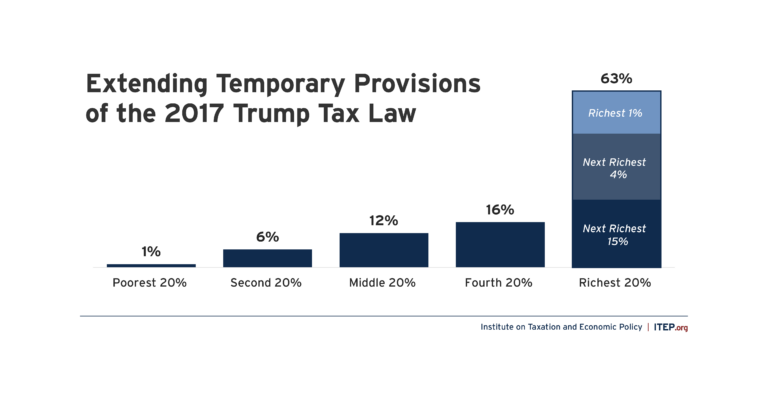
Extending Temporary Provisions of the 2017 Trump Tax Law: National and State-by-State Estimates
• By Joe Hughes, Matthew Gardner, Steve Wamhoff
The push by Congressional Republicans to make the provisions of the 2017 Tax Cuts and Jobs Act permanent would cost nearly $300 billion in the first year and deliver the bulk of the tax benefits to the wealthiest Americans.
Better Local Tax Policy Can Help Communities Thrive
• By Kamolika Das
From dedicating new taxes to fund climate action and public health to vacancy and “mansion” taxes, many local leaders are already exploring ways to make their tax systems more progressive and sustainable. ITEP is committed to helping local leaders and advocates build on this work by advancing knowledge about local tax solutions.
ITEP Launches Local Tax Team
• By ITEP Staff
Contact: Jon Whiten (jon@itep.org) For decades, the Institute on Taxation and Economic Policy (ITEP) has played a role in shaping equitable and sustainable tax systems at the federal and state level. From the beginning, we have collaborated with advocates, policymakers, and others to advance policies that can foster expansive, inclusionary, and racially equitable tax systems. […]

State Income Tax Subsidies for Seniors
• By Carl Davis, Eli Byerly-Duke
State governments provide a wide array of tax subsidies to their older residents. But too many of these carveouts focus on predominately wealthy and white seniors, all while the cost climbs.

Tax Avoidance Continues to Fuel School Privatization Efforts
• By Carl Davis
Wealthy families are overwhelmingly the ones using school voucher tax credits to opt out of paying for public education and other public services and to redirect their tax dollars to private and religious institutions instead. Most of these credits are being claimed by families with incomes over $200,000.
State Rundown 2/23: Tax Dominos Take Shape, Begin to Fall as Session Heats Up
• By ITEP Staff
The 2023 legislative session is in full swing, and dominos continue to be set up as others fall...
