
California
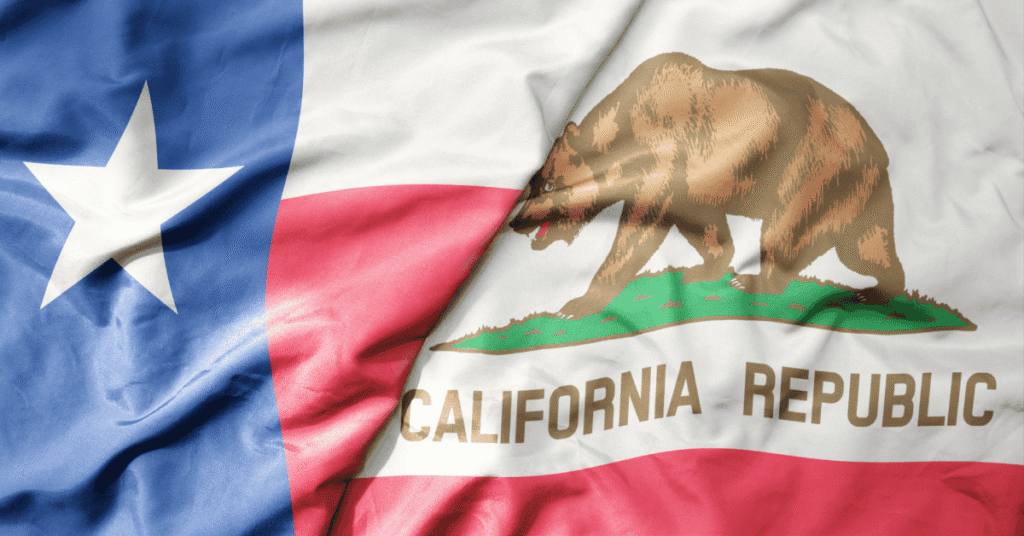
California Gov. Gavin Newsom went to Texas recently and claimed: “Texas taxes poor folks more than we tax our richest." He’s right.
USA Today: Californians Want To Tax Billionaires. They’re Threatening To Leave.
March 25, 2026
Carl Davis, research director at the Institute on Taxation and Economic Policy, predicts the number of billionaires who might leave California over the billionaire tax “will be greater than zero, but still very, very small.” Read more.
Los Angeles Times: Eliminating a Corporate Tax Break Is Pitched as a Way To Make Up for Federal Healthcare Cuts
March 17, 2026
Carl Davis, a research director at the Institute on Taxation and Economic Policy, stated that there is growing support nationwide to repeal the water’s edge tax break as public awareness of profit shifting spreads. “Folks are outraged when they hear that these companies are pretending that they are earning their profits in the Caymans or […]
State Tax Watch 2026
March 9, 2026 • By ITEP Staff
ITEP tracks tax discussions in legislatures across the country and uses our unique data capacity to analyze the revenue, distributional, and racial and ethnic impacts of many of these proposals. State Tax Watch offers the latest news and movement from each state.
California Budget & Policy Center: 5 Facts To Know About Corporate Taxes in California
March 5, 2026
Several large corporations pay next to nothing in corporate taxes in California, largely due to overly generous state tax breaks. Reforming the state’s corporate tax system is a necessary step to support the health and well-being of Californians and strengthen economic security for all. Read more.
Governor Newsom Launches New State Investment and Philanthropic Collaboration To Continue Supporting Families Under Federal Assault
February 23, 2026
Undocumented immigrants contributed $8.5 billion in state and local taxes in 2022 — a number that would rise to $10.3 billion if these taxpayers could apply to work lawfully. People are afraid to leave their homes, children are left without their parents, and families unable to afford groceries. Families are even foregoing critical medical care. […]
Trust Reform is Needed to Protect States, Especially in the Wake of IRS Enforcement Cuts
February 3, 2026 • By Sarah Austin

Trust use is widespread among the wealthiest households, with reports showing that roughly half of the nation’s wealthiest people rely on trusts for tax avoidance reasons
State Rundown 1/22: Cautious Tone Noticeable in Most Statehouses
January 22, 2026 • By ITEP Staff
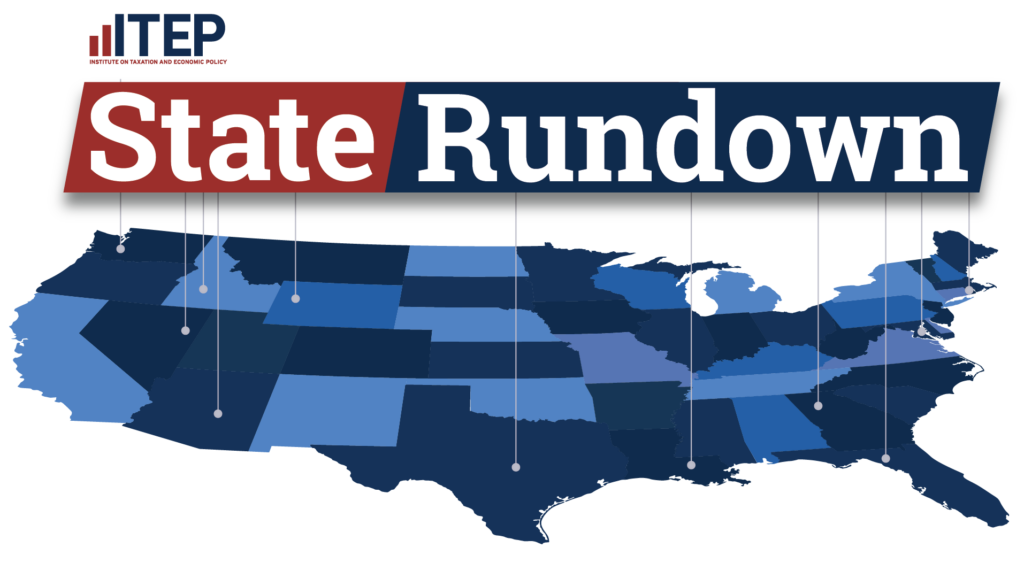
Most states are adopting a very cautious approach so far this year as legislators begin their sessions and governors make their annual addresses, thanks to ongoing economic uncertainty and federal retrenchment.
States Can Push Back Against Reckless Federal Tax Policy. Here’s How.
January 22, 2026 • By Aidan Davis, Wesley Tharpe

They should take steps to protect and boost their own revenues. And they should take a second look at their own tax cuts.
Local Governments Are Increasingly Strapped: 2026 Will Bring New Challenges and New Opportunities
January 21, 2026 • By Kamolika Das

2025 saw an intensification of state and local tax fights across the country, as well as growing experimentation with local-option taxes, levies, fees, and tourism taxes aimed at keeping budgets afloat while also navigating political constraints imposed by state legislatures.
State Rundown 1/14: New Year Brings New Resolutions for Funding Key Priorities
January 14, 2026 • By ITEP Staff
State governors are beginning to lay out their top priorities as legislatures reconvene in statehouses around the country.
Curbing Tax Deductions for Executive Pay is a Federal Tax Change States Should Get Behind
January 9, 2026 • By Matthew Gardner

This provision in last summer’s tax law could actually make budget-balancing a little bit easier for states if they follow suit.
State Rundown 1/7: New Year, New Opportunities for Progressive Revenue
January 7, 2026 • By ITEP Staff
As we kick off a new year, several states are facing revenue shortfalls. Some lawmakers are approaching the challenge with sustainable and equitable solutions.
Texas Property Tax Plan Mimics California’s Damaging Prop 13
December 19, 2025 • By Neva Butkus, Rita Jefferson

This proposal would disrupt the state’s housing market and jeopardize local revenues while doing very little to help workers and families struggling to pay their property tax bills – just as Prop 13 did in California.
property tax debates are taking place throughout the nation.
Re-Examining 529 Plans: Stopping State Subsidies to Private Schools After New Trump Tax Law
November 20, 2025 • By Miles Trinidad, Nick Johnson

The 2025 federal tax law risks making 529 plans more costly for states by increasing tax avoidance and allowing wealthy families to use these funds for private and religious K-12 schools.

Vacancy taxes will not single-handedly solve problems in cities, but they are worth considering to address housing shortages, land use, and building thriving communities.
State Tax Dollars Shouldn’t Subsidize Federal Opportunity Zones
November 12, 2025 • By Eli Byerly-Duke

The Opportunity Zones program benefits wealthy investors more than it benefits disadvantaged communities.
State and Local Policymakers Can Resist Austerity Even Amid Historic Federal Retreat
November 6, 2025 • By Kamolika Das

The progressivity of the federal tax code has been waning. State and local policymakers should respond by protecting their revenue bases, promoting equity, and safeguarding vulnerable communities from harmful budget cuts.
In 2025, Voters Said Yes to Public Resources and Community Investments
November 6, 2025 • By Rita Jefferson

Important tax measures were on the ballot this week, and the outcomes are clear: many voters support new state and local spending to support critical services in their communities.
States Begin Decoupling from Flawed ‘QSBS’ Tax Break
November 6, 2025 • By Nick Johnson, Sarah Austin

A costly tax break for wealthy venture capitalists is drawing some critical attention from state policymakers.
Oil and Gas Companies Are Paying Less Tax to the U.S. than to Foreign Governments
October 30, 2025 • By Matthew Gardner

Since 2017, these companies paid $135 billion in income taxes to foreign governments, but just $29 billion to the U.S.
The Wealth Proceeds Tax: A Simple Way for States to Tax the Wealthy
October 30, 2025 • By Sarah Austin, Carl Davis

Taxing the proceeds generated by wealth through a new Wealth Proceeds Tax is a simple way for states to raise billions in new revenue and improve the fairness of their tax systems.
States across the nation are debating how best to respond to costly new federal tax cuts.
Many lawmakers who were vocal supporters of this bill will see direct personal benefits while most of their constituents benefit little or will be worse off.

Institute on Taxation
and Economic Policy
ITEP is a non-profit, non-partisan tax policy organization. We conduct rigorous analyses of tax and economic proposals and provide data-driven recommendations to shape equitable and sustainable tax systems.
Subscribe to ITEP Emails
Tax research and policy news in your inbox.
Promote Fair Tax Policy
Your gift to ITEP promotes tax justice. With your help, we do research that supports taxing millionaires and billionaires, taxing big corporations and raising revenue for the things our people, our communities and our planet need.
Together, we can create a country with more economic justice, more racial justice, more climate justice… and more tax justice.