
Nevada

IRS Cooperation with ICE Will Damage Public Trust, Putting Tax Revenues in Jeopardy
• By Marco Guzman
Attempts by the Department of Homeland Security to secure private information from the IRS on people who file taxes with an Individual Taxpayer Identification Number is a violation of federal privacy laws that protect taxpayers. It is also a change that could seriously damage public trust in the IRS, which could jeopardize billions of dollars in tax payments by hardworking immigrant families.

State Rundown 4/3: Amidst Tariff Uncertainty, State Lawmakers Talk Taxes
• By ITEP Staff
While all eyes are on the Trump administration’s tariffs on foreign imports, state lawmakers are moving forward with a mix of deep, regressive tax cuts and progressive revenue raisers.
Turning IRS Agents to Deportation Will Reduce Public Revenues
• By Carl Davis, Jon Whiten
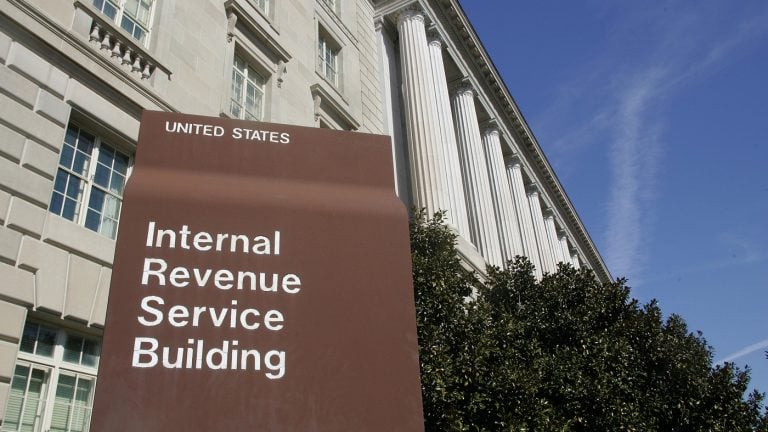
The Trump Administration’s plan to turn IRS agents into deportation agents will result in lower tax collections in addition to the harm done to the families and communities directly affected by deportations.
State Rundown 1/30: The Revenue Decrease is in the Details
• By ITEP Staff
More details on this year’s batch of major tax proposals are emerging from statehouses - and some revenue cuts look like they could be steep. A governor-backed and House-passed plan in Mississippi would phase out the personal income tax, while a recent tax cut proposal out of Idaho is anchored by a $253 million dollar income tax cut.
Trump’s Plan to Extend His 2017 Tax Provisions: Updated National and State-by-State Estimates
• By Steve Wamhoff
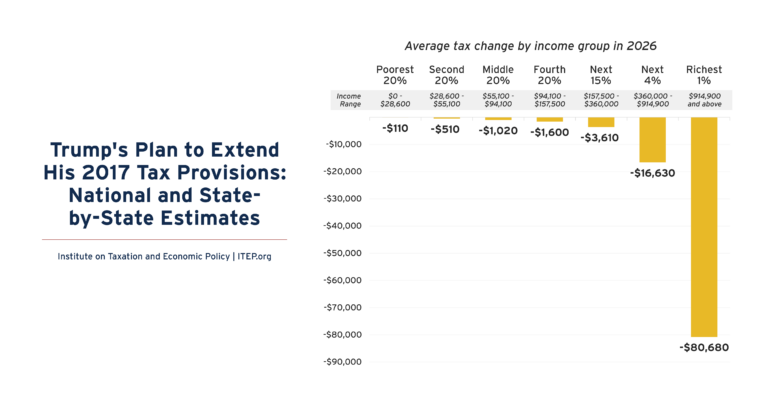
Trump’s plan to make most of the temporary provisions of his 2017 tax law permanent would disproportionately benefit the richest Americans. This includes all major provisions except the $10,000 cap on deductions for state and local taxes (SALT) paid.
State Rundown 12/19: Anti-Tax Playbook in Action
• By ITEP Staff
The anti-tax playbook has been on full display in recent weeks as state policymakers run their offenses against public services and shared priorities. As the playbook dictates, if you have a little breathing room in your budget, propose cuts to the one major tax (personal income tax) that tends to ask more of those who […]
State Rundown 11/07: Election Week and New Special Sessions
• By ITEP Staff
Tax policy results are mixed across the country as many voters weigh in on state and local ballot measures. For example, Washington state voted to maintain its new progressive tax on capital gains; Georgia voters capped growth in property tax assessments; Illinois voters approved a call for a millionaires’ tax; North Dakota voters rejected property […]
2024 Local Tax Ballot Measures: Voters in Dozens of Communities Will Shape Local Policy
• By Rita Jefferson
Next month, voters across the country will weigh in on many local ballot measures that will have a profound effect on the adequacy of our local tax systems and whether cities and communities can fund public needs. These are in addition to statewide ballot questions, many of which have local implications this year.

2024 State Tax Ballot Questions: Voters to Weigh in on Tax Changes Big and Small
• By Jon Whiten
As we approach November’s election, voters in several states will be weighing in on tax policy changes. The outcomes will impact the equity of state and local tax systems and the adequacy of the revenue those systems are able to raise to fund public services.

Extending Temporary Provisions of the 2017 Trump Tax Law: Updated National and State-by-State Estimates
• By Steve Wamhoff
The TCJA Permanency Act would make permanent the provisions of the Tax Cuts and Jobs Act of 2017 that are set to expire at the end of 2025. The legislation would disproportionately benefit the richest Americans. Below are graphics for each state that show the effects of making TCJA permanent across income groups. See ITEP’s […]
Which States Have Joined IRS Direct File?
• By ITEP Staff
The IRS has opened its free tax filing service called Direct File to every state for the 2025 tax filing season. Direct File was made possible by President Biden’s Inflation Reduction Act, which provided new resources for the IRS to improve customer service and ensure taxpayers claim the benefits and deductions for which they are […]
The Nevadan: Trump’s Promise of Mass Deportations Could Devastate Nevada’s Economy. Here’s How.
September 3, 2024
A recent study conducted by the Institute on Taxation and Economic Policy (ITEP) found that undocumented immigrants contributed at least $96.7 billion in federal, state, and local taxes in 2022 — a number that would increase if they were granted formal work authorization. In Nevada, undocumented immigrants accounted for $507 million in 2022 tax revenue, the study found.
State Rundown 8/8: States Laying the Groundwork for Future Tax Battles
• By ITEP Staff
Whether they’re in a special session, gearing up for one, or prepping for 2025, states around the country are focusing on important tax fights...

Sales Tax Holidays Miss the Mark When it Comes to Effective Sales Tax Reform
• By Marco Guzman
Nineteen states have sales tax holidays on the books in 2024. These suspensions combined will cost states and localities over $1.3 billion in lost revenue this year. Sales tax holidays are poorly targeted and too temporary to meaningfully change the regressive nature of a state’s tax system.

Tax Payments by Undocumented Immigrants
• By ITEP Staff
Undocumented immigrants paid $96.7 billion in federal, state, and local taxes in 2022. Providing access to work authorization for undocumented immigrants would increase their tax contributions both because their wages would rise and because their rates of tax compliance would increase.
Improving Refundable Tax Credits by Making Them Immigrant-Inclusive
• By Emma Sifre, Marco Guzman
Undocumented immigrants who work and pay taxes but don't have a valid Social Security number for either themselves or their children are excluded from federal EITC and CTC benefits. Fortunately, several states have stepped in to ensure undocumented immigrants are not left behind by the gaps in the federal EITC and CTC. State lawmakers should continue to ensure that immigrants who are otherwise eligible for these tax credits receive them.

States Should Enact, Expand Mansion Taxes to Advance Fairness and Shared Prosperity
• By Carl Davis, Erika Frankel
The report was produced in partnership with the Center on Budget and Policy Priorities and co-authored by CBPP’s Deputy Director of State Policy Research Samantha Waxman.[1] Click here to use our State Mansion Tax Estimator A historically large share of the nation’s wealth is concentrated in the hands of a few, a reality glaring in […]
State Rundown 5/30: Sessions Are In for Summer
• By ITEP Staff
Legislative sessions across the country are still very much in for summer, which means more pencils, more budgets, and more tax plans...
States Should Opt Into IRS Direct File as the Program is Made Permanent
• By Jon Whiten
While there is plenty of room to expand Direct File at the federal level, states can take matters into their own hands and bring this benefit to their residents by opting into the program.
State Rundown 5/15: The Merry Merry Month of May(be)
• By ITEP Staff
Uncertainty abounds in state tax debates lately...

Iowa Flat Tax Shows Why Such Policies Are a Problem Everywhere
• By Eli Byerly-Duke
As Iowa lawmakers change the state’s graduated personal income tax to a single flat rate, they are designing a state tax code where the rich will pay a lower rate overall than families with modest means.
Fairness Matters: A Chart Book on Who Pays State and Local Taxes
• By ITEP Staff
State and local tax codes can do a lot to reduce inequality. But they add to the nation’s growing income inequality problem when they capture a greater share of income from low- or moderate-income taxpayers. These regressive tax codes also result in higher tax rates on communities of color, further worsening racial income and wealth divides.
State Rundown 4/3: Some States Buck the Trend on Foolish Tax Policy
• By ITEP Staff
This week tax cuts were debated across the upper Midwest...
Capital & Main: Extreme Wealth Is on the Ballot This Year — Will Americans Vote to Tax the Rich?
April 3, 2024
On March 7, President Joe Biden reintroduced proposals to increase taxes on the wealthiest Americans and the nation’s most profitable corporations. The move virtually ensures that the nation’s extreme wealth inequality — more than one in four dollars in the country is held by a tiny sliver of households with a net worth over $30 million — will be part of the national election debate. But excessive wealth may take center stage in at least 10 states, ranging from…
State Rundown 2/28: States Keep Busy While Washington Stalls
• By ITEP Staff
State legislative sessions are in full swing with New Jersey and Oklahoma both particularly active this week...

Institute on Taxation
and Economic Policy
ITEP is a non-profit, non-partisan tax policy organization. We conduct rigorous analyses of tax and economic proposals and provide data-driven recommendations to shape equitable and sustainable tax systems.
Subscribe to ITEP Emails
Tax research and policy news in your inbox.
Promote Fair Tax Policy
Your gift to ITEP promotes tax justice. With your help, we do research that supports taxing millionaires and billionaires, taxing big corporations and raising revenue for the things our people, our communities and our planet need.
Together, we can create a country with more economic justice, more racial justice, more climate justice… and more tax justice.