
Ohio
Policy Matters Ohio: Tax Policy For the People
• By ITEP Staff
Every family in Ohio should be able to afford healthy food, a safe home, health care and the other elements of a good life. Ohio has the resources to make this a reality. Too often, however, our elected officials choose to use those resources to enrich their already wealthy supporters and do whatever else it […]

Abortion-Restricting States Skimp on Funding for Children
• By Amy Hanauer
States differ dramatically in how much they allow families to make choices about whether and when to have children and how much support they provide when families do. But there is a clear pattern: the states that compel childbirth spend less to help children once they are born.
State Rundown 11/8: Election Results Bring Victories, Opportunities for More Common-Sense Tax Reform
• By ITEP Staff
Voters had the chance to impact tax policy across the country on election day, and some chose to enact common-sense reforms to raise revenue...

America Used to Have a Wealth Tax: The Forgotten History of the General Property Tax
• By Carl Davis, Eli Byerly-Duke
Over time, broad wealth taxes were whittled away to become the narrower property taxes we have today. These selective wealth taxes apply to the kinds of wealth that make up a large share of middle-class families’ net worth (like homes and cars), but usually exempt most of the net worth of the wealthy (like business equity, bonds, and pooled investment funds).The rationale for this pared-back approach to wealth taxation has grown weaker in recent decades…

2023’s State and Local Tax Ballot Measures: Voters to Weigh in on Property Taxes, Wealth Taxes, and More
• By Jon Whiten
Even in this slow year for candidate elections, the decisions that voters in states and cities make could strengthen or weaken revenue for needs in their communities and could change how taxes are distributed across the income spectrum. In the places where tax fairness is on the ballot, much is at stake.
Policy Matters Ohio: Ohio Needs a Property-Tax Circuit Breaker
• By ITEP Staff
Sharp rises in home assessment values are bringing property-tax relief to the forefront at the Statehouse in Columbus. While various bills may provide a partial answer to the property tax squeeze being felt by some Ohioans, there is a better solution. It’s one that has been embraced by states across the country: A property-tax circuit […]

Boosting Incomes, Improving Equity: State Earned Income Tax Credits in 2023
• By Aidan Davis, Neva Butkus
Nearly two-thirds of states (31 plus the District of Columbia and Puerto Rico) have an Earned Income Tax Credit, an effective tool that boosts low-paid workers’ incomes and helps lower-income families achieve greater economic security. This year, 12 states expanded and improved EITCs.
State Rundown 8/10: Pump the ‘Breaks’ on Sales Tax Holiday Celebrations
• By ITEP Staff
August is here, school is starting, and with that comes back to school shopping...
Gimmicky Sales Tax Holidays to Cost States & Localities $1.6 Billion This Year
• By ITEP Staff
Sales tax holidays are bad policies that have too often been used as a substitute for more meaningful, permanent reform.

Sales Tax Holidays: An Ineffective Alternative to Real Sales Tax Reform
• By Marco Guzman
Nineteen states have sales tax holidays on the books in 2023, and these suspensions will cost nearly $1.6 billion in lost revenue this year. Sales tax holidays are poorly targeted and too temporary to meaningfully change the regressive nature of a state’s tax system. Overall, the benefits of sales tax holidays are minimal while their downsides are significant.

The Highs and Lows of 2023 State Legislative Sessions
• By Aidan Davis
Nearly one-third of states took steps to improve their tax systems this year by investing in people through refundable tax credits, and in a few notable cases by raising revenue from those most able to pay. But another third of states lost ground, continuing a trend of permanent tax cuts that overwhelmingly benefit high-income households and make tax codes less adequate and equitable.
Policy Matters Ohio: Legislators Squander Golden Opportunity
• By ITEP Staff
The operating budget includes a $1-billion-per-year income-tax cut that disproportionately benefits the wealthy, does nothing for Ohioans in the lowest-income 20%, and temporarily increases taxes for some middle-income households. Read more.
State Rundown 7/6: Tax Policy Keeping Governors Busy from Coast to Coast
• By ITEP Staff
From coast to coast, state governors have been busy inking their signature on a growing list of consequential budget and tax bills...
Policy Matters Ohio: Senate Tax Plan Pits the Rich Against the Rest of Us
• By ITEP Staff
The Ohio Senate has voted to weaken the state’s fiscal foundations in order to hand out billions of dollars to wealthy households. The changes to the state’s personal income taxes, currently included in the Senate’s version of the budget bill, will disproportionately benefit the rich, they will lead to temporary tax increases on some middle-income […]
State Rundown 6/7: The Budget Race Continues
• By ITEP Staff
Across the country, the marathon budget season has held pace, with a steady stream of bills continuing to cross the finish line...
Policy Matters Ohio: A Better Earned Income Tax Credit Will Help Ohio’s Working Families
• By ITEP Staff
Ohio’s leaders can use the tax system to increase economic stability for every family in the state. The Earned Income Tax Credit (EITC) is a proven, powerful tool to do just that. In 2021, the federal EITC lifted about 5.3 million people above the poverty line, including nearly 3 million children. Read more.
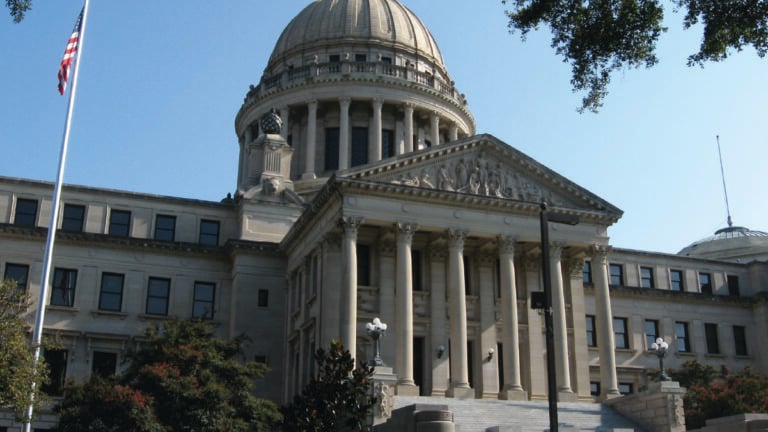
The Real Impact of State Tax Cuts
• By Aidan Davis
This op-ed was originally published by Route Fifty and co-written by ITEP State Director Aidan Davis and Center on Budget and Policy Priorities Senior Advisor for State Tax Policy Wesley Tharpe. There’s a troubling trend in state capitols across the country: Some lawmakers are pushing big, permanent tax cuts that primarily benefit the wealthy and […]
State Rundown 6/1: State Revenue Highs and Lows
• By ITEP Staff
Short-sighted tax cuts continue to make their way to Governors’ desks this week. In Florida, Gov. DeSantis signed a $1.3 billion tax cut package with $550 million of the tax cuts from sales tax holidays, alone. The Nebraska legislature also sent $6.4 billion in tax cuts to Gov. Pillen’s desk which includes an enormous personal income tax cut that will reduce taxes on the top 1 percent by tens of thousands of dollars.
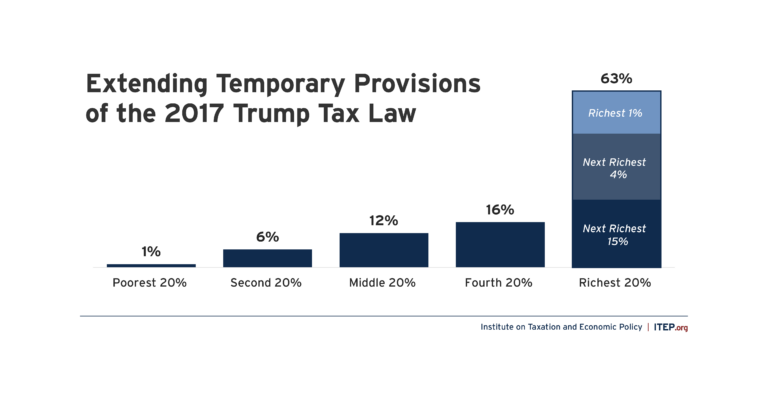
Extending Temporary Provisions of the 2017 Trump Tax Law: National and State-by-State Estimates
• By Joe Hughes, Matthew Gardner, Steve Wamhoff
The push by Congressional Republicans to make the provisions of the 2017 Tax Cuts and Jobs Act permanent would cost nearly $300 billion in the first year and deliver the bulk of the tax benefits to the wealthiest Americans.
State Rundown 4/27: Health, Wealth, and State Tax Policy
• By ITEP Staff
This week the importance of state tax policy is center stage once again...
Policy Matters Ohio: How Ohio’s Income Tax Works – and How the House Budget Would Change It
• By ITEP Staff
The proposed changes to the state’s personal income tax in the House substitute budget bill are another blow to Ohio’s only tax that is based on the ability to pay, weakening the public programs, institutions, and supports that make the state strong. Read more.
State Rundown 4/19: Revenue Discussions Heat Up Like the Temperature
• By ITEP Staff
Tax season has ended for most filers, but the topic remains a hot one in states around the country...
Policy Matters Ohio: Testimony on HB 33 Before the House Finance Committee
• By ITEP Staff
This general assembly has the good fortune of budgeting in a time of surplus. Smart federal policy drove cash to people and businesses so when the worst of covid passed, the economy could rebound. The federal government has also sent crisis dollars to states, propping up potential shortfalls and funding major investments in many areas […]
State Rundown 3/30: A Win for Tax Equity in The Evergreen State
• By ITEP Staff
Over the past week Washington state saw a major victory for tax fairness after the state Supreme Court held the state’s capital gains tax—passed in 2021—constitutional...
Policy Matters Ohio: Testimony on HB 1 Before the House Ways and Means Committee
• By ITEP Staff
This bill proposes a substantial rewriting of Ohio’s property and personal income taxes. It is an overly complicated, poorly designed bill that does not achieve what the sponsor claimed it would. It represents a massive wealth transfer from Ohio’s communities to a wealthy few. It is based on unsound economic reasoning and, if passed, it […]

Institute on Taxation
and Economic Policy
ITEP is a non-profit, non-partisan tax policy organization. We conduct rigorous analyses of tax and economic proposals and provide data-driven recommendations to shape equitable and sustainable tax systems.
Subscribe to ITEP Emails
Tax research and policy news in your inbox.
Promote Fair Tax Policy
Your gift to ITEP promotes tax justice. With your help, we do research that supports taxing millionaires and billionaires, taxing big corporations and raising revenue for the things our people, our communities and our planet need.
Together, we can create a country with more economic justice, more racial justice, more climate justice… and more tax justice.