Most states historically have exempted advertising sales from tax, but that’s starting to change.
- Maryland in 2021 enacted a standalone tax on the sale of targeted advertisements on large platforms that has already raised over $400 million.
- In 2025, Washington extended its general sales tax and its retail business & occupation tax to all advertising while exempting billboards, newspapers, and television and radio stations.
- Earlier this year Utah enacted a law to apply a 4.7 percent tax – the same rate as its retail sales tax — to targeted advertising revenue of companies that raise at least $1 million in such revenue in the state.
- Illinois’ legislature has passed a 10 percent tax on providers of targeted advertising, which the governor has said he would sign.
These states have joined Hawai’i and New Mexico, which for many decades were the only states that extended their sales taxes to apply to advertising.
Other states may follow suit as they finalize budgets for the upcoming fiscal year, which in most states begins July 1.
- The Pennsylvania House of Representatives voted to extend the state’s 5 percent gross receipts tax to targeted digital advertising.
- Minnesota is considering a bill to end the state’s sales tax exemption for digital advertising and use the revenue to lower the general sales tax rate.
- If Illinois, Minnesota, and Pennsylvania join Utah in enacting such proposals in 2026, the number of states taxing some or all advertising will rise from four to eight.
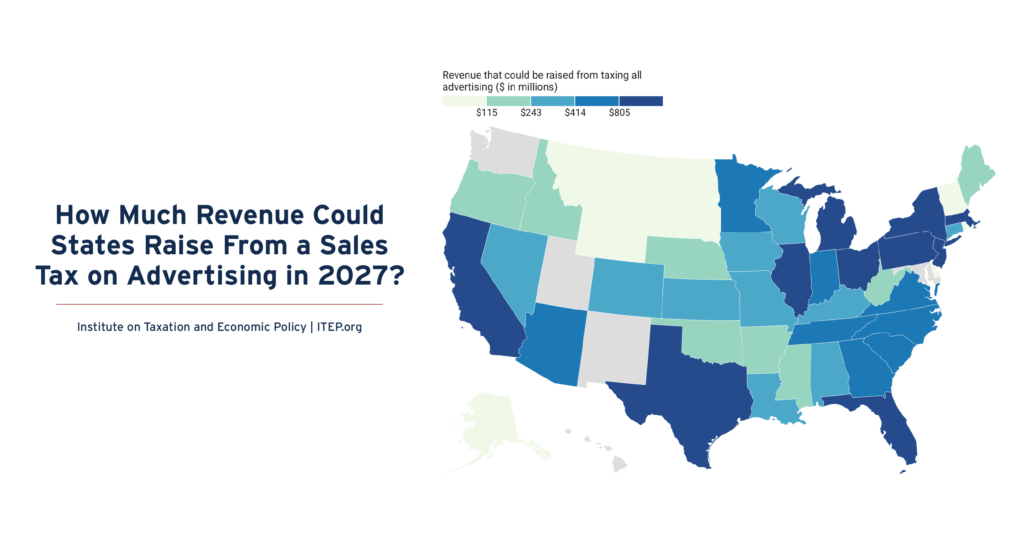
ITEP’s report on taxing advertising identifies some reasons why states are curtailing longstanding sales tax exemptions for the ad sector. One reason is the rising amount of revenue they are losing that otherwise could be funding schools, healthcare, and other public services. A new calculator on our website shows how much revenue each state might raise if it taxed some or all advertising.
Another reason is the social costs resulting from advertising’s increasing use of personal data to manipulate consumer behavior through social media and other platforms. And a third reason is simple fairness: with most states now taxing paid subscriptions to streaming services, it makes sense to apply similar taxes on similar advertising-funded services.
As states head into a new fiscal year facing difficult budget decisions, the growing list of states acting on advertising taxes suggests that policymakers are increasingly seeing this as a viable strategy for raising revenue by repairing a longstanding gap in their tax codes.