In the biggest swing election since Watergate, voters firmly rebuked the Trump and Republican economic agenda last week, bringing in new leaders at every level of government and in every corner of the country. Affordability, corruption, and inequality topped the list of what most enraged Americans.
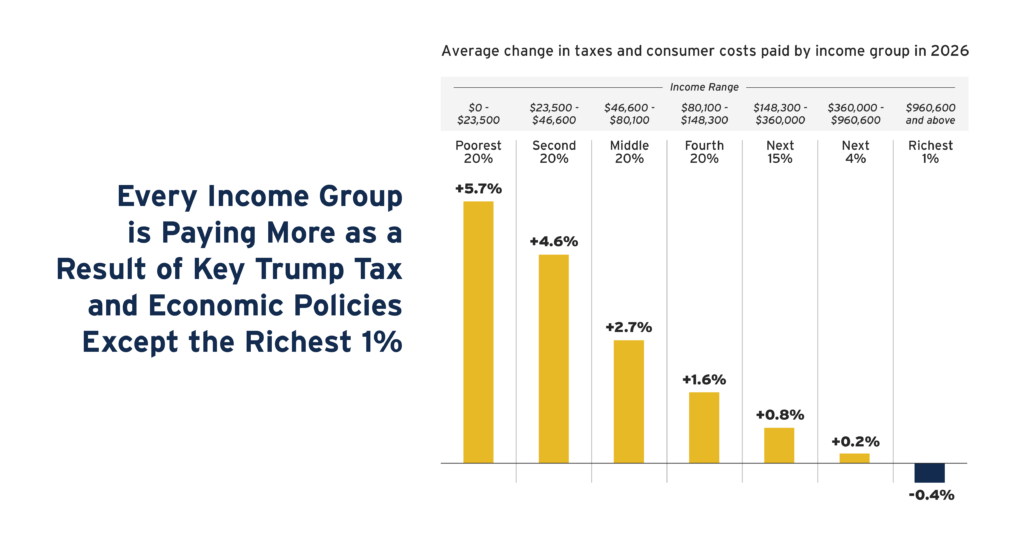
Trump’s economic and tax policies directly led to these problems. His so-called One Big Beautiful Bill Act (OBBBA) – combined with his tariffs, the economic impact of immigration overreach, and war-related gas price hikes – cut taxes for the richest 1 percent while raising costs for the other 99 percent of Americans.
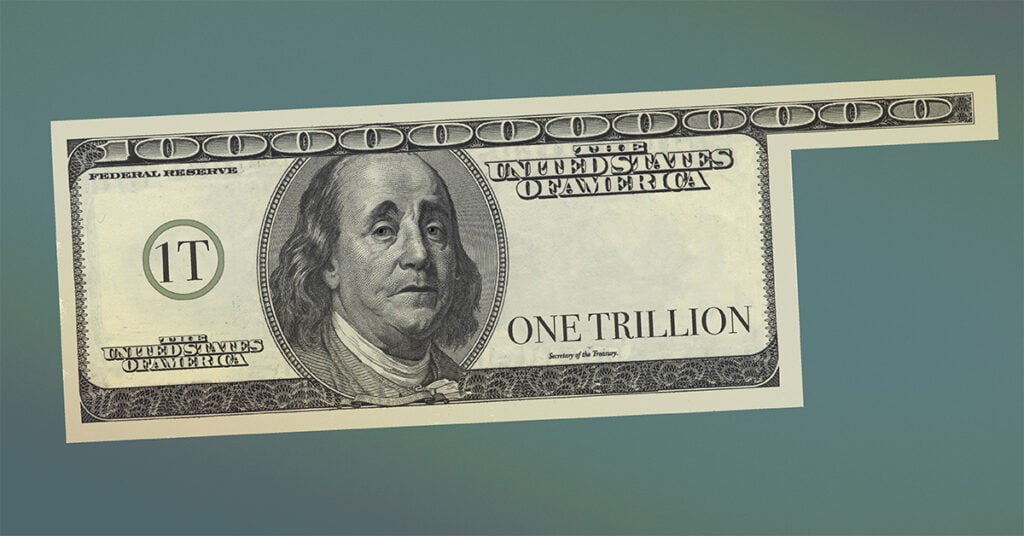
Cumulatively, he cut a trillion dollars from Medicaid and gave a trillion in tax cuts to the richest 1 percent over the next decade, further raising costs and fueling inequality. His policies helped mint new billionaires and even the first trillionaire, Elon Musk, who he allowed to take a chainsaw to crucial government programs.
Tax policy is key to fixing all of this and to addressing looming threats that would make inequality and affordability worse. This is true in Congress, statehouses, and city halls.
By more robustly taxing rich people and corporations, we can rein in the inequality that has worsened so dramatically under this corrupt regime. We can generate the trillions of dollars needed to restore and expand healthcare and to make housing, childcare, and other basics more affordable. And tax reform is essential to maintaining Social Security, a key income support for retirees, people with disabilities, and families who lose a parent.
A Tax the Rich Election
The election results are worth reviewing because they showed such a clear and stunning desire for change. Tax policy must be a big part of that change.
On the ballot, voters chose tax fairness in four of the five places it was put to a direct vote, when you include an August income tax elimination attempt in Missouri.
Voters flipped who controls both houses of Congress, sending at least 55 of 100 Senate seats to Democrats with counting ongoing in Alaska. Voters also sent at least 255 seats of the 435 seats in the House to Democrats, with counting ongoing for 19 seats.
At the state level, voters flipped 549 state legislative seats from Republicans to Democrats, creating seven new Democratic trifectas, bringing to 23 the states where Democrats will control the House, Senate and Governor’s mansion, more than at any time since 1984. At least 29 states, home to three quarters of Americans, are now led by Democratic governors.
Some of these new elected officials have explicitly acknowledged the need to better tax rich people and corporations to pay for healthcare and to bring down costs. Others have not. As the consequences of Trump’s tax regime for states and communities become apparent, it is our job to show the many ways to raise taxes on rich people and corporations to pay for the things Americans need.
ITEP Centered Inequality and Costs
ITEP kept inequality and costs in the news this year. As OBBBA was debated and from the moment it passed, we provided the numbers to help journalists, activists, and citizens make sense of what the bill meant for their pocketbooks, demonstrating that OBBBA and other Trump policies raised costs for 99 percent of Americans while handing $12,560, on average, to the richest 1 percent.
We demonstrated how the war in Iran had raised fuel prices, showing Americans – by region, state, and family size – how much more they were paying because of Trump’s war. We showed, too, that corporations, including the corporations most closely tied to the Trump administration, used Trump policies to pay far less than the 21 percent corporate rate.
In October we revealed that, after two rounds of Trump tax cuts, the number of zero-tax corporations had hit an all-time high of 114 and corporations overall were paying the lowest share of their profits in taxes that we’d seen in more than forty years of studying this issue.
At the state level, our signature Who Pays? report showed how most state tax codes are upside down, enabling the richest to pay the lowest share of their incomes in taxes while low- and middle-income families pay a greater share relative to their incomes. Where tax fairness was directly on the ballot this year, ITEP’s partners won four of the five fights, making permanent higher income taxes for the wealthiest in California and Washington, allowing graduated rates in Colorado and increasing the top rate for the first time since 1946, preserving the income tax in Missouri, and defending top income tax rates and revenue in Massachusetts. In Colorado, our work was cited in the ballot initiative’s legislative text and in Washington the governor cited our data when he signed the new income tax into law.
Up Next: Delivering Tax Justice
Now a new set of leaders must deliver and ITEP will help make that happen. At the federal level, our recommendations would require profitable corporations to pay reasonable rates and would remove special tax breaks for wealthy individuals. For the states, we have concrete ideas to eliminate inequitable tax breaks, better tax corporate income, tax the tech sector that is now so frequently subsidized, and let the wealthiest contribute just a little more of the income that our system allows them to accumulate. We also put forth a comprehensive set of tax ideas for city and county governments.
The investments that can transform the country require revenue. Healthcare, retirement, workers, consumers, disability rights, poverty reduction, college, childcare, housing, racial equity, green investment, environmental regulation, good schools, good jobs, good incomes: these demand robust public investment. It’s time to tax the rich to deliver these essentials to Americans.