
Arkansas
Arkansas Times: Report: Arkansas Taxes Unfair ….. To the Poor
October 17, 2018
Arkansas Advocates for Children and Families is highlighting a new report relevant to ongoing legislative discussions of "tax reform." It does not suggest the problem is taxation on the rich.
Arkansas: Who Pays? 6th Edition
October 17, 2018 • By ITEP Staff
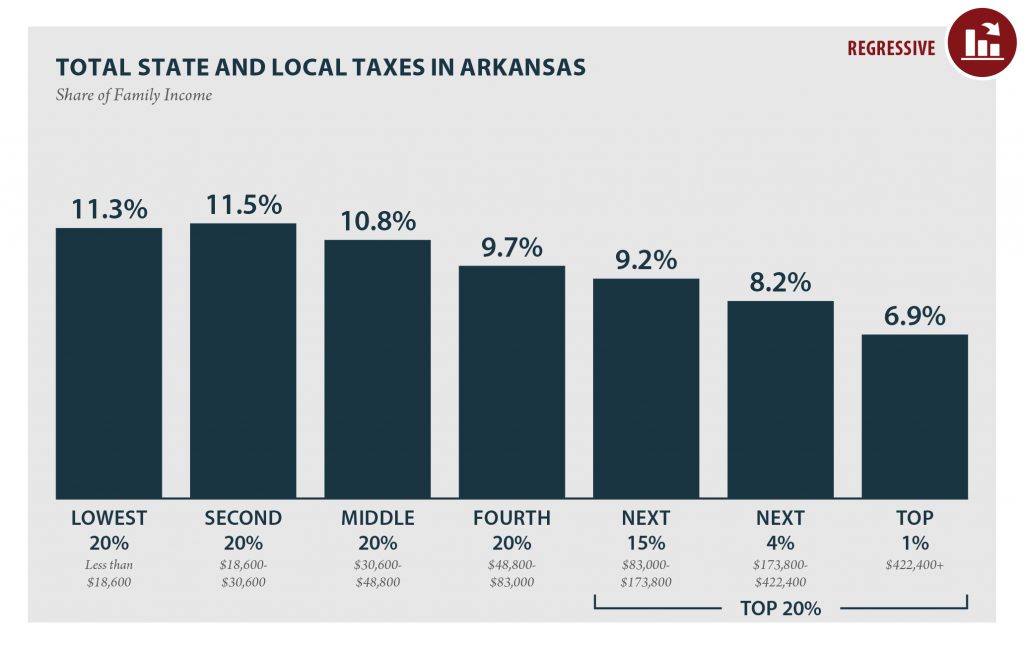
ARKANSAS Read as PDF ARKANSAS STATE AND LOCAL TAXES Taxes as Share of Family Income Top 20% Income Group Lowest 20% Second 20% Middle 20% Fourth 20% Next 15% Next 4% Top 1% Income Range Less than $18,600 $18,600 to $30,600 $30,600 to $48,800 $48,800 to $83,000 $83,000 to $173,800 $173,800 to $422,400 over $422,400 […]
Tax Cuts 2.0 – Arkansas
September 26, 2018 • By ITEP Staff
The $2 trillion 2017 Tax Cuts and Jobs Act (TCJA) includes several provisions set to expire at the end of 2025. Now, GOP leaders have introduced a bill informally called “Tax Cuts 2.0” or “Tax Reform 2.0,” which would make the temporary provisions permanent. And they falsely claim that making these provisions permanent will benefit […]
ITEP Testimony “Regarding the Final Report of the Arkansas Tax Reform and Relief Legislative Task Force”
August 23, 2018 • By Lisa Christensen Gee
Read the testimony in PDF WRITTEN TESTIMONY SUBMITTED TO: THE ARKANSAS TAX REFORM AND RELIEF TASK FORCE Lisa Christensen Gree, Senior State Tax Policy Analyst Institute on Taxation and Economic Policy Regarding the Final Report of the Arkansas Tax Reform and Relief Legislative Task Force August 22, 2018 Thank you for the opportunity to submit these […]
State Rundown 8/8: States Setting Rules for Upcoming Tax Decisions
August 8, 2018 • By ITEP Staff
August is often a season for states to define the parameters of tax debates to come, and that is true this week in several states: a tax task force in Arkansas is nearing its final recommendations; residents of Missouri, Montana, and North Carolina await results of court challenges that will decide whether tax measures will show up on their ballots this fall; and Michigan and South Dakota are taking different approaches to making sure they’re ready to collect online sales taxes next year.
Itchy Tax Trigger Finger: Tax Foundation Says Aim Toward Foot
August 6, 2018
Accounting for all the possible curveballs the future economy might throw at our state is impossible. That’s why legislators bother coming together every year to assess our budget and make choices based on the best available, most current information. One dubious new style of tax change, “tax triggers”, attempts to base major future tax and revenue changes only on the information we have today. Tax triggers are dangerous and generally work by automatically kicking in a tax cut when revenue or some other metric reaches a certain level.
Sales Tax Holidays: An Ineffective Alternative to Real Sales Tax Reform
July 12, 2018 • By Dylan Grundman O'Neill
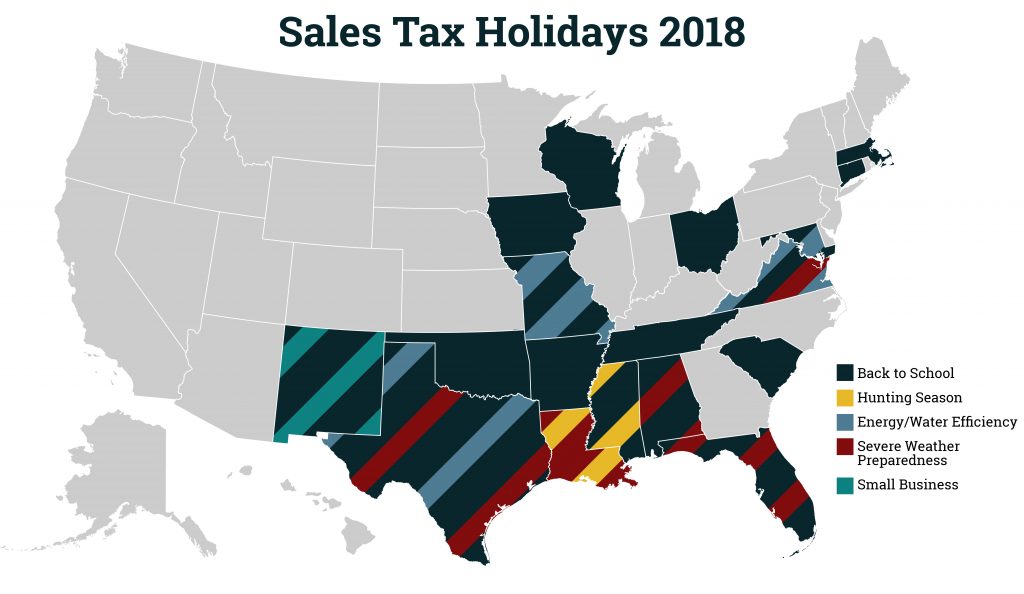
An updated version of this brief for 2019 is available here. Read this report in PDF. Overview Sales taxes are an important revenue source, composing close to half of all state tax revenues.[1] But sales taxes are also inherently regressive because the lower a family’s income, the more the family must spend on goods and […]
State Rundown 6/13: Budget Crunch Time Sets in as State Fiscal Years Come to Close
June 13, 2018 • By ITEP Staff
With many state fiscal years ending June 30th, budget negotiations were completed recently in California, Illinois, Michigan, and North Carolina. New Jersey remains a state to watch as a government shutdown looms but leaders continue to disagree about a proposed millionaires tax, corporate taxes, and school funding. In other states looking to wealthy individuals and large corporations for needed revenues, Arizona's teacher pay crisis could be solved with a tax on its highest-income residents and a similar proposal in Massachusetts is polling well, but Seattle's new "head tax" could be on the chopping block.
SALT/Charitable Workaround Credits Require a Broad Fix, Not a Narrow One
May 23, 2018 • By Carl Davis

The federal Tax Cuts and Jobs Act (TCJA) enacted last year temporarily capped deductions for state and local tax (SALT) payments at $10,000 per year. The cap, which expires at the end of 2025, disproportionately impacts taxpayers in higher-income states and in states and localities more reliant on income or property taxes, as opposed to sales taxes. Increasingly, lawmakers in those states who feel their residents were unfairly targeted by the federal law are debating and enacting tax credits that can help some of their residents circumvent this cap.
State Rundown 5/9: Iowa Digs a New Hole as Other States Try to Avoid or Climb Out of Theirs
May 9, 2018 • By ITEP Staff
This week we have news of a destructive tax cut plan finally approved in Iowa just as one was narrowly avoided in Kansas. Tax debates in Minnesota and Missouri will go down to the wire. And residents of Arizona and Colorado are considering progressive revenue solutions to their states' education funding crises.
State Rundown 4/27: Arbor Day Brings Some Fruitful Tax Developments, Some Shady Proposals
April 27, 2018 • By ITEP Staff
This Arbor Day week, the seeds of discontent with underfunded school systems and underpaid teachers continued to spread, with walkouts occurring in both Arizona and Colorado. And recognizing the need to see the forest as well as the trees, the Arizona teachers have presented revenue solutions to get to the true root of the problem. In the plains states, tax cut proposals continue to pop up like weeds in Kansas and threaten to spread to Iowa and Missouri, where lawmakers are running out of time but are still hoping their efforts to pass destructive tax cuts will bear fruit.
Trends We’re Watching in 2018, Part 5: 21st Century Consumption Taxes
April 20, 2018 • By Misha Hill

We're highlighting the progress of a few newer trends in consumption taxation. This includes using the tax code to discourage consumption of everything from plastic bags to carbon and collecting revenue from emerging industries like ride sharing services and legalized cannabis sales.
On Tax Day, a Look at How Federal Tax Changes Impact Arkansans
April 17, 2018
Taxes allow us to invest in public programs that help everyone, but recent federal tax cuts are shifting those dollars to the Arkansans who need it least. Those tax cuts are expensive–to the tune of $1.5 trillion dollars over 10 years. Nearly a third of Arkansas’s total operating budget is made up of federal revenue. This means that on top of federal budget changes, our state budget will also be forced to make cuts to things that Arkansas kids and families rely on today, like parks, community colleges, and firefighters.
Trends We’re Watching in 2018, Part 4: Tax Cuts & Tax Shifts
April 4, 2018 • By Lisa Christensen Gee
While a lot of tax activities in the states this year have focused on figuring out the impact of federal tax changes on states' bottom lines and residents, there also have been unrelated efforts to cut state taxes or shift from personal income taxes to more regressive sales taxes.
Trends We’re Watching in 2018, Part 3: Improvements to Tax Credits for Workers and Families
March 26, 2018 • By Aidan Davis
This has been a big year for state action on tax credits that support low-and moderate-income workers and families. And this makes sense given the bad hand low- and middle-income families were dealt under the recent Trump-GOP tax law, which provides most of its benefits to high-income households and wealthy investors. Many proposed changes are part of states’ broader reaction to the impact of the new federal law on state tax systems. Unfortunately, some of those proposals left much to be desired.
Bloomberg Law: Arkansas Tax Reform Body Unveils List of Sales Taxes for Scrutiny
March 22, 2018
Arkansas Gov. Asa Hutchinson (R) Feb. 12 told lawmakers that he would seek a cut to the state’s top marginal tax rate, which effectively jump started the task force’s search for revenue to pay for the cuts, estimated to cost $180 million in annual revenue, Boch said. Outside groups, including the Heritage Foundation’s Institute on […]
E.I.T.C. Spells LOVE for Kids and Families in Arkansas
March 16, 2018
Many people in our state work at low-paying jobs. Arkansans who work hard for little money pay a much higher share of their income to state and local taxes compared to the wealthiest. That’s not the way it should be. Fortunately, there is a great option for Arkansas (just ask the 29 other states that are already using it!) that can help turn things around for working families. That option is a state-level Earned Income Tax Credit (or EITC). At Arkansas Advocates for Children and families, we are so in love with the Earned Income Tax Credit that we decided to sing about it.
This Valentine's week finds California, Georgia, Missouri, New York, Oregon, and other states flirting with the idea of coupling to various components of the federal tax-cut bill. Meanwhile, lawmakers seeking revenue solutions to budget shortfalls in Alaska, Oklahoma, and Wyoming saw their advances spurned, and anti-tax advocates in many states have been getting mixed responses to their tax-cut proposals. And be sure to check out our "what we're reading" section to see how states are getting no love in recent federal budget developments.
Here’s Why Arkansas Needs a State EITC
January 31, 2018
Arkansas is part of a shrinking group of states that haven’t started using tax credits, like the Earned Income Tax Credit (EITC), to build their middle class and help people move permanently out of poverty. Arkansas remains among the worst states for overtaxing the poor.
What the Tax Cuts and Jobs Act Means for States – A Guide to Impacts and Options
January 26, 2018 • By ITEP Staff
The recently enacted Tax Cuts and Jobs Act (TCJA) has major implications for budgets and taxes in every state, ranging from immediate to long-term, from automatic to optional, from straightforward to indirect, from certain to unknown, and from revenue positive to negative. And every state can expect reduced federal investments in shared public priorities like health care, education, public safety, and basic infrastructure, as well as a reduced federal commitment to reducing economic inequality and slowing the concentration of wealth. This report provides detail that state residents and lawmakers can use to better understand the implications of the TCJA for…
It’s All About the Context: A Closer Look at Arkansas’s Income Tax
January 10, 2018
The tax task force is rounding out its extensive review of the Arkansas tax code this week by looking at one of the most contentious tax topics these days: income taxes. So, are we a high-income-tax state or a low-income-tax state? In Arkansas, it depends a lot on how much money you make, and how you make it. For example, retirement income is exempt for the first $6,000; military retirement income is completely exempt; there are border-city exemptions if you work in Texarkana; and capital gains income from things like stocks or real estate sales is taxed much more leniently…
Select state coverage of ITEP’s analyses of Republican tax Plans
January 1, 2018
Burlington County Times: Will Phil Murphy raise NJ’s taxes (and 4 other political questions for .. Kaplan Herald: This chart exhibits how the GOP tax plan will hit your pockets Wiscnews: Tax cuts increase inequity Patch.com: MacArthur Touts Tax Reform; Will It Help NJ As Much As He Says? NJ.com: Long lines spring up as […]
How the Final GOP-Trump Tax Bill Would Affect Arkansas Residents’ Federal Taxes
December 16, 2017 • By ITEP Staff
The final tax bill that Republicans in Congress are poised to approve would provide most of its benefits to high-income households and foreign investors while raising taxes on many low- and middle-income Americans. The bill would go into effect in 2018 but the provisions directly affecting families and individuals would all expire after 2025, with […]
The Final Trump-GOP Tax Plan: National and 50-State Estimates for 2019 & 2027
December 16, 2017 • By ITEP Staff
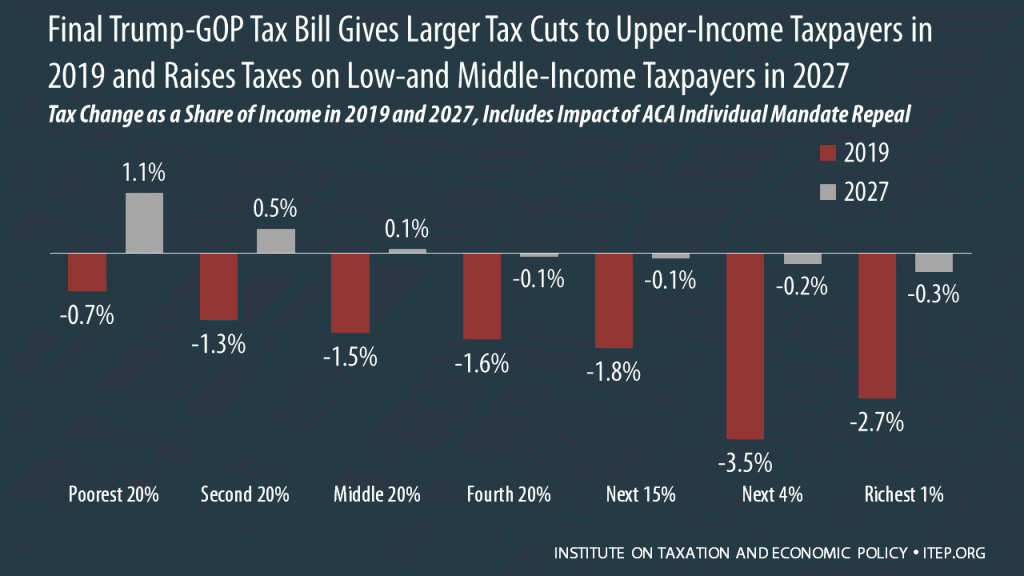
The final Trump-GOP tax law provides most of its benefits to high-income households and foreign investors while raising taxes on many low- and middle-income Americans. The bill goes into effect in 2018 but the provisions directly affecting families and individuals all expire after 2025, with the exception of one provision that would raise their taxes. To get an idea of how the bill will affect Americans at different income levels in different years, this analysis focuses on the bill’s impacts in 2019 and 2027.
How the House and Senate Tax Bills Would Affect Arkansas Residents’ Federal Taxes
December 6, 2017 • By ITEP Staff
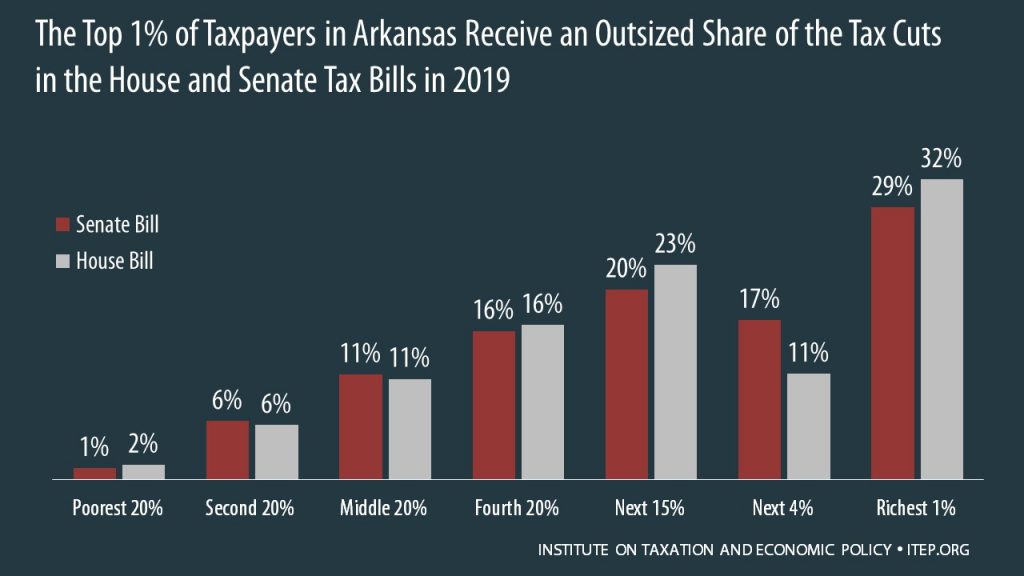
The House passed its “Tax Cuts and Jobs Act” November 16th and the Senate passed its version December 2nd. Both bills would raise taxes on many low- and middle-income families in every state and provide the wealthiest Americans and foreign investors substantial tax cuts, while adding more than $1.4 trillion to the deficit over ten years. The graph below shows that both bills are skewed to the richest 1 percent of Arkansas residents.
