
Blog
State Rundown 9/24: States Reckon with Tightening Fiscal Futures
• By ITEP Staff
States across the nation are reckoning with their tightening fiscal futures as inflation and economic woes continue to eat into their budgets.
State Rundown 5/14: Fund Priorities or Increase Shortfalls?
• By ITEP Staff
As many legislative sessions end, lawmakers are revealing their priorities.
State Rundown 4/23: While Some States Stop Digging, Others Move Full Steam Ahead with Anti-Affordability Agendas
• By ITEP Staff
Missouri lawmakers passed legislation that will have residents vote on a proposal at the ballot box. The ask: for them to pay more in sales taxes to offset cuts – and the possible elimination – of the state's individual income tax, which makes up nearly two-thirds of Missouri’s general fund.

Tax Break for Ultra-wealthy Investors Takes a Hit in Maine and Oregon
• By Nick Johnson
Policymakers in Maine and Oregon wisely said “no” last week to an income tax break for deep-pocketed tech investors and venture capitalists that was expanded in last year’s federal tax bill.
State Rundown 4/8: Budget and Tax Packages Take Shape as Sine Die Approaches in Many States
• By ITEP Staff
State legislative sessions are wrapping up, and final tax and budget packages are making their way to governors’ desks.
State Rundown 4/1: No Fooling Around Anymore in Washington, But Cruel Pranks in South Carolina
• By ITEP Staff
In Washington, Gov. Bob Ferguson and lawmakers decided to stop fooling around with one of the nation’s most upside-down tax codes and finally brought to life a new millionaires’ tax, the first new income tax created in a state since 1991.
State Rundown 3/4: Budget Realities Set In
• By ITEP Staff
As many state legislative sessions near or cross the halfway point, lawmakers are facing tough choices.
State Rundown 2/25: Sausage-Making Season Is Upon Us
• By ITEP Staff
National Sausage Month isn’t until October, but now is the time of year when state lawmakers are really diving into their sausage-making processes, as separate legislative houses and oftentimes political parties send competing bills, budgets, and visions back and forth to grind out their differences.
State Rundown 2/19: Necktie (NCTI) Offers a Way Out of a Knotty Situation
• By ITEP Staff
State lawmakers are grappling with a range of challenges as their fiscal outlooks deteriorate, federal tax enforcement wanes (after the Trump administration cut the IRS workforce by 25 percent), and a rewritten federal tax code sends states scrambling to decide what changes they might want to make in their own codes.
State Rundown 1/14: New Year Brings New Resolutions for Funding Key Priorities
• By ITEP Staff
State governors are beginning to lay out their top priorities as legislatures reconvene in statehouses around the country.
State Rundown 12/10: ‘Tis the Season to Reclaim Lost Revenue
• By ITEP Staff
property tax debates are taking place throughout the nation.
State Rundown 11/24: States Say ‘No Thank You’ to Federal Tax Cuts Reducing State Revenue
• By ITEP Staff
Lawmakers in two more states have wisely said “no thank you” to federal tax cuts that would have flowed through to their state tax codes and undermined funding for their priorities

States Begin Decoupling from Flawed ‘QSBS’ Tax Break
• By Nick Johnson, Sarah Austin
A costly tax break for wealthy venture capitalists is drawing some critical attention from state policymakers.
State Rundown 9/4: Colorado Tackles Offshore Corporate Tax Avoidance, Paves Way for State Conformity Best Practices
• By ITEP Staff
Despite an increasingly bleak state revenue outlook, state lawmakers across the country continue to prioritize regressive tax cuts.

Trump’s Tax Law Clobbers State Budgets. Now’s the Time to Prepare.
• By ITEP Staff
The Trump megabill hands the richest 1% a trillion-dollar windfall while gutting funding for health care, education, and disaster relief — leaving communities to pick up the pieces. State and local leaders must step up, tax the wealthiest fairly, and safeguard the essentials that keep America healthy, educated, and safe.
State Rundown 7/24: States Begin Preparing for Federal Megabill Fallout
• By ITEP Staff
All eyes in statehouses in recent weeks have been on federal budget negotiations, and now that the “megabill” has passed, they are focused in on their own budgets in search of ways to cope with the enormous consequences coming their way. All states will see fewer federal dollars flowing through their coffers, higher needs due […]
How Much Would Every Family in Every State Get if the Megabill’s Tax Cuts Given to the Rich Had Instead Been Evenly Divided?
• By Michael Ettlinger
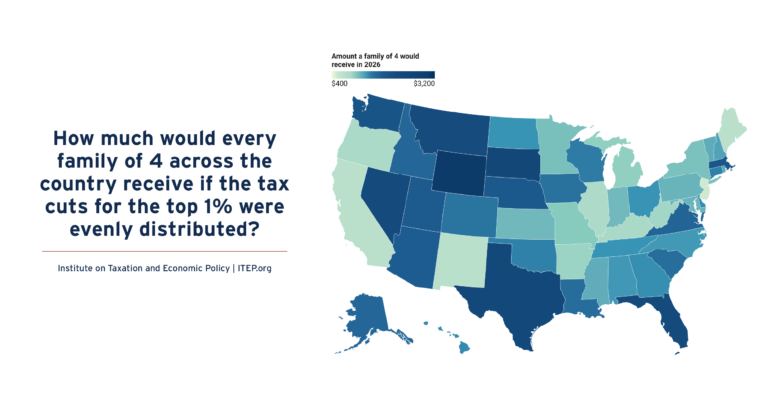
If instead of giving $117 billion to the richest 1 percent, that money had been evenly divided among all Americans, we'd each get $343 - or nearly $1,400 for a family of four.
State Rundown 7/8: State Tax Cuts Continue Despite Federal Megabill Passing
• By ITEP Staff
The last states are wrapping up legislative sessions, and some are crossing the finish line with major income tax cuts.

Local Tax Trends in 2025
• By Rita Jefferson
As federal aid ends and economic uncertainty grows, local governments face tough budget choices. Now is the time for localities to protect vulnerable residents and build stronger, more equitable fiscal foundations.

Trump Megabill Will Give $117 Billion in Tax Cuts to the Top 1% in 2026. How Much In Your State?
• By Michael Ettlinger
The predominant feature of the tax and spending bill working its way through Congress is a massive tax cut for the richest 1 percent — a $114 billion benefit to the wealthiest people in the country in 2026 alone.

How Much Do the Top 1% in Each State Get from the Trump Megabill?
• By Carl Davis
The Senate tax bill under debate right now would bring very large tax cuts to very high-income people. In total, the richest 1 percent would receive $114 billion in tax cuts next year alone. That would amount to nearly $61,000 for each of these affluent households.
Alabama Sunsets its Expensive ‘No Tax on Overtime’ Policy
• By Neva Butkus
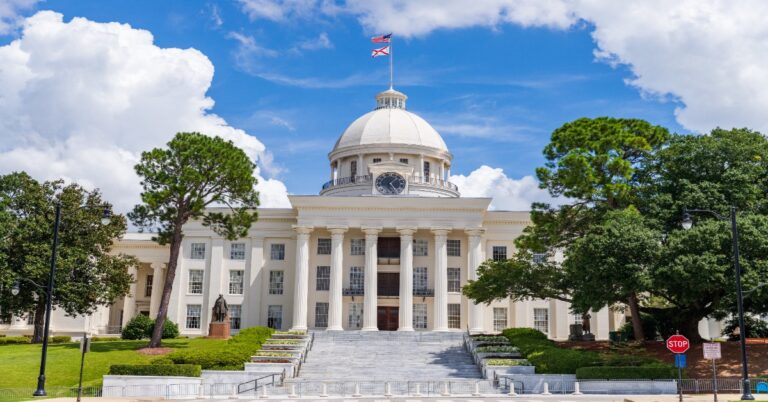
The idea of exempting overtime pay from income tax has gained traction, but there's little evidence it's an effective policy. Alabama tried it in 2023 but ended the policy after just two years. Their reversal highlights how exempting overtime is an expensive gimmick and a distraction from real worker issues.

Five Issues for States to Watch in the Federal Tax Debate
• By Dylan Grundman O'Neill, Kamolika Das, Marco Guzman, Miles Trinidad, Neva Butkus
This post covers five particularly notable provisions for states: increasing deductions for state and local taxes (SALT) paid, allowing more generous tax write-offs for businesses, offering new avenues for capital gains tax avoidance to people contributing to private school voucher funds, carving tips and overtime out of the tax base, and re-upping Opportunity Zone tax breaks for wealthy investors.
State Rundown 5/15: State Tax Debates Carry On in the Midst of Chaotic Federal Tax Landscape
• By ITEP Staff
Even as most major headlines have been about the ever-changing landscape of federal tax policy, the latest “ideas of the week," and now the House tax bill, state tax policy continues to be a priority for lawmakers.

IRS Cooperation with ICE Will Damage Public Trust, Putting Tax Revenues in Jeopardy
• By Marco Guzman
Attempts by the Department of Homeland Security to secure private information from the IRS on people who file taxes with an Individual Taxpayer Identification Number is a violation of federal privacy laws that protect taxpayers. It is also a change that could seriously damage public trust in the IRS, which could jeopardize billions of dollars in tax payments by hardworking immigrant families.

Institute on Taxation
and Economic Policy
ITEP is a non-profit, non-partisan tax policy organization. We conduct rigorous analyses of tax and economic proposals and provide data-driven recommendations to shape equitable and sustainable tax systems.
Subscribe to ITEP Emails
Tax research and policy news in your inbox.
Promote Fair Tax Policy
Your gift to ITEP promotes tax justice. With your help, we do research that supports taxing millionaires and billionaires, taxing big corporations and raising revenue for the things our people, our communities and our planet need.
Together, we can create a country with more economic justice, more racial justice, more climate justice… and more tax justice.