
Gas Taxes
It’s Been 10,000 Days Since the Federal Government Raised the Gas Tax
• By Carl Davis
10,000 days. More than 27 years. By next Tuesday that’s how long it will have been since the federal government last raised the gas tax. Over that time, vehicle fuel efficiency has improved by 25 percent and construction costs have grown 185 percent. And yet the federal gas tax has remained frozen at 18.3 cents per gallon, with its purchasing power shrinking by the day. The federal government has never gone this long without updating…
Federal Inaction on the Gas Tax is Costing Us Dearly
• By Carl Davis
Lawmakers should keep in mind that transportation funding woes can be traced to the federal government’s extremely outdated gas tax rate, which has not been raised in more than 26 years—not even to keep up with inflation.
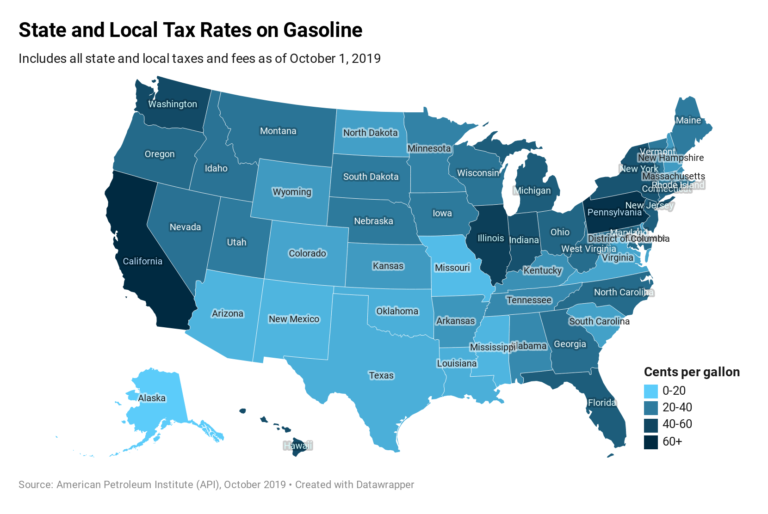
What is the Gas Tax Rate Per Gallon in Your State?
• By ITEP Staff
Every state levies excise taxes on motor fuel, including gasoline, to pay for transportation infrastructure. People who drive far distances or heavy vehicles tend to pay more tax, which helps offset the wear-and-tear they inflict on the roads.
The Heartland Institute: Utah Studies New Method for Transportation Funding
October 11, 2019
The Institute on Taxation and Economic Policy has also found that gas taxes are not a sufficient funding source to repair and rebuild the nation’s crumbling infrastructure. This is mainly due to more fuel-efficient vehicles on the road coupled with skyrocketing transportation construction costs. Read more
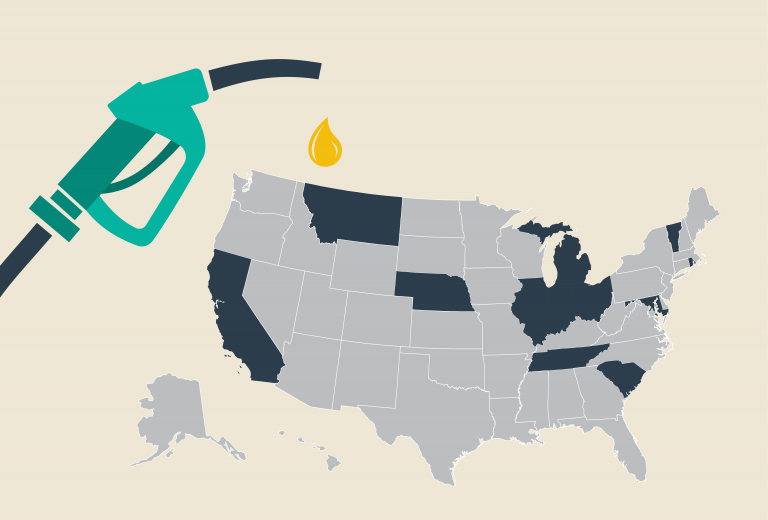
Gas Taxes Rise in a Dozen States, Including an Historic Increase in Illinois
• By Carl Davis
On July 1, 12 states will boost their gasoline taxes and 11 will boost their diesel taxes. The reasons for these increases vary, but they’re generally intended to fund maintenance and improvement of our nation’s transportation infrastructure–a job at which Congress has not excelled in recent years.
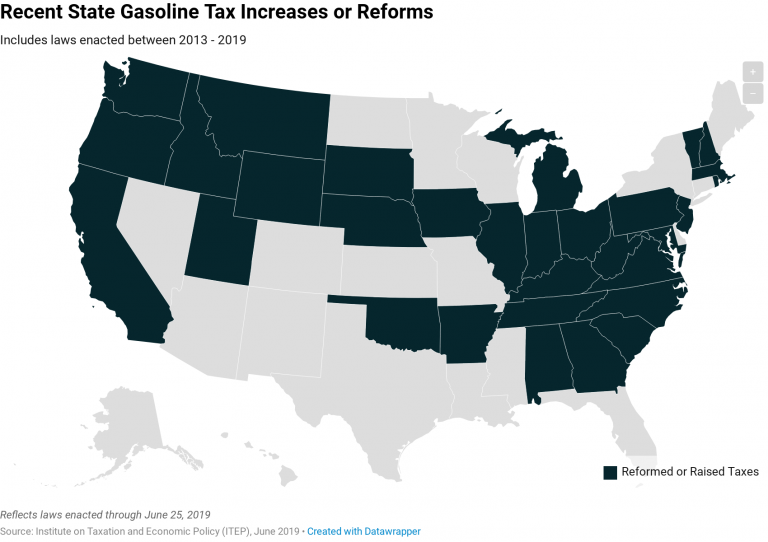
Has Your State Enacted Gas Tax Reform Recently?
• By ITEP Staff
Gas taxes are the most important revenue source that states have available to pay for transportation infrastructure. In recent years, state lawmakers across the country have increasingly agreed that gas taxes must be increased to fund the maintenance and improvement of their infrastructure networks.

Most States Have Raised Gas Taxes in Recent Years
• By Carl Davis
Ohio now enjoys the distinction of being the 30th state to raise or reform its gas tax this decade, and the third state to do so this year, under a bill signed into law by Gov. Mike DeWine. While state tax policy can be a contentious topic, there has been a remarkable level of agreement on the gasoline tax. Increasingly, state lawmakers are deciding that outdated gas taxes need to be raised and reformed to…
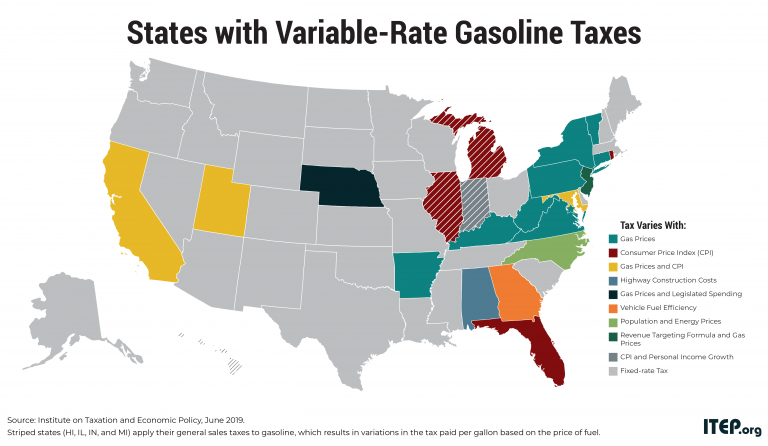
Most Americans Live in States with Variable-Rate Gas Taxes
• By Carl Davis
The flawed design of federal and state gasoline taxes has made it exceedingly difficult to raise adequate funds to maintain the nation’s transportation infrastructure. Twenty-eight states and the federal government levy fixed-rate gas taxes where the tax rate does not change even when the cost of infrastructure materials rises or when drivers purchase more fuel-efficient vehicles and pay less in gas tax. The federal government’s 18.4-cent gas tax, for example, has not increased in over…

Gas Taxes Have Gone Up in Most States, but Decades-Long Procrastinators Remain
• By Carl Davis
The upcoming Memorial Day weekend marks the start of the traditional summer driving season. In most states, summer road-trippers are paying more gas tax than they did a few years ago and are benefiting from smoother and safer roads as a result. In total, 30 states have raised or reformed their gas taxes in the last six years.
These States Abandoned Old Gas Tax Structures in Favor of More Sustainable Variable-Rate Gas Taxes
• By ITEP Staff
Because of these reforms, more than 193 million people (or 59 percent of the U.S. population) now live in places where the state gas tax rate automatically varies over time.
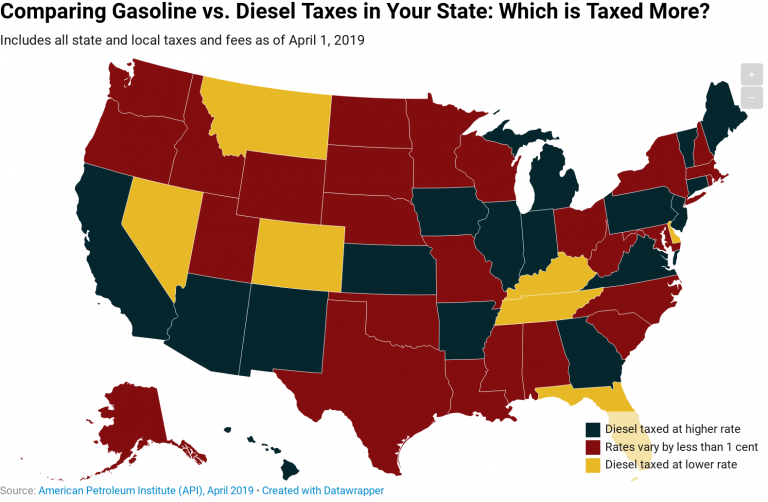
Gasoline vs. Diesel Taxes in Your State: Which is Taxed More?
• By ITEP Staff
Twenty-six states and the District of Columbia tax these two fuel types at the same rate or very similar rates, as of April 2019, according to data from the American Petroleum Institute.
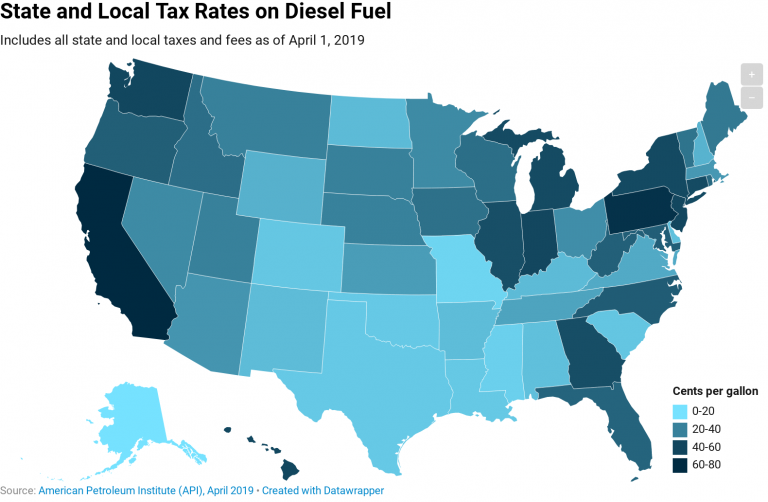
What is the Diesel Fuel Tax Rate in Your State?
• By ITEP Staff
The tax rates identified in this map include state and local excise and sales taxes on diesel fuel, as well as various fees, as calculated by the American Petroleum Institute (API). These taxes are levied in addition to the federal government’s 24.4-cent-per-gallon diesel tax.
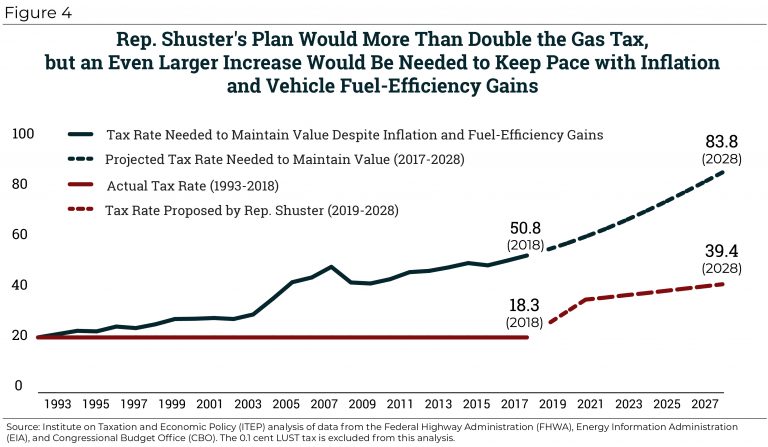
Rep. Shuster’s Mixed Bag: Doubling the Gas Tax before Repealing It Entirely
• By Carl Davis
This article examines the good aspects of Rep. Shuster’s infrastructure funding plan (a higher gas tax that is indexed to inflation), the bad (a flawed indexing formula and eventual gas tax repeal), and the downright ugly (tying the hands of a funding commission before their work even begins and refusing to ask more of high-income households).
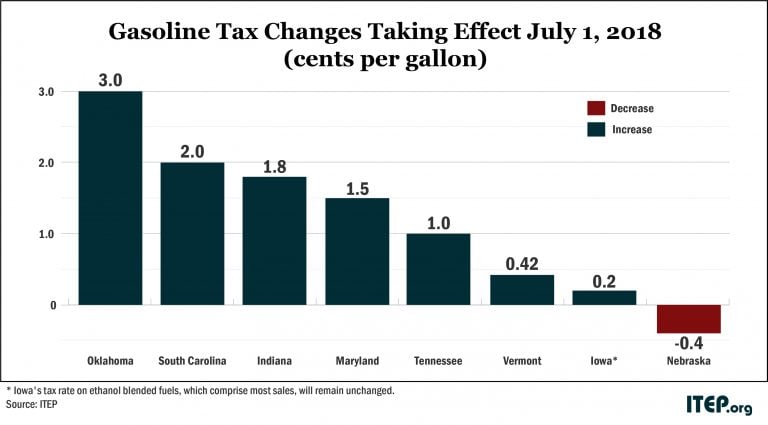
Gas Taxes Rise in Seven States, Including an Historic Increase in Oklahoma
• By Carl Davis
A rare sight is coming to Oklahoma. The last time the Sooner State raised its gas tax rate, the Berlin Wall was still standing, and Congress was debating whether to ban smoking on flights shorter than two hours. Fast forward 31 years, and Oklahoma is finally at it again. On Sunday, the state’s gas tax rate will rise by 3 cents and its diesel tax rate by 6 cents. Both taxes will now stand at…

A Gas Tax Hike Is the Obvious Answer to Infrastructure Funding
• By Steve Wamhoff
As part of his budget plan released Monday, President Trump offered an infrastructure proposal that he describes as a $1.5 trillion 10-year surge in infrastructure investments. The details of the proposal explain that the federal government would put up only $200 billion of this total, which the administration claims will be offset with cuts in other spending. Even this relatively meager funding amount is illusory because it would clearly be financed by cutting other federal…

Gas Taxes Will Rise in 7 States to Fund Transportation Improvements
• By Carl Davis
Summer gas prices are at their lowest level in twelve years, which makes right now a sensible time to ask drivers to pay a little more toward improving the transportation infrastructure they use every day. Seven states will be doing this on Saturday, July 1 when they raise their gasoline tax rates. At the same time, two states will be implementing small gas tax rate cuts.
How Long Has It Been Since Your State Raised Its Gas Tax?
• By Carl Davis
Many state governments are struggling to repair and expand their transportation infrastructure because they are attempting to cover the rising cost of asphalt, machinery, and other construction materials with fixed-rate gasoline taxes that are rarely increased.
Most Americans Live in States with Variable-Rate Gas Taxes
• By ITEP Staff
The flawed design of federal and state gasoline taxes has made it exceedingly difficult to raise adequate funds to maintain the nation’s transportation infrastructure. Thirty states and the federal government levy fixed-rate gas taxes where the tax rate does not change even when the cost of infrastructure materials rises or when drivers transition toward more fuel-efficient vehicles and pay less in gas tax. The federal government’s 18.4 cent gas tax, for example, has not increased…
