
Massachusetts
State Rundown 1/31: Low-Income Families’ Taxes Getting Some Much-Needed Attention
January 31, 2018 • By ITEP Staff

This week was promising for advocates of Earned Income Tax Credits (EITCs) and other tax breaks for workers and their families, which are making headway in Alabama, Maine, Massachusetts, Missouri, Utah, and Wisconsin. The week also saw the unveiling of a tax cut plan in Missouri, a budget-balancing tax increase package in Oklahoma, the end of an unproductive film tax credit in West Virginia, and a very busy week for tax policy in Utah.
What the Tax Cuts and Jobs Act Means for States – A Guide to Impacts and Options
January 26, 2018 • By ITEP Staff
The recently enacted Tax Cuts and Jobs Act (TCJA) has major implications for budgets and taxes in every state, ranging from immediate to long-term, from automatic to optional, from straightforward to indirect, from certain to unknown, and from revenue positive to negative. And every state can expect reduced federal investments in shared public priorities like health care, education, public safety, and basic infrastructure, as well as a reduced federal commitment to reducing economic inequality and slowing the concentration of wealth. This report provides detail that state residents and lawmakers can use to better understand the implications of the TCJA for…
State Rundown 1/25: States Begin Tax Debates while Still Racing to Understand Federal Bill
January 25, 2018 • By ITEP Staff
State legislative sessions are in full swing this week as states grapple with revenue shortfalls and the ramifications of the federal tax cut bill. Lawmakers in Alaska and Louisiana, for example, are debating how to handle their revenue shortfalls, and a tax cut proposal in Idaho has been received tepidly. And be sure to peruse our "What We're Reading" section for helpful perspectives on how states are affected by the federal tax cut bill.
MassBudget: What Does the Federal Tax Law Mean for Massachusetts and How Might the Commonwealth Respond?
January 22, 2018 • By ITEP Staff
The tax cuts are also skewed toward high-income tax filers when measured as a portion of their own incomes.
Repealing, or Working Around, the Cap on State and Local Tax Deductions Would Make the Trump-GOP Tax Law Even More Unfair
January 17, 2018 • By Steve Wamhoff

A bipartisan proposal in Congress to eliminate the new $10,000 cap on federal deductions for state and local taxes (SALT) would cost more than $86 billion in 2019 alone and two-thirds of the benefits would go to the richest 1 percent of households. Unfortunately, “work around” proposals in some states to allow their residents to avoid the new federal cap would likely have the same regressive effect on the overall tax code.
MassBudget: Sweeter than SALT: Highest-Income Households Get Federal Tax Cuts More Than Twice SALT Losses
January 11, 2018 • By ITEP Staff
For Massachusetts’ highest-income households – those with annual incomes over $1 million – the average tax cuts from other federal changes in the law are more than twice the average size of the impact from the loss of SALT deductibility.
Final GOP-Trump Bill Still Forces California and New York to Shoulder a Larger Share of Federal Taxes Under Final GOP-Trump Tax Bill; Texas, Florida, and Other States Will Pay Less
December 17, 2017 • By Meg Wiehe

Residents of California and New York pay a large amount of the nation’s federal personal income taxes relative to their share of the population. As illustrated by the table below, the final GOP-Trump tax bill expected to be approved this week would substantially increase the share of total federal personal income taxes (PIT) paid by both states. Connecticut, Maryland, Massachusetts, and New Jersey would also see their share of federal PIT increase.
How the Final GOP-Trump Tax Bill Would Affect Massachusetts Residents’ Federal Taxes
December 16, 2017 • By ITEP Staff

The final tax bill that Republicans in Congress are poised to approve would provide most of its benefits to high-income households and foreign investors while raising taxes on many low- and middle-income Americans. The bill would go into effect in 2018 but the provisions directly affecting families and individuals would all expire after 2025, with […]
The Final Trump-GOP Tax Plan: National and 50-State Estimates for 2019 & 2027
December 16, 2017 • By ITEP Staff
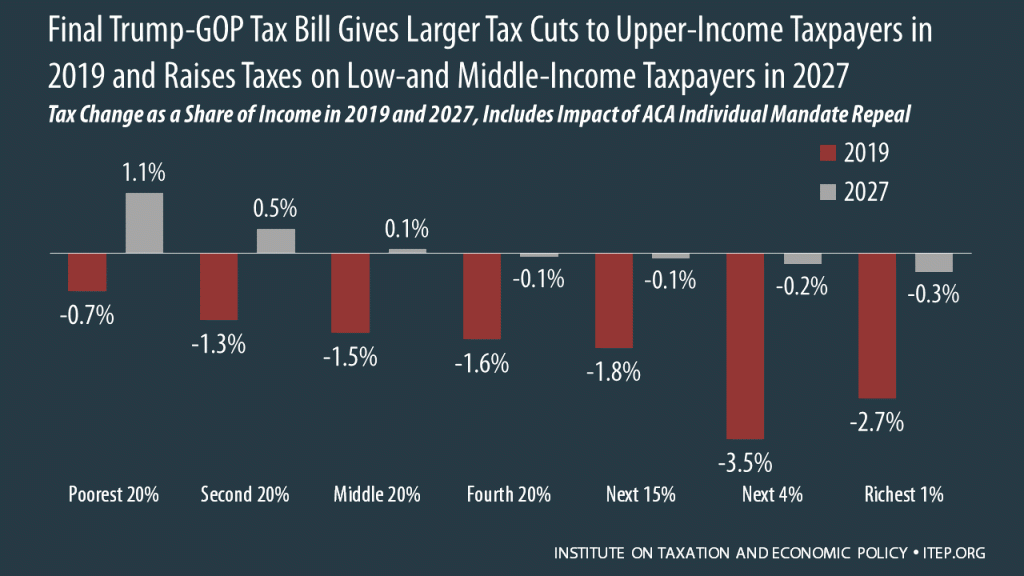
The final Trump-GOP tax law provides most of its benefits to high-income households and foreign investors while raising taxes on many low- and middle-income Americans. The bill goes into effect in 2018 but the provisions directly affecting families and individuals all expire after 2025, with the exception of one provision that would raise their taxes. To get an idea of how the bill will affect Americans at different income levels in different years, this analysis focuses on the bill’s impacts in 2019 and 2027.
Boston Globe: What You Need to Know about the Most Recent Changes to the GOP Tax Bill
December 15, 2017
So when the standard deduction gets bigger, as it would under the Republican bill, itemizing will inevitably become more rare. Likely much more rare. Here in Massachusetts, the number of people expected to continue itemizing will drop from roughly 37 percent of filers to more like 13 percent, according to the Institute on Taxation and […]

ITEP researchers have produced new reports and analyses that look at various pieces of the tax bill, including: the share of tax cuts that will go to foreign investors; how the plans would affect the number of taxpayers that take the mortgage interest deduction or write off charitable contributions, and remaining problems with the bill in spite of proposed compromises on state and local tax deductions.

As 2017 draws to close, Congress has yet to take legislative action to protect Dreamers. The young undocumented immigrants who were brought to the United States as children, and are largely working or in school, were protected by President Obama’s 2012 executive action, Deferred Action for Childhood Arrivals (DACA). But in September, President Trump announced that he would end DACA in March 2018. Instead of honoring the work authorizations and protection from deportation that currently shields more than 685,000 young people, President Trump punted their lives and livelihood to a woefully divided Congress which is expected to take up legislation…
Boston Globe: Look our Wealthy Boston Suburbs, Here Comes the GOP Tax Bill
December 8, 2017
Most Massachusetts taxpayers would see their taxes go down in 2019, by an average of over $2,000. But a study by the left-leaning Institute on Taxation and Economic Policy predicts that roughly 200,000 Massachusetts households earning between $83,000 and $333,000 would face higher taxes, with the average increase in 2019 approaching $1,500. Read more
How the House and Senate Tax Bills Would Affect Massachusetts Residents’ Federal Taxes
December 6, 2017 • By ITEP Staff

The House passed its “Tax Cuts and Jobs Act” November 16th and the Senate passed its version December 2nd. Both bills would raise taxes on many low- and middle-income families in every state and provide the wealthiest Americans and foreign investors substantial tax cuts, while adding more than $1.4 trillion to the deficit over ten years. The graph below shows that both bills are skewed to the richest 1 percent of Massachusetts residents.
National and 50-State Impacts of House and Senate Tax Bills in 2019 and 2027
December 6, 2017 • By ITEP Staff
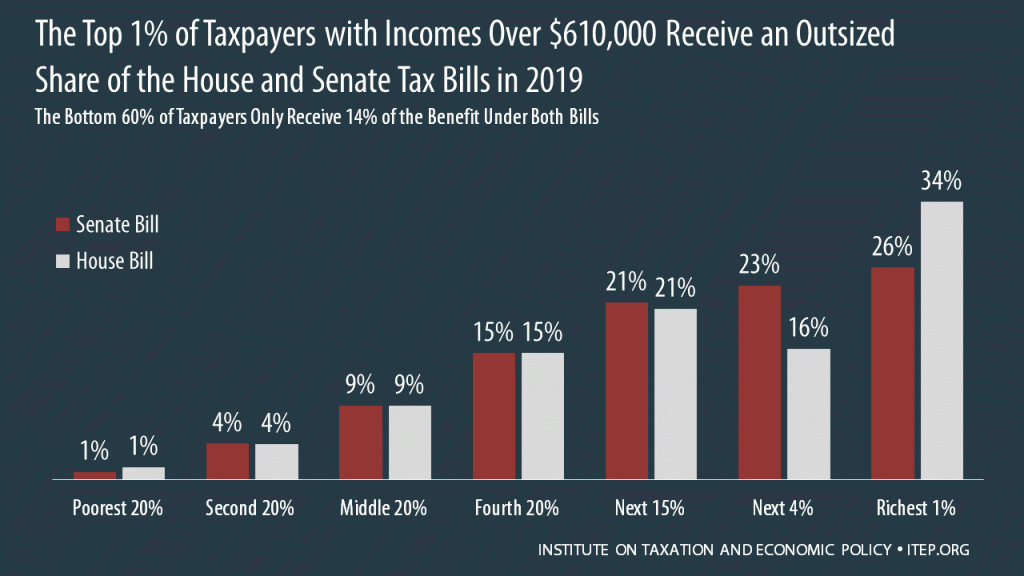
The House passed its “Tax Cuts and Jobs Act” November 16th and the Senate passed its version December 2nd. Both bills would raise taxes on many low- and middle-income families in every state and provide the wealthiest Americans and foreign investors substantial tax cuts, while adding more than $1.4 trillion to the deficit over ten years. National and 50-State data available to download.
A Corporate Tax Cut Would Benefit Coastal Investors, Not the Heartland
November 30, 2017 • By Carl Davis
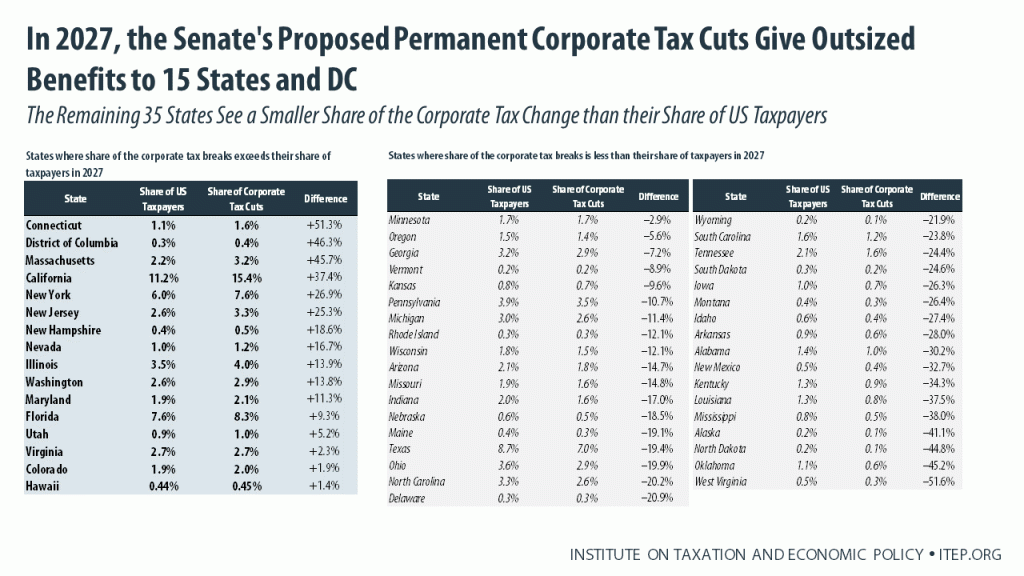
The centerpiece of the House and Senate tax plans is a major tax cut for profitable corporations that the American public does not want, and that will overwhelmingly benefit a small number of wealthy investors living in traditionally “blue” states. New ITEP research shows that poorer states such as West Virginia, Oklahoma, Alabama, and Tennessee would be largely left behind by a corporate tax cut, while the lion’s share of the benefits would remain with a relatively small number of wealthy investors who tend to be concentrated in larger cities near the nation’s coasts.

ITEP has analyzed each of the tax proposals advanced by the House and Senate in recent weeks. While some details have changed, the bottom line is the same: The plans would disproportionately benefit corporations and the wealthy. The Senate tax plan ITEP’s latest analysis examined the proposal that passed the Senate Finance Committee on Nov. […]
Revised Senate Plan Would Raise Taxes on at Least 29% of Americans and Cause 19 States to Pay More Overall
November 18, 2017 • By ITEP Staff
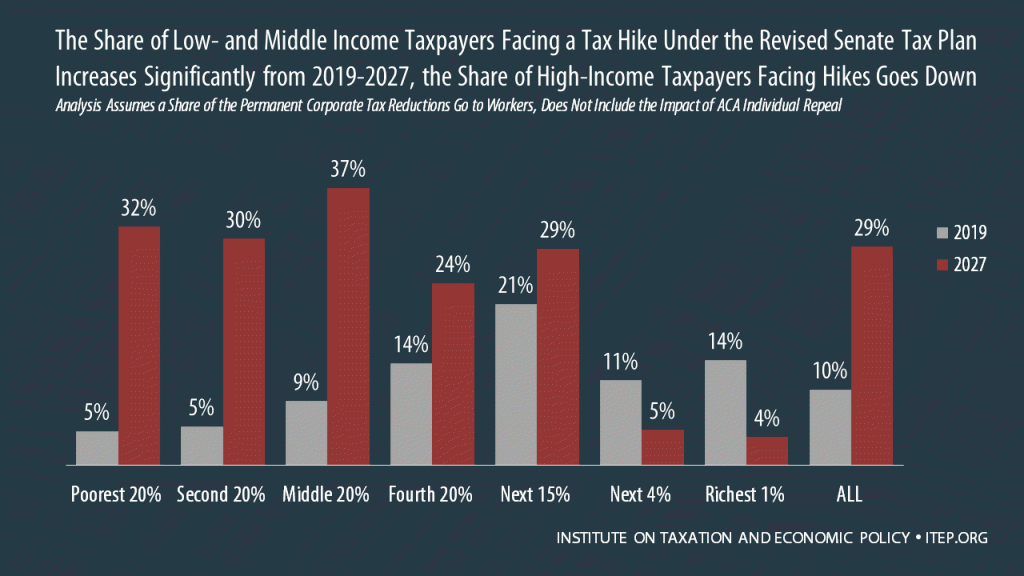
The tax bill reported out of the Senate Finance Committee on Nov. 16 would raise taxes on at least 29 percent of Americans and cause the populations of 19 states to pay more in federal taxes in 2027 than they do today.
CNN: GOP Tax Plans Could Fuel the Suburban Revolt Against Trump
November 15, 2017
The bite from the GOP bill is deeper for upper-middle-class families in major metropolitan areas, particularly in Democratic-leaning states where taxes, and usually property values, are higher. While only about one-in-five families between the 80th and 95th income percentiles in most red states would face higher taxes by 2027 under the House GOP bill, that […]
How the Revised Senate Tax Bill Would Affect Massachusetts Residents’ Federal Taxes
November 13, 2017 • By ITEP Staff
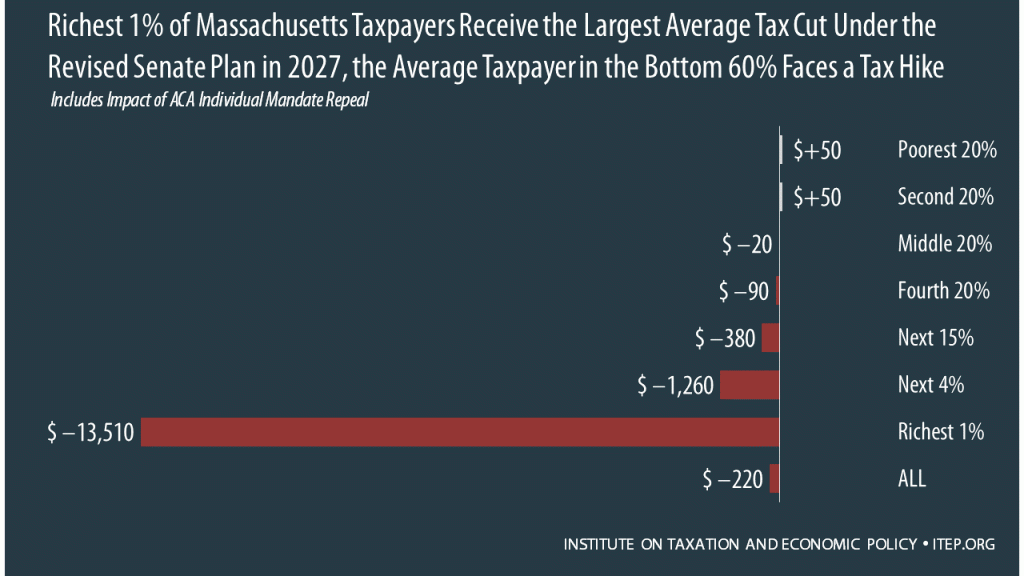
The Senate tax bill released last week would raise taxes on some families while bestowing immense benefits on wealthy Americans and foreign investors. In Massachusetts, 56 percent of the federal tax cuts would go to the richest 5 percent of residents, and 17 percent of households would face a tax increase, once the bill is fully implemented.
Senate Tax Plan Reserves Greatest Benefit for Richest Americans, Millions Face an Increase
November 13, 2017 • By ITEP Staff
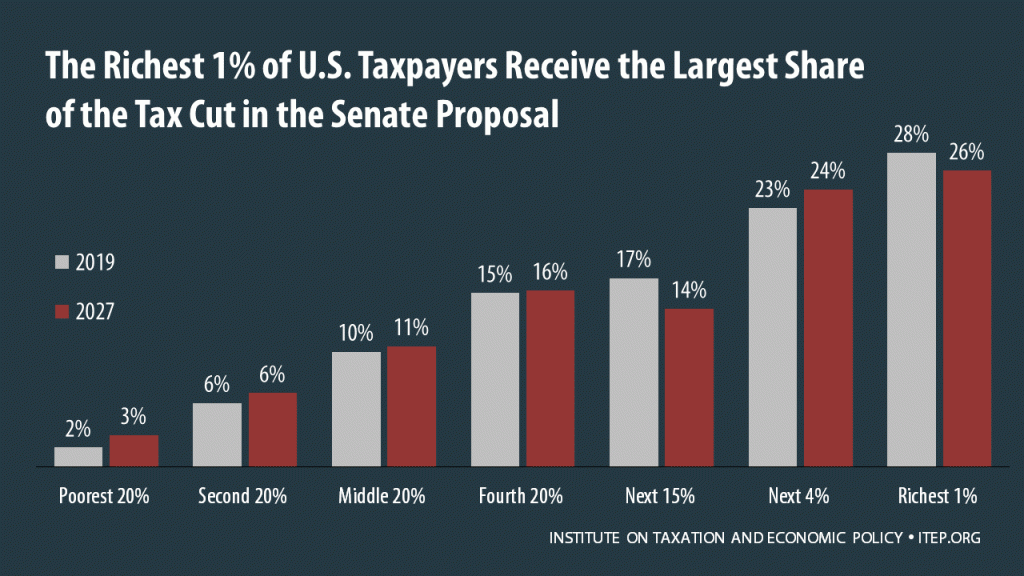
A 50-state analysis of the Senate tax proposal finds that not only would greatest share of benefits go to the richest Americans, but also more than one in 10 taxpayers would face a tax hike, with a large number of those taxpayers residing in states where residents pay higher state and local taxes.
House Tax Bill Would Put Property Tax Deduction Out of Reach for Most Households
November 13, 2017 • By ITEP Staff

The House of Representatives is expected to vote this week on a bill that would reduce federal revenues by roughly $1.5 trillion over the next decade. Despite the bill’s high price tag, many households would pay more in federal tax if the bill is enacted, in large part because it slashes the deduction for state […]
How the House Tax Proposal Would Affect Massachusetts Residents’ Federal Taxes
November 6, 2017 • By ITEP Staff
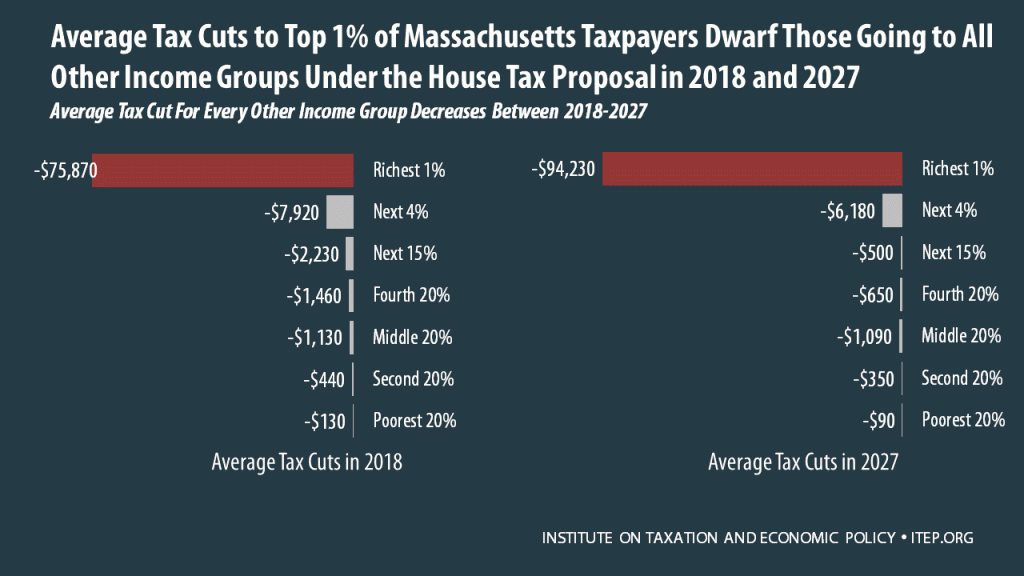
The Tax Cuts and Jobs Act, which was introduced on November 2 in the House of Representatives, includes some provisions that raise taxes and some that cut taxes, so the net effect for any particular family’s federal tax bill depends on their situation. Some of the provisions that benefit the middle class — like lower tax rates, an increased standard deduction, and a $300 tax credit for each adult in a household — are designed to expire or become less generous over time. Some of the provisions that benefit the wealthy, such as the reduction and eventual repeal of the estate…
Analysis of the House Tax Cuts and Jobs Act
November 6, 2017 • By Matthew Gardner, Meg Wiehe, Steve Wamhoff
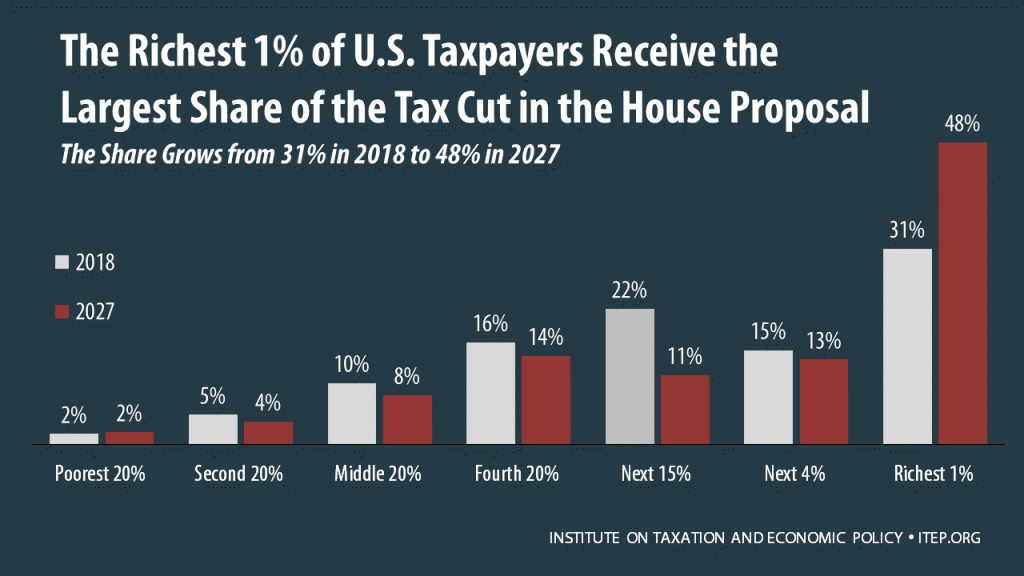
The Tax Cuts and Jobs Act, which was introduced on Nov. 2 in the House of Representatives, would raise taxes on some Americans and cut taxes on others while also providing significant savings to foreign investors.
Bloomberg: GOP Tax Plan Seen Hurting Middle Class in N.Y., 8 Other States
October 5, 2017 • By ITEP Staff
The ITEP report concludes that many of the most affected people would be middle-income and upper-middle income taxpayers. For example, in Maryland, about one-third of those making from $48,700 to $73,700 would face a tax hike, while 41 percent of those between $73,700 and $126,500, would face an increase, the study says. And almost 65 […]
