
Massachusetts
IRS Commissioner, New GAO Report Highlight Importance of Proper IRS Funding
February 16, 2024 • By Joe Hughes
A new GAO report and Commissioner Werfel’s testimony highlight the value and necessity of a well-funded and functioning IRS. Most families and businesses do their best to pay taxes accurately and on time. The nation benefits from a modern revenue agency that can make this process as easy and simple as possible and identify complex tax schemes that deprive the country of revenues.
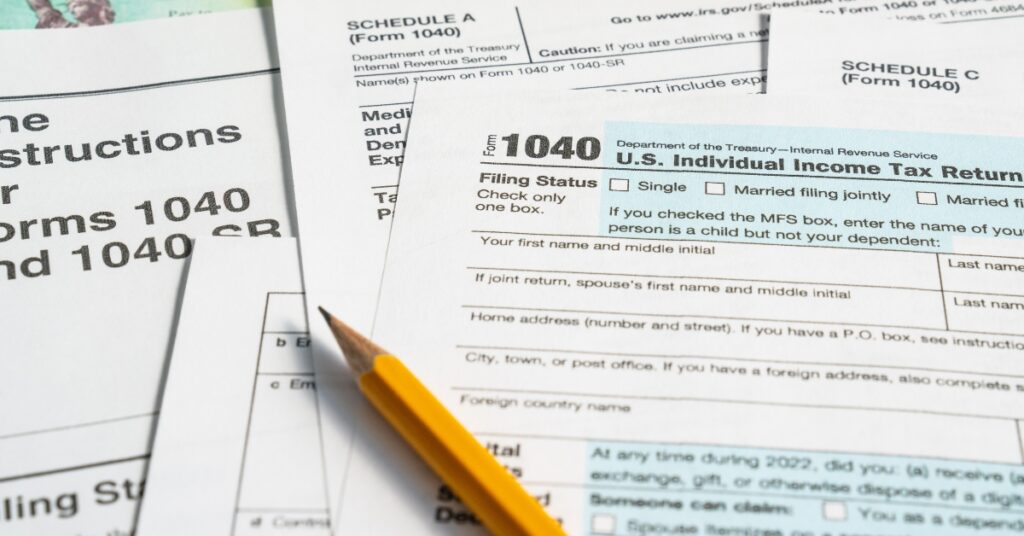
The IRS Direct File pilot is currently open to eligible taxpayers here. Millions of American families have now received their W-2s for 2023, signaling the start to a new tax filing season. The IRS has set January 29 as the first date that people can file their tax returns for the previous year, and the […]
State Rundown 1/26: Wealth Taxes Drawing Interest Early in Legislative Sessions
January 26, 2024 • By ITEP Staff
Bills are moving and state legislative sessions are picking up across the country, giving elected officials the opportunity to consider two distinct paths when it comes to tax policy...
State Tax Watch 2024
January 23, 2024 • By ITEP Staff
Updated July 15, 2024 In 2024, state lawmakers have a choice: advance tax policy that improves equity and helps communities thrive, or push tax policies that disproportionately benefit the wealthy, drain funding for critical public services, and make it harder for low-income and working families to get ahead. Despite worsening state fiscal conditions, we expect […]

The findings of Who Pays? go a long way toward explaining why so many states are failing to raise the amount of revenue needed to provide full and robust support for our public schools.
Massachusetts Budget & Policy Center: How Much Does the Millionaire Tax Improve Tax Fairness? How Does Massachusetts Compare Now to Other States?
January 10, 2024
A new 50-state analysis from the Institute on Taxation and Economic Policy (ITEP) finds that Massachusetts’ recently adopted millionaire tax makes Massachusetts’ state and local tax system much more equitable. Even under current law, however, those with incomes over $1 million still will pay a smaller share of their income in state and local taxes […]
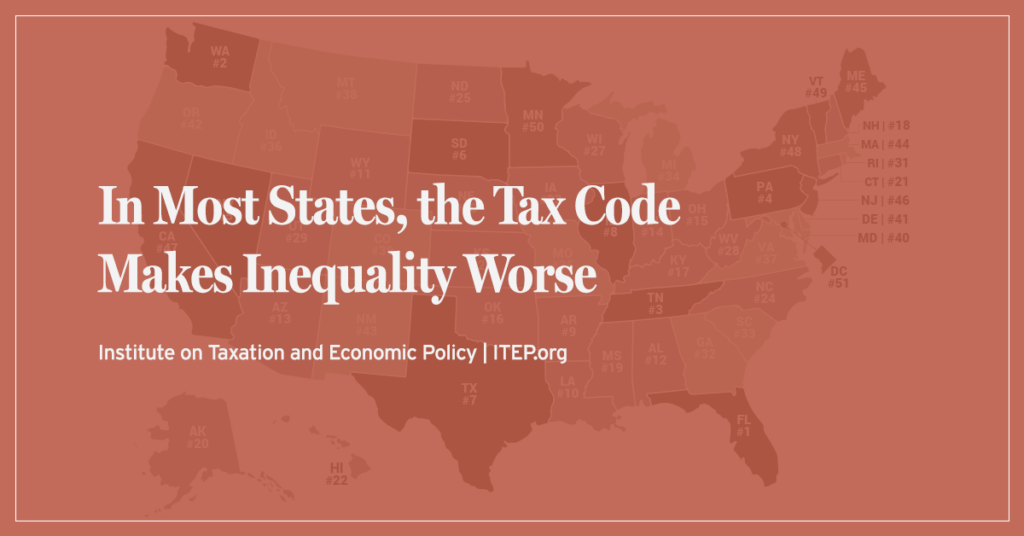
The vast majority of state and local tax systems are upside-down, with the wealthy paying a far lesser share of their income in taxes than low- and middle-income families. Yet a few states have made strides to buck that trend and have tax codes that are somewhat progressive and therefore do not worsen inequality.
Tax Systems in 44 States Exacerbate Inequality, In-Depth ‘Who Pays?’ Study Finds
January 9, 2024 • By ITEP Staff
The vast majority of state and local tax systems are upside-down, with the wealthy paying a far lesser share of their income in taxes than low- and middle-income families. That’s according to the latest edition of the Institute on Taxation and Economic Policy’s Who Pays?, the only distributional analysis of tax systems in all 50 states and the District of Columbia.
Massachusetts: Who Pays? 7th Edition
January 9, 2024 • By ITEP Staff
Massachusetts Download PDF All figures and charts show 2024 tax law in Massachusetts, presented at 2023 income levels. Senior taxpayers are excluded for reasons detailed in the methodology. Our analysis includes nearly all (99.8 percent) state and local tax revenue collected in Massachusetts. As seen in Appendix D, recent tax policy changes have significantly lessened […]
Hidden in Plain Sight: Race and Tax Policy in 2023 State Legislative Sessions
November 21, 2023 • By Brakeyshia Samms
Race was front and center in a lot of state policy debates this year, from battles over what’s being taught in schools to disagreements over new voting laws. Less visible, but also extremely important, were the racial implications of tax policy changes. What states accomplished this year – both good and bad – will acutely affect people and families of color.

States differ dramatically in how much they allow families to make choices about whether and when to have children and how much support they provide when families do. But there is a clear pattern: the states that compel childbirth spend less to help children once they are born.
Far From Radical: State Corporate Income Taxes Already Often Look Beyond the Water’s Edge
November 7, 2023 • By Carl Davis, Matthew Gardner
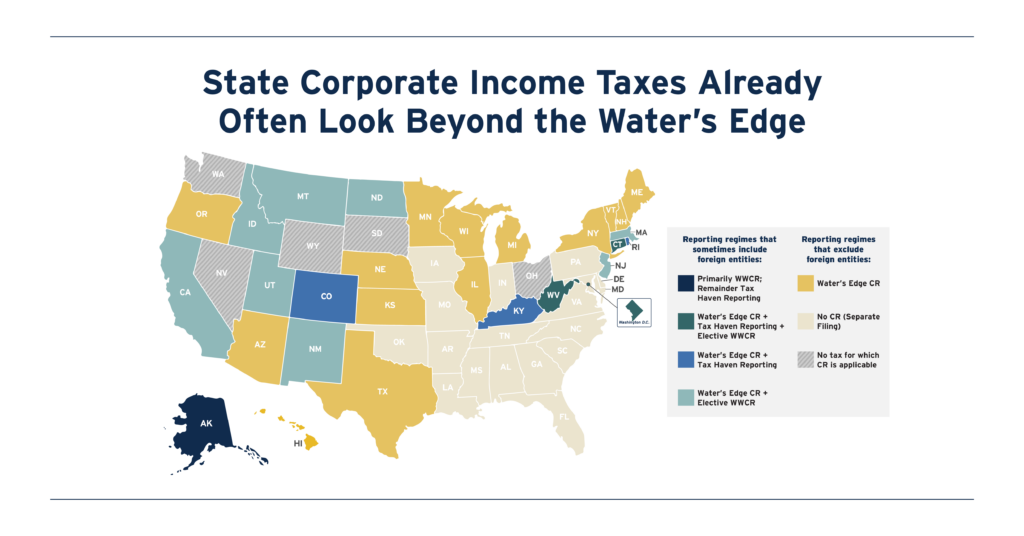
State lawmakers are increasingly interested in reforming their corporate tax bases to start from a comprehensive measure of worldwide profit. This provides a more accurate, and less gameable, starting point for calculating profits subject to state corporate tax. Mandating this kind of filing system, known as worldwide combined reporting (WWCR), would be transformative, as it would all but eliminate state corporate tax avoidance done through the artificial shifting of profits into low-tax countries.
Free Tax Filing Option from the IRS Would Benefit People of Color, Contrary to Corporate Warnings
October 30, 2023 • By Brakeyshia Samms

There's a patchwork of programs and preparers for people of color to turn to when filing taxes, and most come from corporations that profit from providing a service that the government could provide more effectively and efficiently for free. The Direct File program can change that and is a great step forward in the IRS’ work addressing racism in the tax code.
State Rundown 10/26: Off-Year Ballot Measures and State & Local Tax Policy
October 26, 2023 • By ITEP Staff
November elections are creeping closer and closer and while that typically means a new batch of lawmakers are elected, it also means voters have another chance to help shape state and local tax policy...
State Rundown 10/12: Tax Policy Debates Don’t Just Happen in the Statehouse
October 12, 2023 • By ITEP Staff
It may be the off-season for state legislatures, but tax policy changes could soon emerge from the ballot box or the courts. Advocates in Arkansas want voters to decide the future of taxing diapers and feminine hygiene products, and supporters of public education in Nebraska are working to make sure voters have a say on the state’s school choice tax credit. Meanwhile, cannabis firms in Missouri are suing the state over cities and counties stacking sales tax on marijuana.
State Rundown 9/27: Some States are Looking to Paint the Budgets Red
September 27, 2023 • By ITEP Staff
When it comes to investments, state lawmakers across the country are positioning their states to be in the red as they pass or debate further tax cuts that will overwhelmingly benefit the wealthy – and some states are now adding an additional coat of red paint...
States are Boosting Economic Security with Child Tax Credits in 2023
September 12, 2023 • By Aidan Davis, Neva Butkus

Fourteen states now provide Child Tax Credits to reduce poverty, boost economic security, and invest in children. This year alone, lawmakers in three states created new Child Tax Credits while lawmakers in seven states expanded existing credits. To maximize impact, lawmakers should consider making their credits fully refundable, not including an earnings requirement, setting a maximum amount per child instead of per household, setting state-specific phase-out ranges that target low- and middle-income families, indexing to inflation, and offering the option of advanced payments.
Boosting Incomes, Improving Equity: State Earned Income Tax Credits in 2023
September 12, 2023 • By Aidan Davis, Neva Butkus

Nearly two-thirds of states (31 plus the District of Columbia and Puerto Rico) have an Earned Income Tax Credit, an effective tool that boosts low-paid workers’ incomes and helps lower-income families achieve greater economic security. This year, 12 states expanded and improved EITCs.
While a number of state tax laws are debated, approved, and vetoed in any given year, many go unnoticed...
Gimmicky Sales Tax Holidays to Cost States & Localities $1.6 Billion This Year
August 3, 2023 • By ITEP Staff
Sales tax holidays are bad policies that have too often been used as a substitute for more meaningful, permanent reform.
Sales Tax Holidays: An Ineffective Alternative to Real Sales Tax Reform
August 2, 2023 • By Marco Guzman

Nineteen states have sales tax holidays on the books in 2023, and these suspensions will cost nearly $1.6 billion in lost revenue this year. Sales tax holidays are poorly targeted and too temporary to meaningfully change the regressive nature of a state’s tax system. Overall, the benefits of sales tax holidays are minimal while their downsides are significant.
The Dog Days of summer are upon us, and with most states out of session and extreme heat waves making their way across the country, it’s a perfect time to sit back and catch up on all your favorite state tax happenings (ideally with a cool drink in hand)...

State lawmakers continue to make groundbreaking progress on state tax credits, with 17 states creating or enhancing Child Tax Credits or Earned Income Tax Credits so far this year. These policies have the potential to boost family economic security and dramatically reduce the number of children living below the poverty line.
Summer is here and many states nearing the end of their legislative sessions. Temperatures are rising in more ways than one in some state legislatures while others seem to be cooling off.
Across the country, the marathon budget season has held pace, with a steady stream of bills continuing to cross the finish line...
