
New York
Charitable, Property Tax, and Mortgage Interest Deductions Would Be Wiped Out for Two-Thirds of Current Claimants Under Congressional Tax Plans
December 7, 2017 • By Carl Davis
In the ongoing debate over major federal tax legislation, there is significant focus on how House and Senate bills would eliminate the deduction for state income tax payments and cap the deduction for property taxes at $10,000 per year. At the same time, tax writers have retained deductions for charitable gifts and mortgage interest with what appear to be comparatively minor changes, at least at first glance.
How the House and Senate Tax Bills Would Affect New York Residents’ Federal Taxes
December 6, 2017 • By ITEP Staff
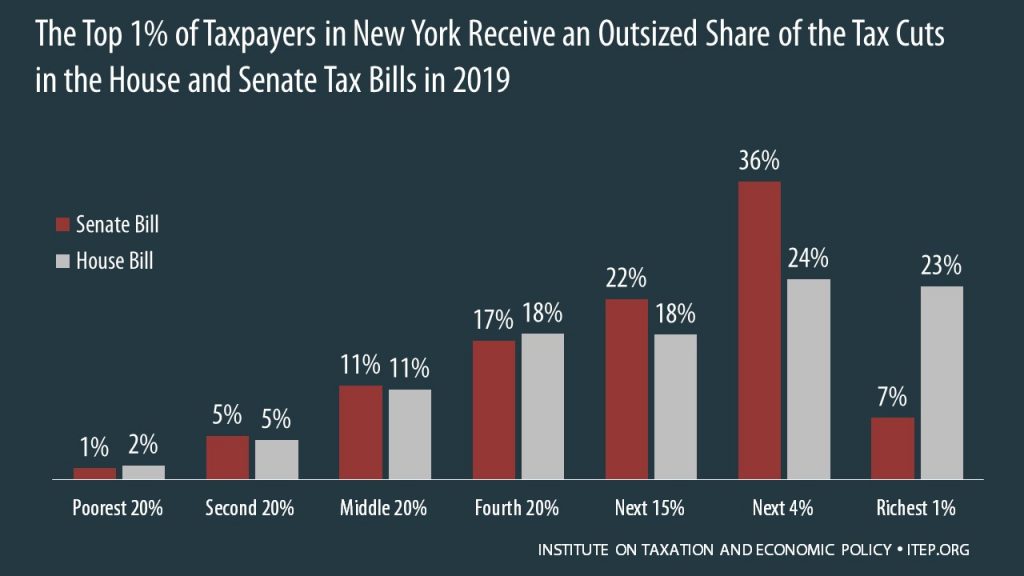
The House passed its “Tax Cuts and Jobs Act” November 16th and the Senate passed its version December 2nd. Both bills would raise taxes on many low- and middle-income families in every state and provide the wealthiest Americans and foreign investors substantial tax cuts, while adding more than $1.4 trillion to the deficit over ten years. The graph below shows that both bills are skewed to the richest 1 percent of New York residents.
National and 50-State Impacts of House and Senate Tax Bills in 2019 and 2027
December 6, 2017 • By ITEP Staff
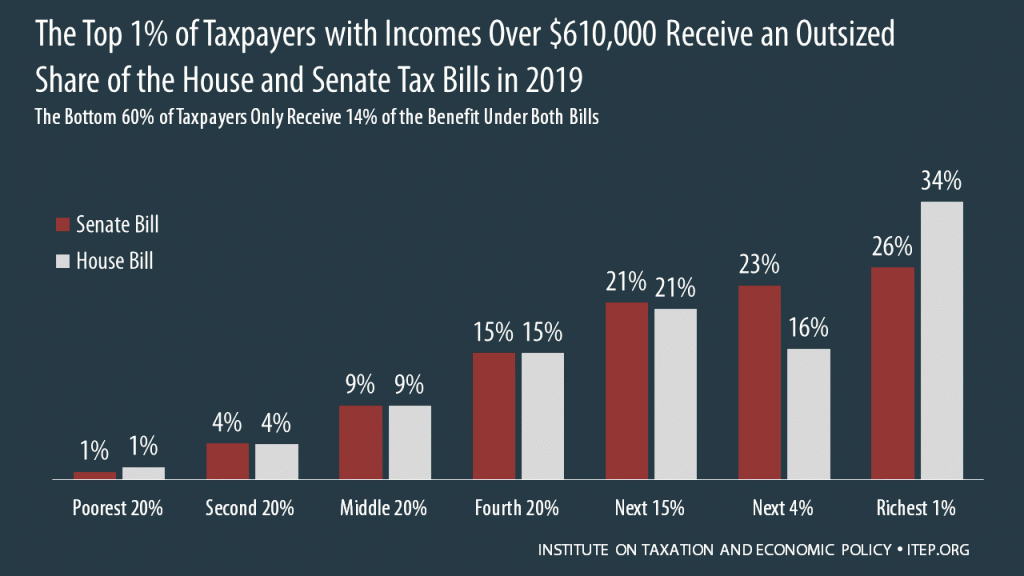
The House passed its “Tax Cuts and Jobs Act” November 16th and the Senate passed its version December 2nd. Both bills would raise taxes on many low- and middle-income families in every state and provide the wealthiest Americans and foreign investors substantial tax cuts, while adding more than $1.4 trillion to the deficit over ten years. National and 50-State data available to download.
Fiscal Policy Institute: Dream Act: What’s At Stake for New York
December 1, 2017
There are 76,000 young immigrants who were potentially eligible for DACA that call New York home. They currently contribute a total of $115 million to local and state taxes annually through sales and excise taxes, property taxes and income tax. Read more
New ITEP Report Explains How Tax Reform Should Eliminate Breaks for Real Estate Investors Like Trump
December 1, 2017 • By Steve Wamhoff

A new report from ITEP provides more details on the many breaks and loopholes for wealthy real estate investors like Trump and what a true tax reform would do to close them.
New York Times: Trump Says GOP Tax Bill Won’t Benefit Him. That’s Not True
November 30, 2017
Mr. Trump still has not released his tax returns, so it’s impossible to know to what extent he would personally benefit from the legislation. But there’s little doubt that he would. “Lower pass-through rates and the repeal of the alternative minimum tax — those two alone are so hugely beneficial to Trump that I have […]
A Corporate Tax Cut Would Benefit Coastal Investors, Not the Heartland
November 30, 2017 • By Carl Davis
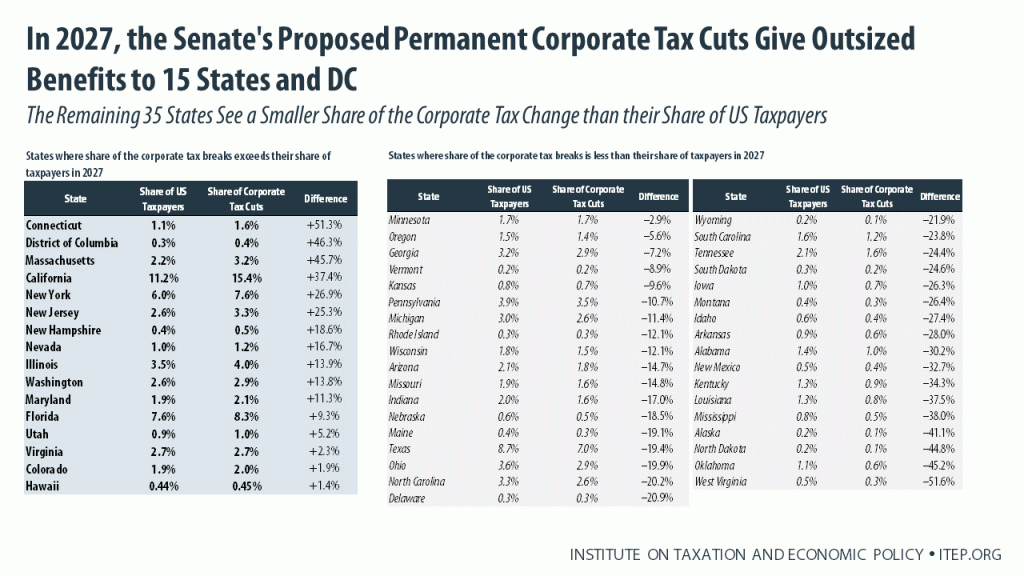
The centerpiece of the House and Senate tax plans is a major tax cut for profitable corporations that the American public does not want, and that will overwhelmingly benefit a small number of wealthy investors living in traditionally “blue” states. New ITEP research shows that poorer states such as West Virginia, Oklahoma, Alabama, and Tennessee would be largely left behind by a corporate tax cut, while the lion’s share of the benefits would remain with a relatively small number of wealthy investors who tend to be concentrated in larger cities near the nation’s coasts.
Quartz: The Republican tax plan takes aim at one of the biggest engines of US growth
November 30, 2017
As Los Angeles Times Jim Puzzanghera pointed out recently, California is already one of a handful of states that pays more to the federal government than it receives. The Republican plan currently being debated in the Senate is likely to make this imbalance even larger. While most of the country can expect to benefit from […]
The Atlantic: The Big Blue Losers in the GOP Tax Plan
November 28, 2017
Between the mortgage and SALT limits, the bills hit many upper-middle-class taxpayers, especially in blue states. The Institute on Taxation and Economic Policy calculates that by 2027 the Senate bill would raise taxes on about 45 percent of households between the 80th and 95th income percentiles in California, Virginia, New Jersey, and New York; and […]
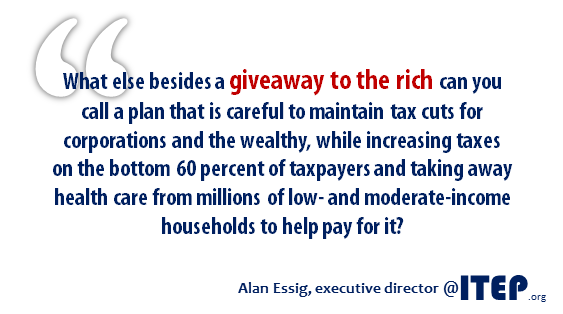
ITEP has analyzed each of the tax proposals advanced by the House and Senate in recent weeks. While some details have changed, the bottom line is the same: The plans would disproportionately benefit corporations and the wealthy. The Senate tax plan ITEP’s latest analysis examined the proposal that passed the Senate Finance Committee on Nov. […]
Revised Senate Plan Would Raise Taxes on at Least 29% of Americans and Cause 19 States to Pay More Overall
November 18, 2017 • By ITEP Staff
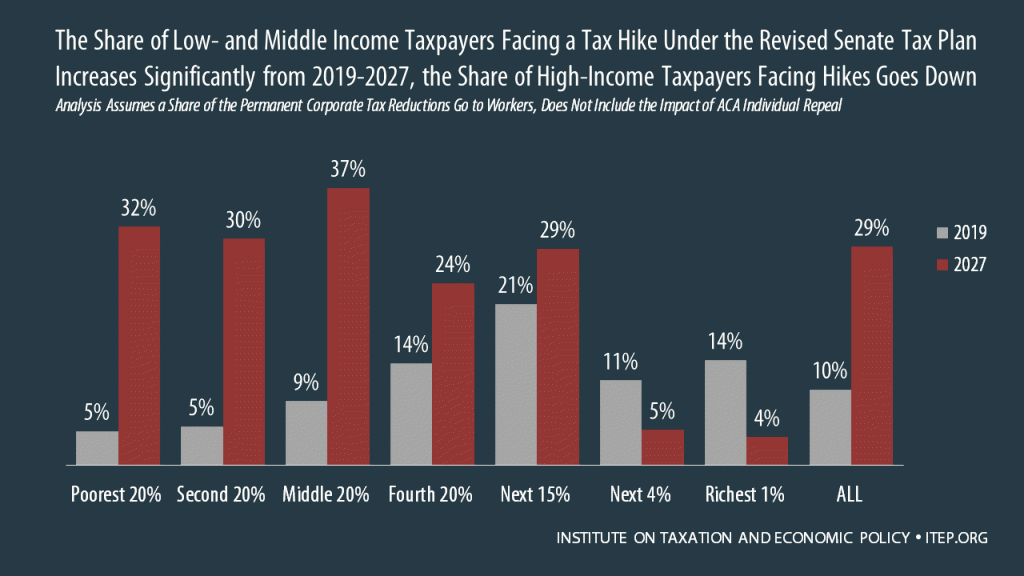
The tax bill reported out of the Senate Finance Committee on Nov. 16 would raise taxes on at least 29 percent of Americans and cause the populations of 19 states to pay more in federal taxes in 2027 than they do today.
New York Times: Confused by Tax Bills?
November 17, 2017
Compared with current law, the House bill, which was passed Thursday, would raise personal federal income taxes on California, New Jersey, New York and Maryland residents by $16.7 billion in 2027, according to an Institute on Taxation and Economic Policy analysis. Florida and Texas, however, would get $31.2 billion in cuts. Read more
New York Times: Billionaires Desperately Need Our Help
November 16, 2017
Now it’s fair to complain that the tax plan over all doesn’t give needy billionaires quite as much as they deserve. For example, the top 1 percent receive only a bit more than 25 percent of the total tax cuts in the Senate bill, according to the Institute on Taxation and Economic Policy. Read more
New York Times: Republican Tax Plan Puts Corporations over People
November 16, 2017
The plans also differ on their treatment of state and local tax deductions. The Senate would kill them entirely. The House would maintain them only for property taxes and cap the deduction at $10,000 a year. Economists generally say that those tax breaks are inefficient. But eliminating them, in the context of the House bill, […]
Los Angeles Times: A Tax Bill No Responsible California Lawmaker Should Support
November 16, 2017
But the bill’s cuts in personal tax rates, its increase in the standard deduction and other benefits for individual taxpayers are partially offset by reductions in some popular tax deductions — including those for state and local taxes and mortgage interest payments, many of whose beneficiaries live in states with high income or sales taxes […]
CNN: GOP Tax Plans Could Fuel the Suburban Revolt Against Trump
November 15, 2017
The bite from the GOP bill is deeper for upper-middle-class families in major metropolitan areas, particularly in Democratic-leaning states where taxes, and usually property values, are higher. While only about one-in-five families between the 80th and 95th income percentiles in most red states would face higher taxes by 2027 under the House GOP bill, that […]
House Tax Plan Offers an Exceptionally Bad Deal for California, New York, New Jersey, and Maryland
November 14, 2017 • By Carl Davis
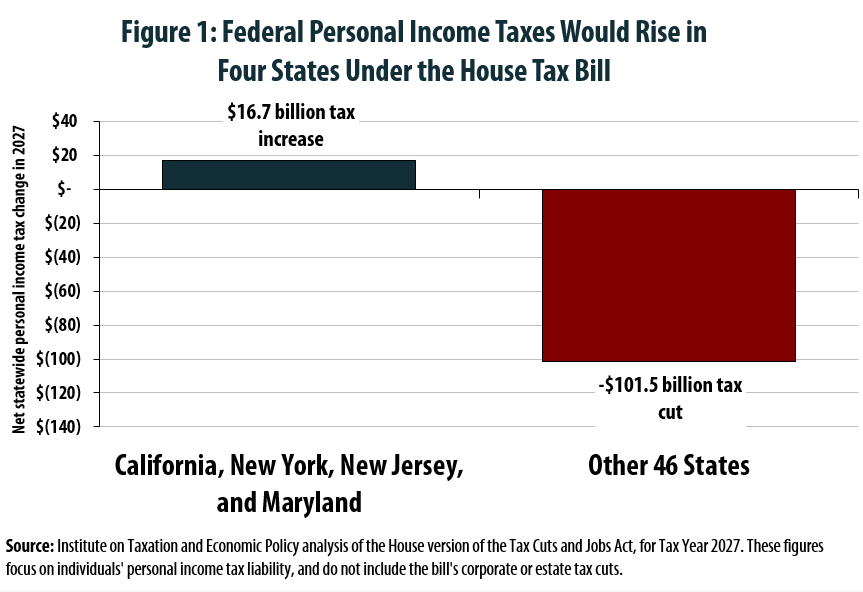
An ITEP analysis reveals that four states would see their residents pay more in aggregate federal personal income taxes under the House’s Tax Cuts and Jobs Act. While some individual taxpayers in every state would face a tax increase, only California, New York, Maryland, and New Jersey would see such large increases that their residents’ overall personal income tax payments rise when compared to current law.
How the Revised Senate Tax Bill Would Affect New York Residents’ Federal Taxes
November 14, 2017 • By ITEP Staff
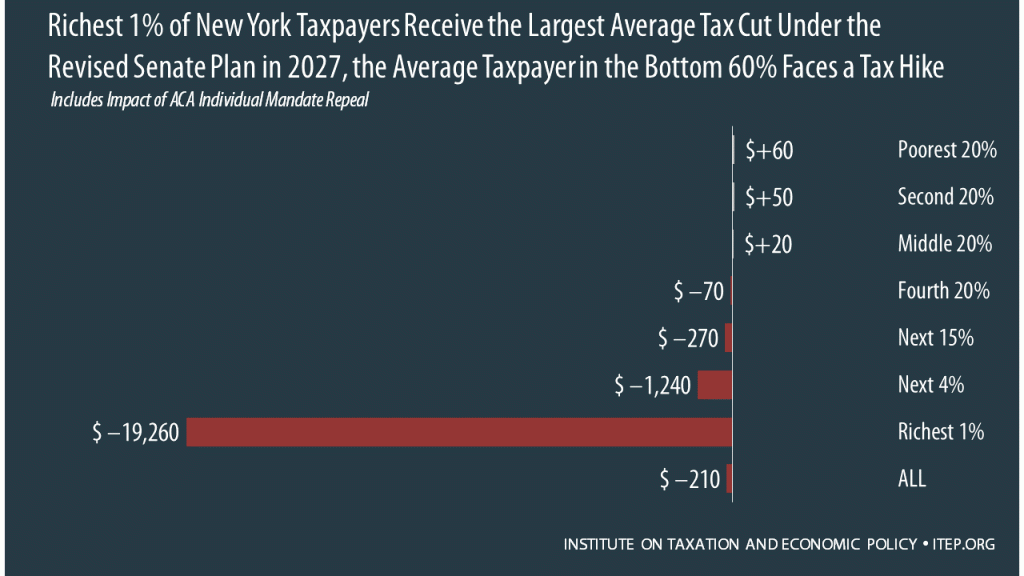
The Senate tax bill released last week would raise taxes on some families while bestowing immense benefits on wealthy Americans and foreign investors. In New York, 38 percent of the federal tax cuts would go to the richest 5 percent of residents, and 19 percent of households would face a tax increase, once the bill is fully implemented.
Senate Tax Plan Reserves Greatest Benefit for Richest Americans, Millions Face an Increase
November 13, 2017 • By ITEP Staff
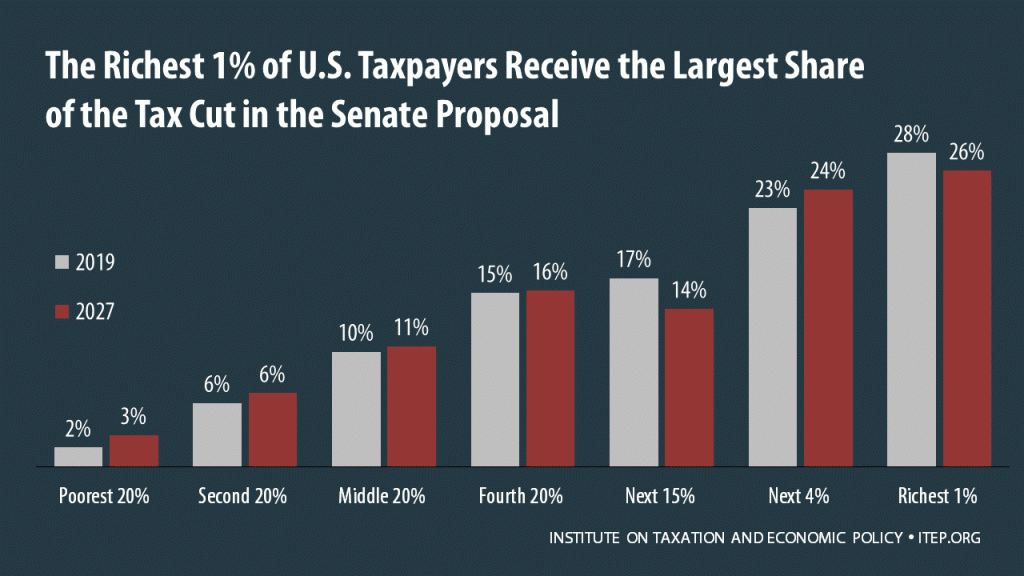
A 50-state analysis of the Senate tax proposal finds that not only would greatest share of benefits go to the richest Americans, but also more than one in 10 taxpayers would face a tax hike, with a large number of those taxpayers residing in states where residents pay higher state and local taxes.
House Tax Bill Would Put Property Tax Deduction Out of Reach for Most Households
November 13, 2017 • By ITEP Staff

The House of Representatives is expected to vote this week on a bill that would reduce federal revenues by roughly $1.5 trillion over the next decade. Despite the bill’s high price tag, many households would pay more in federal tax if the bill is enacted, in large part because it slashes the deduction for state […]
Flawed Data from House Leadership Attempts to Hide Tax Hikes Under Proposal
November 9, 2017 • By Carl Davis
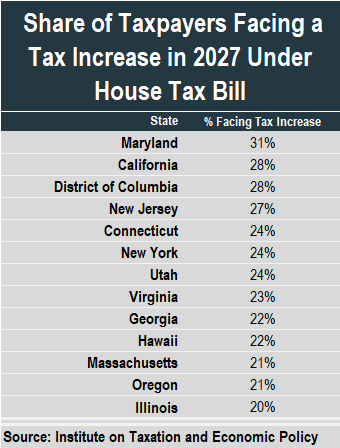
In a story published yesterday evening, Politico reported that House leaders have been “working to create customized data models” to show lawmakers that their constituents will not face a tax increase under the tax bill being debated in the House. On this point, House leaders have taken on an impossible task.
New York Times: Want Kids, a Degree or a Home? The Tax Bill Would Cost You
November 8, 2017
That is why taxes would go up for about 45 percent of middle-class taxpayers by 2026 under the House bill, according to an analysis by The Times. By contrast, the people in the top 1 percent of income will get an average tax cut of $64,720 a year by 2027, according to the Institute on […]
New York Times: Republican Plan Would Raise Taxes on Millions
November 7, 2017
Few independent economists find evidence to support that claim. Analyses published since the plan was introduced last week have consistently found that some middle-class families would see their taxes go up immediately, compared with existing law. One such analysis, from the Institute on Taxation and Economic Policy, found that 8 percent of middle-income earners would […]
New York Times: Republican Tax Rewrite Helps Some Millionaires but Hurts Other
November 7, 2017
The independent Institute on Taxation and Economic Policy said on Monday that the top 1 percent of income earners, those who make just under $500,000 a year or more, would receive nearly half of the bill’s tax benefits a decade from now. That group of taxpayers would consistently see income gains from the bill, and […]
New York Magazine: The Richest One Percent of America Gets Half the Trump Tax Cuts
November 6, 2017
Well, now the House GOP has filled in all the missing details, and the result … would overwhelmingly benefit the rich. An analysis by the Institute on Taxation and Economic Policy, a left-leaning think tank whose calculations are broadly respected, finds that the highest-earning one percent of households would receive nearly half the direct benefit […]
