
Ohio
This week, major tax packages relating to the federal tax-cut bill made news in Georgia, Iowa, and Louisiana, as Minnesota and Oregon lawmakers also continue to work out how their states will be affected. New Mexico's legislative session has finished without significant tax changes, while Idaho and Illinois's sessions are beginning to heat up, and Vermont's school funding system is under the microscope.
What the Tax Cuts and Jobs Act Means for States – A Guide to Impacts and Options
January 26, 2018 • By ITEP Staff
The recently enacted Tax Cuts and Jobs Act (TCJA) has major implications for budgets and taxes in every state, ranging from immediate to long-term, from automatic to optional, from straightforward to indirect, from certain to unknown, and from revenue positive to negative. And every state can expect reduced federal investments in shared public priorities like health care, education, public safety, and basic infrastructure, as well as a reduced federal commitment to reducing economic inequality and slowing the concentration of wealth. This report provides detail that state residents and lawmakers can use to better understand the implications of the TCJA for…
Select state coverage of ITEP’s analyses of Republican tax Plans
January 1, 2018
Burlington County Times: Will Phil Murphy raise NJ’s taxes (and 4 other political questions for .. Kaplan Herald: This chart exhibits how the GOP tax plan will hit your pockets Wiscnews: Tax cuts increase inequity Patch.com: MacArthur Touts Tax Reform; Will It Help NJ As Much As He Says? NJ.com: Long lines spring up as […]
Policy Matters Ohio: Crackdown on Dreamers could cost Ohio millions
December 21, 2017
If DACA recipients stay in Ohio after losing work authorization they could earn lower wages and become less likely to file income tax returns. Without the Dream Act, Ohio can expect to lose at least $5 million in tax revenue, according to the Institute on Taxation and Economic Policy (ITEP). Read more here
How the Final GOP-Trump Tax Bill Would Affect Ohio Residents’ Federal Taxes
December 16, 2017 • By ITEP Staff
The final tax bill that Republicans in Congress are poised to approve would provide most of its benefits to high-income households and foreign investors while raising taxes on many low- and middle-income Americans. The bill would go into effect in 2018 but the provisions directly affecting families and individuals would all expire after 2025, with […]
The Final Trump-GOP Tax Plan: National and 50-State Estimates for 2019 & 2027
December 16, 2017 • By ITEP Staff
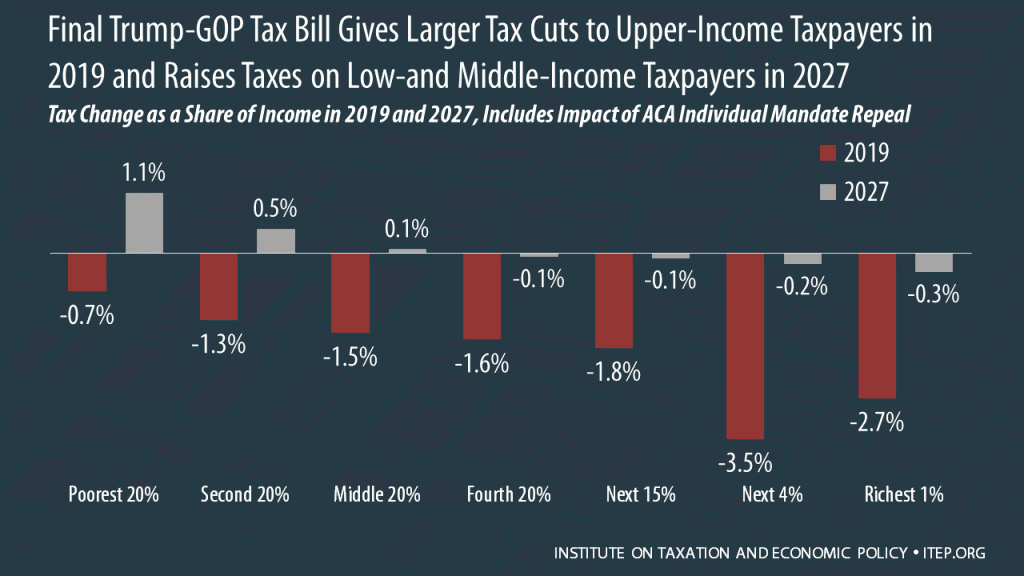
The final Trump-GOP tax law provides most of its benefits to high-income households and foreign investors while raising taxes on many low- and middle-income Americans. The bill goes into effect in 2018 but the provisions directly affecting families and individuals all expire after 2025, with the exception of one provision that would raise their taxes. To get an idea of how the bill will affect Americans at different income levels in different years, this analysis focuses on the bill’s impacts in 2019 and 2027.
How the House and Senate Tax Bills Would Affect Ohio Residents’ Federal Taxes
December 6, 2017 • By ITEP Staff
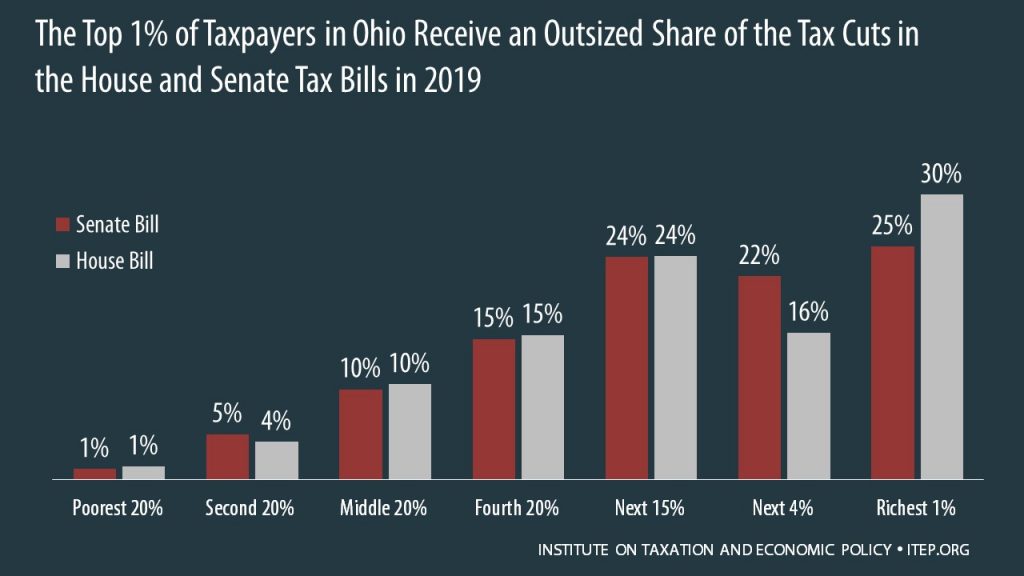
The House passed its “Tax Cuts and Jobs Act” November 16th and the Senate passed its version December 2nd. Both bills would raise taxes on many low- and middle-income families in every state and provide the wealthiest Americans and foreign investors substantial tax cuts, while adding more than $1.4 trillion to the deficit over ten years. The graph below shows that both bills are skewed to the richest 1 percent of Ohio residents.
National and 50-State Impacts of House and Senate Tax Bills in 2019 and 2027
December 6, 2017 • By ITEP Staff
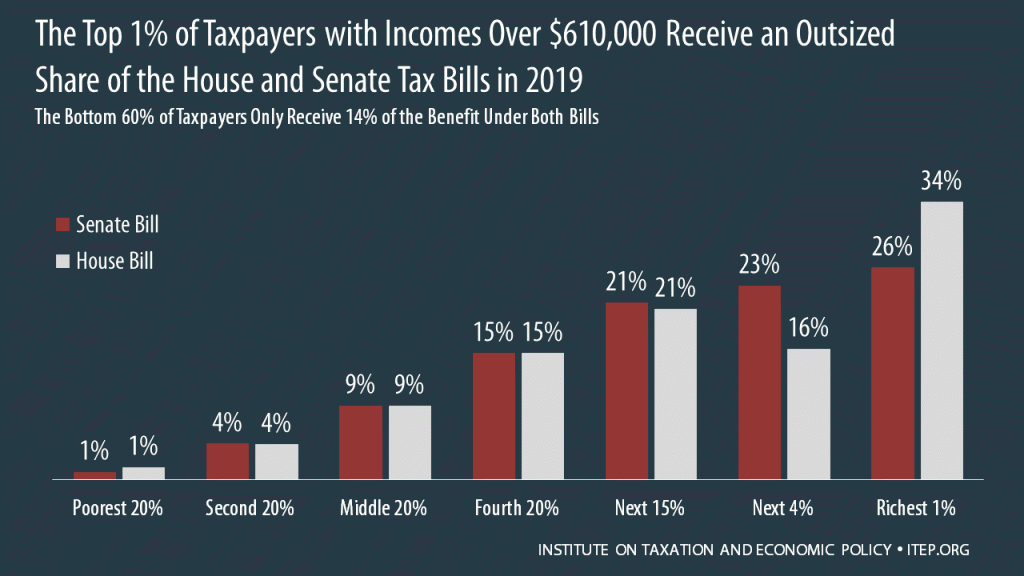
The House passed its “Tax Cuts and Jobs Act” November 16th and the Senate passed its version December 2nd. Both bills would raise taxes on many low- and middle-income families in every state and provide the wealthiest Americans and foreign investors substantial tax cuts, while adding more than $1.4 trillion to the deficit over ten years. National and 50-State data available to download.
Revised Senate Plan Would Raise Taxes on at Least 29% of Americans and Cause 19 States to Pay More Overall
November 18, 2017 • By ITEP Staff
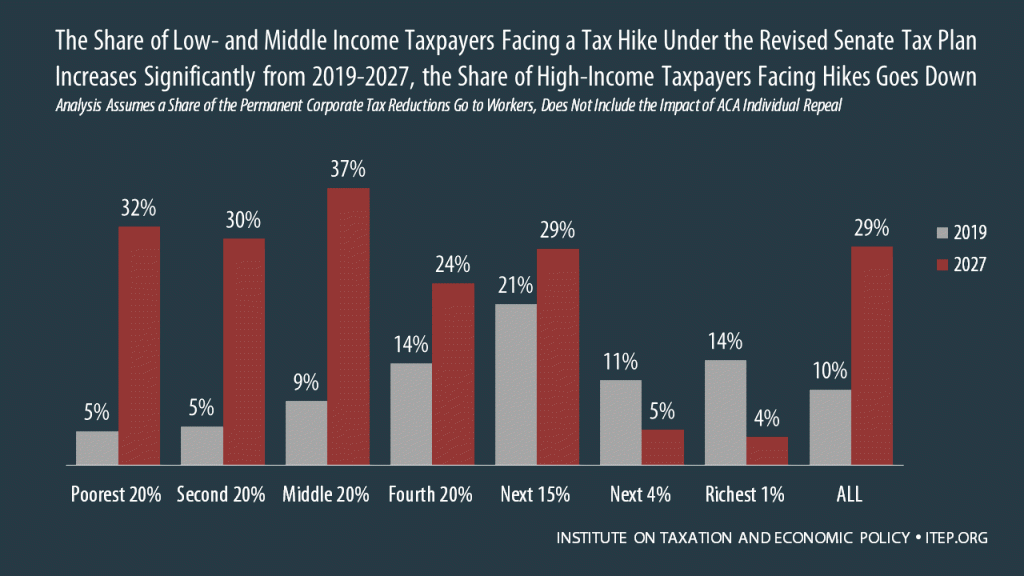
The tax bill reported out of the Senate Finance Committee on Nov. 16 would raise taxes on at least 29 percent of Americans and cause the populations of 19 states to pay more in federal taxes in 2027 than they do today.
How the Revised Senate Tax Bill Would Affect Ohio Residents’ Federal Taxes
November 14, 2017 • By ITEP Staff
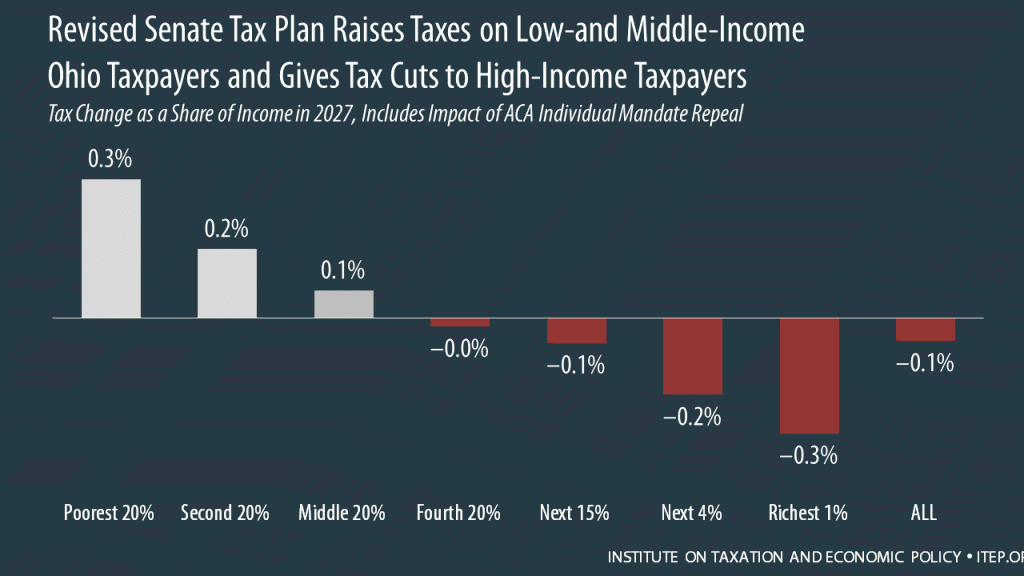
The Senate tax bill released last week would raise taxes on some families while bestowing immense benefits on wealthy Americans and foreign investors. In Ohio, 45 percent of the federal tax cuts would go to the richest 5 percent of residents, and 11 percent of households would face a tax increase, once the bill is fully implemented.
Analysis of the House Tax Cuts and Jobs Act
November 6, 2017 • By Matthew Gardner, Meg Wiehe, Steve Wamhoff
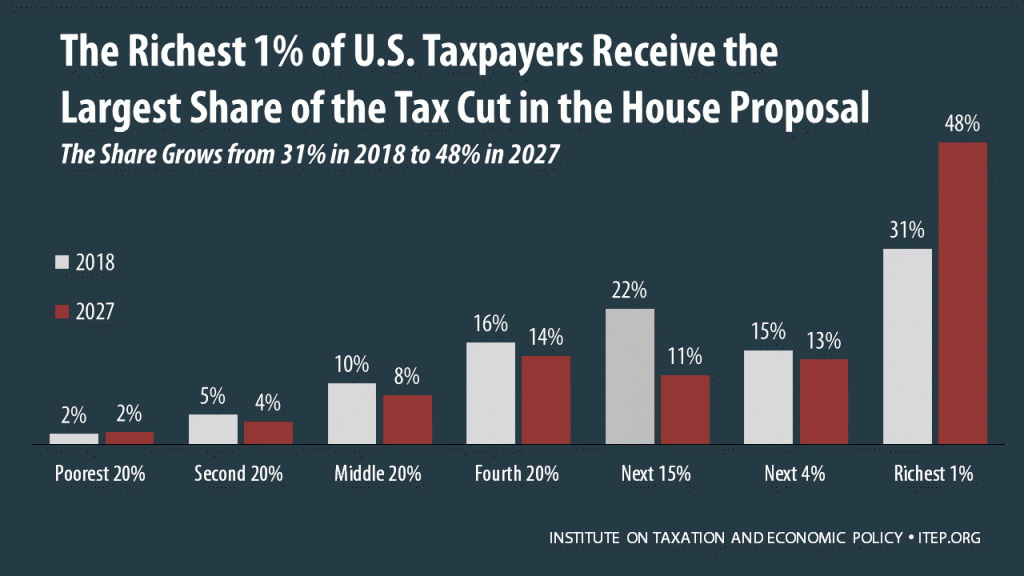
The Tax Cuts and Jobs Act, which was introduced on Nov. 2 in the House of Representatives, would raise taxes on some Americans and cut taxes on others while also providing significant savings to foreign investors.
How the House Tax Proposal Would Affect Ohio Residents’ Federal Taxes
November 6, 2017 • By ITEP Staff
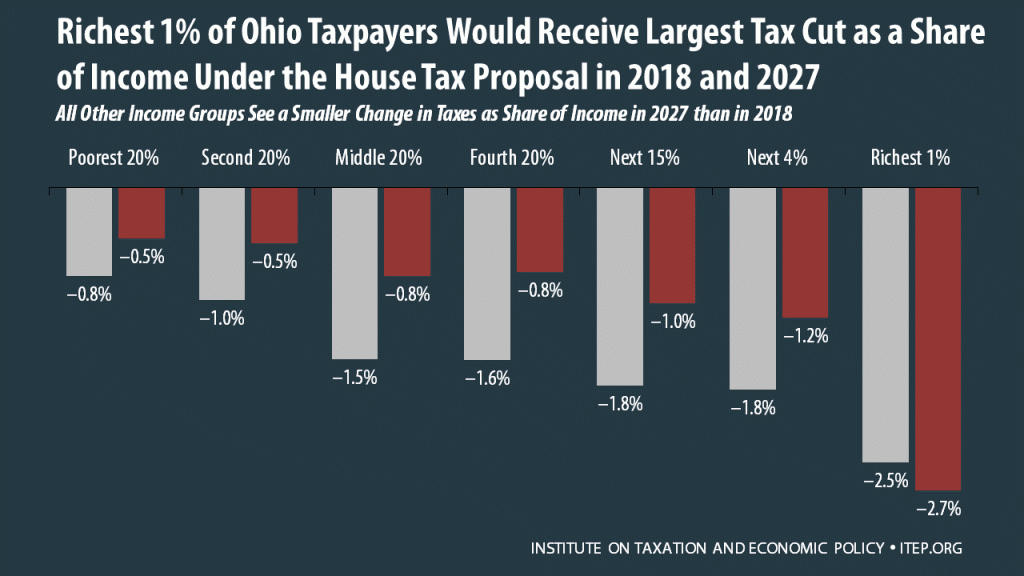
The Tax Cuts and Jobs Act, which was introduced on November 2 in the House of Representatives, includes some provisions that raise taxes and some that cut taxes, so the net effect for any particular family’s federal tax bill depends on their situation. Some of the provisions that benefit the middle class — like lower tax rates, an increased standard deduction, and a $300 tax credit for each adult in a household — are designed to expire or become less generous over time. Some of the provisions that benefit the wealthy, such as the reduction and eventual repeal of the estate…
CNN: How Trump’s Policies Could Hurt the Rust Belt
October 25, 2017
Rust Belt states Ohio, Michigan and Indiana are not home to large populations of $1 million household income earners. Rather, they’re in the middle or bottom of the pack, according a summary from the Institute on Taxation and Economic Policy. States with a higher percentage of millionaire earners voted for Hillary Clinton in the 2016 […]
The Jig Is Up: Republican Budget Resolution Finally Admits That Deficit Will Soar Under GOP Tax Plan
October 20, 2017 • By Alan Essig
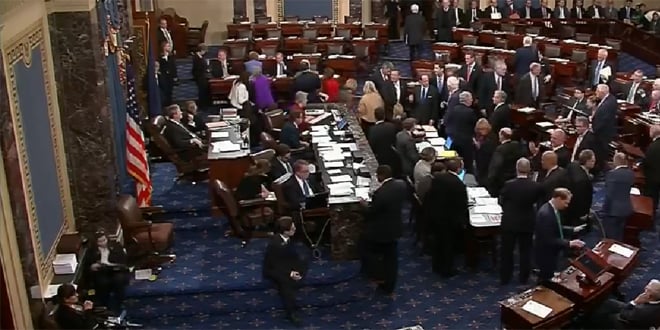
For some lawmakers, annual deficits matter a lot—unless the nation is paying for tax cuts for the wealthy via deficit spending. Last night, Republican lawmakers demonstrated that previous grandstanding about the nation’s debt is much ado about nothing. The Senate approved a budget resolution on a party-line vote that would 1. fast-track legislation adding $1.5 trillion to the deficit over 10 years by cutting taxes, and 2. make it easy to enact this measure without a single Democratic vote.
Benefits of GOP-Trump Framework Tilted Toward the Richest Taxpayers in Each State
October 4, 2017 • By Steve Wamhoff
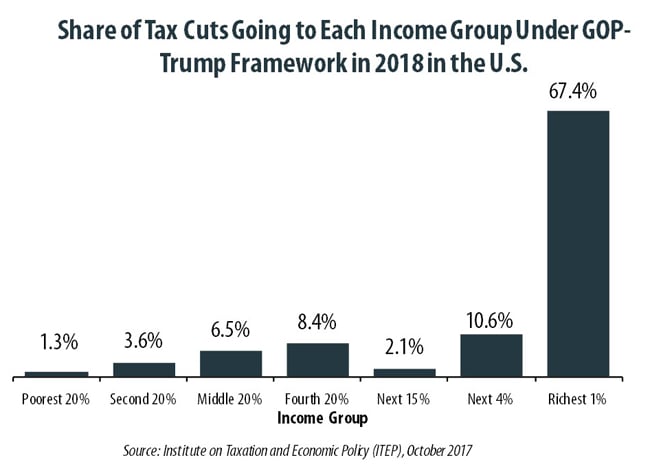
The “tax reform framework” released by the Trump administration and Congressional Republican leaders on September 27 would affect states differently, but every state would see its richest residents grow richer if it is enacted. In all but a handful of states, at least half of the tax cuts would flow to the richest one percent of residents if the framework took effect.
GOP-Trump Tax Framework Would Provide Richest One Percent in Ohio with 57.5 Percent of the State’s Tax Cuts
October 4, 2017 • By ITEP Staff
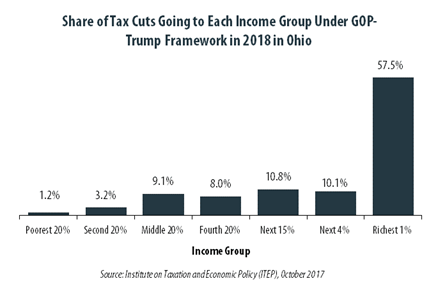
The “tax reform framework” released by the Trump administration and congressional Republican leaders on September 27 would not benefit everyone in Ohio equally. The richest one percent of Ohio residents would receive 57.5 percent of the tax cuts within the state under the framework in 2018. These households are projected to have an income of at least $483,100 next year. The framework would provide them an average tax cut of $56,280 in 2018, which would increase their income by an average of 3.7 percent.

Astonishingly, tax policies in virtually every state make it harder for those living in poverty to make ends meet. When all the taxes imposed by state and local governments are taken into account, every state imposes higher effective tax rates on poor families than on the richest taxpayers.
Census Data Shows Importance of Refundable Tax Credits in Reducing Poverty, But Lawmakers Move to Restrict Them
September 12, 2017 • By Steve Wamhoff

The annual poverty data released by the Census Bureau today continues to show that federal refundable tax credits are the second most important anti-poverty program after Social Security. But this could change if the House Republicans have their way. The budget resolution approved by Republicans on the House Budget Committee in July would place new […]
Rewarding Work Through State Earned Income Tax Credits in 2017
September 11, 2017 • By ITEP Staff
The Earned Income Tax Credit (EITC) is a policy designed to bolster the earnings of low-wage workers and offset some of the taxes they pay, providing the opportunity for struggling families to step up and out of poverty toward meaningful economic security. The federal EITC has kept millions of Americans out of poverty since its enactment in the mid-1970s. Over the past several decades, the effectiveness of the EITC has been magnified as many states have enacted and later expanded their own credits.
Turning Loopholes into Black Holes: Trump’s Territorial Tax Proposal Would Increase Corporate Tax Avoidance
September 6, 2017 • By Matthew Gardner, Steve Wamhoff
The problem of offshore tax avoidance by American corporations could grow much worse under President Donald Trump’s proposal to adopt a “territorial” tax system, which would exempt the offshore profits of American corporations from U.S. taxes. This change would increase the already substantial benefits American corporations obtain when they use accounting gimmicks to make their profits appear to be earned in a foreign country that has no corporate income tax or has one that is extremely low or easy to avoid.
Nearly Half of Trump’s Proposed Tax Cuts Go to People Making More than $1 Million Annually
August 17, 2017 • By ITEP Staff
A tiny fraction of the U.S. population (one-half of one percent) earns more than $1 million annually. But in 2018 this elite group would receive 48.8 percent of the tax cuts proposed by the Trump administration. A much larger group, 44.6 percent of Americans, earn less than $45,000, but would receive just 4.4 percent of the tax cuts.
In Ohio 39.1 Percent of Trump’s Proposed Tax Cuts Go to People Making More than $1 Million
August 17, 2017 • By ITEP Staff
A tiny fraction of the Ohio population (0.5 percent) earns more than $1 million annually. But this elite group would receive 39.1 percent of the tax cuts that go to Ohio residents under the tax proposals from the Trump administration. A much larger group, 47.6 percent of the state, earns less than $45,000, but would receive just 6.3 percent of the tax cuts.
State Rundown 7/27: State Legislative Debates Winding Down but Tax Talk Continues
July 27, 2017 • By ITEP Staff
While only a few states still remain mired in overtime budget debates, there is plenty of budget and tax news from around the country this week. Efforts are underway to repeal gas tax increases in California and challenge a local income tax in Seattle, Washington. And New Jersey legislators' law to modernize its tax code to tax Airbnb rentals has been vetoed for now.
Reviving U.S. Manufacturing, One Cheesecake Factory at a Time
July 27, 2017 • By Matthew Gardner

In the latest example of how the tax code has been abused and distorted, the Cheesecake Factory is claiming the manufacturing tax deduction, apparently for manufacturing cheesecakes, burgers, and other treats.
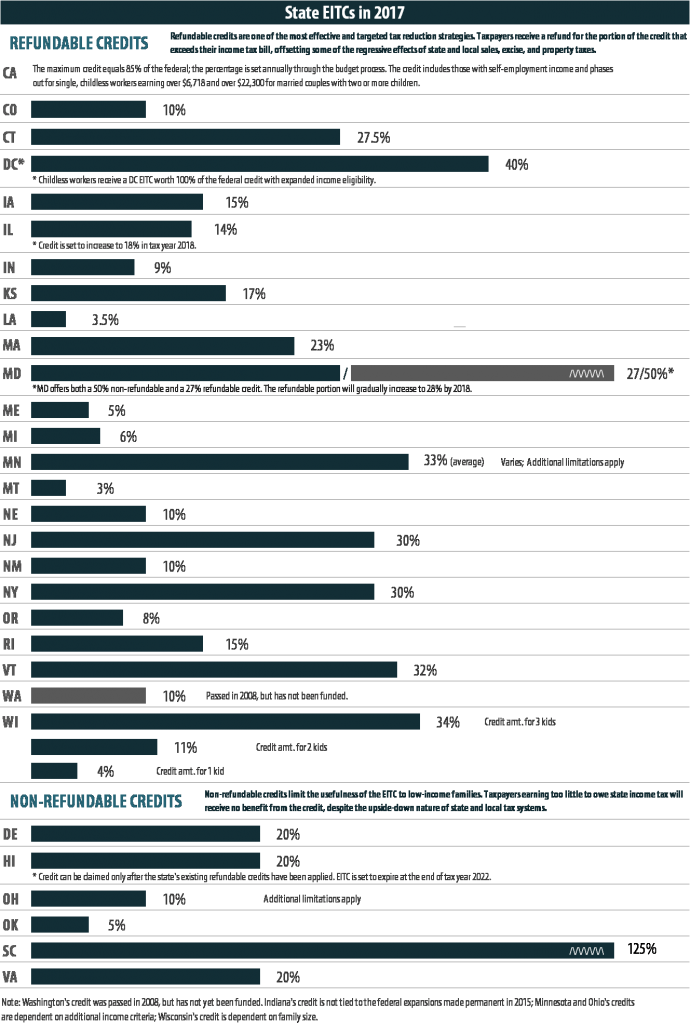
The Earned Income Tax Credit (EITC) is a policy designed to bolster the earnings of low-wage workers and offset some of the taxes they pay, providing the opportunity for struggling families to step up and out of poverty toward meaningful economic security. The federal EITC has kept millions of Americans out of poverty since its enactment in the mid-1970s. Over the past several decades, the effectiveness of the EITC has been magnified as many states have enacted and later expanded their own credits.
