
District of Columbia
Testimony of Neva Butkus Before the Indiana State and Local Tax Review Task Force
October 20, 2023
Today ITEP State Policy Analyst Neva Butkus presented to the Indiana State and Local Tax Review Task Force. For a related blog from Neva, click here. For her slide deck, click here. Good morning members of the State and Local Tax Review Task Force, Thank you for providing me the opportunity to share ITEP’s findings […]
State Tax Credits Have Transformative Power to Improve Economic Security
September 12, 2023 • By Aidan Davis

The latest analysis from the U.S. Census Bureau provides an important reminder of the compelling link between public investments and families’ economic well-being. Policy decisions can drastically reduce poverty and improve family economic stability for low- and middle-income families alike, as today’s data release shows.
Boosting Incomes, Improving Equity: State Earned Income Tax Credits in 2023
September 12, 2023 • By Aidan Davis, Neva Butkus

Nearly two-thirds of states (31 plus the District of Columbia and Puerto Rico) have an Earned Income Tax Credit, an effective tool that boosts low-paid workers’ incomes and helps lower-income families achieve greater economic security. This year, 12 states expanded and improved EITCs.
Sales Tax Holidays: An Ineffective Alternative to Real Sales Tax Reform
August 2, 2023 • By Marco Guzman

Nineteen states have sales tax holidays on the books in 2023, and these suspensions will cost nearly $1.6 billion in lost revenue this year. Sales tax holidays are poorly targeted and too temporary to meaningfully change the regressive nature of a state’s tax system. Overall, the benefits of sales tax holidays are minimal while their downsides are significant.
State Action on Child Tax Credits and Earned Income Tax Credits in 2023
June 28, 2023 • By ITEP Staff
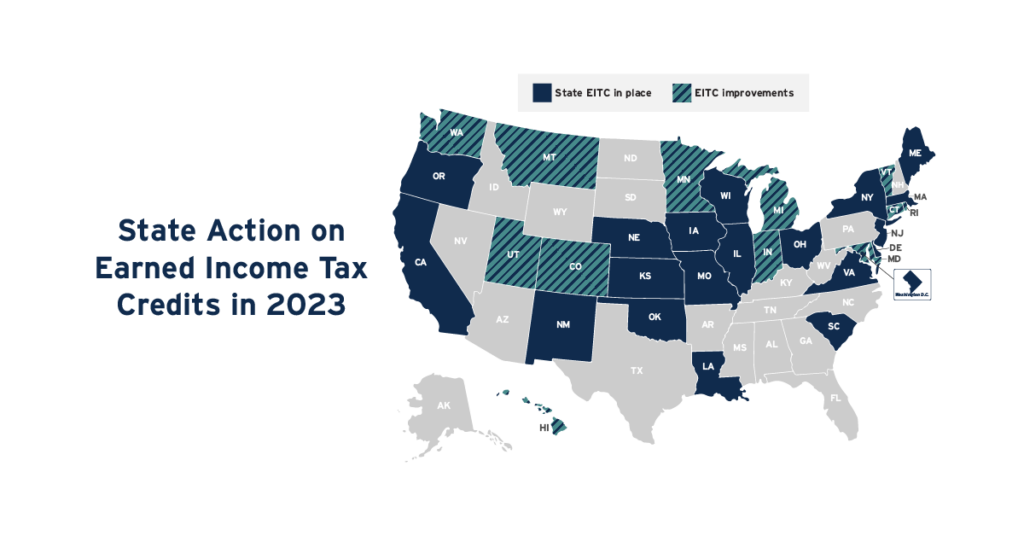
In 2023 so far, 17 states have either adopted or expanded a Child Tax Credit or Earned Income Tax Credit. Both these policies can help bolster the economic security of low- and middle-income families and position the next generation for success.
Circuit Breakers and Other Income-Based Property Tax Programs in 2023
May 19, 2023 • By ITEP Staff
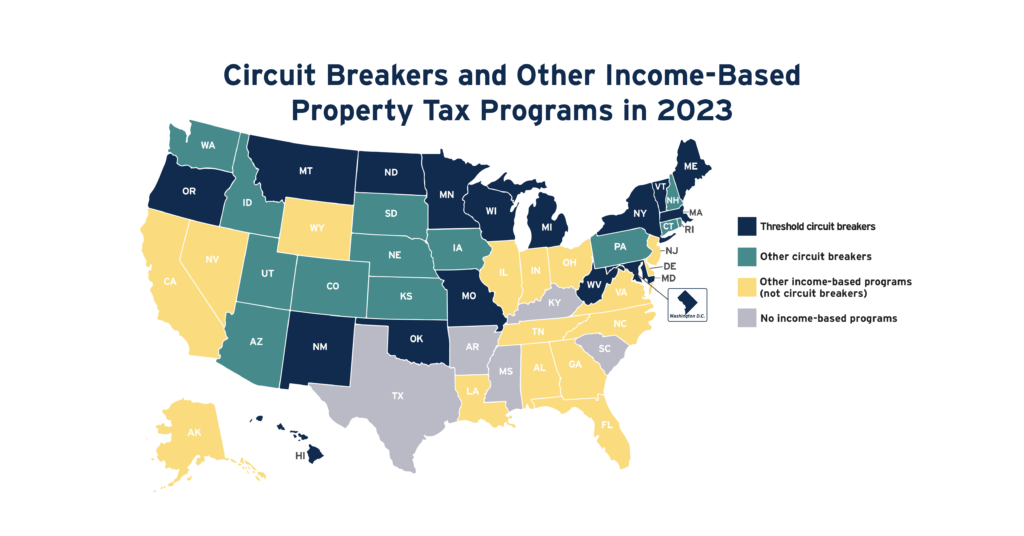
No tax cut offers a more targeted solution to property tax affordability problems than circuit breaker credits. This is because circuit breakers are the only tools for reducing property taxes that measure the affordability of property taxes relative to families’ ability to pay. Circuit breakers protect families from property tax “overload” much like how traditional […]
States Looking to Make Property Taxes Affordable Should Turn to ‘Circuit Breakers’
May 11, 2023 • By ITEP Staff
Many state legislatures this year have been considering property tax cuts – but too many are ignoring the solution that speaks more directly to questions of property tax affordability than any other policy option: the “circuit breaker."
States are Talking About the Wrong Kind of Property Tax Cuts
May 11, 2023 • By Brakeyshia Samms, Carl Davis

Concerns over property tax affordability have been at the forefront this year as housing prices have climbed and property tax bills have often increased along with them. As lawmakers mull a range of property tax cuts, circuit breakers are the best possible approach—and these policies are receiving far too little attention in the states.
Preventing an Overload: How Property Tax Circuit Breakers Promote Housing Affordability
May 11, 2023 • By Brakeyshia Samms, Carl Davis

Circuit breaker credits are the most effective tool available to promote property tax affordability. These policies prevent a property tax “overload” by crediting back property taxes that go beyond a certain share of income. Circuit breakers intervene to ensure that property taxes do not swallow up an unreasonable portion of qualifying households’ budgets.
Extending Temporary Provisions of the 2017 Trump Tax Law: National and State-by-State Estimates
May 4, 2023 • By Joe Hughes, Matthew Gardner, Steve Wamhoff
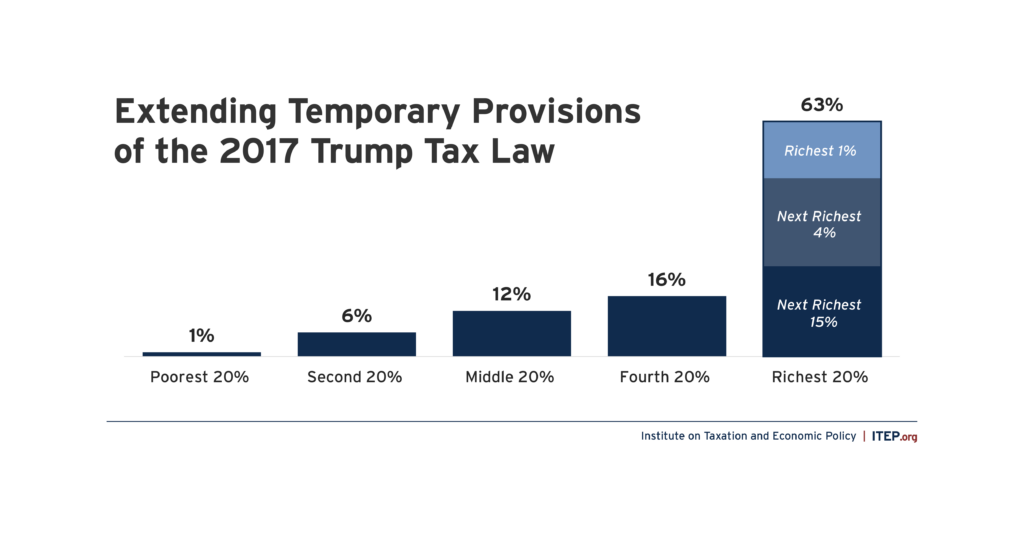
The push by Congressional Republicans to make the provisions of the 2017 Tax Cuts and Jobs Act permanent would cost nearly $300 billion in the first year and deliver the bulk of the tax benefits to the wealthiest Americans.
Testimony of ITEP’s Amy Hanauer Before the D.C. Tax Revision Commission
May 3, 2023
The written testimony of ITEP Executive Director Amy Hanauer is below the embedded video of the hearing. Dear D.C. Tax Revision Commission, Thank you for inviting me to testify last week on the research of my colleagues at the Institute on Taxation and Economic Policy. We’re grateful to have our perspective included and as a […]
Testimony of ITEP’s Marco Guzman Before the Nevada Assembly Committee on Revenue
April 10, 2023
For a video of Marco’s testimony, click here. Thank you, Assemblywoman Anderson, and thank you chairman and members of the Assembly for the opportunity to speak on the topic of Nevada’s state tax system. My name is Marco Guzman, and I am a Senior State Policy Analyst with the Institute on Taxation and Economic Policy […]
This week, several big tax proposals took strides on the march toward becoming law...
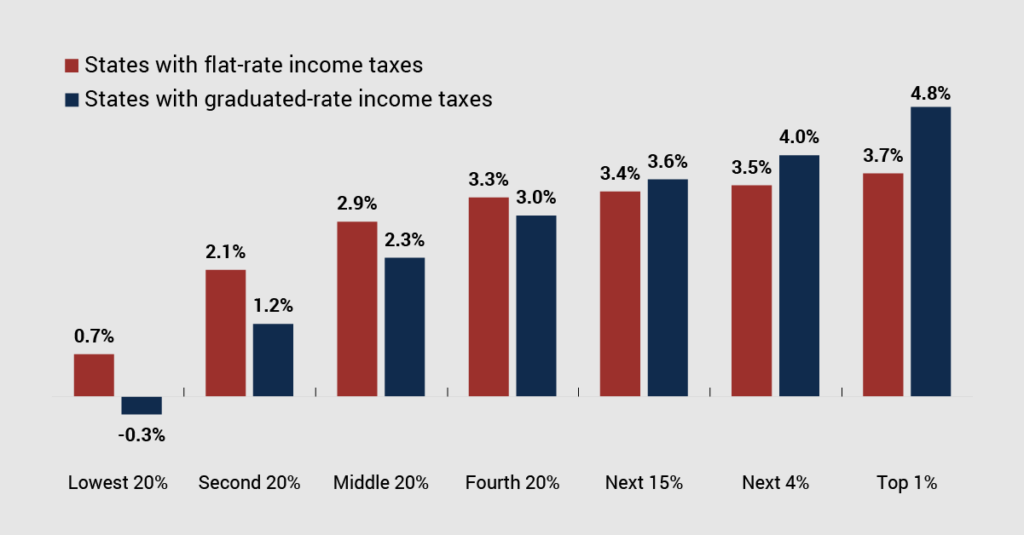
Two-thirds of states with broad-based personal income tax structures have a graduated rate, while one-third have flat taxes.
Momentum Behind State Tax Credits for Workers and Families Continues in 2023
January 18, 2023 • By Miles Trinidad

Refundable tax credits are an important tool for improving family economic security and advancing racial equity, and there is incredible momentum heading into 2023 to boost two key state credits: the Child Tax Credit and the Earned Income Tax Credit.
Flat taxes have some surface appeal but come with significant disadvantages. Critically, a flat tax guarantees that wealthy families’ total state and local tax bill will be a lower share of their income than that paid by families of more modest means.
State Child Tax Credits and Child Poverty: A 50-State Analysis
November 16, 2022 • By Aidan Davis

Regardless of future Child Tax Credit developments at the federal level, state policies can supplement the federal credit to deliver additional benefits to children and families. State credits can be specifically tailored to meet the needs of local populations while also producing long-term benefits for society as a whole
Report: Ten States Hold 71 Percent of America’s Extreme Wealth
October 13, 2022 • By ITEP Staff
Tackling wealth inequality through the tax code can boost economic opportunity Washington, DC: Wealth inequality is rampant in every state and particularly concentrated in a handful of states, according to a first-of-its-kind analysis released today by the Institute on Taxation and Economic Policy (ITEP). This extreme wealth hinders economic opportunities for all but the […]
More than one in four dollars of wealth in the U.S. is held by a tiny fraction of households with net worth over $30 million. Nationally, we estimate that wealth over $30 million per household will reach $26 trillion in 2022 with roughly one-fifth of that amount ($4.5 trillion) held by billionaires.
ITEP Policy Briefs: More and More States Are Helping Low-Income Families with New and Expanded Tax Credits
September 15, 2022 • By ITEP Staff
13 states plus D.C. created or expanded state CTCs or EITCs this year, helping create more equitable state tax systems WASHINGTON, D.C.: In 2022’s state legislative sessions, lawmakers across the country advanced tax policies that will bolster the economic security of millions of low- and moderate-income working families through new and enhanced Child Tax Credits […]
Boosting Incomes and Improving Tax Equity with State Earned Income Tax Credits in 2022
September 15, 2022 • By Aidan Davis
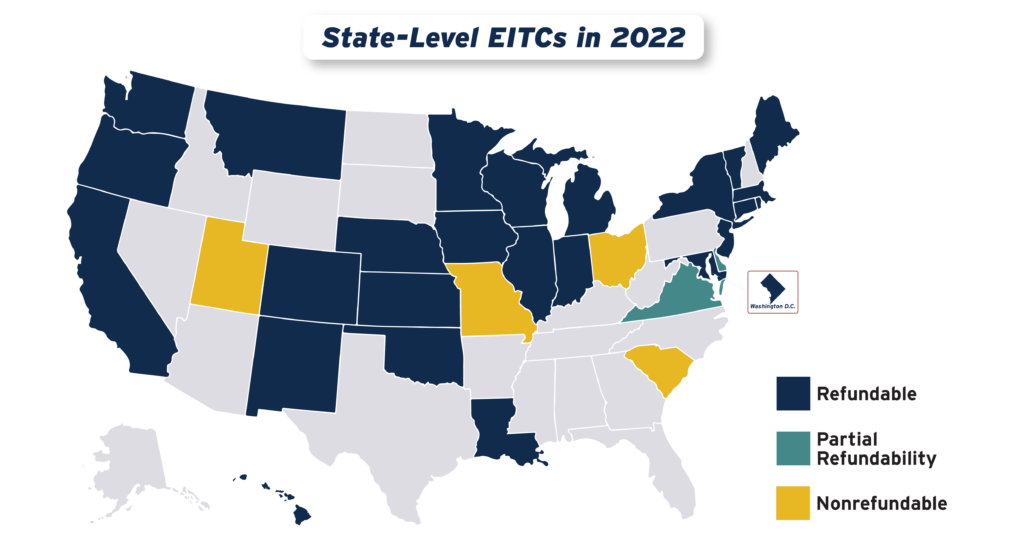
States continued their recent trend of advancing EITCs in 2022, with nine states plus the District of Columbia either creating or improving their credits. Utah enacted a 15 percent nonrefundable EITC, while the District of Columbia, Hawaii, Illinois, Maine, Vermont and Virginia expanded existing credits. Meanwhile, Connecticut, New York and Oregon provided one-time boosts to their EITC-eligible populations.
Census Data Shows Need to Make 2021 Child Tax Credit Expansion Permanent
September 14, 2022 • By Joe Hughes
The Child Tax Credit expansion led to a 46 percent decline in childhood poverty. That it could be accomplished during the largest economic disruption in most of our lifetimes underscores a basic fact: thoughtful, decisive government action to combat poverty works.
National and State-by-State Estimates of Two Approaches to Expanding the Child Tax Credit
September 7, 2022 • By Emma Sifre, Joe Hughes, Steve Wamhoff

The Romney Child Tax Credit plan would leave a quarter of children worse off compared to current law and help half as many low-income children as the 2021 expansion of the credit.
Sales Tax Holidays: An Ineffective Alternative to Real Sales Tax Reform
July 20, 2022 • By Marco Guzman
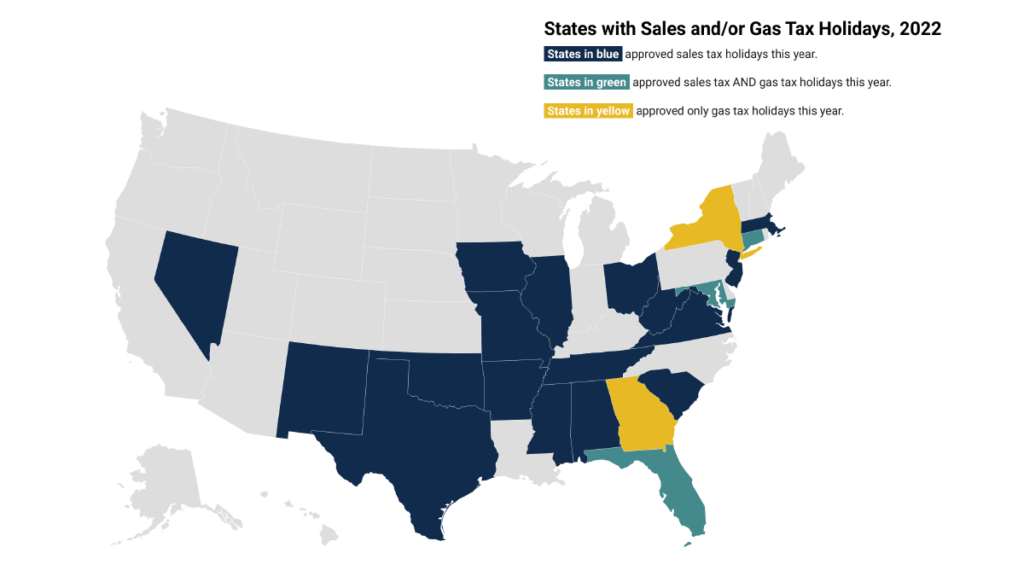
Lawmakers in many states have enacted “sales tax holidays” (20 states will hold them in 2022) to temporarily suspend the tax on purchases of clothing, school supplies, and other items. These holidays may seem to lessen the regressive impacts of the sales tax, but their benefits are minimal while their downsides are significant—particularly as lawmakers have sought to apply the concept as a substitute for more meaningful, permanent reform or arbitrarily reward people with specific hobbies or in certain professions. This policy brief looks at sales tax holidays as a tax reduction device.
State Policy Associate or Policy Analyst (Research Team)
June 23, 2022 • By ITEP Staff
Read as PDF The Institute on Taxation and Economic Policy (ITEP) is a non-profit research organization that analyzes tax laws and tax proposals at the federal, state and local levels. ITEP’s work demonstrates the need to raise more revenue from corporations and the wealthy. Our small, influential staff works with policymakers and front-line partners to research, support, and develop tax policies that address […]

Institute on Taxation
and Economic Policy
ITEP is a non-profit, non-partisan tax policy organization. We conduct rigorous analyses of tax and economic proposals and provide data-driven recommendations to shape equitable and sustainable tax systems.
Subscribe to ITEP Emails
Tax research and policy news in your inbox.
Promote Fair Tax Policy
Your gift to ITEP promotes tax justice. With your help, we do research that supports taxing millionaires and billionaires, taxing big corporations and raising revenue for the things our people, our communities and our planet need.
Together, we can create a country with more economic justice, more racial justice, more climate justice… and more tax justice.