
New York
This Valentine's week finds California, Georgia, Missouri, New York, Oregon, and other states flirting with the idea of coupling to various components of the federal tax-cut bill. Meanwhile, lawmakers seeking revenue solutions to budget shortfalls in Alaska, Oklahoma, and Wyoming saw their advances spurned, and anti-tax advocates in many states have been getting mixed responses to their tax-cut proposals. And be sure to check out our "what we're reading" section to see how states are getting no love in recent federal budget developments.
State Rundown 2/8: State Responses to Federal Bill Gaining Steam
February 8, 2018 • By ITEP Staff
Several states this week are looking at ways to revamp their tax codes in response to the federal tax cut bill, with Georgia, Idaho, Maryland, Nebraska, and Vermont all actively considering proposals. Meanwhile, Connecticut, Louisiana, and Pennsylvania are working on resolving their budget shortfalls. And transportation funding is getting needed attention in Mississippi, Utah, and Wisconsin.
Dallas Morning News: Look out N.Y., L.A. and Chicago: The New Tax Law Makes Dallas even stronger
February 2, 2018
Most of the individual and family savings from tax reform are going to high earners. In Texas, three-quarters of the upside will be claimed by taxpayers earning over $106,000, according to the Institute on Taxation and Economic Policy, a “nonprofit, nonpartisan” research firm in Washington. To offset those gains — and the hit on the […]
State Rundown 1/31: Low-Income Families’ Taxes Getting Some Much-Needed Attention
January 31, 2018 • By ITEP Staff
This week was promising for advocates of Earned Income Tax Credits (EITCs) and other tax breaks for workers and their families, which are making headway in Alabama, Maine, Massachusetts, Missouri, Utah, and Wisconsin. The week also saw the unveiling of a tax cut plan in Missouri, a budget-balancing tax increase package in Oklahoma, the end of an unproductive film tax credit in West Virginia, and a very busy week for tax policy in Utah.
Moody’s and Conservative Economists Agree: The Trump Corporate Tax Cut Is Not Helping Workers
January 26, 2018 • By Steve Wamhoff

Moody’s does not believe that corporate tax cuts are trickling down to working people as bonuses and pay raises. The real problem with the corporate PR campaign is that even those economists who supported Trump’s corporate tax cut and claimed it would help workers do not believe that it works this way.
What the Tax Cuts and Jobs Act Means for States – A Guide to Impacts and Options
January 26, 2018 • By ITEP Staff
The recently enacted Tax Cuts and Jobs Act (TCJA) has major implications for budgets and taxes in every state, ranging from immediate to long-term, from automatic to optional, from straightforward to indirect, from certain to unknown, and from revenue positive to negative. And every state can expect reduced federal investments in shared public priorities like health care, education, public safety, and basic infrastructure, as well as a reduced federal commitment to reducing economic inequality and slowing the concentration of wealth. This report provides detail that state residents and lawmakers can use to better understand the implications of the TCJA for…
New York Times: Apple, Capitalizing on New Tax Law, Plans to Bring Billions in Cash Back to U.S.
January 18, 2018
By shifting the money under the new terms, Apple has saved $43 billion in taxes, more than any other American company, according to the Institute on Taxation and Economic Policy, a research group in Washington. Other tech giants are set to follow suit in the coming months. Companies like Microsoft, Alphabet and Cisco also shifted […]
Albany Times-Union: States Release Plans to Shift from Income to Payroll Taxes
January 17, 2018
But the concept has sparked questions from both sides of the political spectrum. “You are making the state code increasingly complicated and for what?” said Steve Wamhoff, a senior tax policy fellow at the Institute on Taxation and Economic Policy, a Washington D.C. progressive-leaning group that looks at tax issues such as fairness. Wamhoff notes […]
State Rundown 1/17: Budget Deficits, Online Sales Tax, and More
January 17, 2018 • By ITEP Staff
The big news this week in state tax law is that the U.S. Supreme Court has agreed to take on the issue of online sales, nexus, and sales tax collection. States have increasingly lost out on sales tax revenues as more transactions have shifted online from brick-and-mortar stores and the laws determining who is required to collect and remit sales taxes haven't kept up. This is potentially good news for states—25 of which National Association of State Budget Officers (NASBO) reports started the new year with budgetary deficits. In other news, grappling with the local impact of federal tax reform…
Repealing, or Working Around, the Cap on State and Local Tax Deductions Would Make the Trump-GOP Tax Law Even More Unfair
January 17, 2018 • By Steve Wamhoff

A bipartisan proposal in Congress to eliminate the new $10,000 cap on federal deductions for state and local taxes (SALT) would cost more than $86 billion in 2019 alone and two-thirds of the benefits would go to the richest 1 percent of households. Unfortunately, “work around” proposals in some states to allow their residents to avoid the new federal cap would likely have the same regressive effect on the overall tax code.
New York Times: Walmart’s Bumpy Day: From Wage Increase to Store Closings
January 12, 2018
Matt Gardner, a senior fellow at the Institute on Taxation and Economic Policy, a nonprofit research group, said it was difficult to forecast precisely how much Walmart would save. But based on the company’s average annual United States earnings over the past five years, he said, savings from the cut in the corporate tax rate […]
New York Magazine: California, New Jersey, and New York Designing Workarounds to Blunt GOP Tax Bill Impact
January 12, 2018
In a memo released in 2011, the Internal Revenue Service gave its blessing for taxpayers to claim federal deductions on those gifts. The combination of a 100 percent state-tax credit and a federal deduction actually makes the gifts profitable for some donors, said Carl Davis, research director for the Institute on Taxation and Economic Policy. […]
Time: Walmart Shocked Employees By Closing Dozens of Sam’s Club Stores. Here’s What We Know
January 12, 2018
And how much richer will Walmart be in light of the new tax law the company is crediting as the big reason for raises and bonuses for workers? Matt Gardner, a senior fellow at the Institute on Taxation and Economic Policy, told the New York Times that based on Walmart’s earnings over the past five […]
Using Private Debt Collectors as a Substitute for the IRS Is a Bad Deal
January 11, 2018 • By Matthew Gardner

If President Trump is indeed a deal maker, then he should dismantle Congress’s decision to rely on private debt collectors as a substitute for the Internal Revenue Service. This decision, championed for years by Sens. Charles Grassley, R-Iowa, and Chuck Schumer, D-New York, is a lousy deal for everyone--American taxpayers, the federal government--except private debt collectors.
State Rundown 1/4: Will States Show Resolve in a Challenging Year?
January 4, 2018 • By ITEP Staff
This week marks the beginning of what is bound to be a wild year for state tax and budget debates. Essentially every state is already working to sort through the complicated ramifications of the federal tax cuts passed in December, including Kansas, Michigan, Montana, and New Jersey highlighted below. These and other states will have important decisions to make about how to incorporate, reject, or mitigate various aspects of the new federal law, and will need considerable resolve to improve state tax policy to be more fair and more adequate – even as federal taxes become less so.
Select state coverage of ITEP’s analyses of Republican tax Plans
January 1, 2018
Burlington County Times: Will Phil Murphy raise NJ’s taxes (and 4 other political questions for .. Kaplan Herald: This chart exhibits how the GOP tax plan will hit your pockets Wiscnews: Tax cuts increase inequity Patch.com: MacArthur Touts Tax Reform; Will It Help NJ As Much As He Says? NJ.com: Long lines spring up as […]
Final GOP-Trump Bill Still Forces California and New York to Shoulder a Larger Share of Federal Taxes Under Final GOP-Trump Tax Bill; Texas, Florida, and Other States Will Pay Less
December 17, 2017 • By Meg Wiehe
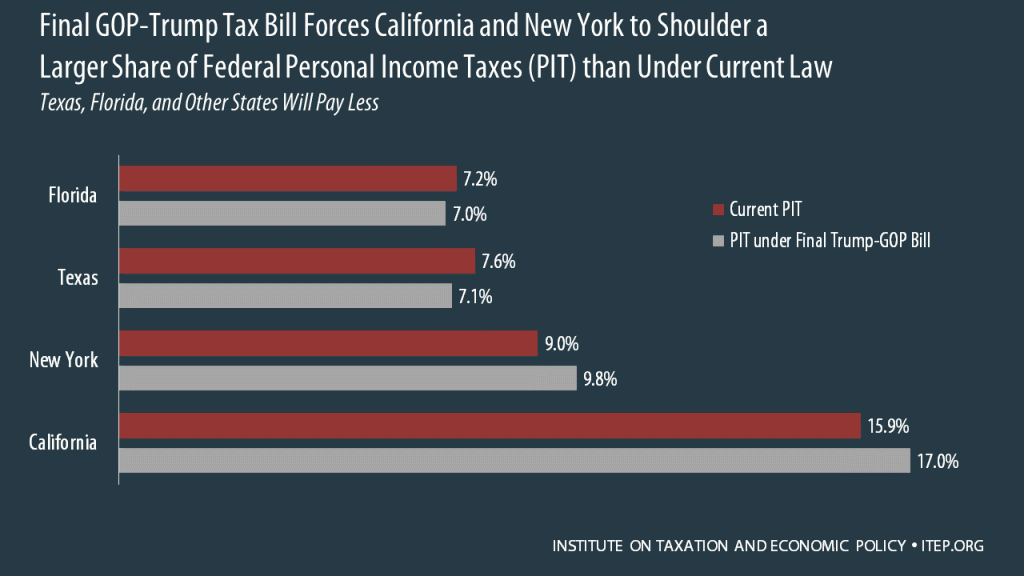
Residents of California and New York pay a large amount of the nation’s federal personal income taxes relative to their share of the population. As illustrated by the table below, the final GOP-Trump tax bill expected to be approved this week would substantially increase the share of total federal personal income taxes (PIT) paid by both states. Connecticut, Maryland, Massachusetts, and New Jersey would also see their share of federal PIT increase.
How the Final GOP-Trump Tax Bill Would Affect New York Residents’ Federal Taxes
December 16, 2017 • By ITEP Staff
The final tax bill that Republicans in Congress are poised to approve would provide most of its benefits to high-income households and foreign investors while raising taxes on many low- and middle-income Americans. The bill would go into effect in 2018 but the provisions directly affecting families and individuals would all expire after 2025, with […]
The Final Trump-GOP Tax Plan: National and 50-State Estimates for 2019 & 2027
December 16, 2017 • By ITEP Staff
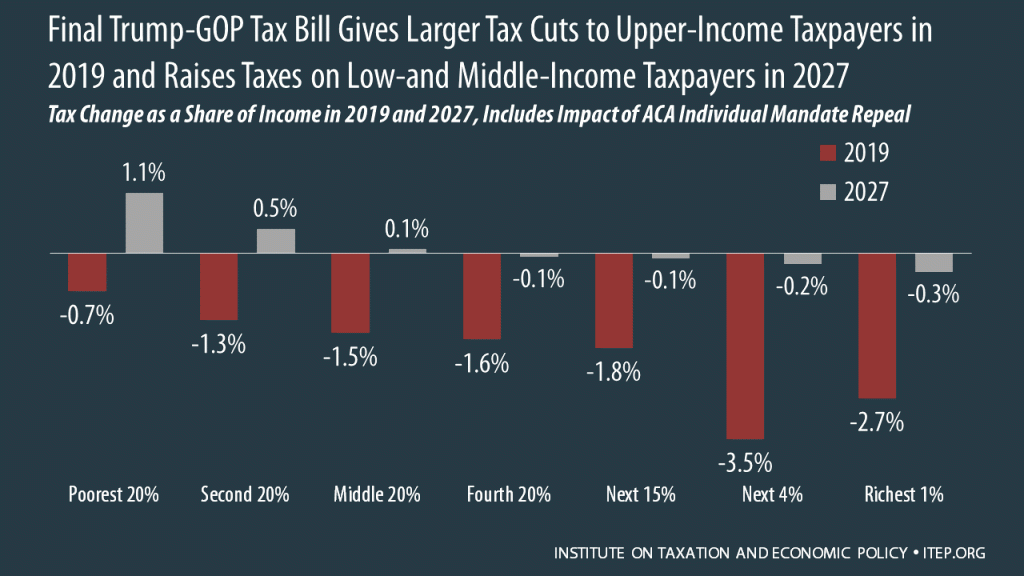
The final Trump-GOP tax law provides most of its benefits to high-income households and foreign investors while raising taxes on many low- and middle-income Americans. The bill goes into effect in 2018 but the provisions directly affecting families and individuals all expire after 2025, with the exception of one provision that would raise their taxes. To get an idea of how the bill will affect Americans at different income levels in different years, this analysis focuses on the bill’s impacts in 2019 and 2027.
Corporations and the Rich Get Everything They Want in Pending Tax Bill, Working People, Not So Much
December 15, 2017 • By Alan Essig
Nearly 30 years ago, Trump was well connected enough that he was able to go to Congress and testify about how tax changes affected his business. Ordinary working people are rarely lucky enough to talk about their personal experiences in front of a congressional committee. So if they want to make their views known about the catastrophe of 2017, it will have to be in election of 2018.
ITEP researchers have produced new reports and analyses that look at various pieces of the tax bill, including: the share of tax cuts that will go to foreign investors; how the plans would affect the number of taxpayers that take the mortgage interest deduction or write off charitable contributions, and remaining problems with the bill in spite of proposed compromises on state and local tax deductions.

As 2017 draws to close, Congress has yet to take legislative action to protect Dreamers. The young undocumented immigrants who were brought to the United States as children, and are largely working or in school, were protected by President Obama’s 2012 executive action, Deferred Action for Childhood Arrivals (DACA). But in September, President Trump announced that he would end DACA in March 2018. Instead of honoring the work authorizations and protection from deportation that currently shields more than 685,000 young people, President Trump punted their lives and livelihood to a woefully divided Congress which is expected to take up legislation…
“Compromises” Under Discussion for the State and Local Tax Deduction Do Not Fix Flawed Tax Bills
December 10, 2017 • By Meg Wiehe, Steve Wamhoff
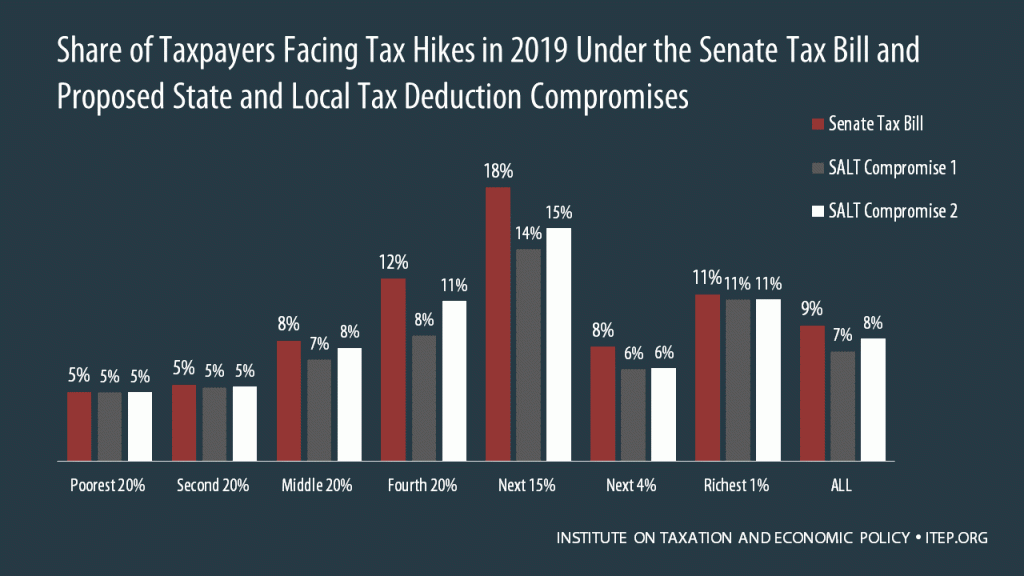
Republicans in Congress are reported to be considering two versions of a change they claim would “improve” the current bills by making them more generous to residents of higher-taxed states. As illustrated by these estimates, the reality is that these proposals would make little difference on those states and taxpayers hit hardest.
Even with Potential SALT Compromises, Senate Bill Forces California and New York to Shoulder a Larger Share of Federal Taxes While Texas, Florida, and Other States Will Pay Less
December 10, 2017 • By Meg Wiehe, Steve Wamhoff
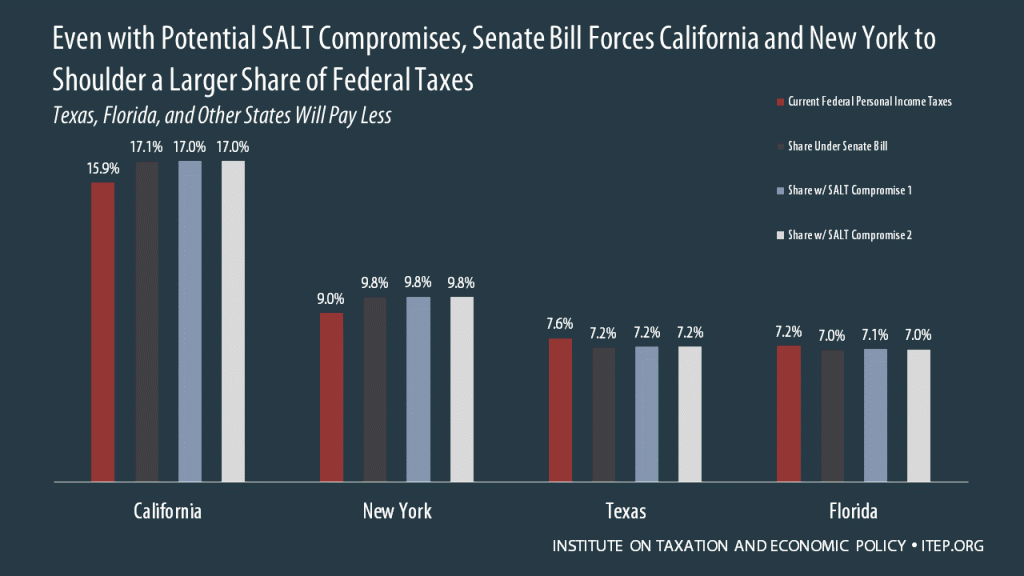
The Senate tax bill, with or without either of the compromises that could be added to it, would shift personal income taxes away from Florida and Texas to states like California and New York, which are already paying a high share relative to their populations.
New Republic: Tax Reform to Own the Libs
December 8, 2017
According to analysis from the Institute on Taxation and Economic Policy, New York, New Jersey, Maryland, and California would pay $17 billion more in taxes by 2027, while Texas and Florida, two large states that Trump won, would pay $31 billion less. “You can definitely see the ideological tilt here,” Carl Davis, the institute’s research […]

Institute on Taxation
and Economic Policy
ITEP is a non-profit, non-partisan tax policy organization. We conduct rigorous analyses of tax and economic proposals and provide data-driven recommendations to shape equitable and sustainable tax systems.
Subscribe to ITEP Emails
Tax research and policy news in your inbox.
Promote Fair Tax Policy
Your gift to ITEP promotes tax justice. With your help, we do research that supports taxing millionaires and billionaires, taxing big corporations and raising revenue for the things our people, our communities and our planet need.
Together, we can create a country with more economic justice, more racial justice, more climate justice… and more tax justice.