
ITEP's Research Priorities
Newark Star-Ledger: Will This Tax Plan Boost Booker’s Campaign?
May 31, 2019
In New Jersey, almost three-quarters of the benefits, 74 percent, would flow to the poorest 40 percent of taxpayers, according to the Institute on Taxation and Economic Policy, a progressive research group. Under the the Trump tax law, 72 percent of the benefits went to the richest 20 percent in the state and capped the […]
Yahoo! Finance: Corporations Paid $91 Billion Less in Taxes in 2018 under Trump’s Tax Law
May 31, 2019
“There are a lot of breaks and loopholes that allow a company not to pay,” said Steve Wamhoff, director of federal tax policy at the Institute on Taxation and Economic Policy (ITEP). “People, when they think of tax reform, think the government is going to fix the tax code and get rid of breaks and […]
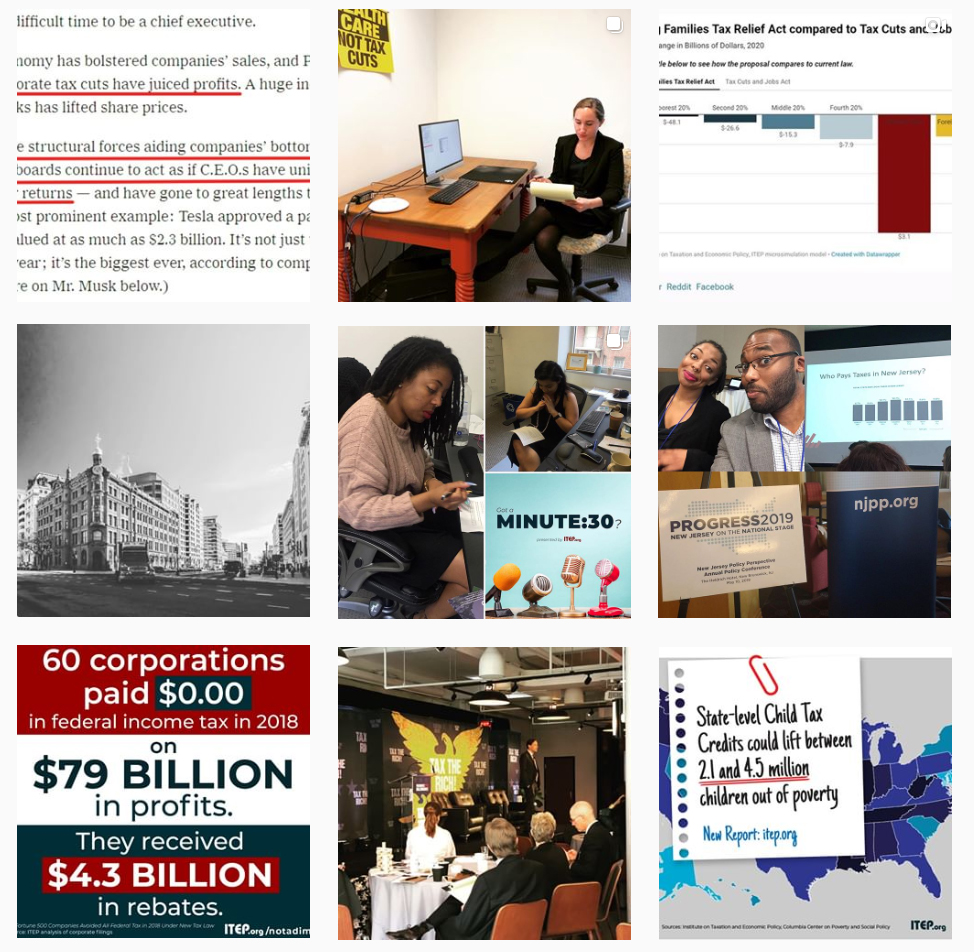
From a new report comparing five major federal tax credit proposals to resources for continuing gas tax debates and the launch of ITEP's interactive library On the Map, here’s a summary of ITEP news this month.
The Tennessean: Our Tax System Is Immoral and Unfair to the Middle Class | Opinion
May 30, 2019
Recently, the Institute on Taxation and Economic Policy shared an analysis of Fortune 500 companies that finds at least 60 of the nation’s biggest corporations didn’t pay one cent in federal income taxes in 2018 and in turn had a collective $79 billion in profits. It is based on 2018 financial filings of the country’s […]
Congressional Research Service Calls Three Strikes on the Trump Tax Cuts
May 30, 2019 • By Matthew Gardner
This new report is the most comprehensive assessment yet undertaken by the CRS, which has an unimpeachable reputation as an impartial arbiter of policy disputes. So, when it says that the TCJA doesn’t appear to have grown wages or the economy and has made our long-term budget deficits even worse, it’s a judgment that will last.
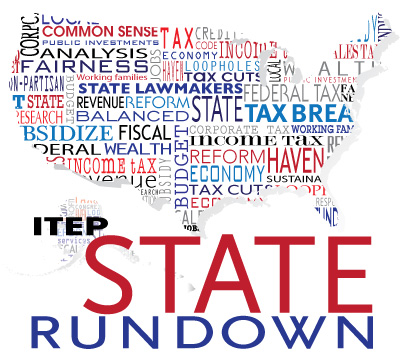
Like certain recent controversially concluded television shows, tax and budget debates can end in many ways and often receive mixed reviews. Illinois leaders, for example, ended on a cliffhanger by approving a historic constitutional amendment to create a graduated income tax in the state, whose ultimate conclusion will be crowdsourced by voters next November. Arizona’s fiscal finale fell flat with many observers due to corner-cutting on needed investments and a heavy focus on tax cuts. Texas legislators went for crowd-pleasing property tax cuts and school funding increases but left a gigantic “but how will we pay for this” plot hole…
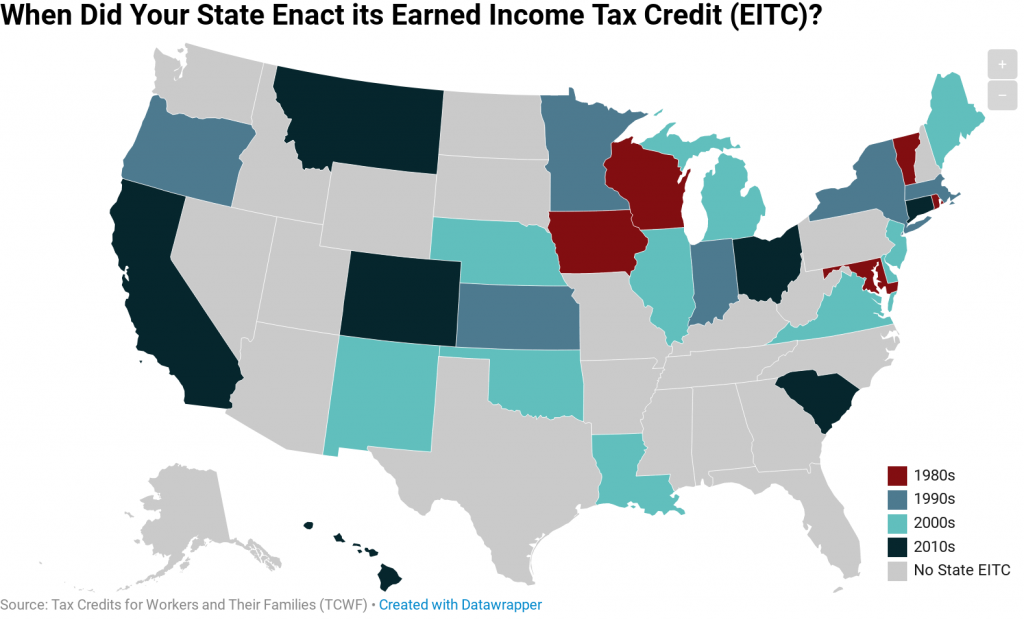
In 1986, Rhode Island became the first state to enact a tax credit patterned after the federal Earned Income Tax Credit (EITC). Since then, EITCs have become increasingly widespread at the state level with 28 states and the District of Columbia now offering them. These credits are designed to improve family economic security by bolstering […]
Winston Salem-Journal: Five Basic Truths About the State Budget
May 28, 2019
The budget is unfair and unjust: North Carolina has always relied upon a regressive tax structure that takes more from the incomes of the poor and middle-class than from the wealthy. But this pattern has grown significantly worse and more unfair in recent years as the personal income tax was flattened and cut and corporate […]
The Columbus Dispatch: Business Groups Pushing to Save Tax Breaks for Richest Ohioans
May 25, 2019
Policy Matters says the analysis, completed by the Institute on Taxation and Economic Policy, found that virtually all of the Ohio tax filers who would pay more under the overall House plan are among the top 5% of Ohio taxpayers, making over $208,000. Read more
Akron Beacon Journal: A $1 Billion State Tax Break Still Worth Shrinking
May 24, 2019
What does the House propose? It would reduce the exemption to the first $100,000 in “pass through” income and wipe out the special 3 percent tax rate. That would save $528 million a year. It would do so without affecting 86 percent of those claiming the exemption. Who would see a change? Policy Matters Ohio […]
Unlike Trump-GOP Tax Law, There Are Tax Plans That Would Actually Deliver on Promise to Help Working People
May 24, 2019 • By Alan Essig

Using the tax code to boost the economic security of low- and moderate-income families is a proven strategy. These bold proposals would go much further than any policy currently on the books, and their approach directly contrasts with longstanding supply-side theories that call for continual tax cuts to those who are already economically faring far better than everyone else.
New Hampshire Business Review: Some NH Firms Paid Little or No Tax in 2018
May 23, 2019
Those companies are hardly unique. “Not a Dime,” a recent study by the Institute on Taxation and Economic Policy (ITEP), found that at least 60 of the Fortune 500 companies paid no taxes to the federal government in 2018, even though they made substantial profits. (There may be more, but the financial filings for the […]
Connecticut Voices for Children: Impact of the FY 2020-2021 Appropriations and Finance Committee Budget and Revenue Proposals on Children and Families
May 23, 2019 • By ITEP Staff
The report recommends that state legislators and the Governor repeal the state’s Bond Lock, revise the volatility cap, and implement additional tax reforms that begin to correct the state’s regressive revenue system by asking more of the state’s wealthiest residents. Read more
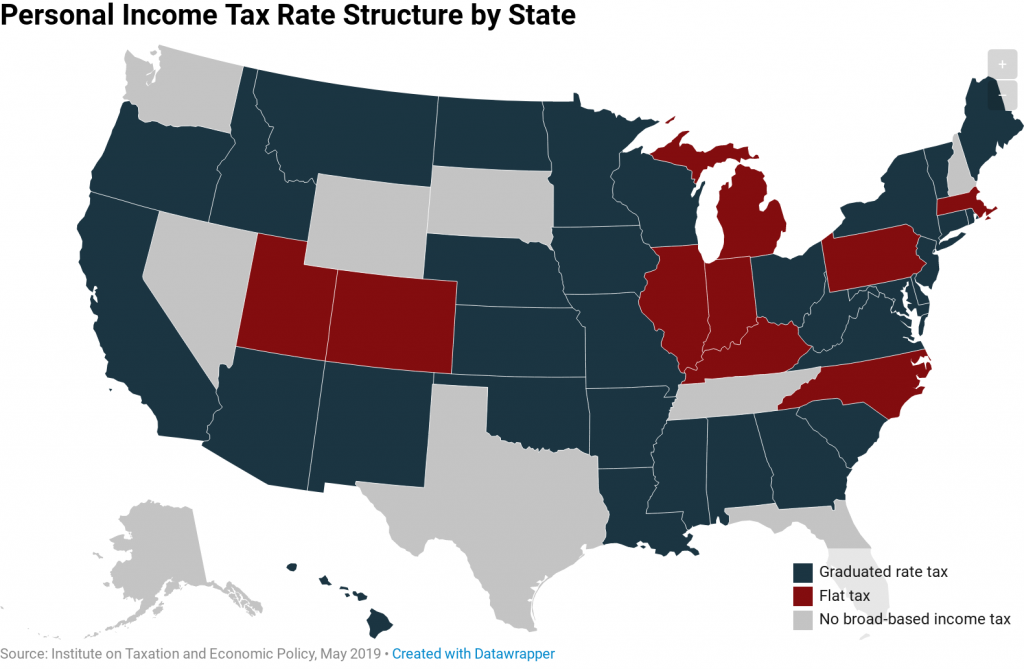
One of the most important decisions that must be made when designing a state personal income tax is whether to charge taxpayers a single flat rate on all their taxable income, or whether to levy a series of graduated rates that ask more of high-income taxpayers
State Rundown 5/22: (Some) State Lawmakers Can (Partly) Relax This Weekend
May 22, 2019 • By ITEP Staff
Lawmakers and advocates can enjoy their barbeques with only one eye on their work email this weekend in states that have essentially finished their budget debates such as Alaska, Minnesota, Nebraska, and Oklahoma, though both Alaska and Minnesota require special sessions to wrap things up. Getting to those barbeques may be a bumpy ride in Louisiana, Michigan, and other states still working to modernize outdated and inadequate gas taxes.
Proposals for Refundable Tax Credits Are Light Years from Tax Policies Enacted in Recent Years
May 22, 2019 • By Steve Wamhoff
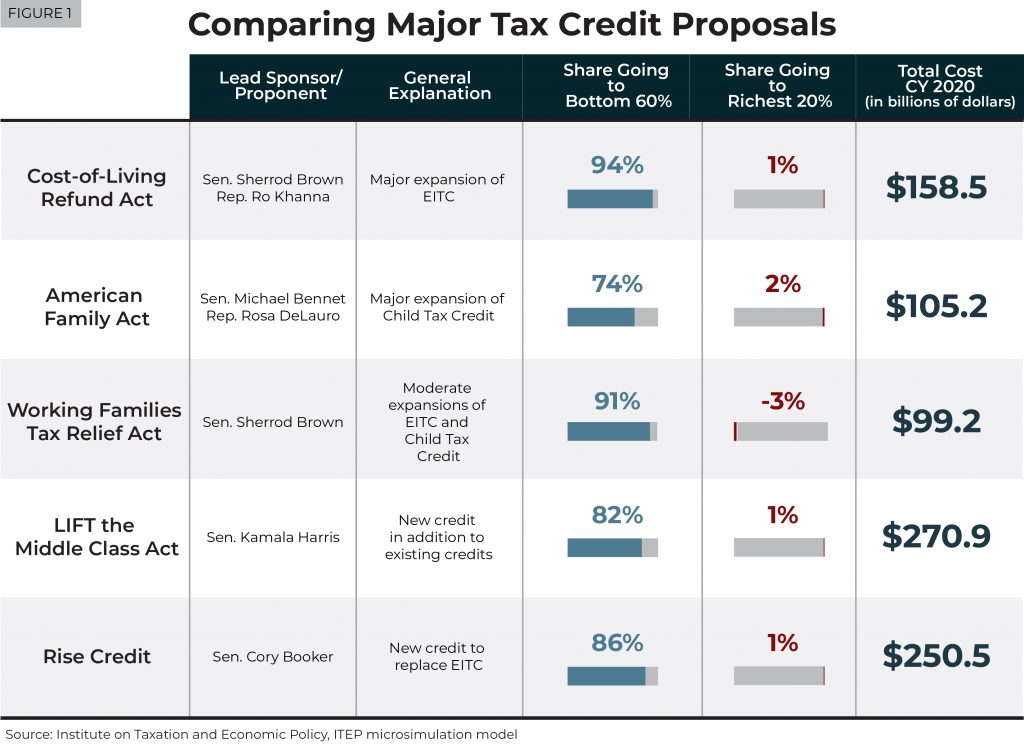
A new ITEP report examines five big proposals that have been announced this year to create or expand tax credits to address inequality and help low- and middle-income households.
New York Times: Democrats’ Tax Cuts Target Middle Class More Than Trump’s, Study Says
May 22, 2019
Tax plans from several Democratic candidates for president would cost less than President Trump’s signature tax cuts but deliver larger benefits to most low- and middle-income Americans, according to a new analysis by the Institute on Taxation and Economic Policy, a liberal think tank in Washington. The analysis is one of the first to examine […]
Five Recent Federal Tax Credit Proposals Target Benefits to Bottom 60 Percent of Taxpayers
May 22, 2019 • By ITEP Staff
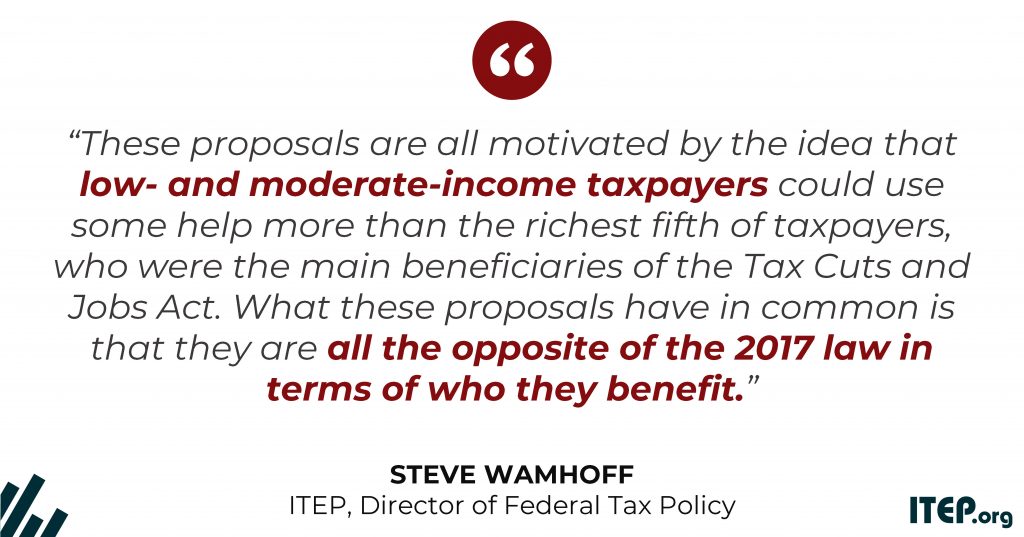
Five tax proposals announced this year are a radical departure from the top-heavy 2017 Tax Cuts and Jobs Act, targeting their benefits instead to low- and moderate income families while providing no or nominal tax cuts to the highest-earning households, a new Institute on Taxation and Economic Policy analysis of each of the five plans reveals.
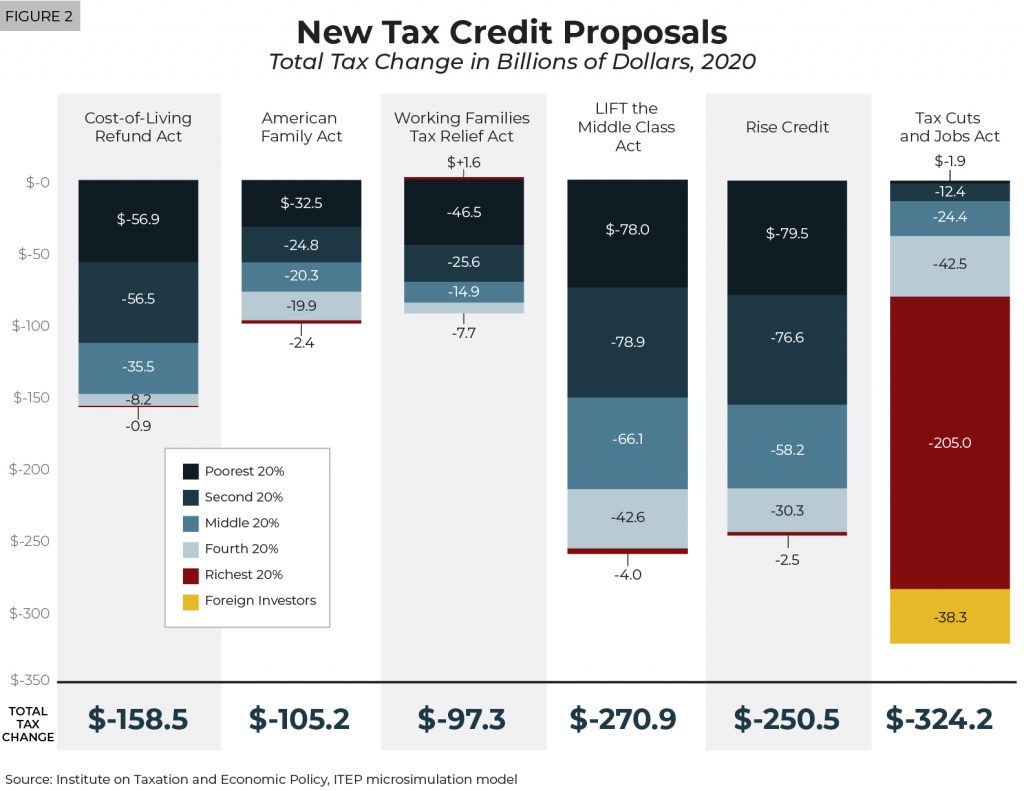
Federal lawmakers have recently announced at least five proposals to significantly expand existing tax credits or create new ones to benefit low- and moderate-income people. While these proposals vary a great deal and take different approaches, all would primarily benefit taxpayers who received only a small share of benefits from the Tax Cuts and Jobs Act.
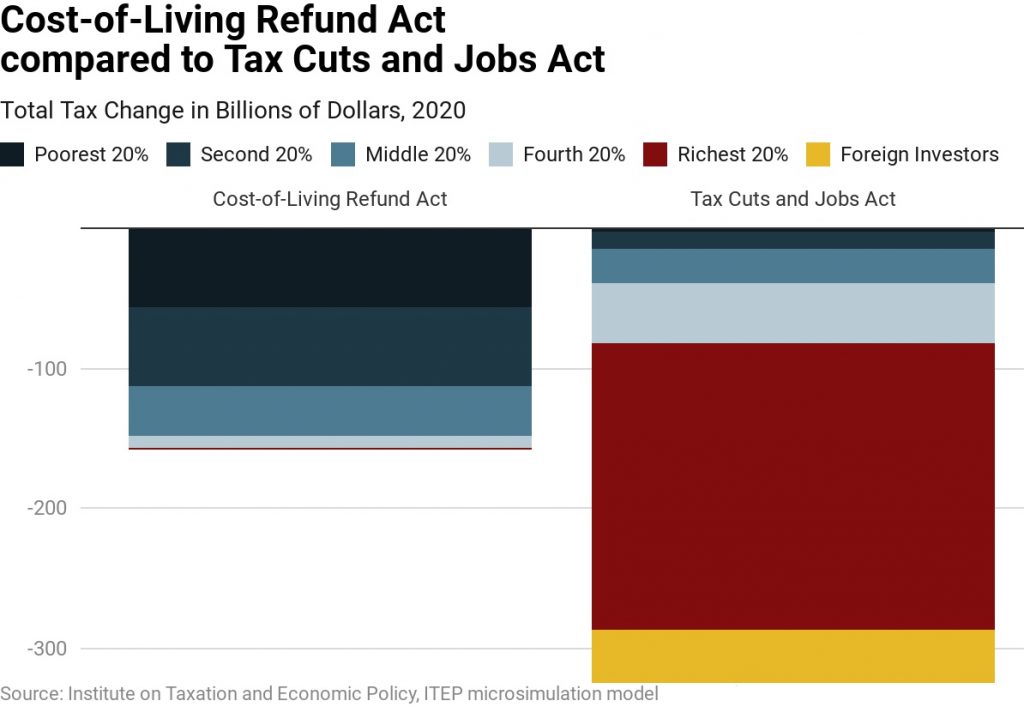
The Cost-of-Living Refund Act would expand the Earned Income Tax Credit (EITC) for low- and moderate-income working people. The maximum EITC would nearly double for working families with children. Working people without children would receive an EITC that is nearly six times the size of the small EITC that they are allowed under current law.

The American Family Act would expand the Child Tax Credit (CTC) for low- and middle-income families. The CTC would increase from $2,000 under current law to $3,000 for each child age six and older and to $3,600 for each child younger than age six. The proposal removes limits on the refundable part of the credit so that low- and moderate-income families with children could receive the entire credit.
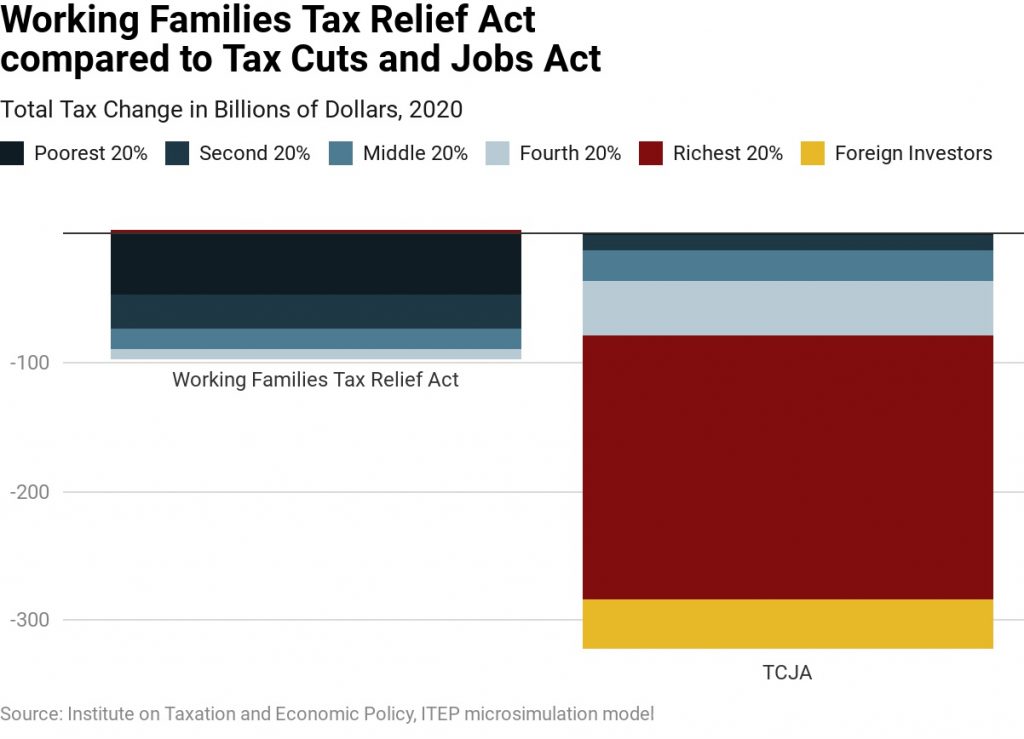
The Working Families Tax Relief Act would expand the Earned Income Tax Credit (EITC) and the Child Tax Credit (CTC) for low- and middle-income families.
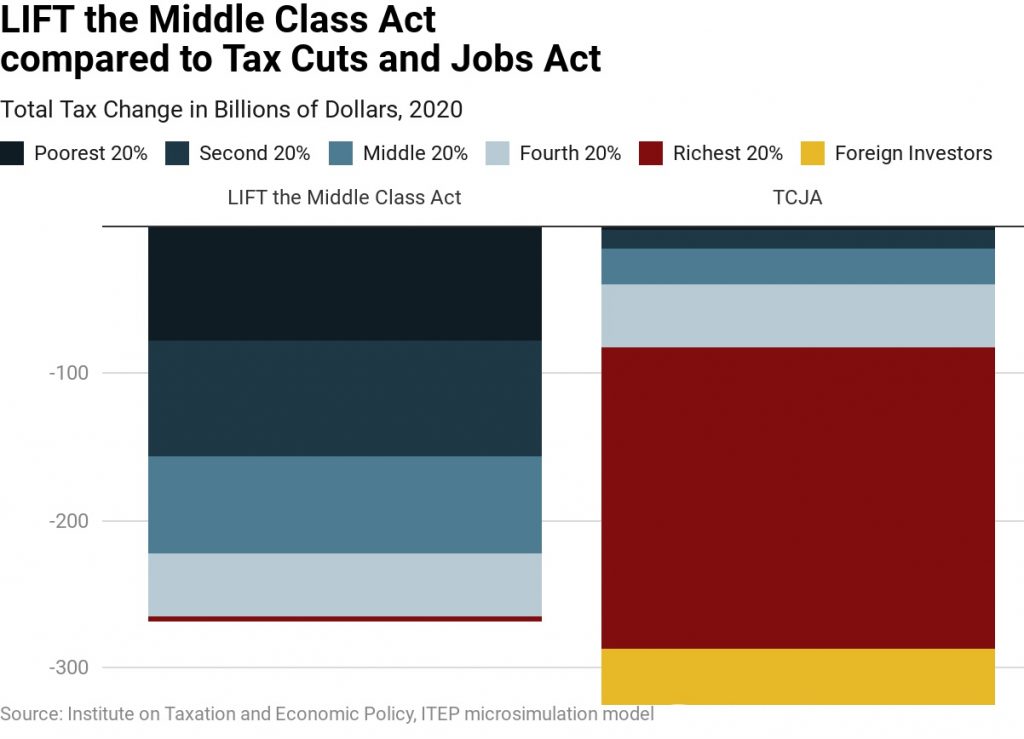
The LIFT (Livable Incomes for Families Today) the Middle Class Act would create a new tax credit of up to $3,000 for single people and up to $6,000 for married couples, which would be an addition to existing tax credits. Eligible taxpayers would be allowed a credit equal to the maximum amount or their earnings, whichever is less. Income limits would prevent well-off households from receiving the credit.
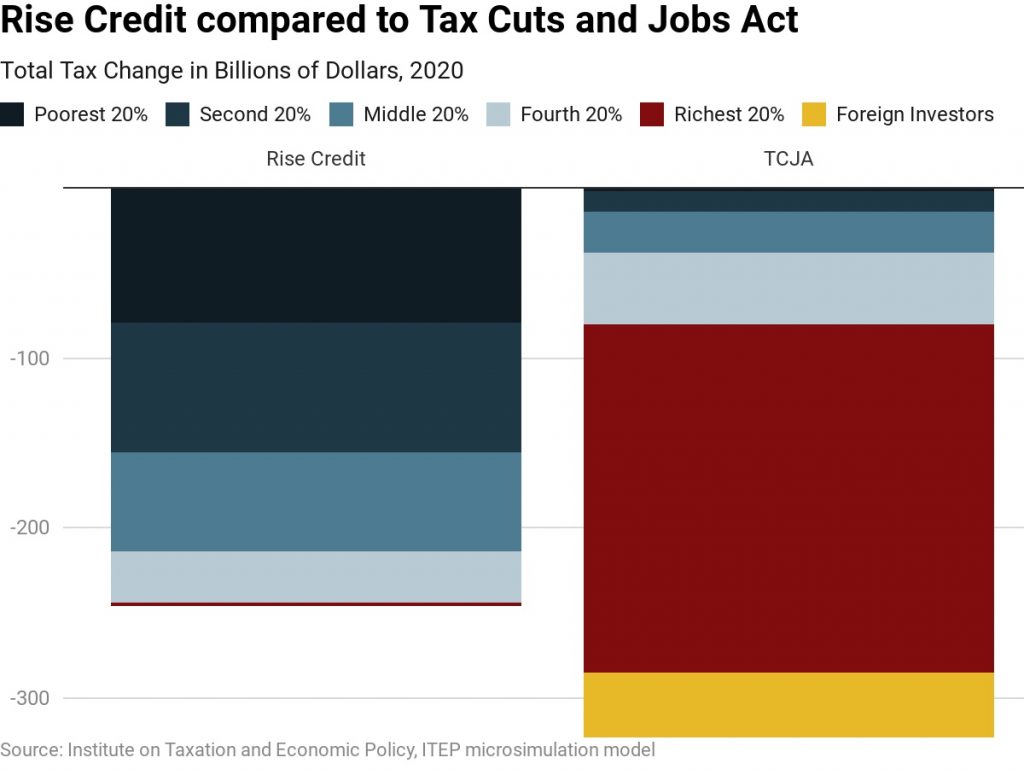
The Rise Credit would replace the existing EITC. In most cases, the Rise Credit would be $4,000 for single people and $8,000 for married couples. Eligible taxpayers would be allowed a credit equal to the maximum amount or their earnings, whichever is less.
Arizona Daily Sun: Tax Dodgers Inc.
May 21, 2019
How is it possible to pay less than zero? By riddling the tax code with so many special deductions and gimmicks that the government owes you money! On tax day this year, a watchdog group called ITEP (Institute on Taxation and Economic Policy) issued a report documenting that 60 of America’s biggest corporations used the […]

Institute on Taxation
and Economic Policy
ITEP is a non-profit, non-partisan tax policy organization. We conduct rigorous analyses of tax and economic proposals and provide data-driven recommendations to shape equitable and sustainable tax systems.
Subscribe to ITEP Emails
Tax research and policy news in your inbox.
Promote Fair Tax Policy
Your gift to ITEP promotes tax justice. With your help, we do research that supports taxing millionaires and billionaires, taxing big corporations and raising revenue for the things our people, our communities and our planet need.
Together, we can create a country with more economic justice, more racial justice, more climate justice… and more tax justice.