
ITEP's Research Priorities
Gas Taxes Have Gone Up in Most States, but Decades-Long Procrastinators Remain
May 21, 2019 • By Carl Davis

The upcoming Memorial Day weekend marks the start of the traditional summer driving season. In most states, summer road-trippers are paying more gas tax than they did a few years ago and are benefiting from smoother and safer roads as a result. In total, 30 states have raised or reformed their gas taxes in the last six years.
These States Abandoned Old Gas Tax Structures in Favor of More Sustainable Variable-Rate Gas Taxes
May 20, 2019 • By ITEP Staff
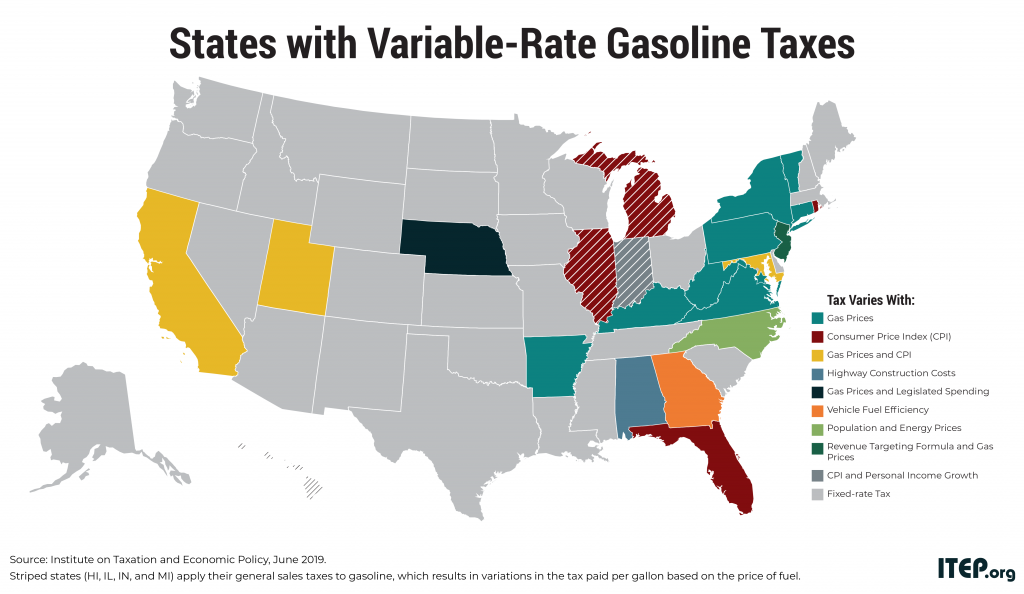
Because of these reforms, more than 193 million people (or 59 percent of the U.S. population) now live in places where the state gas tax rate automatically varies over time.
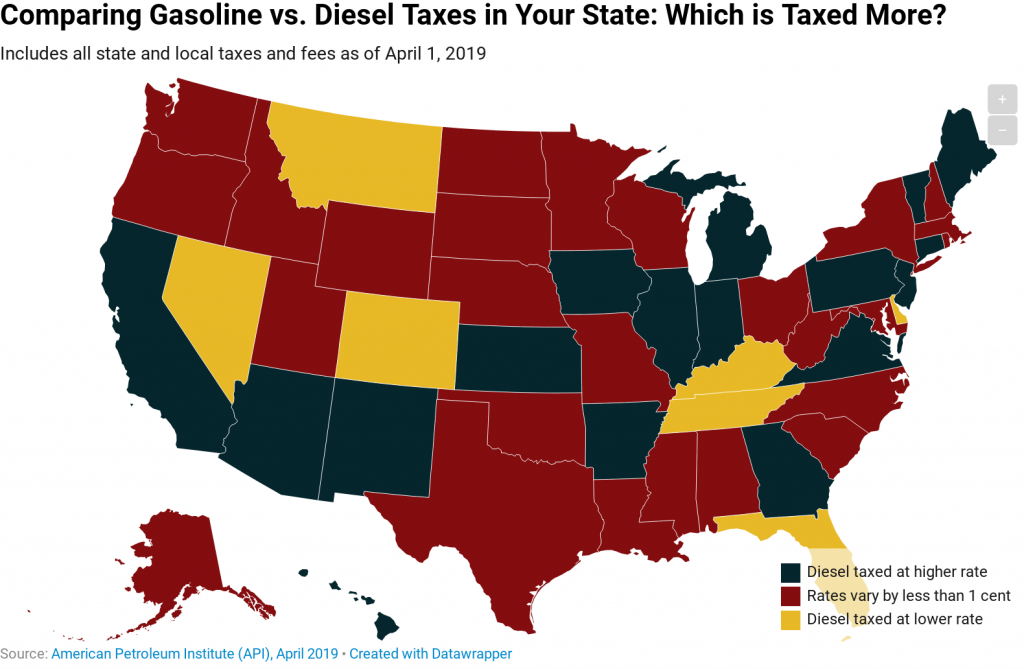
Twenty-six states and the District of Columbia tax these two fuel types at the same rate or very similar rates, as of April 2019, according to data from the American Petroleum Institute.
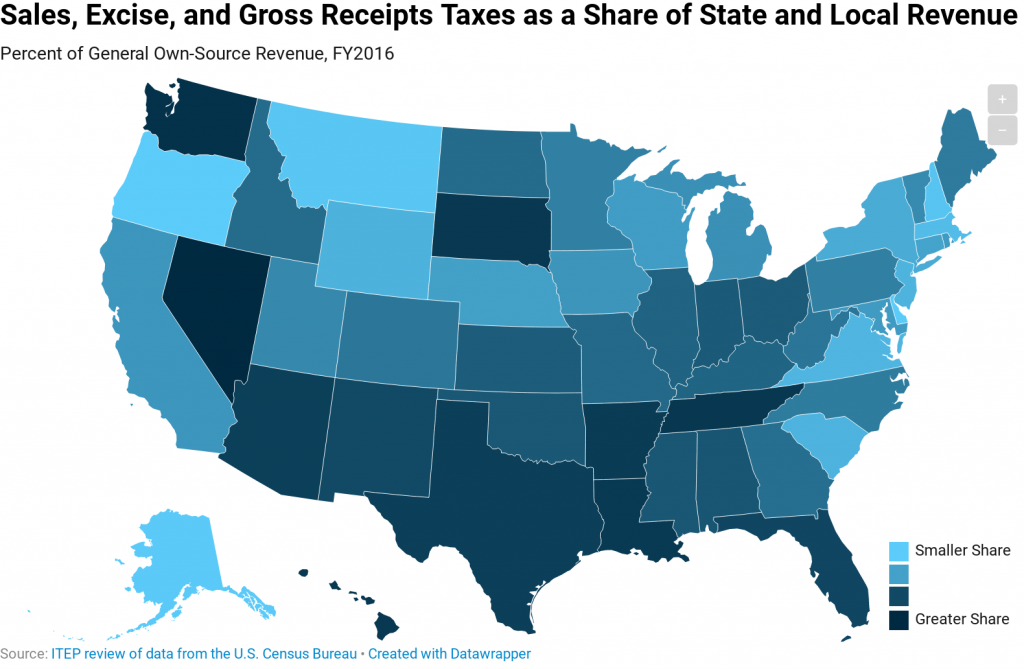
Consumption taxes (including general sales taxes, excise taxes on specific products, and gross receipts taxes) are an important revenue source for state and local governments. While five states lack state-level general sales taxes (Alaska, Delaware, Montana, New Hampshire, and Oregon), every state levies taxes on some types of consumption.
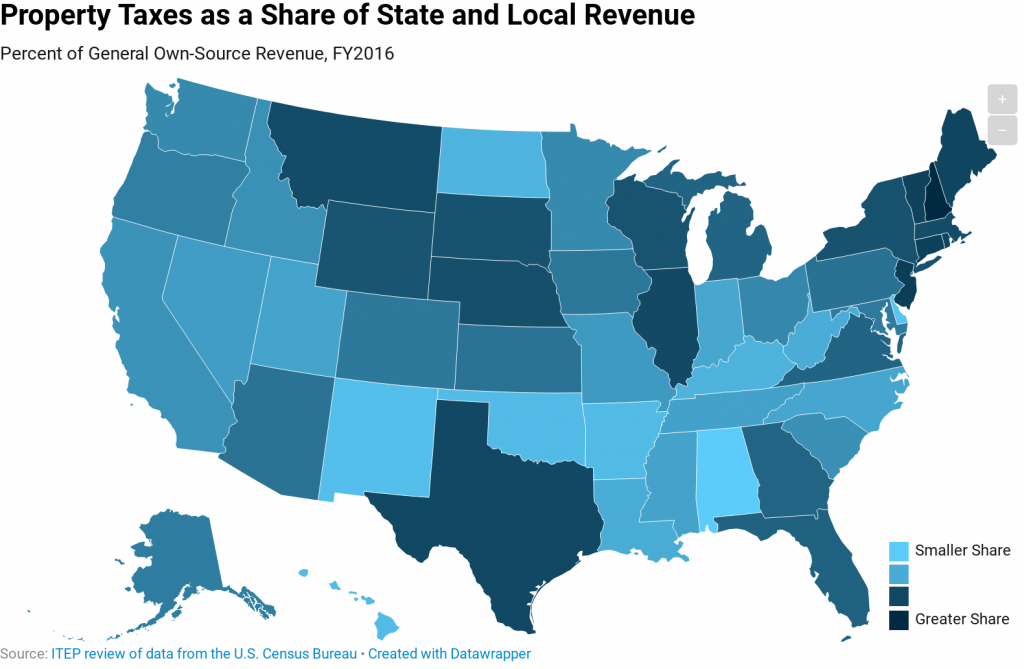
The property tax is the oldest major revenue source for state and local governments and remains an important mechanism for funding education and other local services. This map shows the share of state and local general revenue in each state that is raised through property taxes.
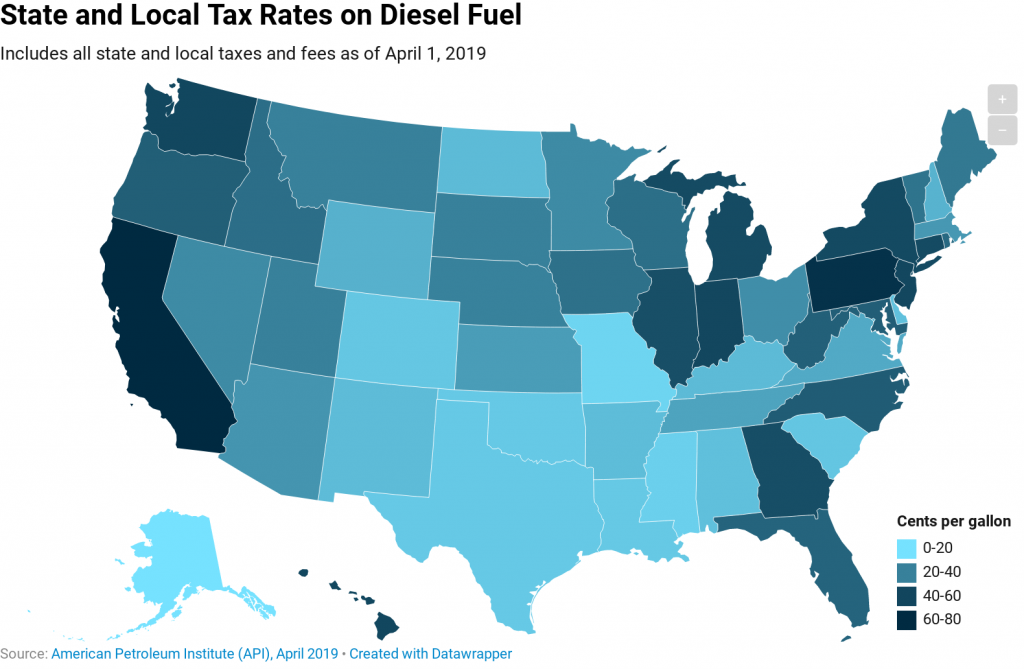
The tax rates identified in this map include state and local excise and sales taxes on diesel fuel, as well as various fees, as calculated by the American Petroleum Institute (API). These taxes are levied in addition to the federal government’s 24.4-cent-per-gallon diesel tax.
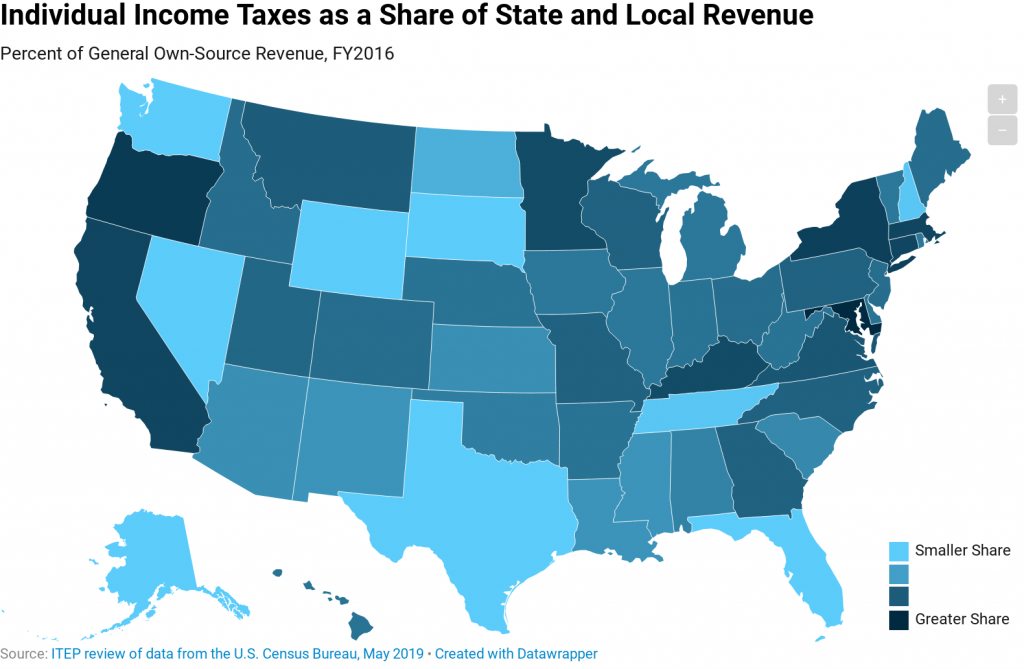
Income taxes vary considerably in their structure across states, though the best taxes are fine-tuned to taxpayers’ ability-to-pay.
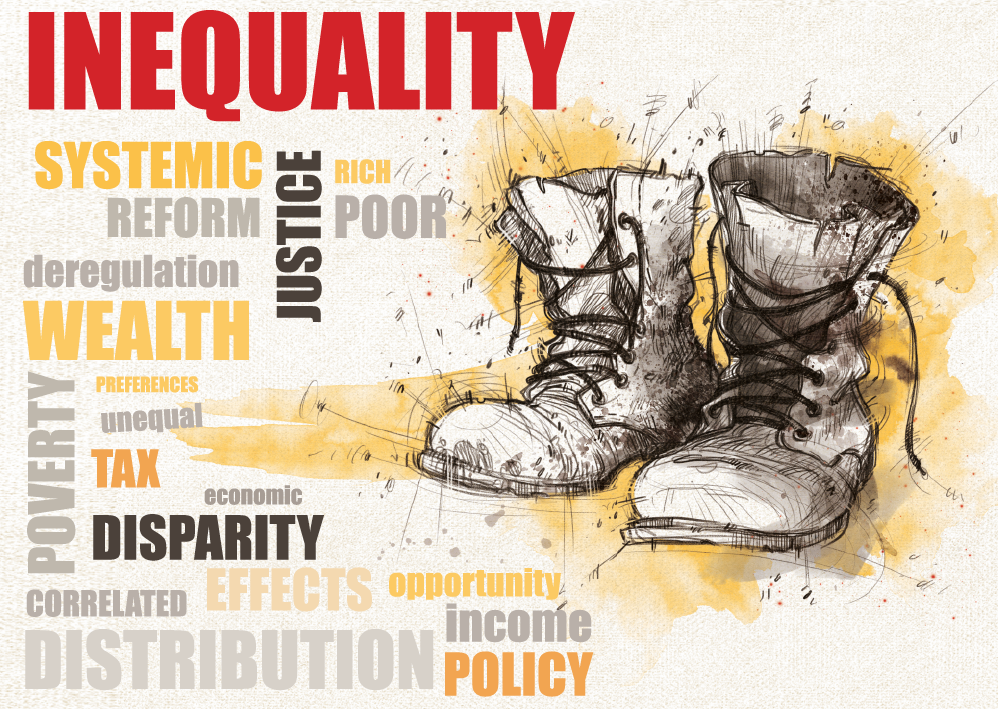
Policymakers and the public widely agree that economic inequality is the social policy problem of our age. It threatens the livelihoods of millions of children and adults, and it even threatens our democracy. Although some say Americans could fix it themselves by simply rolling up their sleeves, as a sub-headline in a March U.S. News and World Report column implied, the reality is different.
Wharton: Have Stock Buybacks Gone Too Far?
May 16, 2019
Fueled by the lower corporate tax rate, share buybacks among S&P 500 companies shot to a fourth consecutive record in the last quarter of 2018, according to Standard & Poor’s. What’s more is that the lower tax rate enabled dozens of profitable Fortune 500 companies such as Amazon and IBM to avoid paying federal taxes […]
State Rundown 5/16: Tensions Remain High Over Budgets and School Finances in Several States
May 16, 2019 • By ITEP Staff
Tax and budget negotiations remain at standstills in Louisiana and Minnesota, as school funding debates and teacher protests again captured headlines in several states. Oregon lawmakers, for example, finally passed a mixed-bag tax package that won’t improve tax equity but will raise much-needed revenue for education. Meanwhile their counterparts in Nebraska continue to debate highly […]
Policy Matters Ohio: The Good and the Bad in the House Tax Plan
May 15, 2019 • By ITEP Staff
The tax plan approved by the Ohio House last week would sharply limit an income-tax break for business owners that costs more than $1 billion a year while providing few benefits to the Ohio economy. At the same time, it would eliminate the bottom two brackets of the income tax and cut rates by 6.6%. […]
Hartford Courant: We Are a Group of Wealthy Connecticut residents, and we want to pay more in taxes.
May 14, 2019
Connecticut was slow to recover from the Great Recession. Meanwhile, inequality has skyrocketed. As the economy grew coming out of the recession, 100 percent of increased income in Connecticut has gone to the top 1 percent of earners. At the same time, the remaining 99 percent of income earners have seen their income decline, on […]
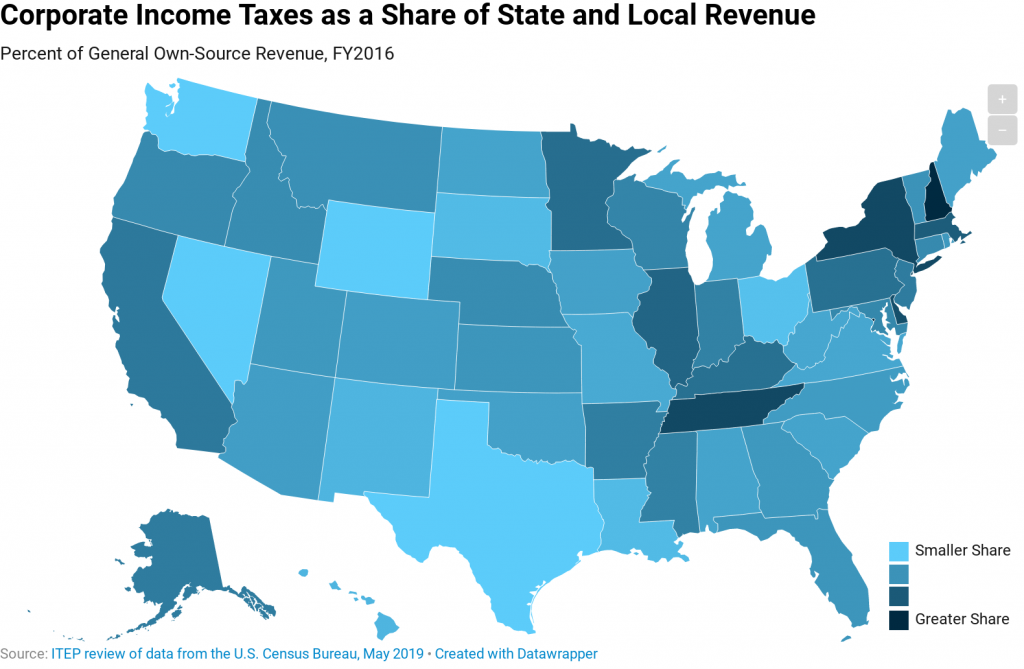
Corporate income taxes are an important source of revenue for state governments and ensure that profitable corporations benefiting from public services pay toward the maintenance of those services.
WBNS Ohio: Expert explains why Ohio gas prices can fluctuate so quickly
May 12, 2019
Ohio is now the 30th state to raise or reform its gas tax this decade, according to the Institute on Taxation and Economic Policy (ITEP). Starting July 1, 2019, a 10.5 cent gas tax and 19 cent diesel tax increase will take effect with the purpose of fixing deteriorating roads and bridges around the state. […]
Salon: The Tax Bill for Many Big Polluters Last Year? $0
May 12, 2019
Adapting to our warming world is expensive. It costs a lot to build sea walls, cure disease outbreaks, and rebuild after floods. It takes money to invent better batteries, turn farms into carbon sinks, and replace polluting power plants with clean energy. Instead of maybe taxing carbon emissions to pay for all this, the United […]
Connecticut Voices for Children: Voices from the Capitol: Countdown to the End of the Session
May 10, 2019 • By ITEP Staff
Staff experts from our national partners – Elizabeth McNichol of the Center on Budget and Policy Priorities and Aidan Davis of the Institute on Taxation and Economic Policy – joined Jamie Mills of Connecticut Voices for Children in submitting powerful testimony before the Finance Committee in support of a modest surcharge on capital gains earned […]
Presentation: NCSL Task Force on State and Local Taxation, Taxing Cannabis
May 10, 2019 • By Carl Davis
ITEP Research Director Carl Davis presented to the National Conference of State Legislatures (NCSL) Task Force on State and Local Taxation on approaches to cannabis taxation and the recent report Taxing Cannabis.
State Rundown 5/9: Illinois Moves Closer to a Progressive Income Tax
May 9, 2019 • By ITEP Staff
Lawmakers in Illinois and Ohio have advanced major tax proposals but cannot rest just yet, as they must still get past the other legislative chamber. Their counterparts in Michigan, Minnesota, Nebraska, and Oregon, meanwhile, are all at impasses over education funding, as those in Texas left their school funding disagreement unresolved at least until they reconvene...in 2021. And in an era of many states pre-empting smaller jurisdictions by revoking local decision-making powers, leaders in Colorado and Delaware made moves in the opposite direction, entrusting cities and school districts with more local control.
ABC News: Trump Lobbied for Tax Loopholes in the 1990s
May 9, 2019
The sweeping, bipartisan law that Trump railed against was popular in both Democrat and Republican circles, as it got rid of numerous loopholes, reduced tax-code chicanery and lowered tax rates across income brackets. “The 1986 tax law was the gold standard for tax reform because it removed loopholes and simplified the tax system,” said Steve […]
Allentown Morning Call: Fortune 500 company PPL not only paid no federal taxes last year, it got a $19 million rebate; it says it has invested those savings
May 8, 2019
Sixty of America’s Fortune 500 corporations paid nothing — or got refunds — for 2018, according to a report released last month by the Institute on Taxation and Economic Policy in Washington, described as a left-leaning think tank by the Washington Post and New York Times. In PPL’s case, the institute said the company received […]
Voice of America: In the US, Death Is More Certain Than Taxes
May 8, 2019
In the corporate world, however, with the tax overhaul pushed to passage by Trump and Republican lawmakers in 2017 that cut the basic federal corporate tax rate from 35% to 21%, 60 of the biggest U.S. corporations avoided paying any taxes last year, according to the Washington-based Institute on Taxation and Economic Policy. The research […]
The Hill: Tax Prep Companies Under Fire over Free File Program
May 8, 2019
Steve Wamhoff, director of federal tax policy for the left-leaning Institute on Taxation and Economic Policy, said that it’s inevitable that when private companies are tasked with offering a public service, they will do things to maximize their profits. A free tax-filing service “would be carried out more efficiently publicly rather than privately,” he added. […]
Maryland Center on Economic Policy: Improving the Child Tax Credit Would Benefit More than 700,000 Marylanders
May 7, 2019 • By ITEP Staff
Refundable tax credits like the Earned Income Tax Credit and the Child Tax Credit make an important difference for working families, together bringing more than 100,000 Marylanders’ family incomes above the federal poverty line each year. Maryland has built on these successful policies by supplementing the federal Earned Income Tax Credit with a state credit and extending […]
Proponents of Trump Tax Law Cite ITEP with Obvious Lack of Context
May 6, 2019 • By Steve Wamhoff
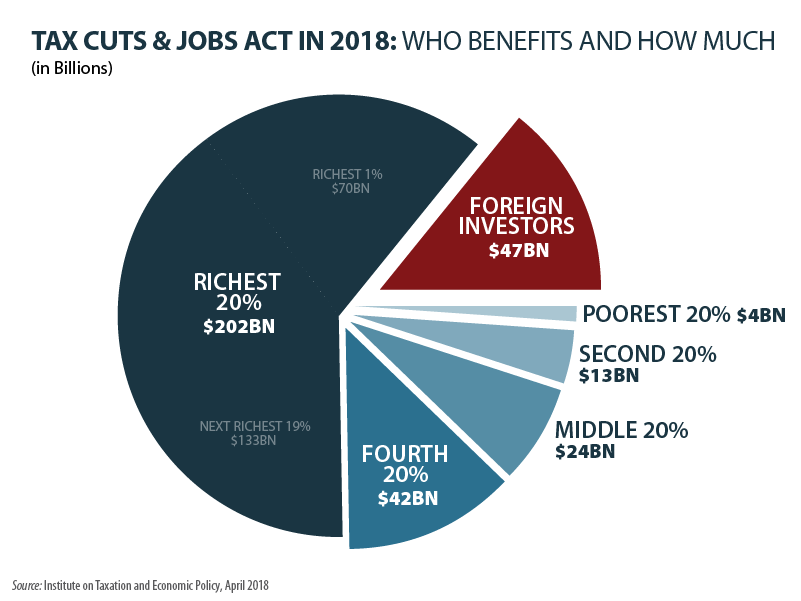
Sen. Chuck Grassley, the chairman of the Senate Finance Committee, today has an op-ed defending Trump-GOP tax law. “One of the most-covered falsehoods being spread about tax reform,” as he calls the law, “is that it’s a middle-class tax hike.” He cites ITEP’s estimates to back up his point that most people in every income group have lower taxes because of the law. As Sen. Grassley and his staff know full well, this leaves out the important point of our findings.
Governing: What States Can Do to Drastically Reduce Child Poverty
May 6, 2019
The following is an excerpt of an op-ed by Meg Wiehe and Christopher Whimer published in Governing: States have been called laboratories of democracy because they often launch some of the boldest policy ideas. Before the Affordable Care Act provided health insurance access for millions more Americans, for example, Massachusetts implemented a law that served […]

Institute on Taxation
and Economic Policy
ITEP is a non-profit, non-partisan tax policy organization. We conduct rigorous analyses of tax and economic proposals and provide data-driven recommendations to shape equitable and sustainable tax systems.
Subscribe to ITEP Emails
Tax research and policy news in your inbox.
Promote Fair Tax Policy
Your gift to ITEP promotes tax justice. With your help, we do research that supports taxing millionaires and billionaires, taxing big corporations and raising revenue for the things our people, our communities and our planet need.
Together, we can create a country with more economic justice, more racial justice, more climate justice… and more tax justice.