
Massachusetts

One-time payments have become a common theme around the country, as Idaho is one of roughly eleven states with plans to provide tax relief in a similar fashion...
State Rundown 1/26: States Offering Preview of Tax Themes and Trends for 2022
January 26, 2022 • By ITEP Staff
Governors and legislators are beginning to settle on and advance tax bills that could drastically shape the future of their states and several trends and themes are beginning to emerge...
State Rundown 1/20: Governors Eyeing Tax Cuts in Yearly Addresses
January 20, 2022 • By ITEP Staff
A common theme is emerging out of states, as governors around the U.S. begin the year with their annual state speeches, and the news does not bode well for long-term growth and sustainable budgets...
Here at ITEP we want to give thanks and say we’re grateful for all of the hard work that advocates in states across the country are doing to secure progressive tax policy victories...
The Impact of Work From Home on Commercial Property Values and the Property Tax in U.S. Cities
November 4, 2021 • By ITEP Staff

The fiscal implications of a decline in commercial property values are important because the property tax is the dominant local source of taxes, and commercial property makes up a significant portion of the property base in cities.
State Income Taxes and Racial Equity: Narrowing Racial Income and Wealth Gaps with State Personal Income Taxes
October 4, 2021 • By Carl Davis, Jessica Schieder, Marco Guzman
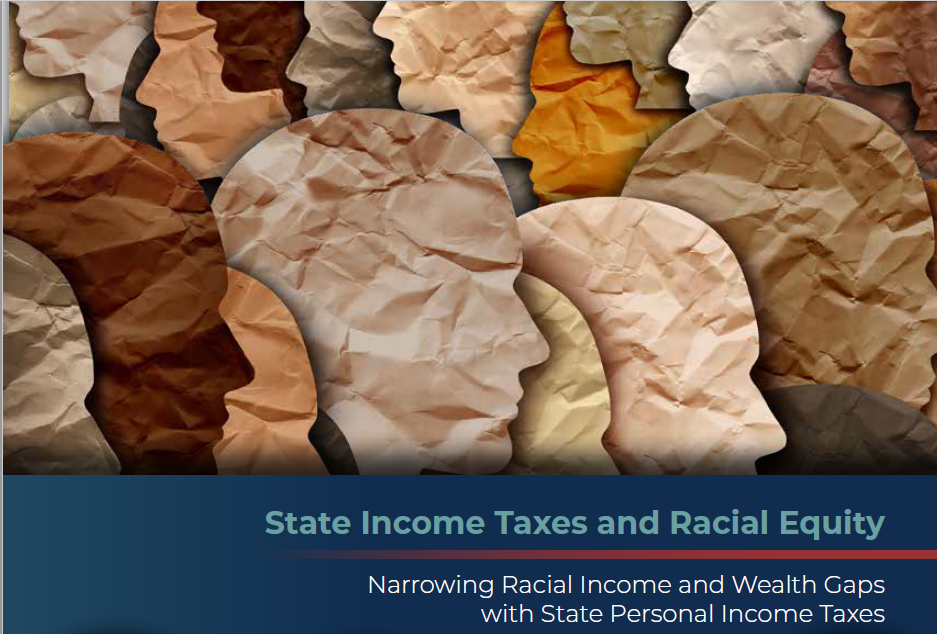
10 state personal income tax reforms that offer the most promising routes toward narrowing racial income and wealth gaps through the tax code.
Sales Tax Holidays: An Ineffective Alternative to Real Sales Tax Reform
August 6, 2021 • By Dylan Grundman O'Neill
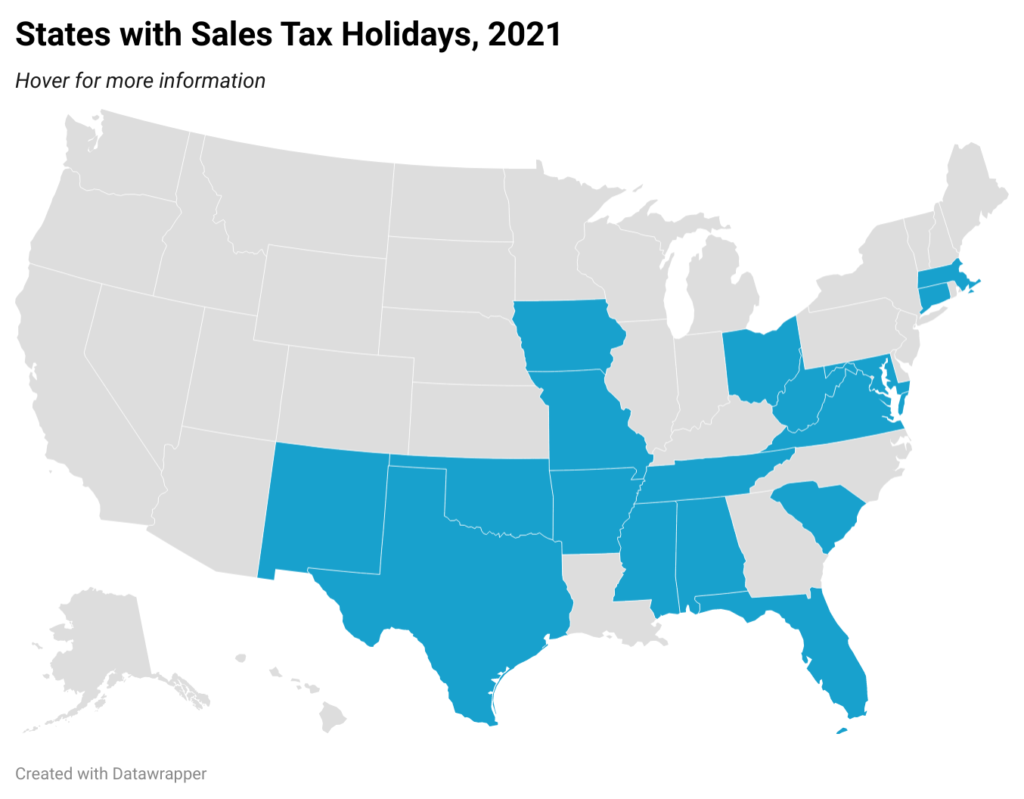
Policymakers tout sales tax holidays as a way for families to save money while shopping for “essential” goods. On the surface, this sounds good. However, a two- to three-day sales tax holiday for selected items does nothing to reduce taxes for low- and moderate-income taxpayers during the other 362 days of the year. Sales taxes are inherently regressive. In the long run, sales tax holidays leave a regressive tax system unchanged, and the benefits of these holidays for working families are minimal. Sales tax holidays also fall short because they are poorly targeted, cost revenue, can easily be exploited, and…
State Rundown 8/4: Tis the Season…for Unnecessary Sales Tax Holidays
August 4, 2021 • By ITEP Staff
It’s beginning to look a lot like that time of year again. That’s right, it’s sales tax holiday season and states across the country are doing their best to induce spending that would probably occur regardless...
State Rundown 7/21: States Go for Tax Policy Gold This Olympics Season
July 21, 2021 • By ITEP Staff
It’s Olympics season! As countries around the globe battle for first place in a plethora of sports and contests it’s as good a time as any to look around America to see which states deserve a gold medal in the ‘Equitable Tax Policy’ event...
State Rundown 6/30: Resolutions Are in Order for the New Fiscal Year
June 30, 2021 • By ITEP Staff
Today is the last day of the fiscal year in many states, and some lawmakers might want to take the opportunity to make some new fiscal year resolutions. Legislators in Arizona, New Hampshire, Ohio, North Carolina, and Wisconsin, for example, should really cut back on the trickle-down tax-cut Kool-Aid, which may make parties with rich donors more fun but tends to be both harmful and habit-forming...
Taxing rich households and large corporations to fund vital investments in education and other shared priorities has long been a winner in the eyes of the American public, and more recently has also enjoyed a string of victories in state legislatures and at the ballot box. That win streak continued this week as Arizona’s voter-approved tax surcharge on the rich and Seattle, Washington’s payroll tax on high-profit, high-salary businesses both survived court challenges, and Massachusetts leaders approved a millionaires tax to go before voters next year.
State Rundown 6/7: Remaining State Legislative Sessions Are Heating up as Budget Deadlines Loom
June 7, 2021 • By ITEP Staff
Just as an early summer heatwave brought soaring temperatures this past weekend through much of the lower 48 states, several state legislative sessions are heating up as legislators scramble to make tough budget decisions. Massachusetts lawmakers are voting on a fiery new "millionaires' tax" that would support transportation and education revenue needs, and Connecticut will likely restore its state Earned Income Tax Credit (EITC) back to 30 percent. Illinois’s decision to cut back corporate tax breaks also provided a breath of fresh air. Unfortunately, we'd give other state tax proposals a more lukewarm reception: New Hampshire, North Carolina, and Ohio…
Income Tax Increases in the President’s American Families Plan
May 25, 2021 • By ITEP Staff, Matthew Gardner, Steve Wamhoff
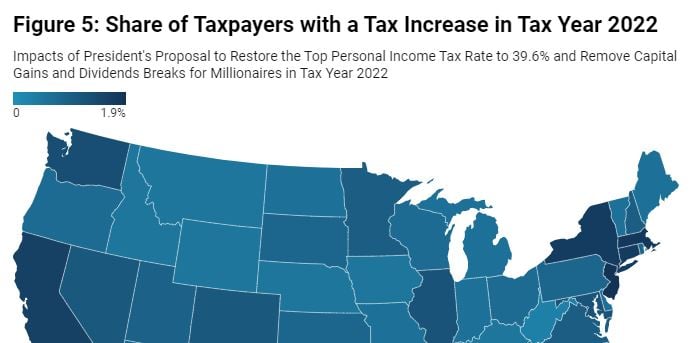
President Biden’s American Families Plan includes revenue-raising proposals that would affect only very high-income taxpayers.[1] The two most prominent of these proposals would restore the top personal income tax rate to 39.6 percent and eliminate tax breaks related to capital gains for millionaires. As this report explains, these proposals would affect less than 1 percent of taxpayers and would be confined almost exclusively to the richest 1 percent of Americans. The plan includes other tax increases that would also target the very well-off and would make our tax system fairer. It would raise additional revenue by more effectively enforcing tax…
“Tax Day” was earlier this week but the debates, research, and advocacy that determine our taxes and how they are used take place every day of the year...
Massachusetts Budget & Policy Center: Ending the Tax Penalty Against Working Immigrants: MA Should Follow Other States Extending EITC to Immigrant Tax Filers
May 17, 2021 • By ITEP Staff
The Earned Income Tax Credit (EITC) is a key program for reducing poverty in the United States. Together with the federal Child Tax Credit, these low-income federal credits lifted 7.5 million households above the poverty line in 2019, more than any other program except Social Security. In Massachusetts, the EITC provides support to more than […]
State Rundown 5/13: States Get Federal Aid and Guidance as Many Sessions Wind Down
May 13, 2021 • By ITEP Staff
We had our noses buried in new American Rescue Plan guidance...when we heard the refreshing news that Missouri leaders are on the verge of modernizing their tax code, not only by becoming the final state to apply sales taxes to online purchases, but also by enacting an Earned Income Tax Credit (EITC)...Meanwhile, tax debates are also highly active in California, Colorado, Louisiana, Maine, and Nebraska. We also share some of our own reporting on recent efforts in Arizona and several other states to undermine voter-approved reforms and democratic institutions themselves.
Effects of the President’s Capital Gains and Dividends Tax Proposals by State
May 6, 2021 • By ITEP Staff, Matthew Gardner, Steve Wamhoff

President Biden’s proposal to eliminate the lower income tax rate on capital gains (profits from selling assets) and stock dividends for millionaires would affect less than half of one percent (0.4 percent) of U.S. taxpayers if it goes into effect in 2022. The share of taxpayers affected would be less than 1 percent in every state.
This week’s state fiscal news brings a reminder that even though advocates for great economic and racial justice have won some major progressive victories recently, anti-tax zealots have been hard at work too. Lawmakers advanced or enacted troubling regressive tax cuts or shifts in Idaho, Kansas, and Montana, and are actively debating them in Iowa, […]
State Rundown 4/14: More Progressive Wins in the Headlines this Week, but Mind the Fine Print
April 14, 2021 • By ITEP Staff
Two significant victories headlined state tax debates in the past week, as New Mexico leaders improved existing targeted tax credits to give bigger boosts and reach more families in need, and West Virginia lawmakers unanimously shut down a destructive effort to eliminate the state’s progressive income tax. These developments follow last week’s major wins for progressive taxation and targeted assistance in New York, and more good news is likely soon as Washington legislators continue to advance their own targeted credit for working families. Not all the news is positive though, as costly and/or regressive tax cuts remain on the table…
National and State-by-State Estimates of President Biden’s Campaign Proposals for Revenue
April 8, 2021 • By ITEP Staff, Matthew Gardner, Steve Wamhoff
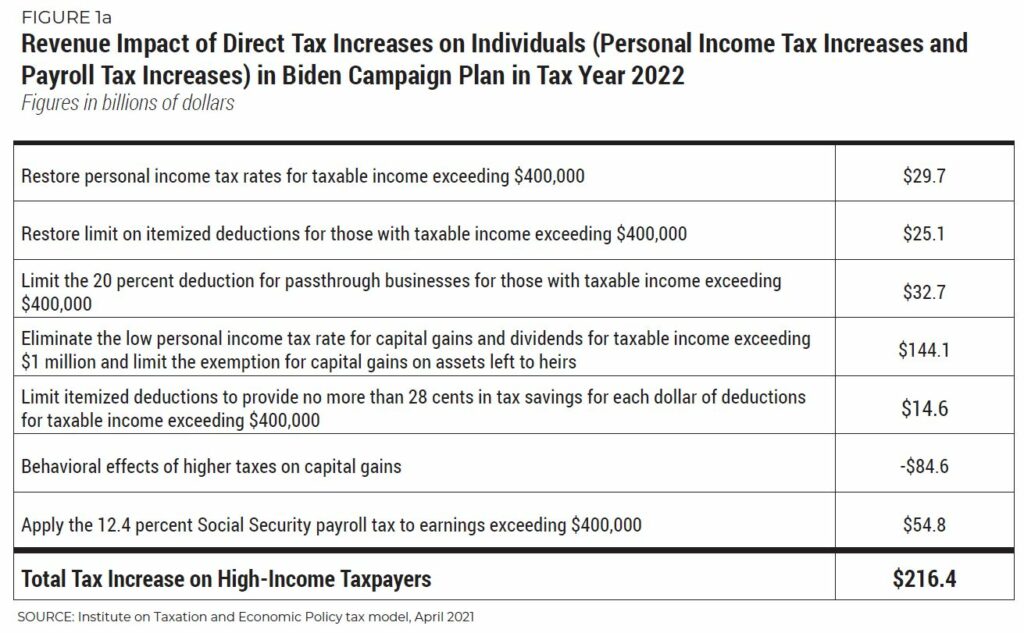
During his presidential campaign, Joe Biden proposed to change the tax code to raise revenue directly from households with income exceeding $400,000. More precisely, Biden proposed to raise personal income taxes on unmarried individuals and married couples with taxable income exceeding $400,000, and he also proposed to raise payroll taxes on individual workers with earnings exceeding $400,000. Just 2 percent of taxpayers would see a direct tax hike (an increase in either personal income taxes, payroll taxes, or both) if Biden’s campaign proposals were in effect in 2022. The share of taxpayers affected in each state would vary from a…
State Rundown 3/17: Momentum for Sound Progressive Tax Reforms Continues to Build
March 17, 2021 • By ITEP Staff
We wrote last week that the inclusion of fiscal relief for states and localities in Congress’s American Rescue Plan should free up state lawmakers’ time and attention to focus on the comprehensive reforms needed to address upside-down and inadequate tax codes, and some states are already doing just that.

Many state governments are struggling to repair and expand their transportation infrastructure because they are attempting to cover the rising cost of asphalt, machinery, and other construction materials with fixed-rate gasoline taxes that are rarely increased.
State Rundown 2/24: State Tax Debates Quickly Thaw Out with Warmer Weather
February 24, 2021 • By ITEP Staff
Warming temperatures in many parts of the country this week seem to be thawing out state fiscal debates as well. Multiple states including California, Colorado, Maryland, and New Jersey saw movement on efforts to improve tax credits for low- and middle-income families. Mississippi House lawmakers suddenly rushed through a dangerous bill to eliminate the state’s income tax and shift those taxes onto lower-income households. Montana senators also approved regressive income tax cuts and South Dakota legislators advanced an anti-tax constitutional amendment, while lawmakers in Hawaii, Rhode Island, and Washington made progress on improving the progressivity of their tax codes. Gas…
States Are Finally Going Bold with Progressive Tax Efforts
February 4, 2021 • By Dylan Grundman O'Neill

Advocates, lawmakers, study commissions, and even governors in some states are proposing bold tax policy reforms that look beyond pandemic-induced budget shortfalls and the “K-shaped recovery” to address underlying inequities and underfunding that gave rise to them. These efforts include proposals to: end or reverse regressive tax policies like the preferential treatment of income derived from wealth over income earned through work; restore or strengthen estate and inheritance taxes to slow the concentration of wealth in ever-fewer hands; raise revenue and slow inequality with progressive income taxes; and many other ideas to right upside-down tax codes while raising the revenue…
NJ.com: Biden says GOP plan with $1,000 payments is too small as Senate moves ahead with his plan. Here’s the latest.
February 3, 2021
The Institute on Taxation and Economic Policy, a progressive research group, said that 90% of New Jersey adults and 91% of children would receive at least a partial payment. But that’s a lower percentage than any other state, tied with Massachusetts. Of the 5.6 million adults in the state who would receive a stimulus check, […]
