
Oklahoma

State Rundown 11/29: Thanksgiving Leftovers Edition
• By ITEP Staff
The State Rundown is back from Thanksgiving break with a heaping helping of leftover state tax news, but beware, some of it may be rotten.
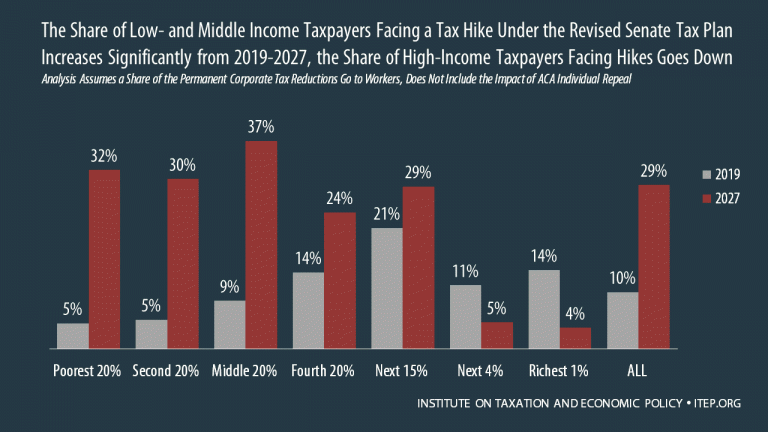
Revised Senate Plan Would Raise Taxes on at Least 29% of Americans and Cause 19 States to Pay More Overall
• By ITEP Staff
The tax bill reported out of the Senate Finance Committee on Nov. 16 would raise taxes on at least 29 percent of Americans and cause the populations of 19 states to pay more in federal taxes in 2027 than they do today.
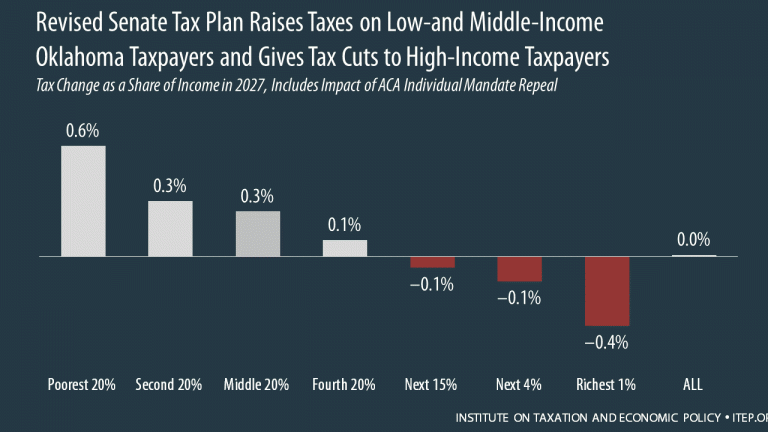
How the Revised Senate Tax Bill Would Affect Oklahoma Residents’ Federal Taxes
• By ITEP Staff
The Senate tax bill released last week would raise taxes on some families while bestowing immense benefits on wealthy Americans and foreign investors. In Oklahoma, 44 percent of the federal tax cuts would go to the richest 5 percent of residents, and 6 percent of households would face a tax increase, once the bill is fully implemented.
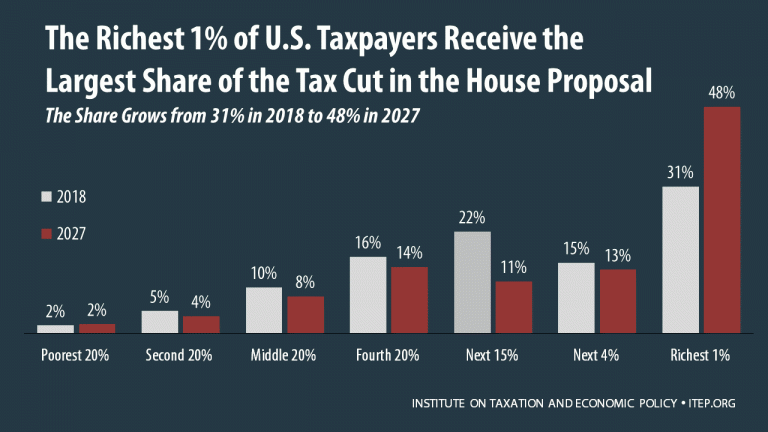
Analysis of the House Tax Cuts and Jobs Act
• By Matthew Gardner, Meg Wiehe, Steve Wamhoff
The Tax Cuts and Jobs Act, which was introduced on Nov. 2 in the House of Representatives, would raise taxes on some Americans and cut taxes on others while also providing significant savings to foreign investors.
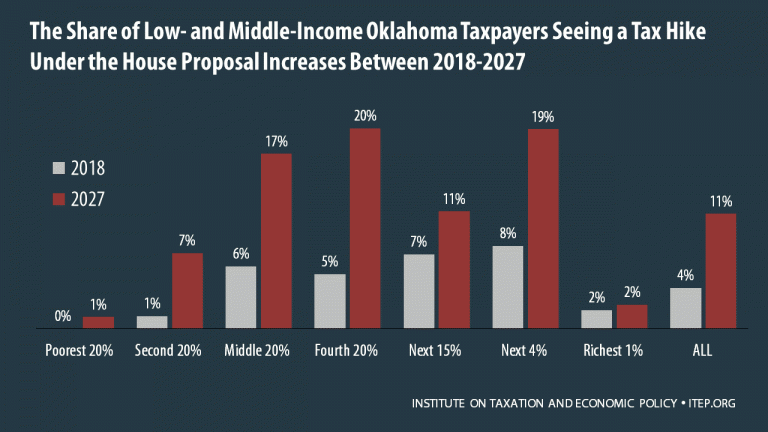
How the House Tax Proposal Would Affect Oklahoma Residents’ Federal Taxes
• By ITEP Staff
The Tax Cuts and Jobs Act, which was introduced on November 2 in the House of Representatives, includes some provisions that raise taxes and some that cut taxes, so the net effect for any particular family’s federal tax bill depends on their situation. Some of the provisions that benefit the middle class — like lower tax rates, an increased standard deduction, and a $300 tax credit for each adult in a household — are designed to…
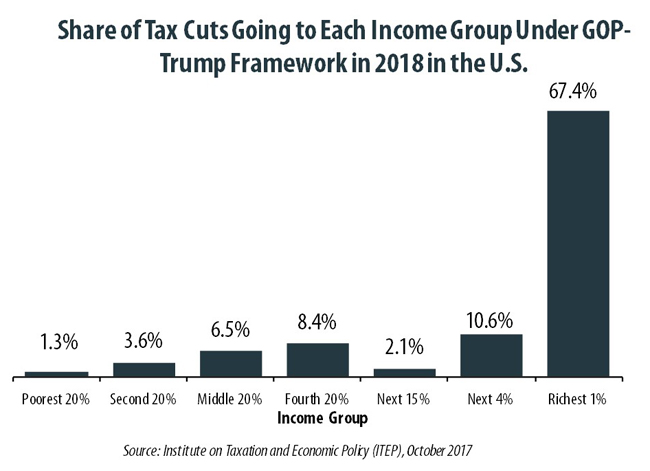
Benefits of GOP-Trump Framework Tilted Toward the Richest Taxpayers in Each State
• By Steve Wamhoff
The “tax reform framework” released by the Trump administration and Congressional Republican leaders on September 27 would affect states differently, but every state would see its richest residents grow richer if it is enacted. In all but a handful of states, at least half of the tax cuts would flow to the richest one percent of residents if the framework took effect.

GOP-Trump Tax Framework Would Provide Richest One Percent in Oklahoma with 61.7 Percent of the State’s Tax Cuts
• By ITEP Staff
The “tax reform framework” released by the Trump administration and congressional Republican leaders on September 27 would not benefit everyone in Oklahoma equally. The richest one percent of Oklahoma residents would receive 61.7 percent of the tax cuts within the state under the framework in 2018. These households are projected to have an income of at least $498,400 next year. The framework would provide them an average tax cut of $72,150 in 2018, which would…
State Rundown 9/28: Wisconsin Budget Finalized, Oklahoma Special Session Underway
• By ITEP Staff
This week, Wisconsin's leaders finalized the state budget at last, while those in Oklahoma began a special session to close their state's revenue shortfall. Soda tax fights made news in Illinois and Pennsylvania. And New Jersey offered Amazon $5 billion in tax subsidies.

State Tax Codes as Poverty Fighting Tools
• By ITEP Staff
Astonishingly, tax policies in virtually every state make it harder for those living in poverty to make ends meet. When all the taxes imposed by state and local governments are taken into account, every state imposes higher effective tax rates on poor families than on the richest taxpayers.
State Rundown 9/13: The Year of Unprecedented State Budget Impasses Continues
• By ITEP Staff
This week, Pennsylvania lawmakers risk defaulting on payments due to their extremely overdue budget and Illinois legislators will borrow billions to start paying their backlog of unpaid bills. Governing delves into why there were more such budget impasses this year than in any year in recent memory. And Oklahoma got closure from its Supreme Court on whether closing special tax exemptions counts as "raising taxes" (it doesn't).
Reducing the Cost of Child Care Through State Tax Codes in 2017
• By ITEP Staff
Low- and middle-income working parents spend a significant portion of their income on child care. As the number of parents working outside of the home continues to rise, child care expenses have become an unavoidable and increasingly unaffordable expense. This policy brief examines state tax policy tools that can be used to make child care more affordable: a dependent care tax credit modeled after the federal program and a deduction for child care expenses.
Rewarding Work Through State Earned Income Tax Credits in 2017
• By ITEP Staff
The Earned Income Tax Credit (EITC) is a policy designed to bolster the earnings of low-wage workers and offset some of the taxes they pay, providing the opportunity for struggling families to step up and out of poverty toward meaningful economic security. The federal EITC has kept millions of Americans out of poverty since its enactment in the mid-1970s. Over the past several decades, the effectiveness of the EITC has been magnified as many states…
The Oklahoman: Tax Holiday Debate Splits Those on the Left
August 31, 2017
The liberal Institute on Taxation and Economic Policy has been among those urging repeal of sales tax holidays. In Georgia, the liberal Georgia Budget and Policy Institute promoted repeal. In an interview with Governing magazine, Wesley Tharpe, research director of the Georgia Budget and Policy Institute, appeared dismissive of the savings the holiday provided low-income […]
State Rundown 8/23: Few Lingering Budget Debates Cannot Linger Much Longer
• By ITEP Staff
This week, Oklahoma lawmakers learned they'll need to enter a special session to balance their budget and that they'll likely face a lawsuit over their low funding of public education. Pennsylvania's budget stalemate is also coming to a head as the state literally runs out of funds to pay its bills. And Amazon's tax practices are in the news again as the company has been sued in South Carolina.
Nearly Half of Trump’s Proposed Tax Cuts Go to People Making More than $1 Million Annually
• By ITEP Staff
A tiny fraction of the U.S. population (one-half of one percent) earns more than $1 million annually. But in 2018 this elite group would receive 48.8 percent of the tax cuts proposed by the Trump administration. A much larger group, 44.6 percent of Americans, earn less than $45,000, but would receive just 4.4 percent of the tax cuts.
In Oklahoma 40.7 Percent of Trump’s Proposed Tax Cuts Go to People Making More than $1 Million
• By ITEP Staff
A tiny fraction of the Oklahoma population (0.3 percent) earns more than $1 million annually. But this elite group would receive 40.7 percent of the tax cuts that go to Oklahoma residents under the tax proposals from the Trump administration. A much larger group, 50.0 percent of the state, earns less than $45,000, but would receive just 5.4 percent of the tax cuts.

It’s a Fact: Voucher Tax Credits Offer Profits for Some “Donors”
• By Carl Davis
In nine states, tax rewards gained by donating to fund private K-12 vouchers are so oversized that “donors” can turn a profit. This is the shocking but true finding of a pair of studies released by ITEP over the last year.
Sound Tax Policy Made a Comeback in 2017
• By ITEP Staff
2017 marked a sea change in state tax policy and a stark departure from the current federal tax debate as dubious supply-side economic theories began to lose their grip on statehouses. Compared to the predominant trend in recent years of emphasizing top-heavy income tax cuts and shifting to more regressive consumption taxes in the hopes […]
Rewarding Work Through State Earned Income Tax Credits
• By Aidan Davis
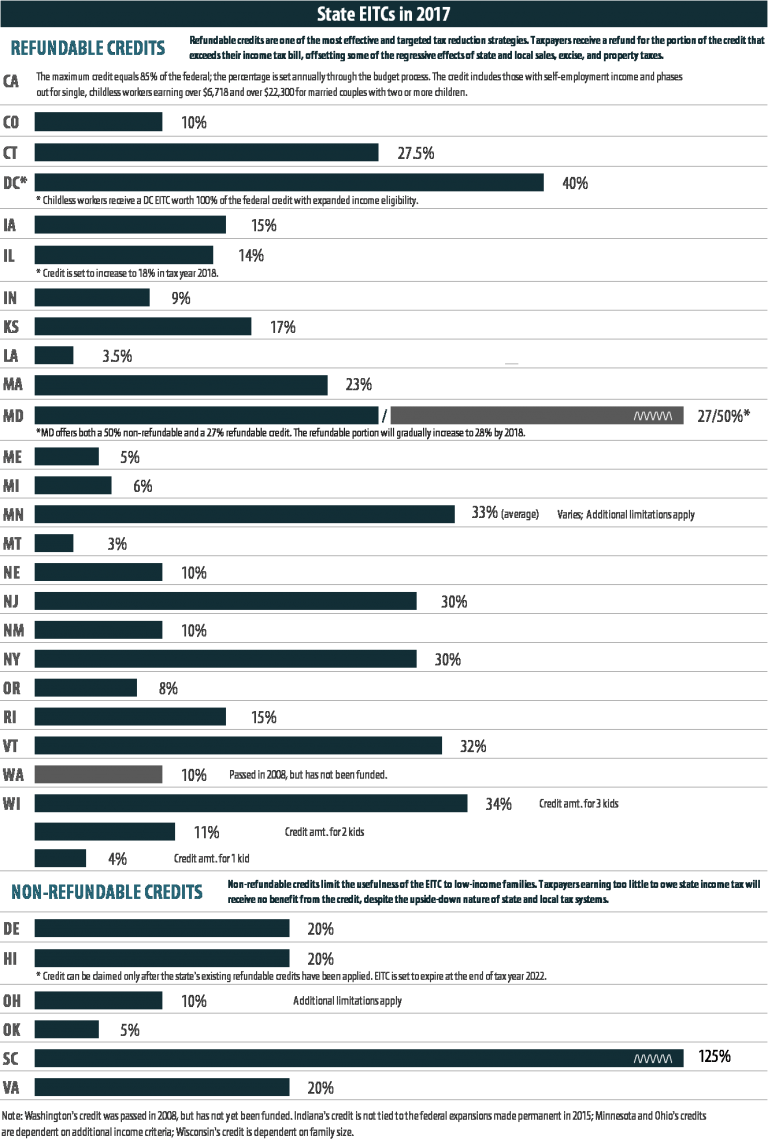
The Earned Income Tax Credit (EITC) is a policy designed to bolster the earnings of low-wage workers and offset some of the taxes they pay, providing the opportunity for struggling families to step up and out of poverty toward meaningful economic security. The federal EITC has kept millions of Americans out of poverty since its enactment in the mid-1970s. Over the past several decades, the effectiveness of the EITC has been magnified as many states…
Trump Tax Proposals Would Provide Richest One Percent in Oklahoma with 56.3 Percent of the State’s Tax Cuts
• By ITEP Staff
Earlier this year, the Trump administration released some broadly outlined proposals to overhaul the federal tax code. Households in Oklahoma would not benefit equally from these proposals. The richest one percent of the state’s taxpayers are projected to make an average income of $1,379,600 in 2018.
Trump’s $4.8 Trillion Tax Proposals Would Not Benefit All States or Taxpayers Equally
• By Matthew Gardner, Steve Wamhoff
The broadly outlined tax proposals released by the Trump administration would not benefit all taxpayers equally and they would not benefit all states equally either. Several states would receive a share of the total resulting tax cuts that is less than their share of the U.S. population. Of the dozen states receiving the least by this measure, seven are in the South. The others are New Mexico, Oregon, Maine, Idaho and Hawaii.
Newsday: Rural America Keeps Rejecting Big Wind
July 19, 2017
Since last October, NextEra Energy, the world’s biggest producer of wind energy, has filed lawsuits in federal and state courts against five rural governments, including the town of Hinton, Oklahoma, population: 3,000. NextEra is funding its courthouse mugging of small-town America with your tax dollars. A recent report by the Institute on Taxation and Economic […]
State Rundown 6/28: States Scramble to Finish Budgets Before July Deadlines
• By ITEP Staff
This week, several states attempt to wrap up their budget debates before new fiscal years (and holiday vacations) begin in July. Lawmakers reached at least short-term agreement on budgets in Alaska, New Hampshire, Rhode Island, and Vermont, but such resolution remains elusive in Connecticut, Delaware, Illinois, Maine, Pennsylvania, Washington, and Wisconsin.

Gas Taxes Will Rise in 7 States to Fund Transportation Improvements
• By Carl Davis
Summer gas prices are at their lowest level in twelve years, which makes right now a sensible time to ask drivers to pay a little more toward improving the transportation infrastructure they use every day. Seven states will be doing this on Saturday, July 1 when they raise their gasoline tax rates. At the same time, two states will be implementing small gas tax rate cuts.
How Long Has It Been Since Your State Raised Its Gas Tax?
• By Carl Davis
Many state governments are struggling to repair and expand their transportation infrastructure because they are attempting to cover the rising cost of asphalt, machinery, and other construction materials with fixed-rate gasoline taxes that are rarely increased.
