
Recent Work by ITEP
Using Private Debt Collectors as a Substitute for the IRS Is a Bad Deal
January 11, 2018 • By Matthew Gardner

If President Trump is indeed a deal maker, then he should dismantle Congress’s decision to rely on private debt collectors as a substitute for the Internal Revenue Service. This decision, championed for years by Sens. Charles Grassley, R-Iowa, and Chuck Schumer, D-New York, is a lousy deal for everyone--American taxpayers, the federal government--except private debt collectors.
New Tax Breaks for Craft Beer Are a Drop in the Barrel: 76 percent of Tax Bill’s Beer Tax Cut Goes to a Handful of the Biggest Producers
January 10, 2018 • By Matthew Gardner

The $1.5 trillion tax cut that took effect on Jan.1 was never really going to be about small businesses, despite President Trump’s transparently false claims to the contrary. However, one economic sector still appears happy, for now, to hoist a mug to Congress’s successful sleight of hand: craft breweries.
New Tax Law Allows Affluent Taxpayers to Write off K-12 Private School Tuition
January 9, 2018 • By Matthew Gardner

Taxpayers are still learning about the intended and unintended consequences of the major tax overhaul that Republican leaders ramrodded through late last year. One little-noted provision subverts state laws that prohibit the use of public dollars for private schools by allowing taxpayers to use 529 plans to pay for K-12 tuition. Until last year, the […]
State Rundown 1/4: Will States Show Resolve in a Challenging Year?
January 4, 2018 • By ITEP Staff
This week marks the beginning of what is bound to be a wild year for state tax and budget debates. Essentially every state is already working to sort through the complicated ramifications of the federal tax cuts passed in December, including Kansas, Michigan, Montana, and New Jersey highlighted below. These and other states will have important decisions to make about how to incorporate, reject, or mitigate various aspects of the new federal law, and will need considerable resolve to improve state tax policy to be more fair and more adequate – even as federal taxes become less so.
Corporate America, You Just Got a $650 Billion Tax Cut! What Are You Going to Do Next?
December 22, 2017 • By Matthew Gardner

While many Fortune 500 CEO’s likely had to restrain themselves from preemptively shouting “we’re going to Disneyland” in an homage to the Disney Corporation’s trademark ad spot involving the winner of each year’s Super Bowl, it’s pretty understandable that several of them—including known tax avoiders AT&T, Boeing, Comcast and Wells Fargo—would preemptively make grandiose promises that they will reserve part of their tax cuts for the little people who made it all possible.
These have been dark days for those who care about tax justice and public investments, but with the Winter Solstice this week and many states diving into their legislative sessions in January, longer days (and long work days) are soon to come! Governors and legislators are already proposing or hinting at their 2018 tax and budget plans in Alaska, California, Iowa, Maryland, and Washington. And transportation investments are getting strong support in Missouri, Oregon, and Virginia.
Final Tax Bill Hits Parents of College Students Harder than Other Taxpayers
December 19, 2017 • By Steve Wamhoff

While many provisions targeting higher education in previous versions of the tax plan were eventually dropped, little thought has been given to how the bill still raises taxes on parents at the time they are trying to pay for college tuition.
The Trump-GOP’s Big Giveaway to Multinational Corporations
December 19, 2017 • By Richard Phillips

The tax bill just approved by Congress was a golden opportunity to solve these problems for good—but turned out to be a colossal missed opportunity. Instead of addressing the hundreds of billions in lost federal tax revenue due to offshore tax avoidance schemes, the Trump-GOP tax bill would forgive most of the taxes owed on the profits held offshore right now and open the floodgates to even more offshore profit-shifting in the future.
Corker Claims Provisions Benefiting Him Could Not Have Changed His Vote Because He Never Read the Bill
December 18, 2017 • By Matthew Gardner

Many Republicans who had previously claimed to be deficit hawks have been cheerfully supportive of major tax-cutting legislation as it has moved forward this fall. But one Republican Senator, Bob Corker of Tennessee, has taken a defiant stance on the issue, insisting that “passing off increased debt to future generations” would be a deal-breaker for him. When the Senate passed its version of the tax plan last week, Corker was the only Republican to vote No.
Final GOP-Trump Bill Still Forces California and New York to Shoulder a Larger Share of Federal Taxes Under Final GOP-Trump Tax Bill; Texas, Florida, and Other States Will Pay Less
December 17, 2017 • By Meg Wiehe
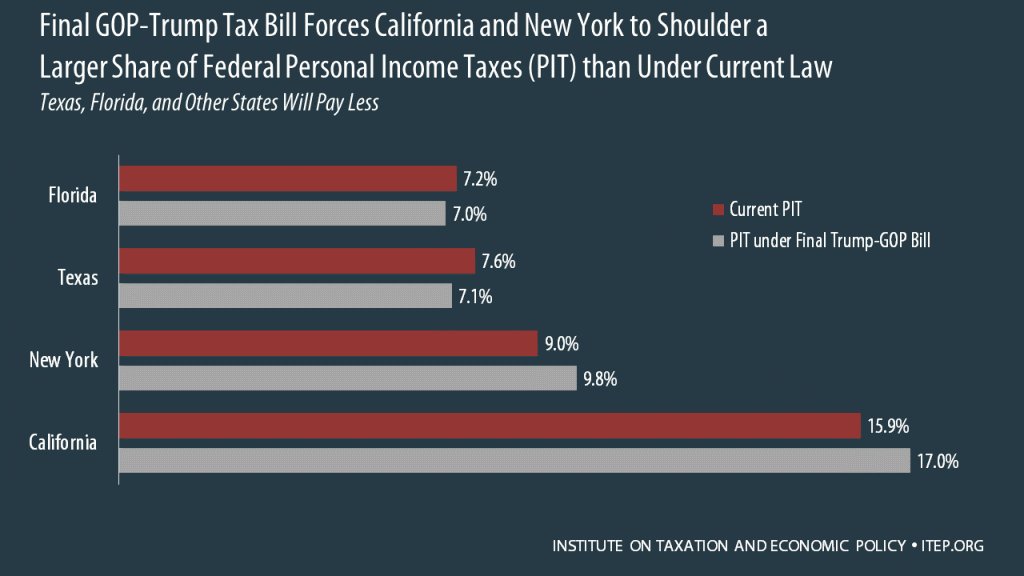
Residents of California and New York pay a large amount of the nation’s federal personal income taxes relative to their share of the population. As illustrated by the table below, the final GOP-Trump tax bill expected to be approved this week would substantially increase the share of total federal personal income taxes (PIT) paid by both states. Connecticut, Maryland, Massachusetts, and New Jersey would also see their share of federal PIT increase.
ITEP in the News
The Guardian: Billionaire Fortunes Have Reached All-Time Highs Under Trump. So Has the Movement To Tax Them
The Guardian: Washington State’s ‘Historic’ Millionaire Tax Takes Aim at Super-Rich – Will It Succeed?
Video: ITEP's Amy Hanauer Discusses How to Make the Federal Tax Code Fairer on WHYY
Politico: Governors Forgo Past Response to High Gasoline Prices
Stateline: Gas Prices Rise Again As Some States Consider Tax Holidays
ITEP Work in Action
FACT Coalition: Take the Money and Run – Amidst Oil Price Windfalls, U.S. Oil Majors Continue to Pay Less Tax at Home than Abroad
Brookings: The Caregiving Crisis and the 2026 Vote
Gov. Evers Vetoes Bill Requiring Wisconsin to Opt Into Nationwide Expansion of Private Voucher Schools
Oxfam: The Case for Fairly Taxing the Rich in New York
Economic Policy Institute: How ARPA State and Local Fiscal Recovery Funds Helped Ensure a Swift Post-COVID Recovery

Institute on Taxation
and Economic Policy
ITEP is a non-profit, non-partisan tax policy organization. We conduct rigorous analyses of tax and economic proposals and provide data-driven recommendations to shape equitable and sustainable tax systems.
Subscribe to ITEP Emails
Tax research and policy news in your inbox.
Promote Fair Tax Policy
Your gift to ITEP promotes tax justice. With your help, we do research that supports taxing millionaires and billionaires, taxing big corporations and raising revenue for the things our people, our communities and our planet need.
Together, we can create a country with more economic justice, more racial justice, more climate justice… and more tax justice.