
Idaho
Measures on the November Ballot Could Improve or Worsen State Tax Codes
October 26, 2022 • By Jon Whiten

In a couple of weeks, voters in a handful of states will weigh in on several tax-related ballot measures that could make state tax codes more equitable and raise money for public services, or take states in the opposite direction, making tax systems less fair and draining state coffers of dollars needed to maintain critical […]
More States are Boosting Economic Security with Child Tax Credits in 2022
September 15, 2022 • By Aidan Davis

After years of being limited in reach, there is increasing momentum at the state level to adopt and expand Child Tax Credits. Today ten states are lifting the household incomes of families with children through yearly multi-million-dollar investments in the form of targeted, and usually refundable, CTCs.
State Rundown 9/7: Labor Day Week Provides Sobering Reminder of Steps Forward, Back
September 7, 2022 • By ITEP Staff
Though Labor Day has passed, advocates on the ground in states across the country are continuing to uphold the spirit of the labor movement...
Idaho Center for Fiscal Policy: 2022 Special Legislative Session: Understanding Impacts of the Tax and Education Bill
September 1, 2022
State surpluses and strong revenue growth are leaving many states with a big opportunity this year. Idaho is no exception and is faced with options to advance policies that directly improve people’s lives in education, health care, housing, child care, transportation, and other budget areas. A 2022 Special Legislative Session bill that reduces taxes and […]
State Rundown 7/27: It’s (Sales Tax) Holiday Season, But Who’s Really Celebrating?
July 27, 2022 • By ITEP Staff
It’s the holiday season – well, the sales tax holiday season, that is. But after taking a closer look, you may notice that there is little to celebrate...
Legislative Momentum in 2022: New and Expanded Child Tax Credits and EITCs
July 22, 2022 • By Neva Butkus
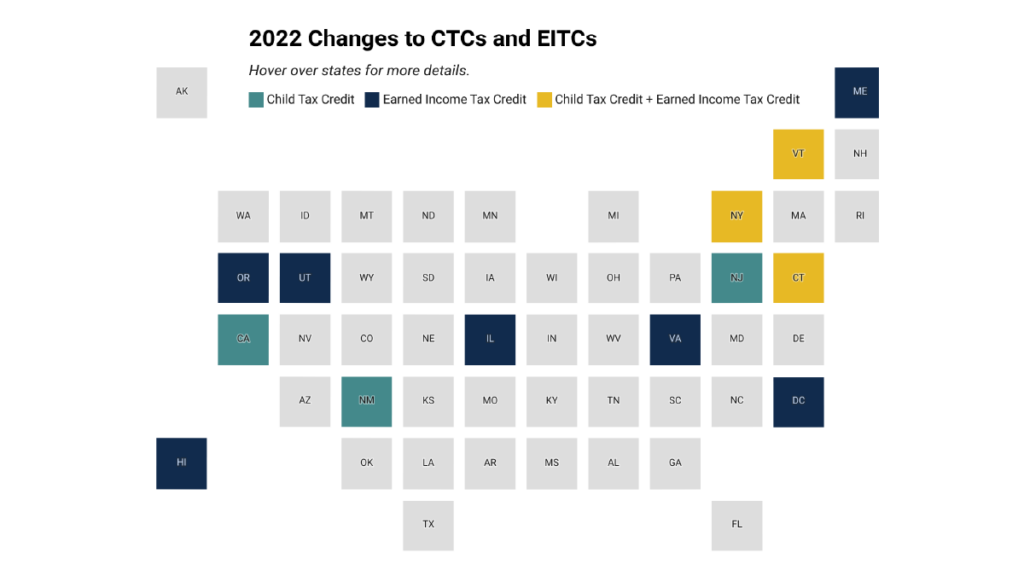
State legislatures across the country made investments in their future, centering children, families, and workers by enacting and expanding state Earned Income Tax Credits (EITCs), Child Tax Credits (CTCs), and other refundable credits this session. In total, seven states either expanded or created CTCs this session. Connecticut, New Mexico, New Jersey, Rhode Island and Vermont […]
Most States Used Surpluses to Reduce Taxes But Not in Sustainable or Progressive Ways
July 22, 2022 • By Kamolika Das

The average person on the street would have no idea that many states experienced unprecedented budget surpluses this year. Iowa, for instance, has the most structurally deficient bridges of any state with nearly 1 in 5 falling apart. The Iowa Board of Regents proposed a 4.25 percent tuition increase for all three state universities and […]
With inflation dominating headlines both nationally and locally, state lawmakers around the U.S. are searching for ways to put their revenues to good use, and not surprisingly, some options are better than others...
State Rundown 5/11: Mid-Year Special Elections and Primary Season Kicks Off with Taxes in the Spotlight
May 11, 2022 • By ITEP Staff
As 2022 inches closer to its midpoint, important tax policy decisions are being put in the hands of voters, as special elections and the primary season begin...
This Spring looks to be bringing a mix of showers and flowers as states around the nation continue to act on a range of tax proposals...
State Rundown 3/9: One State Stands Out Amid the Avalanche of Tax Cuts
March 9, 2022 • By ITEP Staff
The avalanche of regressive tax-cut proposals coming out of state legislatures has not slowed over the course of the winter months, but one state has provided a shot of hope to advocates of tax equity...
A Better Alternative: New Mexico Prioritizes Targeted, Temporary Tax Cuts
March 9, 2022 • By Marco Guzman
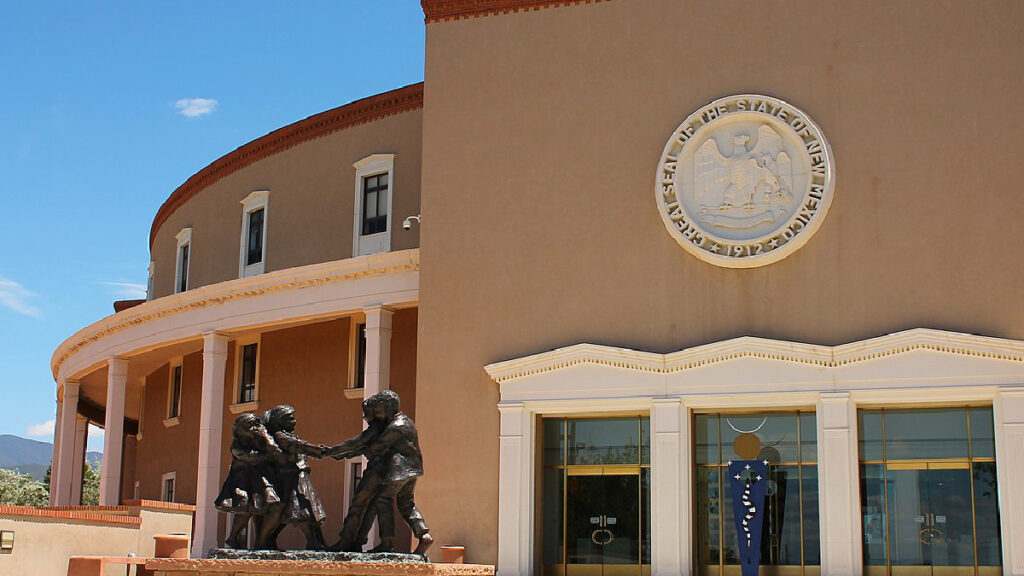
New Mexico stands in stark contrast to the many examples of poorly targeted tax-cut proposals currently being considered around the country.
ITEP is happy to announce the launch of our new State Tax Watch page, where you can find out about the most up-to-date tax proposals and permanent legislative changes happening across the country...
SOTU and GOP Response Highlight Dramatic Difference in Parties’ Tax Policy Approach
March 2, 2022 • By Aidan Davis, ITEP Staff, Jenice Robinson

Since last year, multiple states across the country have proposed or are pursuing costly income and other tax cuts that are heavily tilted toward the highest-income households. State advocates have worked to beat back these proposals and sounded the alarm about the long-term consequences of tax cuts, but legislatures (most GOP-led) continue to introduce and approve top-heavy and permanent tax cuts. This state tax-cut fervor took center stage last night when Gov. Kim Reynolds of Iowa gave the Republican response to President Biden's SOTU address.
While record state revenue surpluses have led to big pushes in red states to make unnecessary permanent income and corporate tax cuts, Democrats are also getting in on the tax-cut mania...
Idaho Center for Fiscal Policy: HB 436 Tax Cuts Benefit Wealthy Idahoans
February 7, 2022
The tax cuts proposed in HB 436 would benefit wealthy Idahoans the most. The bill would also collapse the state’s five tax brackets to four, and would lower the income tax rate on the wealthiest tax bracket from 6.5% to 6%. Read more
Idaho Center for Fiscal Policy: Idaho Families Would Benefit From Move to Include More Children in State’s Child Tax Credit
February 7, 2022
From housing to child care, hard-working Idaho families face high costs in our growing state. Since 2018, Idaho’s tax code has supported families through the state Child Tax Credit (CTC). In the American Rescue Plan Act (ARPA), Congress approved a temporary change to expand the definition of “child” to include 17-year-olds in tax year 2021. […]
One-time payments have become a common theme around the country, as Idaho is one of roughly eleven states with plans to provide tax relief in a similar fashion...
Idaho Press-Tribune: Who gets rebates, tax cuts under House bill
January 20, 2022
Idaho’s corporate income tax rate is a single rate of 6.5%; the bill would lower it to 6%. Necochea called that “throwing money out of the state,” citing figures from the Institute on Taxation and Economic Policy estimating that 81% of the benefit from that cut would flow out of state. “Corporate owners can live […]
Quad City Times: Record $600M Idaho tax cut clears House, heads to Senate
January 20, 2022
An analysis by the Institute on Taxation and Economic Policy, a nonprofit, nonpartisan tax policy organization based in Washington, D.C., found that the total tax benefits of the package for a person in the top 1% of Idaho income earners making $557,000 or more annually would benefit by $13,254. Read more
State Rundown 1/13: The Tax Cuts Cometh, But There Is a Better Way
January 13, 2022 • By ITEP Staff
As expected, with the start of many new legislative sessions around the country, lawmakers have introduced a slew of tax cut plans following better-than-expected budget outlooks that have, so far, weathered the impact of the pandemic...
State Rundown 12/15: Making Our State Tax Naughty or Nice List & Checking it Twice
December 15, 2021 • By ITEP Staff
As the holiday season kicks into full gear, we’re putting the finishing touches on our State Tax Naughty or Nice list, and it looks like some late entrants are making a good case to be included...
Bloomberg: SALT Debate Forces Rich Americans to Confront Widening Tax Gap
December 10, 2021
Lawmakers in Arizona, Arkansas, Idaho, Iowa, Louisiana, Missouri, Montana, North Carolina, Ohio and Oklahoma have also approved cuts to their top personal income tax going into effect either this year or in future years. “There are states moving in different directions,” said Carl Davis, research director at the left-leaning Institute on Taxation and Economic Policy. […]
Labor Day is around the corner and in the spirit of celebrating the achievements of workers around the country, we here at ITEP want to call attention to the states (and territories) that are using tax policy to support workers and residents alike...
The One Thing Missing From the Qualified Business Income Deduction Conversation: Racial Equity
August 25, 2021 • By Marco Guzman

When crafting tax policy, lawmakers and bill authors often work backward, using a patchwork of changes to help achieve their stated goal. One important consideration that is routinely left out is what impact the change will have on racial equity. Such is the case with the qualified business income deduction, which is helping to further enrich wealthy business owners, the overwhelming majority of whom are white. At present, white Americans own 88 percent of private business wealth despite making up only 60 percent of the population. Meanwhile, Black and Hispanic families confronting much higher barriers to entrepreneurship each own less…

Institute on Taxation
and Economic Policy
ITEP is a non-profit, non-partisan tax policy organization. We conduct rigorous analyses of tax and economic proposals and provide data-driven recommendations to shape equitable and sustainable tax systems.
Subscribe to ITEP Emails
Tax research and policy news in your inbox.
Promote Fair Tax Policy
Your gift to ITEP promotes tax justice. With your help, we do research that supports taxing millionaires and billionaires, taxing big corporations and raising revenue for the things our people, our communities and our planet need.
Together, we can create a country with more economic justice, more racial justice, more climate justice… and more tax justice.