
California
Extending Federal EITC Enhancements Would Bolster the Effects of State-Level Credits
September 13, 2021 • By Aidan Davis

The EITC expansion targets workers without children in the home. In 2022 it would provide a $12.4 billion boost, benefiting 19.5 million workers who on average would receive an income boost of $730 dollars.
Frequently Asked Questions about Proposals to Repeal the Cap on Federal Tax Deductions for State and Local Taxes (SALT)
September 3, 2021 • By Carl Davis, ITEP Staff, Steve Wamhoff

Even though Democrats in Congress uniformly opposed the TCJA because its benefits went predominately to the rich, many Democratic lawmakers now want to give a tax cut to the rich by repealing the cap on SALT deductions.
Labor Day is around the corner and in the spirit of celebrating the achievements of workers around the country, we here at ITEP want to call attention to the states (and territories) that are using tax policy to support workers and residents alike...
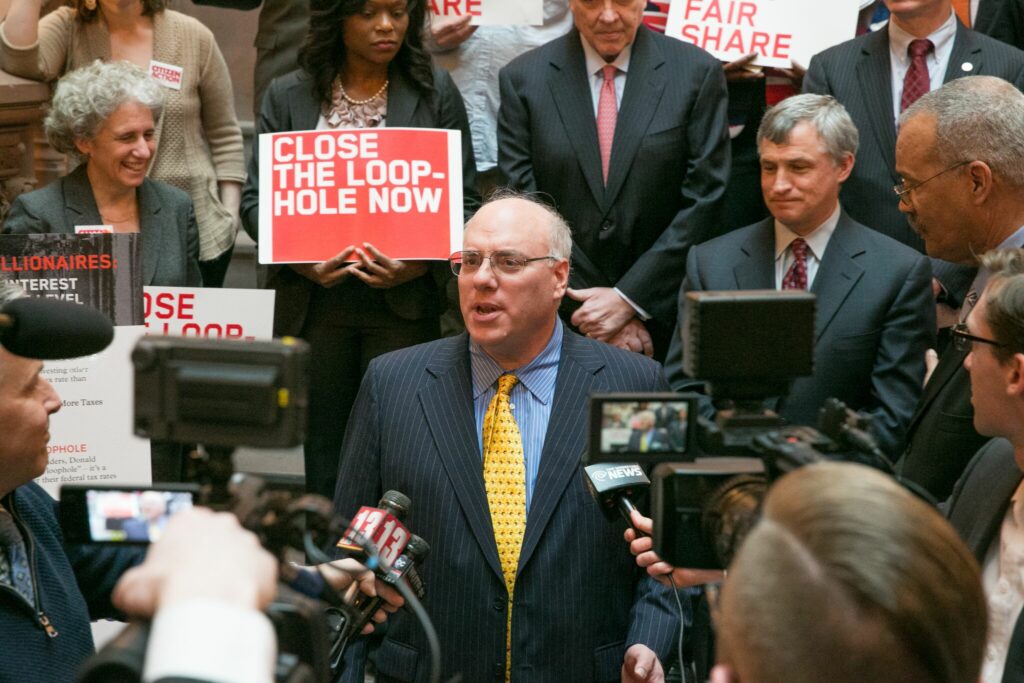
We asked New York state resident Morris Pearl, former Blackrock executive and current chair of the Patriotic Millionaires, a few questions to hear straight from the mouth of a millionaire how the SALT cap and its proposed repeal would affect his life.
Options to Reduce the Revenue Loss from Adjusting the SALT Cap
August 26, 2021 • By Carl Davis, ITEP Staff, Matthew Gardner, Steve Wamhoff

If lawmakers are unwilling to replace the SALT cap with a new limit on tax breaks that raises revenue, then any modification they make to the cap in the current environment will lose revenue and make the federal tax code less progressive. Given this, lawmakers should choose a policy option that loses as little revenue as possible and that does the smallest amount of damage possible to the progressivity of the federal tax code.
State Rundown 8/4: Tis the Season…for Unnecessary Sales Tax Holidays
August 4, 2021 • By ITEP Staff
It’s beginning to look a lot like that time of year again. That’s right, it’s sales tax holiday season and states across the country are doing their best to induce spending that would probably occur regardless...
State Rundown 7/21: States Go for Tax Policy Gold This Olympics Season
July 21, 2021 • By ITEP Staff
It’s Olympics season! As countries around the globe battle for first place in a plethora of sports and contests it’s as good a time as any to look around America to see which states deserve a gold medal in the ‘Equitable Tax Policy’ event...
Napa Valley Register: California’s progressive tax system proved its worth during the pandemic
July 8, 2021
In fact, the Institute on Taxation and Economic Policy reports that California’s tax system does the most of any state to alleviate inequality — while taxes in most states serve to widen the gap between rich and poor. Read more
State Rundown 7/7: The New Fiscal Year Starts off With a Bang, And Not Just Fireworks
July 7, 2021 • By ITEP Staff
States were busy over the past week despite the Fourth of July holiday. Many are gearing up for upcoming tax and budget clashes that could shape their futures for some time...

President Joe Biden's American Families and Jobs plans intend to “build back better” and create a more inclusive economy. To fully live up to this ideal, the final plan must include undocumented people and their families.

A growing group of state lawmakers are recognizing the extent to which low- and middle-income Americans are struggling and the ways in which their state and local tax systems can do more to ensure the economic security of their residents over the long run. To that end, lawmakers across the country have made strides in enacting, increasing, or expanding tax credits that benefit low- and middle-income families. Here is a summary of those changes and a celebration of those successes.
State Rundown 6/24: Late June State Fiscal Debates Unusually Active
June 24, 2021 • By ITEP Staff
Delayed legislative sessions and protracted federal aid debates have made for a busier June than normal for state fiscal debates. Arizona, New Hampshire, and North Carolina legislators, for example, are still pushing for expensive and regressive tax cuts in their states while they remain in session...
Taxing rich households and large corporations to fund vital investments in education and other shared priorities has long been a winner in the eyes of the American public, and more recently has also enjoyed a string of victories in state legislatures and at the ballot box. That win streak continued this week as Arizona’s voter-approved tax surcharge on the rich and Seattle, Washington’s payroll tax on high-profit, high-salary businesses both survived court challenges, and Massachusetts leaders approved a millionaires tax to go before voters next year.
State Rundown 6/7: Remaining State Legislative Sessions Are Heating up as Budget Deadlines Loom
June 7, 2021 • By ITEP Staff
Just as an early summer heatwave brought soaring temperatures this past weekend through much of the lower 48 states, several state legislative sessions are heating up as legislators scramble to make tough budget decisions. Massachusetts lawmakers are voting on a fiery new "millionaires' tax" that would support transportation and education revenue needs, and Connecticut will likely restore its state Earned Income Tax Credit (EITC) back to 30 percent. Illinois’s decision to cut back corporate tax breaks also provided a breath of fresh air. Unfortunately, we'd give other state tax proposals a more lukewarm reception: New Hampshire, North Carolina, and Ohio…
Bloomberg: Hedge Funds, Tech Spur Texas Wealth Boom as California Fades
June 4, 2021
The growth comes with headaches. Traffic is getting worse and public transportation is limited. The influx of people is driving up housing prices, forcing up the cost of living by boosting property taxes. Given high levies on real estate and the state sales tax, the fiscal burden on middle-class people is higher in Texas than […]
Income Tax Increases in the President’s American Families Plan
May 25, 2021 • By ITEP Staff, Matthew Gardner, Steve Wamhoff
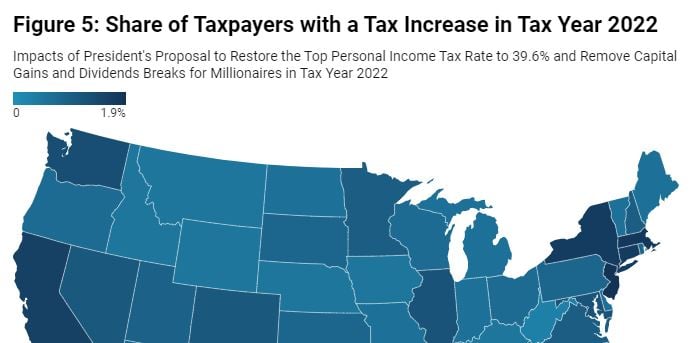
President Biden’s American Families Plan includes revenue-raising proposals that would affect only very high-income taxpayers.[1] The two most prominent of these proposals would restore the top personal income tax rate to 39.6 percent and eliminate tax breaks related to capital gains for millionaires. As this report explains, these proposals would affect less than 1 percent of taxpayers and would be confined almost exclusively to the richest 1 percent of Americans. The plan includes other tax increases that would also target the very well-off and would make our tax system fairer. It would raise additional revenue by more effectively enforcing tax…
State Rundown 5/13: States Get Federal Aid and Guidance as Many Sessions Wind Down
May 13, 2021 • By ITEP Staff
We had our noses buried in new American Rescue Plan guidance...when we heard the refreshing news that Missouri leaders are on the verge of modernizing their tax code, not only by becoming the final state to apply sales taxes to online purchases, but also by enacting an Earned Income Tax Credit (EITC)...Meanwhile, tax debates are also highly active in California, Colorado, Louisiana, Maine, and Nebraska. We also share some of our own reporting on recent efforts in Arizona and several other states to undermine voter-approved reforms and democratic institutions themselves.
Nearly 20 Million Will Benefit if Congress Makes the EITC Enhancement Permanent
May 13, 2021 • By Aidan Davis
Overall, the EITC enhancement would provide a $12.4 billion boost in 2022 if made permanent, benefiting 19.5 million workers. It would have a particularly meaningful impact on the bottom 20 percent of eligible households who would receive more than three-fourths of the total benefit. Forty-one percent of households in the bottom 20 percent of earners would benefit, receiving an average income boost of 6.3 percent, or $740 dollars.
Effects of the President’s Capital Gains and Dividends Tax Proposals by State
May 6, 2021 • By ITEP Staff, Matthew Gardner, Steve Wamhoff

President Biden’s proposal to eliminate the lower income tax rate on capital gains (profits from selling assets) and stock dividends for millionaires would affect less than half of one percent (0.4 percent) of U.S. taxpayers if it goes into effect in 2022. The share of taxpayers affected would be less than 1 percent in every state.
The Sacramento Bee: California parents would get big tax breaks under Biden proposal. Here’s how much to expect
May 1, 2021
Low and middle income families struggling to pay for child care and other expenses would see big new tax breaks through 2025 under the White House’s new child tax credit plan, according to a new analysis. Most of the breaks would go to households with incomes less than $51,700, but even those with lower six […]
Bloomberg: N.Y., New Jersey, California Hit Hardest by Biden Tax Changes
April 29, 2021
President Joe Biden’s plan to ramp up the income tax rate and capital gains tax rate as part of a $1.8 trillion stimulus plan would hit high-tax states like New York and California the hardest, while New Mexico and Mississippi would be least affected, according to research from the Institute on Taxation and Economic Policy. […]
Bold Progressive State Tax Victories Provide Bright Spots in Difficult Year
April 27, 2021 • By Dylan Grundman O'Neill

“Bold progressive victories” is probably not the first phrase that comes to mind when thinking about state laws enacted so far in 2021...But progressive advocates, lawmakers, and voters have won some tremendous victories in states recently...We should celebrate them for the achievements they are—and closely study them for lessons they can teach about how to bring about positive progressive change in these and other states.
Bloomberg: The Myth of the Middle-Class SALT Cap Victim
April 23, 2021
Once again, if you make well under $1 million a year and your tax rate really did go up from 2017 to 2018 because of the SALT cap, I’m not denying that your suffering is real. But you appear to be in a distinct minority even in New York, New Jersey, Connecticut, California and other […]
Just as a recent cold snap reminded us that spring has not fully sprung yet, this week’s news has been full of reminders that state fiscal debates aren’t quite finished either...

Young workers are confronting a harsh economic reality filled with student loan debt and far too few good-paying jobs. The pandemic reinforced this group’s long history of not receiving proper benefits, such as health insurance, from their employers. They also are often overlooked when it comes to policies that promote economic wellbeing. The federal Earned Income Tax Credit (EITC), for example, is a glowing success story. It lifted 5.8 million people out of poverty in 2018, including 3 million children. But a key shortcoming of the federal EITC: working adults without children in the home receive little to no benefit.
