
New York
Do you remember/the big tax news innn September? Well, if not, we at ITEP got you covered...
How the Inflation Reduction Act’s Tax Reforms Can Help Close the Racial Wealth Gap
September 20, 2022 • By Brakeyshia Samms, Joe Hughes

Lawmakers have many opportunities to pass reforms that will make our tax code fairer and further reduce racial inequity in our economy. The Inflation Reduction Act is a great step forward; better taxing wealth and income from wealth and expanding targeted refundable tax credits would build on this progress.
ITEP Policy Briefs: More and More States Are Helping Low-Income Families with New and Expanded Tax Credits
September 15, 2022 • By ITEP Staff
13 states plus D.C. created or expanded state CTCs or EITCs this year, helping create more equitable state tax systems WASHINGTON, D.C.: In 2022’s state legislative sessions, lawmakers across the country advanced tax policies that will bolster the economic security of millions of low- and moderate-income working families through new and enhanced Child Tax Credits […]
Boosting Incomes and Improving Tax Equity with State Earned Income Tax Credits in 2022
September 15, 2022 • By Aidan Davis
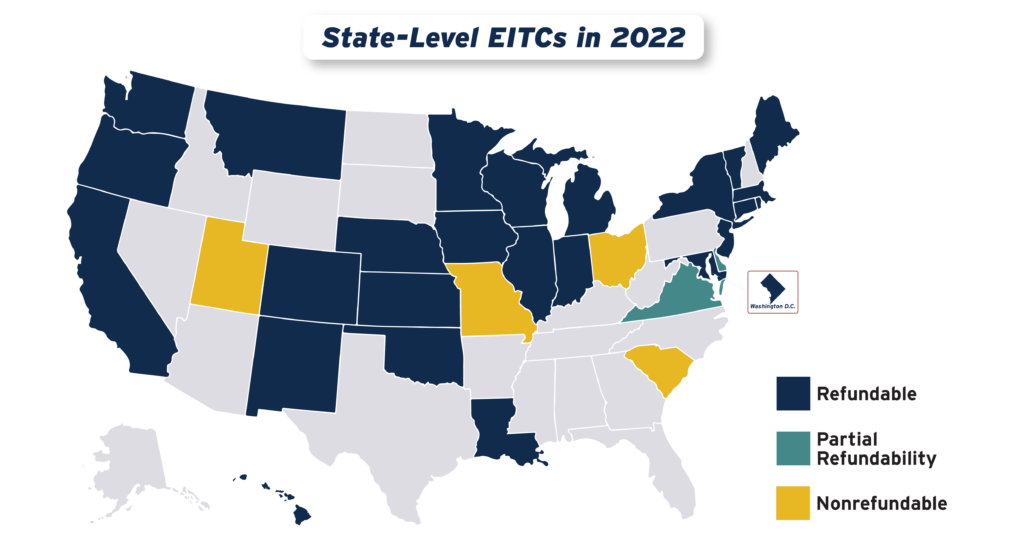
States continued their recent trend of advancing EITCs in 2022, with nine states plus the District of Columbia either creating or improving their credits. Utah enacted a 15 percent nonrefundable EITC, while the District of Columbia, Hawaii, Illinois, Maine, Vermont and Virginia expanded existing credits. Meanwhile, Connecticut, New York and Oregon provided one-time boosts to their EITC-eligible populations.
More States are Boosting Economic Security with Child Tax Credits in 2022
September 15, 2022 • By Aidan Davis

After years of being limited in reach, there is increasing momentum at the state level to adopt and expand Child Tax Credits. Today ten states are lifting the household incomes of families with children through yearly multi-million-dollar investments in the form of targeted, and usually refundable, CTCs.
Census Data Shows Need to Make 2021 Child Tax Credit Expansion Permanent
September 14, 2022 • By Joe Hughes
The Child Tax Credit expansion led to a 46 percent decline in childhood poverty. That it could be accomplished during the largest economic disruption in most of our lifetimes underscores a basic fact: thoughtful, decisive government action to combat poverty works.
State Rundown 9/7: Labor Day Week Provides Sobering Reminder of Steps Forward, Back
September 7, 2022 • By ITEP Staff
Though Labor Day has passed, advocates on the ground in states across the country are continuing to uphold the spirit of the labor movement...
National and State-by-State Estimates of Two Approaches to Expanding the Child Tax Credit
September 7, 2022 • By Emma Sifre, Joe Hughes, Steve Wamhoff

The Romney Child Tax Credit plan would leave a quarter of children worse off compared to current law and help half as many low-income children as the 2021 expansion of the credit.

Everyone loves a deal, so it’s no surprise why the appeal of the state sales tax holiday continues to persist. This year, 20 states will forgo more than $1 billion in combined revenue to enact a variety of sales tax holidays that—like most things that are too good to be true—will do little to provide meaningful benefits and instead undermine funding for public services.
State Rundown 8/10: States Still Talking Taxes as IRA Dominates Headlines
August 10, 2022 • By ITEP Staff
While federal tax policy has dominated the headlines with the Senate’s recent approval of the Inflation Reduction Act, lawmakers in statehouses across the country...
Jon Whiten
August 3, 2022 • By ITEP Staff

Jon leads ITEP’s work to shape the public debate around tax policy and ensure that policymakers, advocates, and other stakeholders are using ITEP’s data and analysis in order to make sound decisions.
State Rundown 7/27: It’s (Sales Tax) Holiday Season, But Who’s Really Celebrating?
July 27, 2022 • By ITEP Staff
It’s the holiday season – well, the sales tax holiday season, that is. But after taking a closer look, you may notice that there is little to celebrate...
Legislative Momentum in 2022: New and Expanded Child Tax Credits and EITCs
July 22, 2022 • By Neva Butkus
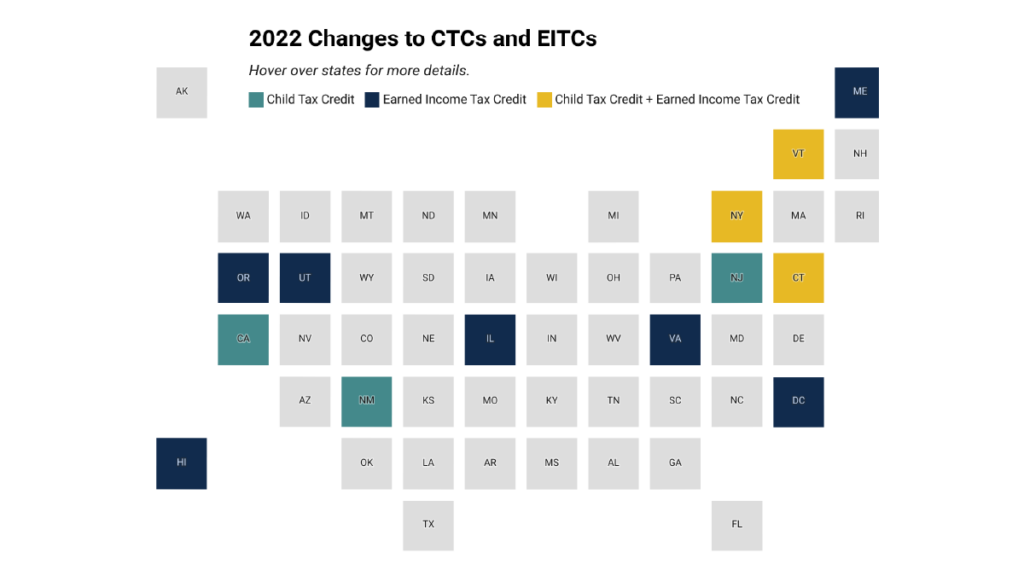
State legislatures across the country made investments in their future, centering children, families, and workers by enacting and expanding state Earned Income Tax Credits (EITCs), Child Tax Credits (CTCs), and other refundable credits this session. In total, seven states either expanded or created CTCs this session. Connecticut, New Mexico, New Jersey, Rhode Island and Vermont […]
Most States Used Surpluses to Reduce Taxes But Not in Sustainable or Progressive Ways
July 22, 2022 • By Kamolika Das

The average person on the street would have no idea that many states experienced unprecedented budget surpluses this year. Iowa, for instance, has the most structurally deficient bridges of any state with nearly 1 in 5 falling apart. The Iowa Board of Regents proposed a 4.25 percent tuition increase for all three state universities and […]
New ITEP Brief Shows How State Sales Tax Holidays Fail to Live Up to the Hype
July 20, 2022 • By Marco Guzman

Twenty states this year have decided to go so far as to forgo a combined $1 billion in vital tax revenue in favor of conveniently popular yet ultimately ineffective sales tax holidays. Whether it’s a state looking for a way to help families manage the rising cost of goods or to celebrate back-to-school shopping season, these policy options are poorly targeted and an inadequate use of state tax revenue that could be doing more to make childcare more affordable, health care more accessible and high-quality education available to everyone.
Sales Tax Holidays: An Ineffective Alternative to Real Sales Tax Reform
July 20, 2022 • By Marco Guzman
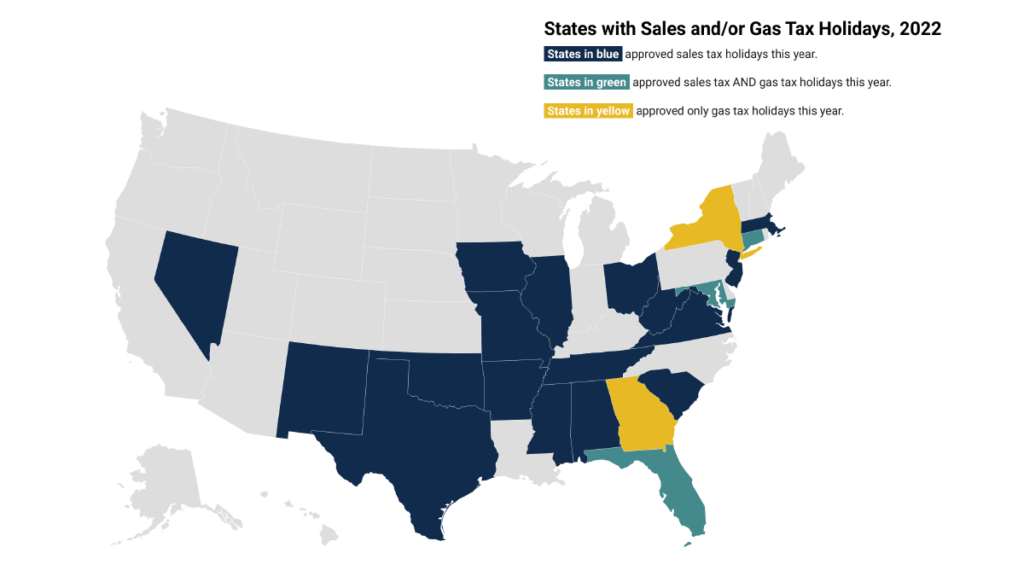
Lawmakers in many states have enacted “sales tax holidays” (20 states will hold them in 2022) to temporarily suspend the tax on purchases of clothing, school supplies, and other items. These holidays may seem to lessen the regressive impacts of the sales tax, but their benefits are minimal while their downsides are significant—particularly as lawmakers have sought to apply the concept as a substitute for more meaningful, permanent reform or arbitrarily reward people with specific hobbies or in certain professions. This policy brief looks at sales tax holidays as a tax reduction device.
From the Bay State to the Golden State, lawmakers across the nation are making deals and negotiating budgets with major tax implications...
Although the sun is shining and Independence Day is right around the corner, many state lawmakers are still indoors hammering out the details of future budgets or still hard at work passing laws...
With many state legislative sessions wrapped or wrapping up, we at ITEP want to take a moment to direct your attention south, and specifically, to the American South...
Creating Racially and Economically Equitable Tax Policy in the South
June 21, 2022 • By Kamolika Das
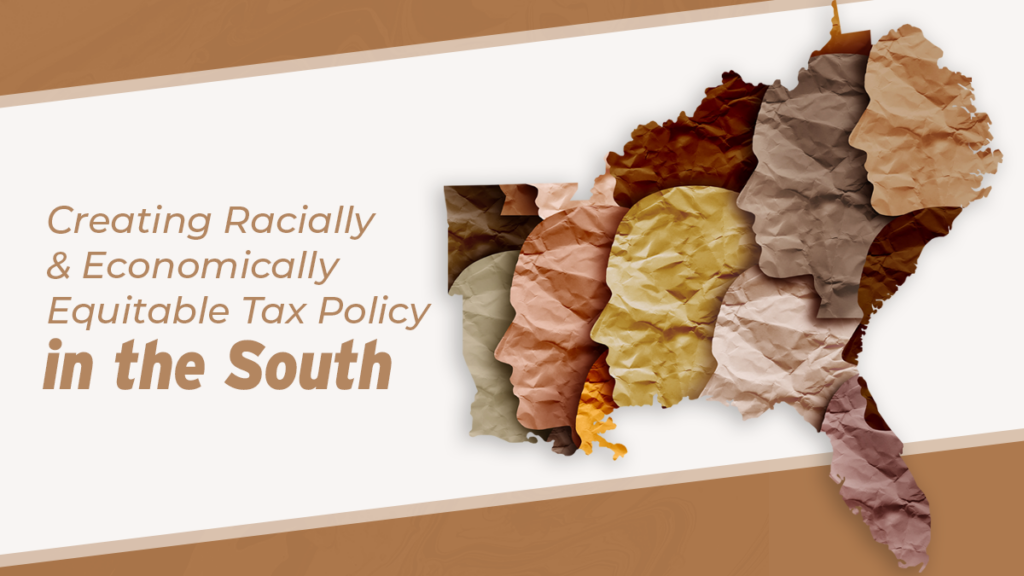
The South's negative outcomes on measures of wellbeing are the result of a century and a half of policy choices. Lawmakers have many options available to make concrete improvements to tax policy that would raise more revenue, do so equitably, and generate resources that could improve schools, healthcare, social services, infrastructure, and other public resources.
With inflation dominating headlines both nationally and locally, state lawmakers around the U.S. are searching for ways to put their revenues to good use, and not surprisingly, some options are better than others...
State Rundown 6/8: Tax Policy Features Prominently During Budget and Primary Season
June 8, 2022 • By ITEP Staff
As voters head to the polls to weigh in on their state’s primary elections and legislators convene to hash out budget deals, tax policy remains atop the agenda...
The New York Times: State Lawmakers, Step Up and Govern
May 17, 2022
Below is an excerpt of a letter to the editor by Aidan Davis: The overarching theme that ties most of them together is that they are a default reaction among leaders who lack an ambitious, positive vision for the role of government. Read more
State Rundown 5/11: Mid-Year Special Elections and Primary Season Kicks Off with Taxes in the Spotlight
May 11, 2022 • By ITEP Staff
As 2022 inches closer to its midpoint, important tax policy decisions are being put in the hands of voters, as special elections and the primary season begin...
Revenue-Raising Proposals in President Biden’s Fiscal Year 2023 Budget Plan
April 26, 2022 • By Steve Wamhoff

President Biden's latest budget plan includes proposals that would raise $2.5 trillion in new revenue. While many of these reforms appeared in his previous budget, some of them are brand new, such as his proposal to prevent basis-shifting in partnerships and his Billionaires Minimum Income Tax.
