
New York
New York Times: Will a Corporate Tax Holiday Give Workers Anything to Cheer?
September 26, 2017
Apple alone is sitting on an overseas stash of almost $260 billion, according to Bloomberg, while Microsoft has more than $120 billion parked abroad. The pharmaceutical giant Pfizer does not regularly disclose how much of its offshore profits are stored in foreign tax havens, but the Institute on Taxation and Economic Policy estimates that at […]
New York Times: Nothing Is Too Strange for Cities Wooing Amazon to Build There
September 25, 2017
Tax policy experts are more skeptical of Amazon’s bidding process and how much cities stand to benefit. “Why are they doing this whole dog and pony show? Amazon wants something for nothing,” said Matthew Gardner, a senior fellow at the Institute on Taxation and Economic Policy, a nonpartisan think tank. “They would like a package […]
State Rundown 9/25: No Rest for the Weary as State Tax and Budget Debates Wind Down, Ramp Up
September 25, 2017 • By ITEP Staff
Last week, Wisconsin leaders finally came to agreement on a state budget, while their peers in Connecticut appear to be close behind them. Iowa lawmakers avoided a special session with a short-term fix and will have to return to their structural deficit issues next session, as will those in Louisiana who will face a $1 billion shortfall. Meanwhile, District of Columbia leaders have already resumed meeting and discussing tax and budget issues there.

Astonishingly, tax policies in virtually every state make it harder for those living in poverty to make ends meet. When all the taxes imposed by state and local governments are taken into account, every state imposes higher effective tax rates on poor families than on the richest taxpayers.

State lawmakers seeking to make residential property taxes more affordable have two broad options: across-the-board tax cuts for taxpayers at all income levels, such as a homestead exemption or a tax cap, and targeted tax breaks that are given only to particular groups of low- and middle-income taxpayers. One such targeted program to reduce property taxes is called a “circuit breaker” because it protects taxpayers from a property tax “overload” just like an electric circuit breaker: when a property tax bill exceeds a certain percentage of a taxpayer’s income, the circuit breaker reduces property taxes in excess of this “overload”…
Politifact: Will Trump’s Decision on DACA Hurt New York’s Economy?
September 10, 2017
A small part of the lost economic contribution is tax receipts. Undocumented immigrants eligible for DACA contribute more than $2 billion in state and local taxes each year, according to research from the Institute on Taxation and Economic Policy. More than $140 million comes from DACA eligible immigrants in New York state. Read more
Turning Loopholes into Black Holes: Trump’s Territorial Tax Proposal Would Increase Corporate Tax Avoidance
September 6, 2017 • By Matthew Gardner, Steve Wamhoff
The problem of offshore tax avoidance by American corporations could grow much worse under President Donald Trump’s proposal to adopt a “territorial” tax system, which would exempt the offshore profits of American corporations from U.S. taxes. This change would increase the already substantial benefits American corporations obtain when they use accounting gimmicks to make their profits appear to be earned in a foreign country that has no corporate income tax or has one that is extremely low or easy to avoid.
The New York Times: Trump Tax Plan May Free Up Corporate Dollars, but Then What?
August 30, 2017
But skeptics worry that making the system airtight is impossible. “It’s an endless cat-and-mouse game,” said Matthew Gardner, senior fellow at the Institute on Taxation and Economic Policy, a research group based in Washington. “What’s driving companies to engage in paper transactions is not our 35 percent tax rate,” he said, but other countries’ willingness […]
The New York Times: It’s a Myth That Corporate Tax Cuts Mean More Jobs
August 30, 2017
According to the Institute on Taxation and Economic Policy, AT&T enjoyed an effective tax rate of just 8 percent between 2008 and 2015, despite recording a profit in the United States each year, by exploiting tax breaks and loopholes. (The company argues that it pays significant taxes, at a rate close to 34 percent in […]
State Rundown 8/23: Few Lingering Budget Debates Cannot Linger Much Longer
August 23, 2017 • By ITEP Staff
This week, Oklahoma lawmakers learned they'll need to enter a special session to balance their budget and that they'll likely face a lawsuit over their low funding of public education. Pennsylvania's budget stalemate is also coming to a head as the state literally runs out of funds to pay its bills. And Amazon's tax practices are in the news again as the company has been sued in South Carolina.
New York Times: Does Amazon Pay Taxes?
August 17, 2017
“If this was five years ago, the tweet would be making a very compelling point,” said Carl Davis, the research director of the left-leaning Institute on Taxation and Economic Policy. Historically, “there is no doubt that Amazon used its ability to not collect sales tax to gain a competitive advantage.” But that criticism is outdated. […]
Nearly Half of Trump’s Proposed Tax Cuts Go to People Making More than $1 Million Annually
August 17, 2017 • By ITEP Staff
A tiny fraction of the U.S. population (one-half of one percent) earns more than $1 million annually. But in 2018 this elite group would receive 48.8 percent of the tax cuts proposed by the Trump administration. A much larger group, 44.6 percent of Americans, earn less than $45,000, but would receive just 4.4 percent of the tax cuts.
In New York 57.9 Percent of Trump’s Proposed Tax Cuts Go to People Making More than $1 Million
August 17, 2017 • By ITEP Staff
A tiny fraction of the New York population (0.6 percent) earns more than $1 million annually. But this elite group would receive 57.9 percent of the tax cuts that go to New York residents under the tax proposals from the Trump administration. A much larger group, 44.8 percent of the state, earns less than $45,000, but would receive just 3.6 percent of the tax cuts.
New York Times: Questions Emerge Over What Wisconsin Must Give for Foxconn Plant
August 11, 2017
Mr. Walker, who has made promises of job creation a centerpiece of his two terms in office, has pushed lawmakers to move quickly in approving the bill, which would offer Foxconn, a producer of flat-panel display screens for televisions and other consumer electronics, close to $3 billion in state tax credits. The subsidies for the […]
This week, Rhode Island lawmakers agreed on a budget, leaving only three states – Connecticut, Pennsylvania, and Wisconsin – without complete budgets. Texas, however, remains in special session and West Virginia could go back into another special session over tax issues. And in New York City, the mayor proposes a tax on the wealthy to […]
USA Today: In Some States, Sales Tax Holidays Lose Luster
August 4, 2017
For more than a decade after New York started the modern trend in 1997, the number of states with annual sales tax holidays grew steadily. But the count peaked at 19 in 2010, and this year’s tally is one fewer than last year. The Institute on Taxation and Economic Policy estimates that states lost $300 million […]
The New York Times: Wisconsin’s Lavish Lure for Foxconn: $3 Billion in Tax Subsidies
July 28, 2017
Big companies like Foxconn possess leverage to extract concessions from state governments that smaller firms cannot, said Carl Davis, research director at the nonpartisan Institute on Taxation and Economic Policy in Washington. “This is not a comprehensive strategy for economic development,” he said. “If Wisconsin were going to offer this kind of subsidy for every […]
50-State Analysis of Trump’s Tax Outline: Poorer Taxpayers and Poorer States are Disadvantaged
July 20, 2017 • By Alan Essig
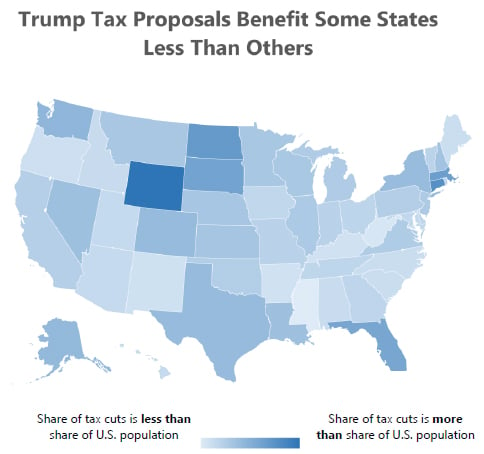
Not only would President Trump’s proposed tax plan fail to deliver on its promise of largely helping middle-class taxpayers, it also would shower a disproportionate share of the total tax cut on taxpayers in some of the richest states while southern and a few other states would receive a smaller share of the tax cut […]
Trump Tax Proposals Would Provide Richest One Percent in New York with 66.9 Percent of the State’s Tax Cuts
July 20, 2017 • By ITEP Staff
Earlier this year, the Trump administration released some broadly outlined proposals to overhaul the federal tax code. Households in New York would not benefit equally from these proposals. The richest one percent of the state’s taxpayers are projected to make an average income of $3,234,000 in 2018. They would receive 66.9 percent of the tax cuts that go to New York’s residents and would enjoy an average cut of $176,680 in 2018 alone.
Trump’s $4.8 Trillion Tax Proposals Would Not Benefit All States or Taxpayers Equally
July 20, 2017 • By Matthew Gardner, Steve Wamhoff
The broadly outlined tax proposals released by the Trump administration would not benefit all taxpayers equally and they would not benefit all states equally either. Several states would receive a share of the total resulting tax cuts that is less than their share of the U.S. population. Of the dozen states receiving the least by this measure, seven are in the South. The others are New Mexico, Oregon, Maine, Idaho and Hawaii.
Sales Tax Holidays: An Ineffective Alternative to Real Sales Tax Reform
July 12, 2017 • By ITEP Staff
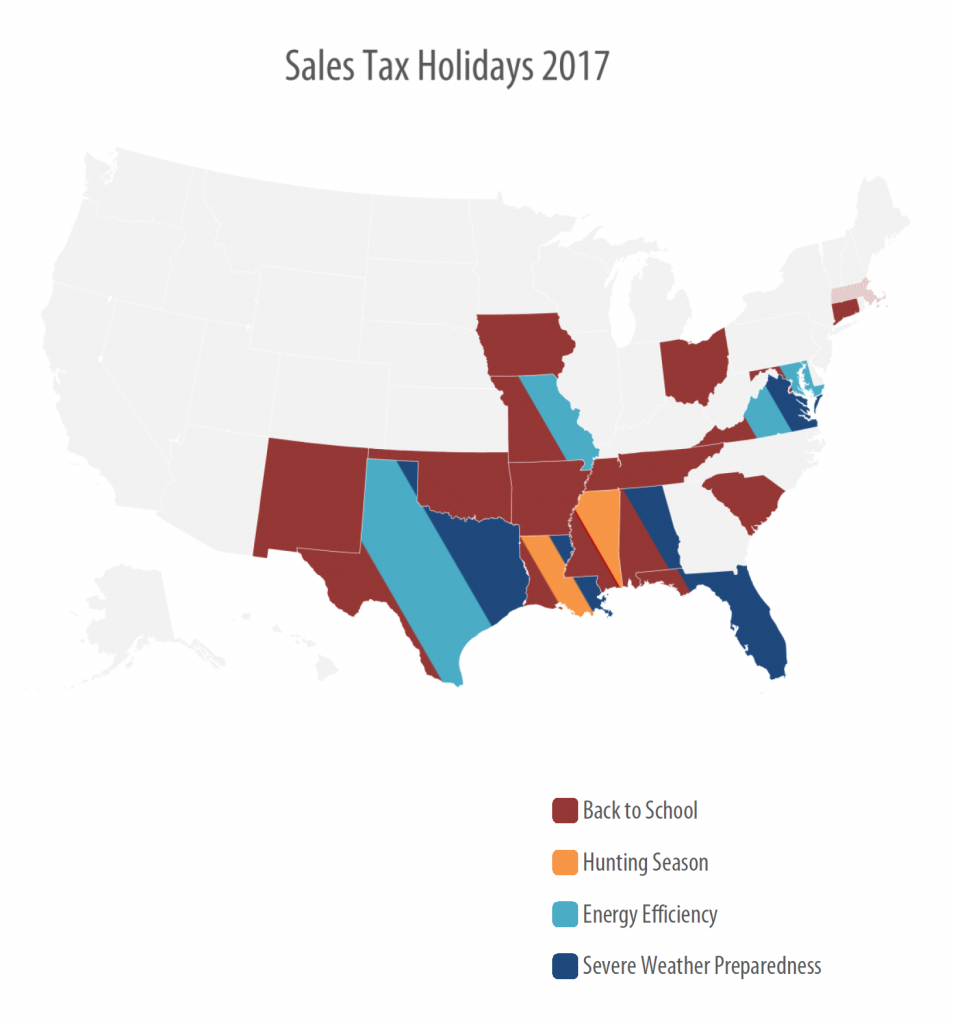
Sales taxes are an important revenue source, composing close to half of all state tax revenues. But sales taxes are also inherently regressive because the lower a family’s income, the more the family must spend on goods and services subject to the tax. Lawmakers in many states have enacted “sales tax holidays” (at least 16 states will hold them in 2017), to provide a temporary break on paying the tax on purchases of clothing, school supplies, and other items. While these holidays may seem to lessen the regressive impacts of the sales tax, their benefits are minimal. This policy brief…
Trump Budget Uses Unrealistic Economic Forecast to Tee Up Tax Cuts
June 29, 2017 • By Carl Davis

The Trump Administration recently released its proposed budget for Fiscal Year 2018. The administration claims that its proposals would reduce the deficit in nearly every year over the next decade before eventually achieving a balanced budget in 2027, but the assumptions it uses to reach this conclusion are deeply flawed. This report explains these flaws and their consequences for the debate over major federal tax changes.
Senate Health Care Reform Bill Just as “Mean” as the House Version
June 26, 2017 • By Alan Essig
The Congressional Budget Office today released its score of the Senate Health Care proposal and the news is not good. It’s no wonder a narrow group of 13 lawmakers cobbled together the bill behind closed doors. Now that the measure has seen the light of day, we know that it epitomizes Robin Hood in reverse policies by snatching health coverage from 22 million people by 2026 (15 million in 2018) while showering tax cuts on the already wealthy.
Which States Benefit from the Tax Cuts in the GOP Health Plan?
June 15, 2017 • By Steve Wamhoff
Congressional Republicans’ plans to repeal the two largest tax increases on individuals that were enacted as part of the Affordable Care Act (ACA) would disproportionately benefit residents of Connecticut, New York, the District of Columbia and 10 other states. The remaining states would receive a share of the tax cuts that is less than their share of the total U.S. population.
Steve Wamhoff
June 8, 2017 • By ITEP Staff

Steve is ITEP’s director of federal tax policy. In this role, he is responsible for setting the organization’s federal research and policy agenda. He is the author of numerous reports and analyses of federal tax policies as well as in-depth policy briefs that outline how the federal income tax and corporate tax code can be overhauled to improve tax fairness.
