
Oklahoma
Reducing the Cost of Child Care Through State Tax Codes in 2018
• By Aidan Davis
Families in poverty contribute over 30 percent of their income to child care compared to about 6 percent for families at or above 200 percent of poverty. Most families with children need one or more incomes to make ends meet which means child care expenses are an increasingly unavoidable and unaffordable expense. This policy brief examines state tax policy tools that can be used to make child care more affordable: a dependent care tax credit…
Updating Sales and Excise Taxes to Reflect Today’s Economy
• By ITEP Staff
Consumers’ growing interest in online shopping and “gig economy” services like Uber and Airbnb has forced states and localities to revisit their sales taxes, for instance. Meanwhile new evidence on the dangers and causes of obesity has led to rising interest in soda taxes, but the soda industry is fighting back. Carbon taxes are being discussed as a tool for combatting climate change. And changing attitudes toward cannabis use have spurred some states to move…

The Fight for Education Funding: State Revenue Needs and Responses in 2018
• By Aidan Davis
States’ need for revenue and increased investment in key public services is not unique to this legislative session. But the extent of disinvestment—particularly in education—has been a driving force behind policy discussion and state legislative action this year. In many cases ill-advised tax cuts coupled with persistent school funding cuts led states to this common fate, initiating a powerful and growing trend. Here’s how lawmakers in a handful of state responded:
Sales Tax Holidays: An Ineffective Alternative to Real Sales Tax Reform
• By Dylan Grundman O'Neill
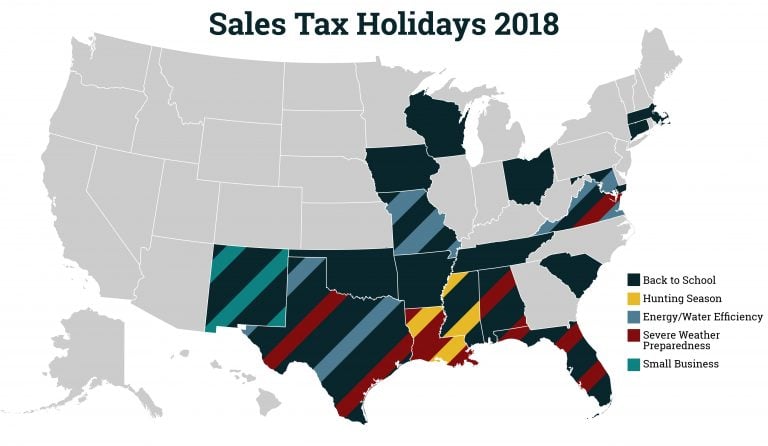
An updated version of this brief for 2019 is available here. Read this report in PDF. Overview Sales taxes are an important revenue source, composing close to half of all state tax revenues.[1] But sales taxes are also inherently regressive because the lower a family’s income, the more the family must spend on goods and […]

State Rundown 7/10: Budget Brinksmanship and Ballot Battles
• By ITEP Staff
New Jersey avoided a second consecutive shutdown and proved that even against staunch opposition, progressive solutions to states' fiscal issues are attainable, and Arizona voters will likely have a chance to solve their education funding crisis in a similar way. Budget and tax debates remain to be resolved, however, in Maine and Massachusetts. Meanwhile, voters are gaining a clearer picture of what questions they will be asked on ballots this fall as signature drives conclude…
Fox Business: Higher State Taxes, Not OPEC, Boosting Gas Prices
July 5, 2018
In July, Oklahoma, South Carolina and Tennessee were among seven states that raised their gas taxes Opens a New Window. . At least 27 states have raised or updated their gas taxes since 2013, according to a report from the Institute on Taxation and Economic Policy Opens a New Window. . California – where drivers pay some […]
The Nation: Will Red-State Protests Spark Electoral Change?
July 5, 2018
State lawmakers came “out of the gate in 2011 with a pretty regressive, large-scale tax-cut plan,” said Meg Wiehe, deputy director of the Institute on Taxation and Economic Policy (ITEP), a nonprofit, tax-focused research group. Led by Governor Fallin, the Oklahoma GOP wanted to scrap the income tax entirely—a plan that was the brainchild of […]
USA Today: Gas Taxes Rise Sunday in Seven States as AAA Projects Record Travel for July 4th
July 2, 2018
Massive teacher protests this spring in Oklahoma, West Virginia, Kentucky and other states prompted the Oklahoma Legislature to raise taxes on cigarettes, fuel and oil and gas production to pay for raises averaging $6,100 per year and to boost funding for schools, support personnel and state workers. “The last time the Sooner State raised its gas tax […]
The Other SALT Cap Workaround: Accountants Steer Clients Toward Private K-12 Voucher Tax Credits
• By Carl Davis
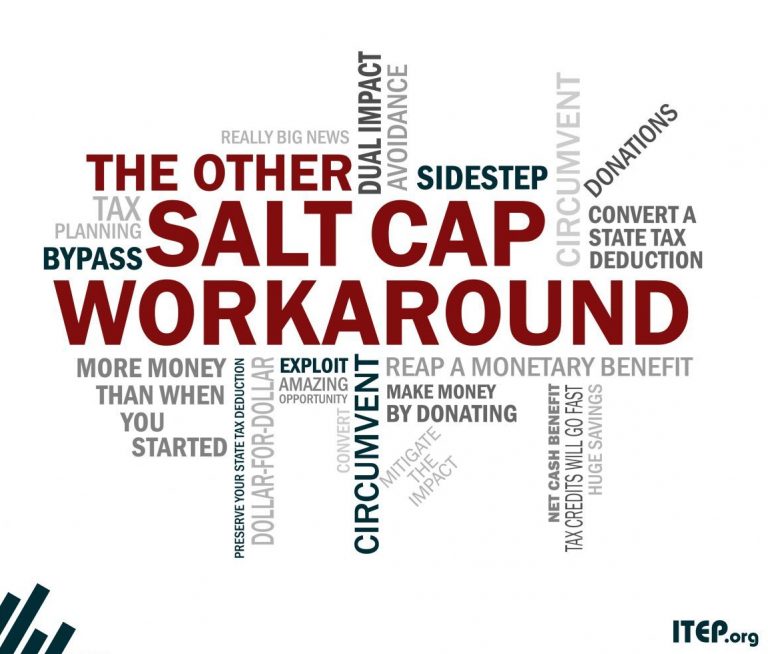
On May 23, 2018, the IRS and Treasury Department announced that they “intend to propose regulations addressing the federal income tax treatment of certain payments made by taxpayers for which taxpayers receive a credit against their state and local taxes.” They made the announcement in response to new “workaround tax credits” enacted in New York […]
Gas Taxes Rise in Seven States, Including an Historic Increase in Oklahoma
• By Carl Davis
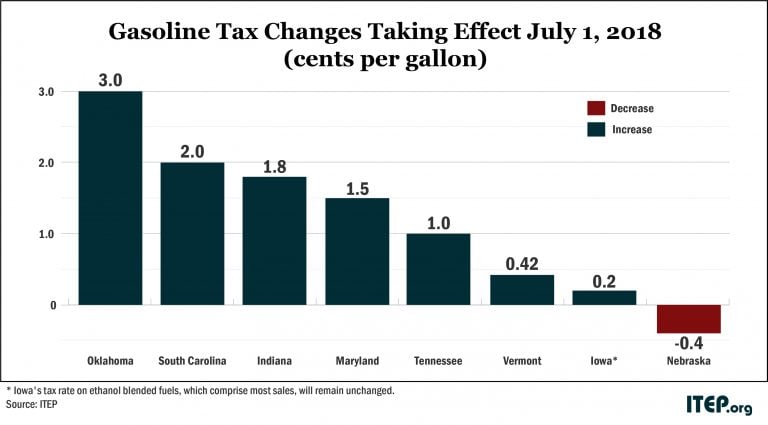
A rare sight is coming to Oklahoma. The last time the Sooner State raised its gas tax rate, the Berlin Wall was still standing, and Congress was debating whether to ban smoking on flights shorter than two hours. Fast forward 31 years, and Oklahoma is finally at it again. On Sunday, the state’s gas tax rate will rise by 3 cents and its diesel tax rate by 6 cents. Both taxes will now stand at…
Oklahoma Policy Institute: On Immigration Rhetoric, Consider the Facts
• By ITEP Staff
These undocumented Oklahomans currently contribute about $85 million in state and local taxes per year, according to our best estimates. They pay sales tax directly when they purchase goods and services, just like the rest of us, and they pay property taxes through owning a home or paying rent. Although they are not technically eligible […]
Oklahoma Policy Institute: To Improve Public Safety and Insurance rates, Allow Undocumented Oklahomans to Drive Legally
• By ITEP Staff
Oklahoma’s approximately 95,000 undocumented immigrants are a force in Oklahoma’s economy, accounting for about 1 in 30 members of the workforce and contributing roughly $85 million in state and local taxes annually. But despite their positive economic contributions, undocumented residents face arrest and/or deportation for doing something that many Oklahomans do every day: driving. Read […]

SALT/Charitable Workaround Credits Require a Broad Fix, Not a Narrow One
• By Carl Davis
The federal Tax Cuts and Jobs Act (TCJA) enacted last year temporarily capped deductions for state and local tax (SALT) payments at $10,000 per year. The cap, which expires at the end of 2025, disproportionately impacts taxpayers in higher-income states and in states and localities more reliant on income or property taxes, as opposed to sales taxes. Increasingly, lawmakers in those states who feel their residents were unfairly targeted by the federal law are debating…
Most States Have Raised Gas Taxes in Recent Years
• By Carl Davis
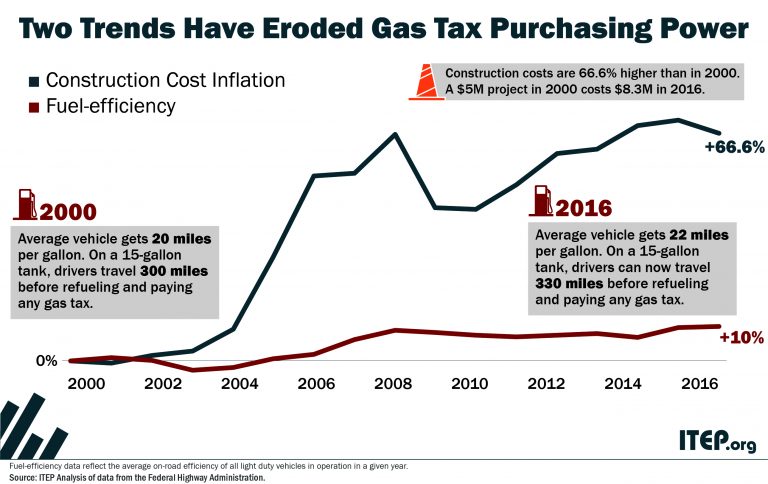
An updated version of this blog was published in April 2019. State tax policy can be a contentious topic, but in recent years there has been a remarkable level of agreement on one tax in particular: the gasoline tax. Increasingly, state lawmakers are deciding that outdated gas taxes need to be raised and reformed to fund infrastructure projects that are vital to their economies.
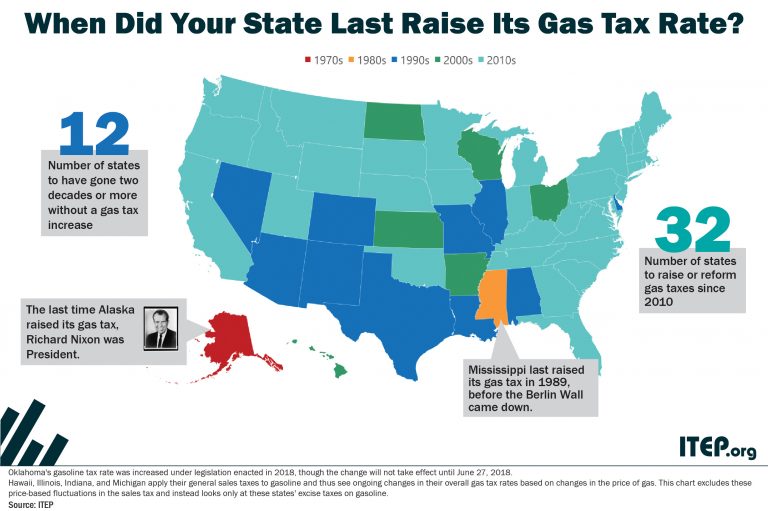
How Long Has It Been Since Your State Raised Its Gas Tax?
• By ITEP Staff
Many state governments are struggling to repair and expand their transportation infrastructure because they are attempting to cover the rising cost of asphalt, machinery, and other construction materials with fixed-rate gasoline taxes that are rarely increased.
NC Teachers’ March on Raleigh and the Tax Cuts that Led Them There
• By Aidan Davis
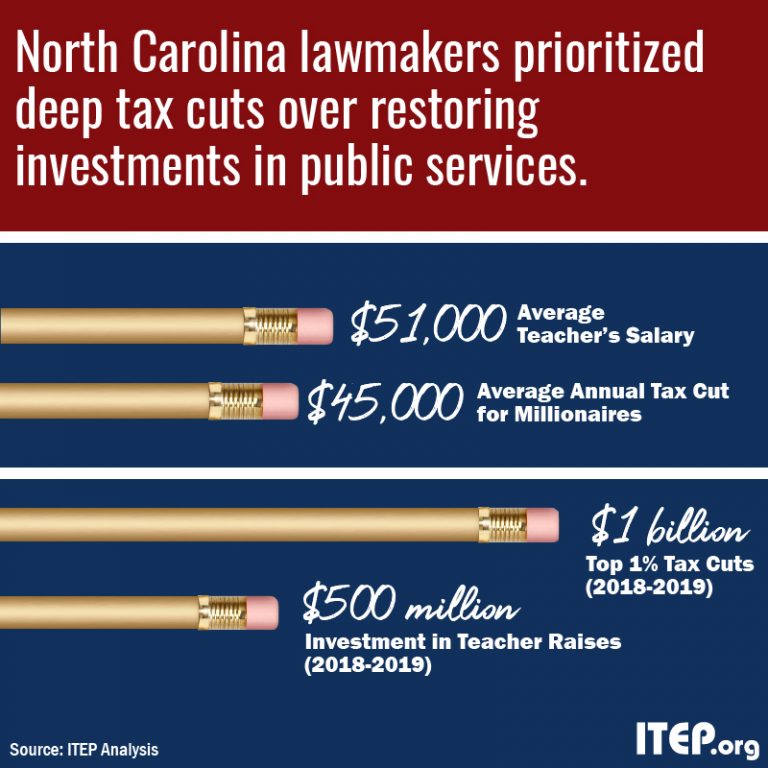
Once again, public school teachers are taking a stand for education and against irresponsible, top-heavy tax cuts that deprive states of the revenue they need to sufficiently fund public services, including education.

Millionaires Average Annual Tax Cut in North Carolina Is Comparable to Average Teacher’s Salary
• By Meg Wiehe
North Carolina lawmakers' misplaced priorities are evident: The recent rounds of tax cuts will provide the state’s millionaires with an average annual tax break of more than $45,000, which is nearly as much as the average teacher’s annual salary of about $50,000.
State Rundown 5/3: Progressive Revenue Solutions to Fiscal Woes Gaining Traction
• By ITEP Staff
This week, Arizona teachers continued to strike over pay issues and advocates unveiled a progressive revenue solution they hope to put before voters, while a progressive income tax also gained support as part of a resolution to Illinois's budget troubles. Iowa and Missouri legislators continued to try to push through unsustainable tax cuts before their sessions end. And Minnesota and South Carolina focused on responding to the federal tax-cut bill.
State Rundown 12/31/9999: IRS Glitch and Legislative Impasses Extend Tax Season
• By ITEP Staff
This week the IRS website asked some would-be tax filers to return after December 31, 9999. State legislators don't have quite that much time, but are struggling to wrap up their tax debates on schedule as well. Iowa legislators, for example, are ironically still debating tax cuts despite having run out of money to cover their daily expenses for the year. Nebraska's session wrapped up, but its tax debate continues in the form of a…
State Rundown 4/13: Teacher Strikes, Special Sessions, Federal Cuts Haunting States
• By ITEP Staff
This Friday the 13th is a spooky one for many state lawmakers, as past bad fiscal decisions have been coming back to haunt them in the form of teacher strikes and walk-outs in Arizona, Kentucky, and Oklahoma. Meanwhile, policymakers in Maryland, Nebraska, New Jersey, Oregon, and Utah all attempted to exorcise negative consequences of the federal tax-cut bill from their tax codes. And our What We're Reading section includes yet another stake to the heart…
Washington Post: Behind Oklahoma’s Teacher Strike: Years of Tax Cuts and an Energy Slump
April 12, 2018
Some states that have also recently pushed through big income tax cuts, including North Carolina and Ohio, did so while also broadening their tax base, according to Meg Wiehe of the Institute on Taxation and Economic Policy. But until this year, Oklahoma did very little to balance rate reductions with increases in the tax base. Oklahoma raised […]
Vox: How Tax Cuts for the Rich Led to the Oklahoma Teachers Strike
• By ITEP Staff
Before the strike last week, the state legislature tried to avert the work stoppage by passing a $447 million tax increase that effectively gives teachers an average annual pay bump of $6,000. That concession from the state legislature didn’t meet the teachers’ full demands, but it was a huge win considering the state legislature hadn’t approved a tax increase since 1990.
State Rundown 4/5: Education Funding Issues Take Center Stage
• By ITEP Staff
This week, Kentucky legislators passed a bill shifting taxes onto low- and middle-income families, Oklahoma legislators reached a deal on education funding, and their counterparts in Kansas proffered multiple proposals for their education funding needs. Meanwhile, tax debates are coming down to the wire in Iowa, Missouri, and Nebraska, and responses to the federal tax-cut bill were settled on in Maryland, New York, and Wisconsin.
Teachers’ Strikes Are Emblematic of Larger Tax Challenges for States
• By Meg Wiehe
As other researchers as well as journalists have noted, teachers striking or threatening to strike over low wages and overall lack of investment isn’t simply a narrative about schools and public workers’ pay. It is illustrative of a broader conflict over tax laws and how states and local jurisdictions fund critical public services that range from K-12 education, public safety, roads and bridges, health care, parks, to higher education.
State Rundown 3/30: Several Major Tax Debates Will March on into April
• By ITEP Staff
This week, after the recent teacher strike in West Virginia, teacher pay crises brought on by years of irresponsible tax cuts also made headlines in Arizona and Oklahoma. Maine and New York lawmakers continue to hash out how they will respond to the federal tax bill. And their counterparts in Missouri and Nebraska attempt to push forward their tax cutting agendas.
