
Iowa

All I Want for Christmas is a Clean DREAM Act
• By Misha Hill
As 2017 draws to close, Congress has yet to take legislative action to protect Dreamers. The young undocumented immigrants who were brought to the United States as children, and are largely working or in school, were protected by President Obama’s 2012 executive action, Deferred Action for Childhood Arrivals (DACA). But in September, President Trump announced that he would end DACA in March 2018. Instead of honoring the work authorizations and protection from deportation that currently…

State Rundown 12/7: States Try to Plan While Awaiting Federal Tax Decisions
• By ITEP Staff
Though most eyes were on Congress rather than states this week, several states have been taking stock of their fiscal situations. Wyoming lawmakers considered ways to resolve budget shortfalls, Kansas and New Mexico legislators got some minor good news about their states' revenues, their counterparts in Minnesota and Vermont grappled with less encouraging revenue news, and those in West Virginia were just happy to hear their revenues had at least met expectations for once.
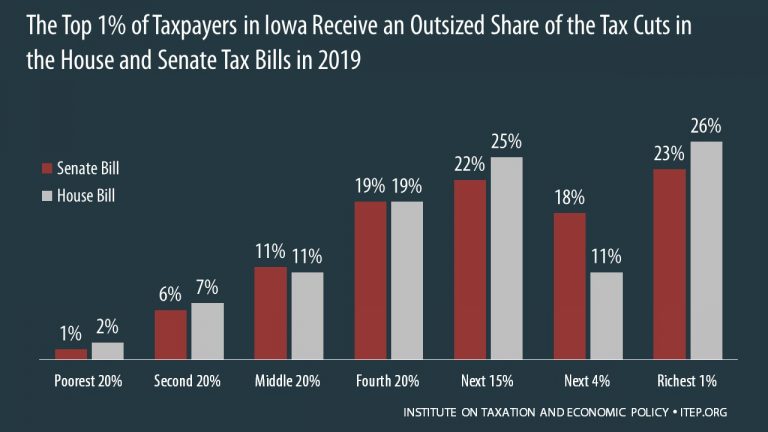
How the House and Senate Tax Bills Would Affect Iowa Residents’ Federal Taxes
• By ITEP Staff
The House passed its “Tax Cuts and Jobs Act” November 16th and the Senate passed its version December 2nd. Both bills would raise taxes on many low- and middle-income families in every state and provide the wealthiest Americans and foreign investors substantial tax cuts, while adding more than $1.4 trillion to the deficit over ten years. The graph below shows that both bills are skewed to the richest 1 percent of Iowa residents.
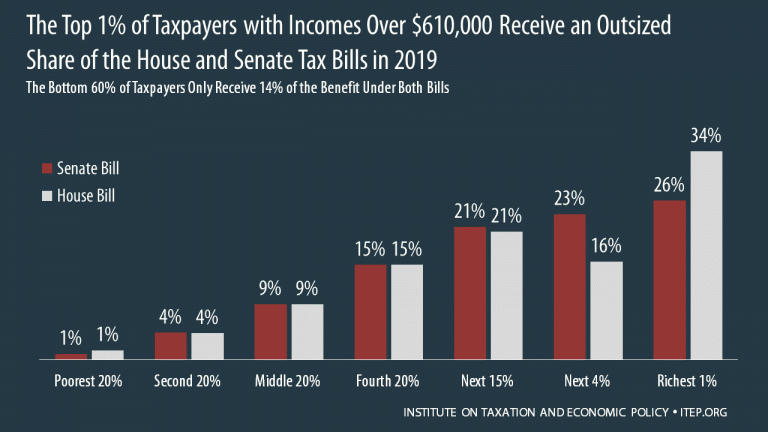
National and 50-State Impacts of House and Senate Tax Bills in 2019 and 2027
• By ITEP Staff
The House passed its “Tax Cuts and Jobs Act” November 16th and the Senate passed its version December 2nd. Both bills would raise taxes on many low- and middle-income families in every state and provide the wealthiest Americans and foreign investors substantial tax cuts, while adding more than $1.4 trillion to the deficit over ten years. National and 50-State data available to download.
State Rundown 11/29: Thanksgiving Leftovers Edition
• By ITEP Staff
The State Rundown is back from Thanksgiving break with a heaping helping of leftover state tax news, but beware, some of it may be rotten.
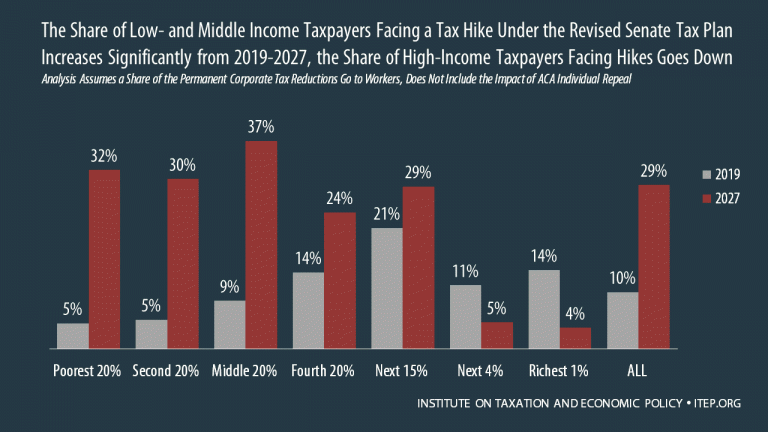
Revised Senate Plan Would Raise Taxes on at Least 29% of Americans and Cause 19 States to Pay More Overall
• By ITEP Staff
The tax bill reported out of the Senate Finance Committee on Nov. 16 would raise taxes on at least 29 percent of Americans and cause the populations of 19 states to pay more in federal taxes in 2027 than they do today.
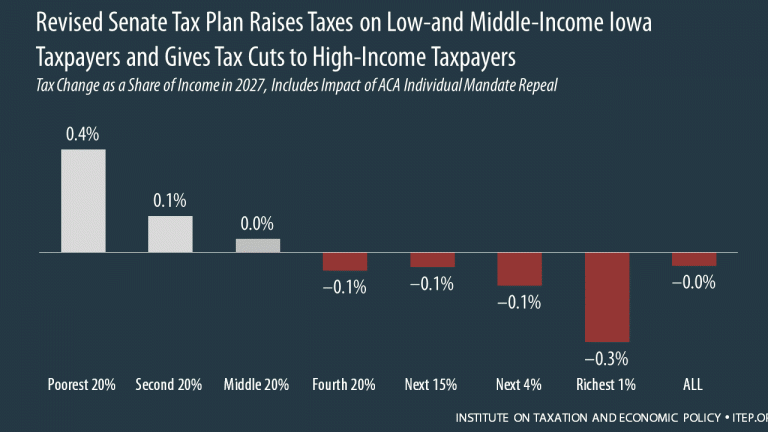
How the Revised Senate Tax Bill Would Affect Iowa Residents’ Federal Taxes
• By ITEP Staff
The Senate tax bill released last week would raise taxes on some families while bestowing immense benefits on wealthy Americans and foreign investors. In Iowa, 34 percent of the federal tax cuts would go to the richest 5 percent of residents, and 9 percent of households would face a tax increase, once the bill is fully implemented.
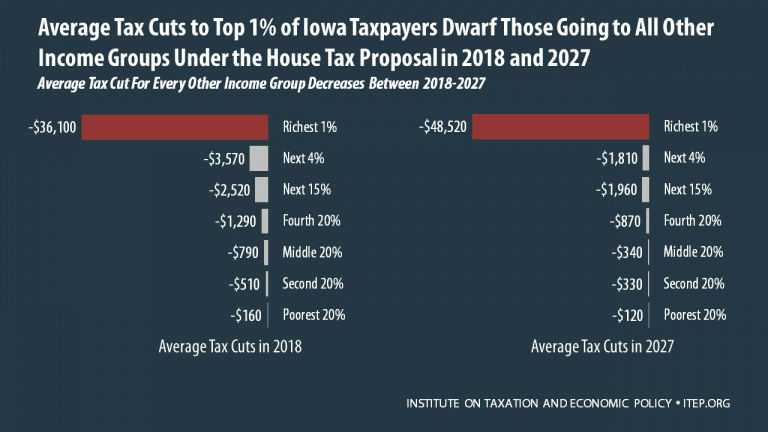
How the House Tax Proposal Would Affect Iowa Residents’ Federal Taxes
• By ITEP Staff
The Tax Cuts and Jobs Act, which was introduced on November 2 in the House of Representatives, includes some provisions that raise taxes and some that cut taxes, so the net effect for any particular family’s federal tax bill depends on their situation. Some of the provisions that benefit the middle class — like lower tax rates, an increased standard deduction, and a $300 tax credit for each adult in a household — are designed to…
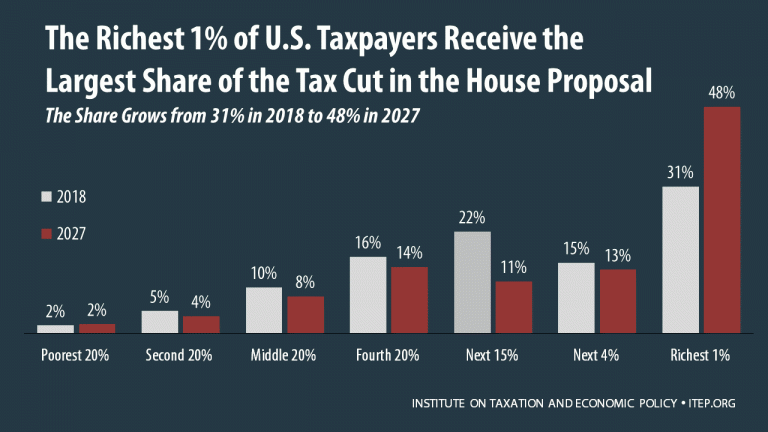
Analysis of the House Tax Cuts and Jobs Act
• By Matthew Gardner, Meg Wiehe, Steve Wamhoff
The Tax Cuts and Jobs Act, which was introduced on Nov. 2 in the House of Representatives, would raise taxes on some Americans and cut taxes on others while also providing significant savings to foreign investors.
Trickle-Down Dries Up: States without personal income taxes lag behind states with the highest top tax rates
• By Carl Davis, Nick Buffie
Lawmakers who support reducing or eliminating state personal income taxes typically claim that doing so will spur economic growth. Often, this claim is accompanied by the assertion that states without income taxes are booming, and that their success could be replicated by any state that abandons its income tax. To help evaluate these arguments, this study compares the economic performance of the nine states without broad-based personal income taxes to their mirror opposites—the nine states…
State Rundown 10/25: Marijuana Taxes a Bright Spot amid Underperforming State Revenues
• By ITEP Staff
This week in state tax news saw Alaska begin yet another special session, Louisiana lawmakers holding meetings to begin preparing for the state’s looming (self-imposed) fiscal cliff, and Alabama policymakers beginning a study of school finance (in)adequacy and (in)equity. Meanwhile, state revenue performance is poor well into 2017 in many states, though Montana, Nevada, and Oregon are all enjoying modest but welcome revenue bumps from legalized marijuana.
Tax Foundation Updates Its Problematic Wishlist for State Tax Policy
• By Carl Davis
This week the Tax Foundation published its 2018 State Business Tax Climate Index, or as University of Iowa economist Peter Fisher has nicknamed it, the “Waste of Time Index.”
State Rundown 10/13: Soda Taxes, Business Subsidies, and Gas Taxes Considered in Several States
• By ITEP Staff
A comprehensive tax study is underway in Arkansas this week as other states hone in on more specific issues. Soda taxes hit setbacks in Illinois and Michigan, business tax subsidies faced scrutiny in Iowa and Missouri, and gas tax update efforts are underway in Mississippi and North Dakota.
Select State News Coverage of ITEP’s 50-State Analysis of the GOP Tax Proposal
October 10, 2017
The Sentinel: Trump Tax Even in Harrisburg Will Feature Truckers The Columbus Dispatch: 15% of Ohioans Could See Tax Increase Under GOP Plan KGW Portland: Richest Oregonians Benefit Most from Proposed Tax Cuts Raleigh News & Observer: The Racial Wealth Divide Could Grow with Tax Changes Northwest Indiana Times: Hoosiers Would Lose in Trump Tax […]
State Rundown 10/4: Wildfires in Montana and Tax Cuts in Kansas Wreak Budget Havoc
• By ITEP Staff
This week, Kansas's school funding was again ruled unconstitutionally low and unfair, while Montana lawmakers indicated they'd rather let historic wildfires burn a hole through their budget than raise revenues to meet their funding needs. Meanwhile, a struggling agricultural sector continues to cause problems for Iowa and Nebraska, but legalized recreational marijuana is bringing good economic news to both California and Nevada.
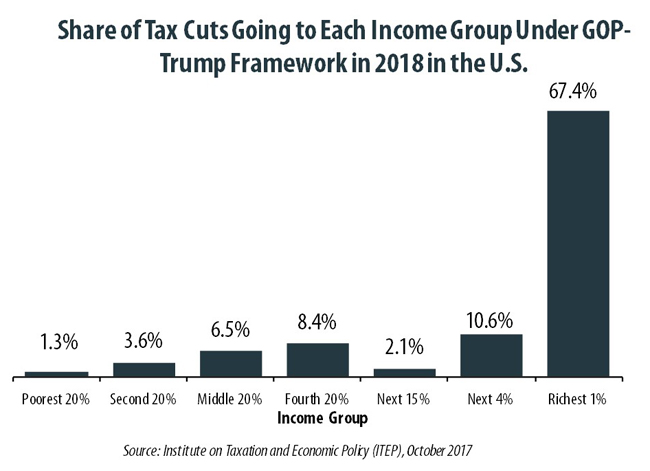
Benefits of GOP-Trump Framework Tilted Toward the Richest Taxpayers in Each State
• By Steve Wamhoff
The “tax reform framework” released by the Trump administration and Congressional Republican leaders on September 27 would affect states differently, but every state would see its richest residents grow richer if it is enacted. In all but a handful of states, at least half of the tax cuts would flow to the richest one percent of residents if the framework took effect.
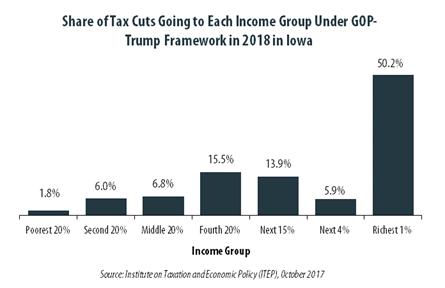
GOP-Trump Tax Framework Would Provide Richest One Percent in Iowa with 50.2 Percent of the State’s Tax Cuts
• By ITEP Staff
The “tax reform framework” released by the Trump administration and congressional Republican leaders on September 27 would not benefit everyone in Iowa equally. The richest one percent of Iowa residents would receive 50.2 percent of the tax cuts within the state under the framework in 2018. These households are projected to have an income of at least $440,800 next year. The framework would provide them an average tax cut of $50,050 in 2018, which would…
State Rundown 9/25: No Rest for the Weary as State Tax and Budget Debates Wind Down, Ramp Up
• By ITEP Staff
Last week, Wisconsin leaders finally came to agreement on a state budget, while their peers in Connecticut appear to be close behind them. Iowa lawmakers avoided a special session with a short-term fix and will have to return to their structural deficit issues next session, as will those in Louisiana who will face a $1 billion shortfall. Meanwhile, District of Columbia leaders have already resumed meeting and discussing tax and budget issues there.
State Rundown 8/31: Modernizing Taxes is Sometimes a Sprint, Sometimes a Marathon
• By ITEP Staff
Tax and budget debates are progressing at different paces in different parts of the country this week. In Connecticut and Wisconsin, lawmakers hope to finally settle their budget and tax differences soon. In South Dakota, a court case that could finally enable states to enforce their sales taxes on online retailers inches slowly closer to the U.S. Supreme Court.
In Iowa 36.9 Percent of Trump’s Proposed Tax Cuts Go to People Making More than $1 Million
• By ITEP Staff
A tiny fraction of the Iowa population (0.4 percent) earns more than $1 million annually. But this elite group would receive 36.9 percent of the tax cuts that go to Iowa residents under the tax proposals from the Trump administration. A much larger group, 43.0 percent of the state, earns less than $45,000, but would receive just 7.0 percent of the tax cuts.
Nearly Half of Trump’s Proposed Tax Cuts Go to People Making More than $1 Million Annually
• By ITEP Staff
A tiny fraction of the U.S. population (one-half of one percent) earns more than $1 million annually. But in 2018 this elite group would receive 48.8 percent of the tax cuts proposed by the Trump administration. A much larger group, 44.6 percent of Americans, earn less than $45,000, but would receive just 4.4 percent of the tax cuts.

It’s a Fact: Voucher Tax Credits Offer Profits for Some “Donors”
• By Carl Davis
In nine states, tax rewards gained by donating to fund private K-12 vouchers are so oversized that “donors” can turn a profit. This is the shocking but true finding of a pair of studies released by ITEP over the last year.
Trump Tax Proposals Would Provide Richest One Percent in Iowa with 44.7 Percent of the State’s Tax Cuts
• By ITEP Staff
Earlier this year, the Trump administration released some broadly outlined proposals to overhaul the federal tax code. Households in Iowa would not benefit equally from these proposals. The richest one percent of the state’s taxpayers are projected to make an average income of $1,164,200 in 2018. They would receive 44.7 percent of the tax cuts that go to Iowa’s residents and would enjoy an average cut of $84,860 in 2018 alone.
Trump’s $4.8 Trillion Tax Proposals Would Not Benefit All States or Taxpayers Equally
• By Matthew Gardner, Steve Wamhoff
The broadly outlined tax proposals released by the Trump administration would not benefit all taxpayers equally and they would not benefit all states equally either. Several states would receive a share of the total resulting tax cuts that is less than their share of the U.S. population. Of the dozen states receiving the least by this measure, seven are in the South. The others are New Mexico, Oregon, Maine, Idaho and Hawaii.
State Rundown 7/11: Some Legislatures Get Long Holiday Weekends, Others Work Overtime
• By ITEP Staff
Illinois and New Jersey made national news earlier this month after resolving their contentious budget stalemates. But they weren’t the only states working through (and in some cases after) the holiday weekend to resolve budget issues.

Institute on Taxation
and Economic Policy
ITEP is a non-profit, non-partisan tax policy organization. We conduct rigorous analyses of tax and economic proposals and provide data-driven recommendations to shape equitable and sustainable tax systems.
Subscribe to ITEP Emails
Tax research and policy news in your inbox.
Promote Fair Tax Policy
Your gift to ITEP promotes tax justice. With your help, we do research that supports taxing millionaires and billionaires, taxing big corporations and raising revenue for the things our people, our communities and our planet need.
Together, we can create a country with more economic justice, more racial justice, more climate justice… and more tax justice.