
Maryland
House Tax Bill Would Put Property Tax Deduction Out of Reach for Most Households
November 13, 2017 • By ITEP Staff
The House of Representatives is expected to vote this week on a bill that would reduce federal revenues by roughly $1.5 trillion over the next decade. Despite the bill’s high price tag, many households would pay more in federal tax if the bill is enacted, in large part because it slashes the deduction for state […]
Flawed Data from House Leadership Attempts to Hide Tax Hikes Under Proposal
November 9, 2017 • By Carl Davis
In a story published yesterday evening, Politico reported that House leaders have been “working to create customized data models” to show lawmakers that their constituents will not face a tax increase under the tax bill being debated in the House. On this point, House leaders have taken on an impossible task.
How the House Tax Proposal Would Affect Maryland Residents’ Federal Taxes
November 6, 2017 • By ITEP Staff
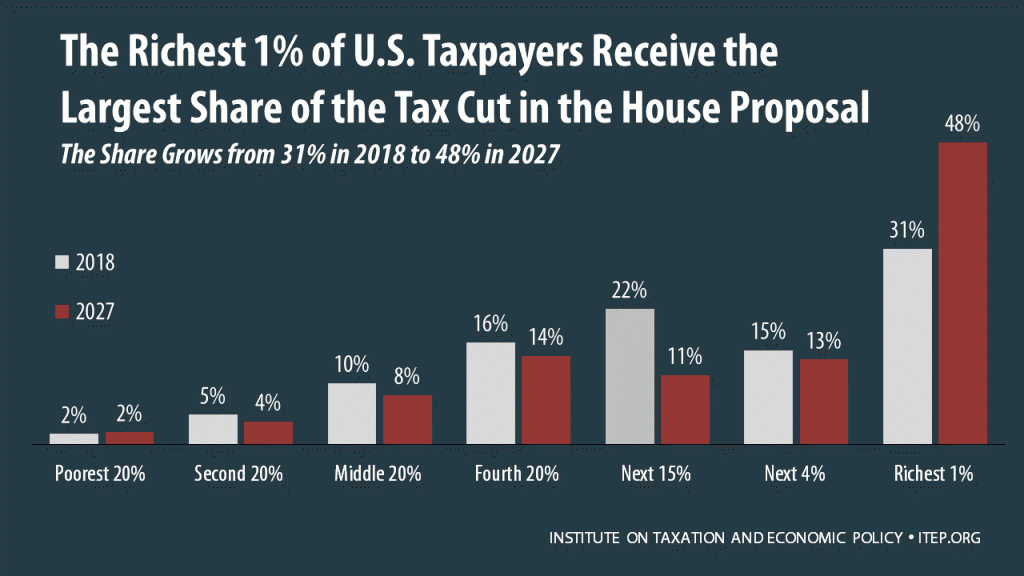
The Tax Cuts and Jobs Act, which was introduced on November 2 in the House of Representatives, includes some provisions that raise taxes and some that cut taxes, so the net effect for any particular family’s federal tax bill depends on their situation. Some of the provisions that benefit the middle class — like lower tax rates, an increased standard deduction, and a $300 tax credit for each adult in a household — are designed to expire or become less generous over time. Some of the provisions that benefit the wealthy, such as the reduction and eventual repeal of the estate…
Analysis of the House Tax Cuts and Jobs Act
November 6, 2017 • By Matthew Gardner, Meg Wiehe, Steve Wamhoff
The Tax Cuts and Jobs Act, which was introduced on Nov. 2 in the House of Representatives, would raise taxes on some Americans and cut taxes on others while also providing significant savings to foreign investors.
Mother Jones: Republicans Unveil Huge Corporate Tax Cuts Paid For by Deficit-Spending
November 3, 2017
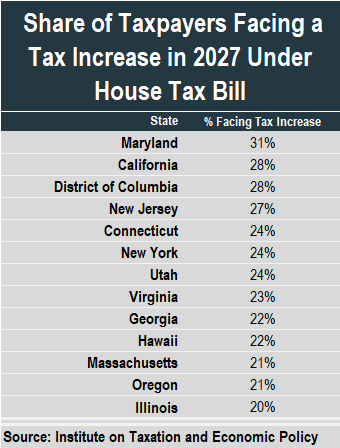
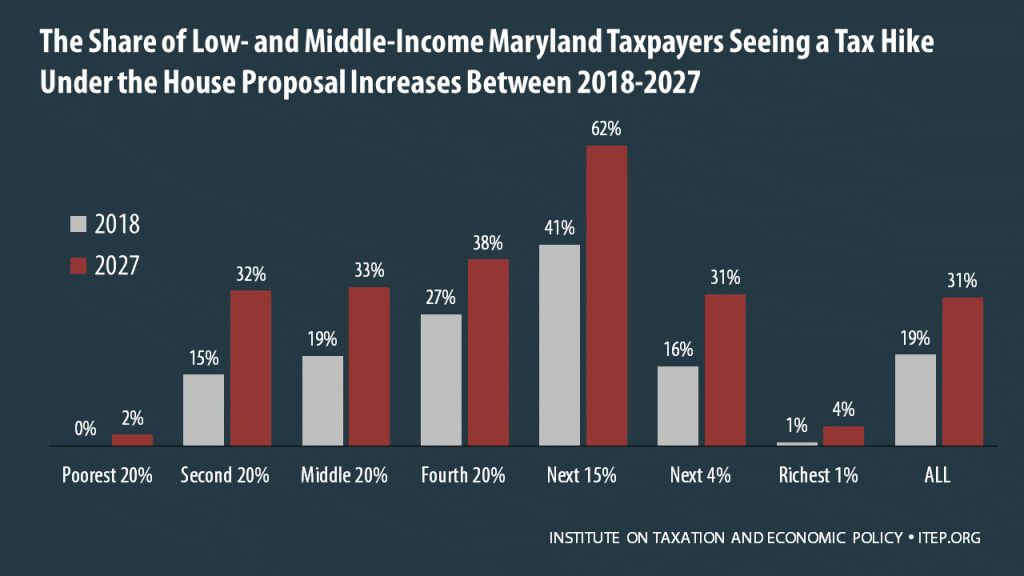
Completely repealing the state and local deduction would lead to taxes going up for 1 in six Americans, according to the left-leaning Institute on Taxation and Economic Policy. In a high-tax state like Maryland, nearly 1 in 3 households would see their taxes increase. Read more
Mother Jones: Republicans Fast Track Tax Cut for the Wealthy
October 27, 2017
Most of the Republican opposition came from the GOP’s plan to eliminate deductions for state and local taxes, with 11 Republicans from New York and New Jersey voting against the bill. Eliminating the deduction, which disproportionately affects well-off families in high-tax states, is the main reason why Trump’s plan would raise taxes on one in six Americans, […]
Star-Ledger: You’re Now More at Risk of Losing Your Property Tax Break
October 26, 2017
The loss of the state and local tax deduction would mean higher taxes for 26.4 percent of New Jersey taxpayers, according to a study by the Institute on Taxation and Economic Policy, a progressive research group in Washington. That was second to Maryland, at 30.5 percent, the group said. Read more
Trickle-Down Dries Up: States without personal income taxes lag behind states with the highest top tax rates
October 26, 2017 • By Carl Davis, Nick Buffie
Lawmakers who support reducing or eliminating state personal income taxes typically claim that doing so will spur economic growth. Often, this claim is accompanied by the assertion that states without income taxes are booming, and that their success could be replicated by any state that abandons its income tax. To help evaluate these arguments, this study compares the economic performance of the nine states without broad-based personal income taxes to their mirror opposites—the nine states levying the highest top marginal personal income tax rates throughout the last decade.
CNN: How Trump’s Policies Could Hurt the Rust Belt
October 25, 2017
Rust Belt states Ohio, Michigan and Indiana are not home to large populations of $1 million household income earners. Rather, they’re in the middle or bottom of the pack, according a summary from the Institute on Taxation and Economic Policy. States with a higher percentage of millionaire earners voted for Hillary Clinton in the 2016 […]
Select State News Coverage of ITEP’s 50-State Analysis of the GOP Tax Proposal
October 10, 2017
The Sentinel: Trump Tax Even in Harrisburg Will Feature Truckers The Columbus Dispatch: 15% of Ohioans Could See Tax Increase Under GOP Plan KGW Portland: Richest Oregonians Benefit Most from Proposed Tax Cuts Raleigh News & Observer: The Racial Wealth Divide Could Grow with Tax Changes Northwest Indiana Times: Hoosiers Would Lose in Trump Tax […]
Bloomberg: GOP Tax Plan Seen Hurting Middle Class in N.Y., 8 Other States
October 5, 2017 • By ITEP Staff
The ITEP report concludes that many of the most affected people would be middle-income and upper-middle income taxpayers. For example, in Maryland, about one-third of those making from $48,700 to $73,700 would face a tax hike, while 41 percent of those between $73,700 and $126,500, would face an increase, the study says. And almost 65 […]
50-State Analysis: GOP-Trump Tax Proposal Would Give the Store Away to the Wealthy, Exacerbate the Income Divide
October 4, 2017 • By Alan Essig
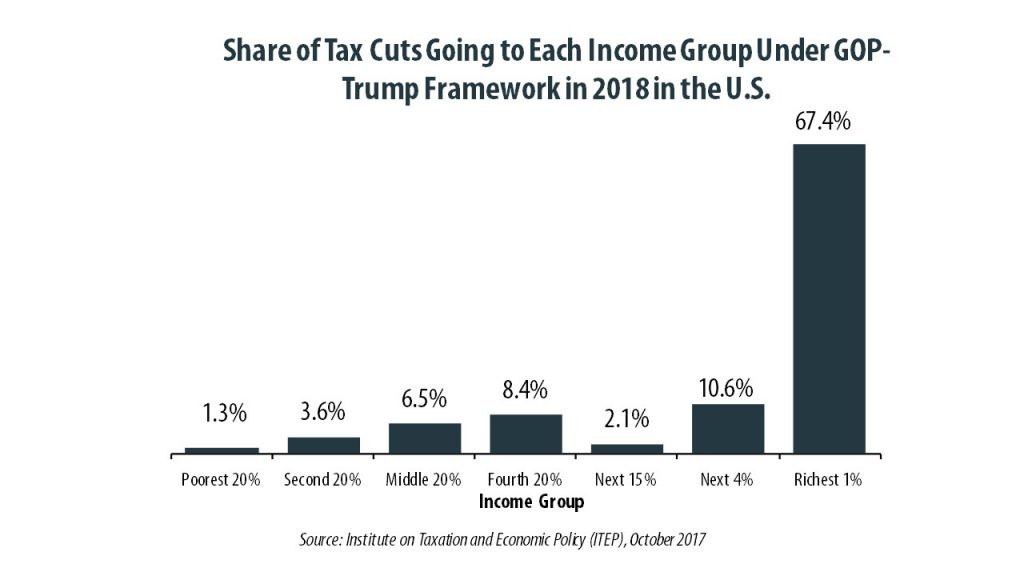
A 50-state analysis of the GOP tax framework reveals the top 1 percent of taxpayers would receive a substantial tax cut while middle- and upper-middle-income taxpayers in many states would pay more, the Institute on Taxation and Economic Policy said today. The GOP continues to tout its tax plan as “beneficial to the middle class.” […]
Benefits of GOP-Trump Framework Tilted Toward the Richest Taxpayers in Each State
October 4, 2017 • By Steve Wamhoff
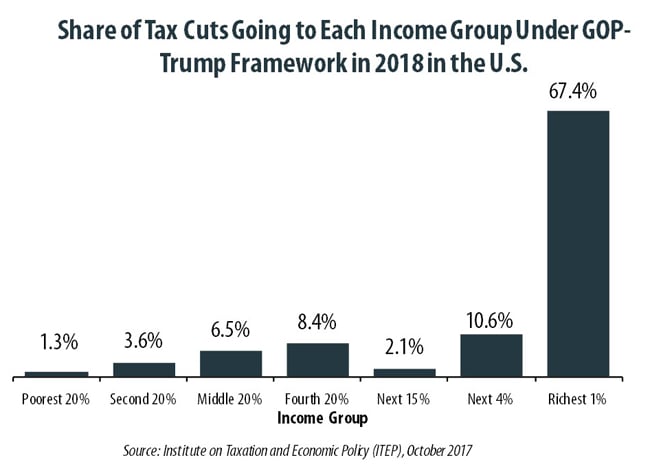
The “tax reform framework” released by the Trump administration and Congressional Republican leaders on September 27 would affect states differently, but every state would see its richest residents grow richer if it is enacted. In all but a handful of states, at least half of the tax cuts would flow to the richest one percent of residents if the framework took effect.
30% of Marylanders Would Pay More Under GOP-Trump Tax Framework, But the State’s Richest 1% Would Pay Less
October 4, 2017 • By ITEP Staff
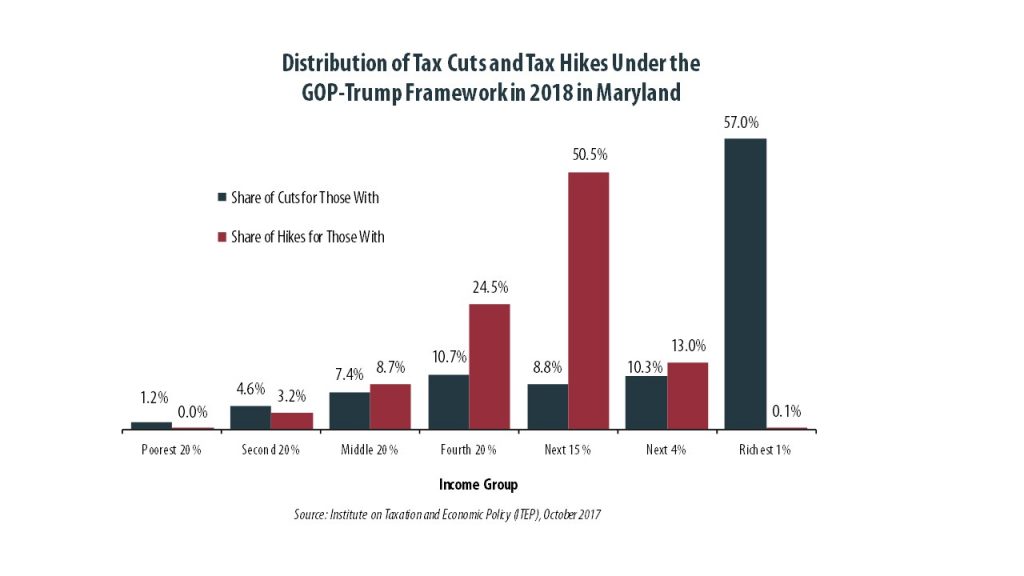
The “tax reform framework” released by the Trump administration and congressional Republican leaders on September 27 would not benefit everyone in Maryland equally. More than 30 percent of Maryland households would have higher tax bills, but nearly everyone among the richest one percent of the state’s residents would receive a tax cut.

Astonishingly, tax policies in virtually every state make it harder for those living in poverty to make ends meet. When all the taxes imposed by state and local governments are taken into account, every state imposes higher effective tax rates on poor families than on the richest taxpayers.
State lawmakers seeking to make residential property taxes more affordable have two broad options: across-the-board tax cuts for taxpayers at all income levels, such as a homestead exemption or a tax cap, and targeted tax breaks that are given only to particular groups of low- and middle-income taxpayers. One such targeted program to reduce property taxes is called a “circuit breaker” because it protects taxpayers from a property tax “overload” just like an electric circuit breaker: when a property tax bill exceeds a certain percentage of a taxpayer’s income, the circuit breaker reduces property taxes in excess of this “overload”…
State Rundown 8/31: Modernizing Taxes is Sometimes a Sprint, Sometimes a Marathon
August 31, 2017 • By ITEP Staff
Tax and budget debates are progressing at different paces in different parts of the country this week. In Connecticut and Wisconsin, lawmakers hope to finally settle their budget and tax differences soon. In South Dakota, a court case that could finally enable states to enforce their sales taxes on online retailers inches slowly closer to the U.S. Supreme Court.
Washington Post: Ahead of regional summit, left-leaning policy groups say ‘No’ to a sales tax for Metro
August 28, 2017
A regionwide one-cent sales tax to fund Metro would have a disproportionate impact on poor families, taking five times the share of income from the bottom 20 percent of earners when compared with those in the top 1 percent, according to a new analysis from a trio of left-leaning think tanks representing the District, Maryland and Virginia.
DC Fiscal Policy Institute, Maryland Center on Economic Policy, and The Commonwealth Institute: Triple Whammy: A Regional Sales Tax for Metro, Like Fare Hikes and Service Cuts, Would Fall Hardest on Struggling Families
August 28, 2017
A strong Metro system is important to all of us in the Washington region. And everyone agrees that the Metro system needs new resources to rebuild its health. But a regional sales tax—a widely discussed option—would be an unfair way to pay for it.
Maryland Center on Economic Policy: Trump Tax Framework Would Give Away Trillions in Tax Breaks to Millionaires
August 24, 2017
The Trump administration and congressional leaders are gearing up to overhaul the federal tax code this fall. While many of the details remain fuzzy, one thing is clear: the administration’s top priority is to hand out big tax breaks to millionaires.
Nearly Half of Trump’s Proposed Tax Cuts Go to People Making More than $1 Million Annually
August 17, 2017 • By ITEP Staff
A tiny fraction of the U.S. population (one-half of one percent) earns more than $1 million annually. But in 2018 this elite group would receive 48.8 percent of the tax cuts proposed by the Trump administration. A much larger group, 44.6 percent of Americans, earn less than $45,000, but would receive just 4.4 percent of the tax cuts.
In Maryland 61.9 Percent of Trump’s Proposed Tax Cuts Go to People Making More than $1 Million
August 17, 2017 • By ITEP Staff
A tiny fraction of the Maryland population (0.7 percent) earns more than $1 million annually. But this elite group would receive 61.9 percent of the tax cuts that go to Maryland residents under the tax proposals from the Trump administration. A much larger group, 37.7 percent of the state, earns less than $45,000, but would receive just 4.1 percent of the tax cuts.
Trump Tax Proposals Would Provide Richest One Percent in Maryland with 69.7 Percent of the State’s Tax Cuts
July 20, 2017 • By ITEP Staff
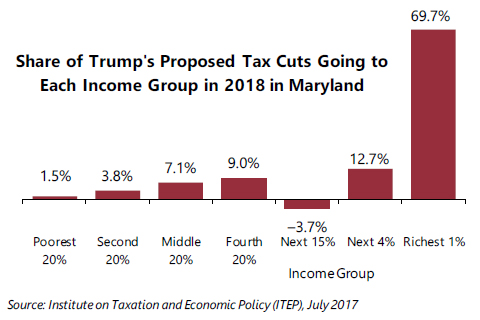
Earlier this year, the Trump administration released some broadly outlined proposals to overhaul the federal tax code. Households in Maryland would not benefit equally from these proposals. The richest one percent of the state’s taxpayers are projected to make an average income of $1,802,700 in 2018. They would receive 69.7 percent of the tax cuts that go to Maryland’s residents and would enjoy an average cut of $123,720 in 2018 alone.
Trump’s $4.8 Trillion Tax Proposals Would Not Benefit All States or Taxpayers Equally
July 20, 2017 • By Matthew Gardner, Steve Wamhoff
The broadly outlined tax proposals released by the Trump administration would not benefit all taxpayers equally and they would not benefit all states equally either. Several states would receive a share of the total resulting tax cuts that is less than their share of the U.S. population. Of the dozen states receiving the least by this measure, seven are in the South. The others are New Mexico, Oregon, Maine, Idaho and Hawaii.
Sales Tax Holidays: An Ineffective Alternative to Real Sales Tax Reform
July 12, 2017 • By ITEP Staff
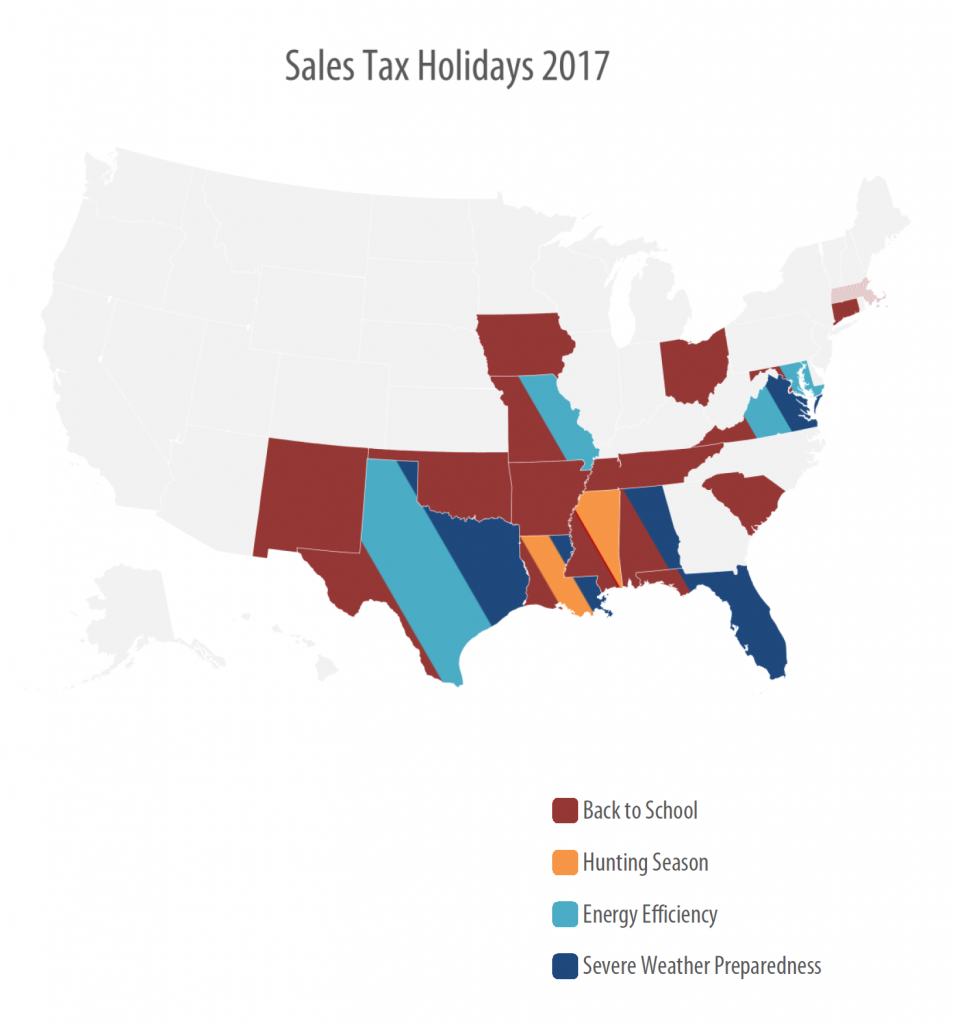
Sales taxes are an important revenue source, composing close to half of all state tax revenues. But sales taxes are also inherently regressive because the lower a family’s income, the more the family must spend on goods and services subject to the tax. Lawmakers in many states have enacted “sales tax holidays” (at least 16 states will hold them in 2017), to provide a temporary break on paying the tax on purchases of clothing, school supplies, and other items. While these holidays may seem to lessen the regressive impacts of the sales tax, their benefits are minimal. This policy brief…

Institute on Taxation
and Economic Policy
ITEP is a non-profit, non-partisan tax policy organization. We conduct rigorous analyses of tax and economic proposals and provide data-driven recommendations to shape equitable and sustainable tax systems.
Subscribe to ITEP Emails
Tax research and policy news in your inbox.
Promote Fair Tax Policy
Your gift to ITEP promotes tax justice. With your help, we do research that supports taxing millionaires and billionaires, taxing big corporations and raising revenue for the things our people, our communities and our planet need.
Together, we can create a country with more economic justice, more racial justice, more climate justice… and more tax justice.