
Virginia
Arkansas Times: Arkansas to Fare Worse Than Most States under Trump Tax Proposal, Report Says
September 8, 2017
We don’t have an actual tax bill to parse yet, but Arkansas Advocates for Children and Families has a helpful preview of how the cuts outlined by Trump earlier this year would affect Arkansas. It’s based on an analysis by the Institute on Taxation and Economic Policy. The key takeaway is that Arkansas is among the […]

State Rundown 8/31: Modernizing Taxes is Sometimes a Sprint, Sometimes a Marathon
• By ITEP Staff
Tax and budget debates are progressing at different paces in different parts of the country this week. In Connecticut and Wisconsin, lawmakers hope to finally settle their budget and tax differences soon. In South Dakota, a court case that could finally enable states to enforce their sales taxes on online retailers inches slowly closer to the U.S. Supreme Court.
Private School Voucher Credits Offer a Windfall to Wealthy Investors in Some States
• By Carl Davis
State lawmakers who want to send public dollars to private schools have devised a shrewd tactic for getting around political and constitutional obstacles that make it difficult to do so. These lawmakers found a way to pay high-income taxpayers to fund those schools on states’ behalf, sometimes even offering those taxpayers a tidy profit in […]
Washington Post: Ahead of regional summit, left-leaning policy groups say ‘No’ to a sales tax for Metro
August 28, 2017
A regionwide one-cent sales tax to fund Metro would have a disproportionate impact on poor families, taking five times the share of income from the bottom 20 percent of earners when compared with those in the top 1 percent, according to a new analysis from a trio of left-leaning think tanks representing the District, Maryland and Virginia.
DC Fiscal Policy Institute, Maryland Center on Economic Policy, and The Commonwealth Institute: Triple Whammy: A Regional Sales Tax for Metro, Like Fare Hikes and Service Cuts, Would Fall Hardest on Struggling Families
• By ITEP Staff
A strong Metro system is important to all of us in the Washington region. And everyone agrees that the Metro system needs new resources to rebuild its health. But a regional sales tax—a widely discussed option—would be an unfair way to pay for it.
In Virginia 48.0 Percent of Trump’s Proposed Tax Cuts Go to People Making More than $1 Million
• By ITEP Staff
A tiny fraction of the Virginia population (0.6 percent) earns more than $1 million annually. But this elite group would receive 48.0 percent of the tax cuts that go to Virginia residents under the tax proposals from the Trump administration. A much larger group, 43.5 percent of the state, earns less than $45,000, but would receive just 5.1 percent of the tax cuts.
Nearly Half of Trump’s Proposed Tax Cuts Go to People Making More than $1 Million Annually
• By ITEP Staff
A tiny fraction of the U.S. population (one-half of one percent) earns more than $1 million annually. But in 2018 this elite group would receive 48.8 percent of the tax cuts proposed by the Trump administration. A much larger group, 44.6 percent of Americans, earn less than $45,000, but would receive just 4.4 percent of the tax cuts.
In West Virginia 18.3 Percent of Trump’s Proposed Tax Cuts Go to People Making More than $1 Million
• By ITEP Staff
A tiny fraction of the West Virginia population (0.1 percent) earns more than $1 million annually. But this elite group would receive 18.3 percent of the tax cuts that go to West Virginia residents under the tax proposals from the Trump administration. A much larger group, 55.9 percent of the state, earns less than $45,000, but would receive just 9.3 percent of the tax cuts.
State Rundown 8/9: And Then There Were Three
• By ITEP Staff
This week, Rhode Island lawmakers agreed on a budget, leaving only three states – Connecticut, Pennsylvania, and Wisconsin – without complete budgets. Texas, however, remains in special session and West Virginia could go back into another special session over tax issues. And in New York City, the mayor proposes a tax on the wealthy to […]

It’s a Fact: Voucher Tax Credits Offer Profits for Some “Donors”
• By Carl Davis
In nine states, tax rewards gained by donating to fund private K-12 vouchers are so oversized that “donors” can turn a profit. This is the shocking but true finding of a pair of studies released by ITEP over the last year.

Trump Touts Tax Cuts for the Wealthy as a Plan for Working People
• By Steve Wamhoff
Unless the administration takes a radically different direction on tax reform from what it has already proposed, its tax plan would be a monumental giveaway to the top 1 percent. The wealthiest one percent of households would receive 61 percent of all the Trump tax breaks, and would receive an average of $145,400 in 2018 alone.
Sound Tax Policy Made a Comeback in 2017
• By ITEP Staff
2017 marked a sea change in state tax policy and a stark departure from the current federal tax debate as dubious supply-side economic theories began to lose their grip on statehouses. Compared to the predominant trend in recent years of emphasizing top-heavy income tax cuts and shifting to more regressive consumption taxes in the hopes […]
Rewarding Work Through State Earned Income Tax Credits
• By Aidan Davis
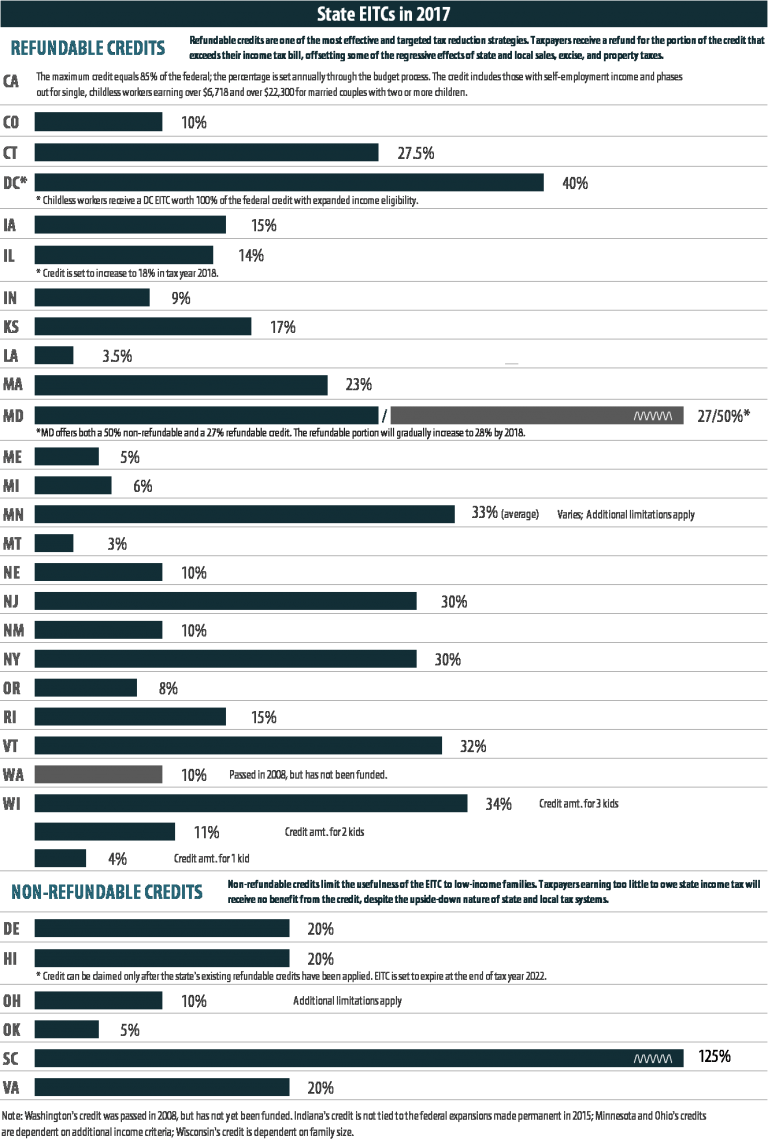
The Earned Income Tax Credit (EITC) is a policy designed to bolster the earnings of low-wage workers and offset some of the taxes they pay, providing the opportunity for struggling families to step up and out of poverty toward meaningful economic security. The federal EITC has kept millions of Americans out of poverty since its enactment in the mid-1970s. Over the past several decades, the effectiveness of the EITC has been magnified as many states…
West Virginia Center on Budget & Policy: New Report Shows Trump Tax Plan Benefits Wealthy, Fails to Help Middle Class
• By ITEP Staff
A new analysis from the Institute on Taxation and Economic Policy reveals a federal tax reform plan based on President Trump’s April outline would fail to deliver on its promise of largely helping middle-class taxpayers, showering 61.4 percent of the total tax cut on the richest 1 percent nationwide. In West Virginia, the top 1 percent of the state’s residents would receive an average tax cut of $51,600 compared with an average tax cut of $720 for…
50-State Analysis of Trump’s Tax Outline: Poorer Taxpayers and Poorer States are Disadvantaged
• By Alan Essig
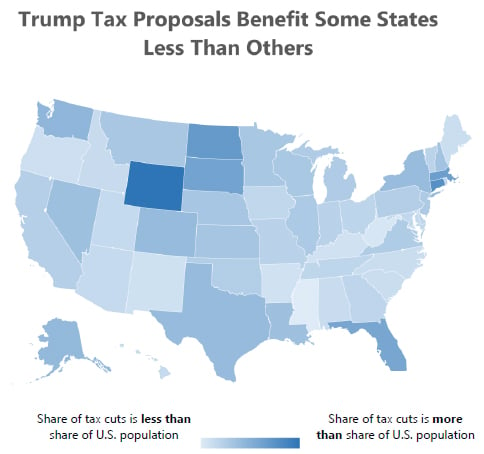
Not only would President Trump’s proposed tax plan fail to deliver on its promise of largely helping middle-class taxpayers, it also would shower a disproportionate share of the total tax cut on taxpayers in some of the richest states while southern and a few other states would receive a smaller share of the tax cut […]
Trump Tax Proposals Would Provide Richest One Percent in West Virginia with 37.4 Percent of the State’s Tax Cuts
• By ITEP Staff
Earlier this year, the Trump administration released some broadly outlined proposals to overhaul the federal tax code. Households in West Virginia would not benefit equally from these proposals. The richest one percent of the state’s taxpayers are projected to make an average income of $791,400 in 2018.
Trump Tax Proposals Would Provide Richest One Percent in Virginia with 60 Percent of the State’s Tax Cuts
• By ITEP Staff
Earlier this year, the Trump administration released some broadly outlined proposals to overhaul the federal tax code. Households in Virginia would not benefit equally from these proposals. The richest one percent of the state’s taxpayers are projected to make an average income of $1,718,600 in 2018.
Trump’s $4.8 Trillion Tax Proposals Would Not Benefit All States or Taxpayers Equally
• By Matthew Gardner, Steve Wamhoff
The broadly outlined tax proposals released by the Trump administration would not benefit all taxpayers equally and they would not benefit all states equally either. Several states would receive a share of the total resulting tax cuts that is less than their share of the U.S. population. Of the dozen states receiving the least by this measure, seven are in the South. The others are New Mexico, Oregon, Maine, Idaho and Hawaii.
Richmond Times-Dispatch: Legislator Proposes Exempting Poorest Virginia Localities from Some Taxes
July 14, 2017
Carl Davis, research director at the nonpartisan Institute on Taxation and Economic Policy, says state taxes don’t play that large a role in economic development decisions. Companies search for an ideal location and a trained workforce and balance a host of other factors during site selection. “There’s just so much more than state tax policy […]
Sales Tax Holidays: An Ineffective Alternative to Real Sales Tax Reform
• By ITEP Staff
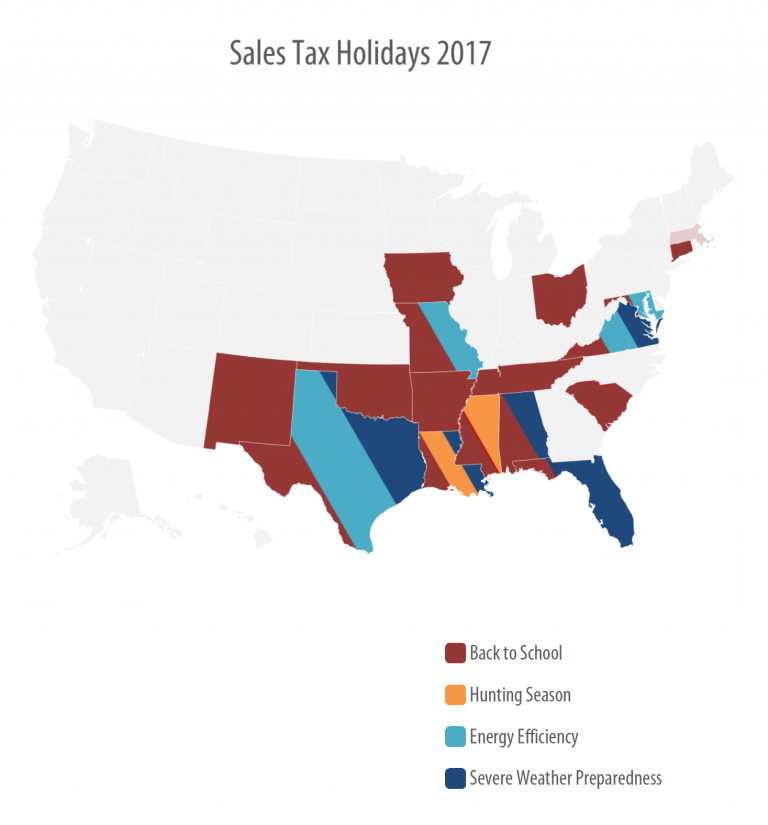
Sales taxes are an important revenue source, composing close to half of all state tax revenues. But sales taxes are also inherently regressive because the lower a family’s income, the more the family must spend on goods and services subject to the tax. Lawmakers in many states have enacted “sales tax holidays” (at least 16 states will hold them in 2017), to provide a temporary break on paying the tax on purchases of clothing, school…
State Rundown 6/28: States Scramble to Finish Budgets Before July Deadlines
• By ITEP Staff
This week, several states attempt to wrap up their budget debates before new fiscal years (and holiday vacations) begin in July. Lawmakers reached at least short-term agreement on budgets in Alaska, New Hampshire, Rhode Island, and Vermont, but such resolution remains elusive in Connecticut, Delaware, Illinois, Maine, Pennsylvania, Washington, and Wisconsin.

Gas Taxes Will Rise in 7 States to Fund Transportation Improvements
• By Carl Davis
Summer gas prices are at their lowest level in twelve years, which makes right now a sensible time to ask drivers to pay a little more toward improving the transportation infrastructure they use every day. Seven states will be doing this on Saturday, July 1 when they raise their gasoline tax rates. At the same time, two states will be implementing small gas tax rate cuts.
Most Americans Live in States with Variable-Rate Gas Taxes
• By ITEP Staff
The flawed design of federal and state gasoline taxes has made it exceedingly difficult to raise adequate funds to maintain the nation’s transportation infrastructure. Thirty states and the federal government levy fixed-rate gas taxes where the tax rate does not change even when the cost of infrastructure materials rises or when drivers transition toward more fuel-efficient vehicles and pay less in gas tax. The federal government’s 18.4 cent gas tax, for example, has not increased…
Scripps News Service: Money Diverted from Public Schools?
June 26, 2017
All the programs basically work this way: Individuals and businesses make cash or stock donations to scholarship granting organizations. The organizations award scholarships to qualifying families with K-12 students, primarily children in failing public schools or whose families’ income meets the state’s poverty threshold. Students can then attend a private or religious school of their […]
West Virginia Lawmakers Settle on Imperfect Budget, Delay Tax Debate for Next Session
• By Aidan Davis
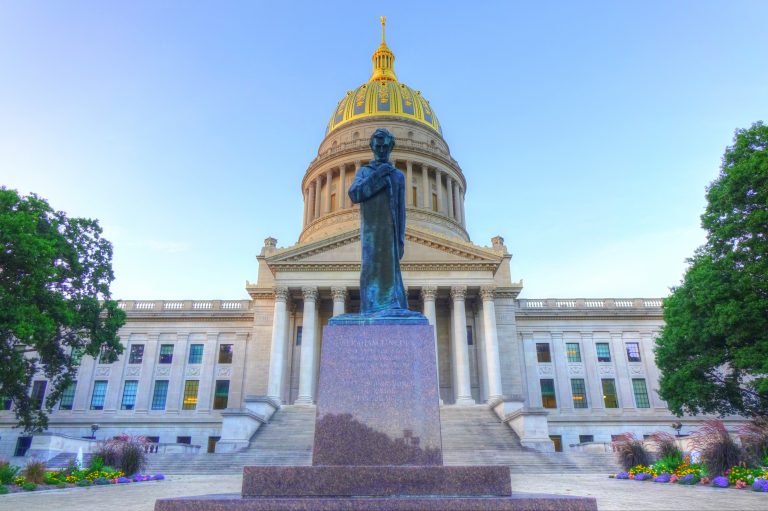
West Virginia’s roller coaster ride of a session is nearing its tumultuous end. In a press conference this morning, Gov. Jim Justice announced that he will let the legislature’s most recent budget bill become law without his signature.
