
Tax Reform Options and Challenges
196 posts

9 Things You Should Know About the Tax Debate
• By Richard Phillips
A Chart Book on the U.S. Tax System
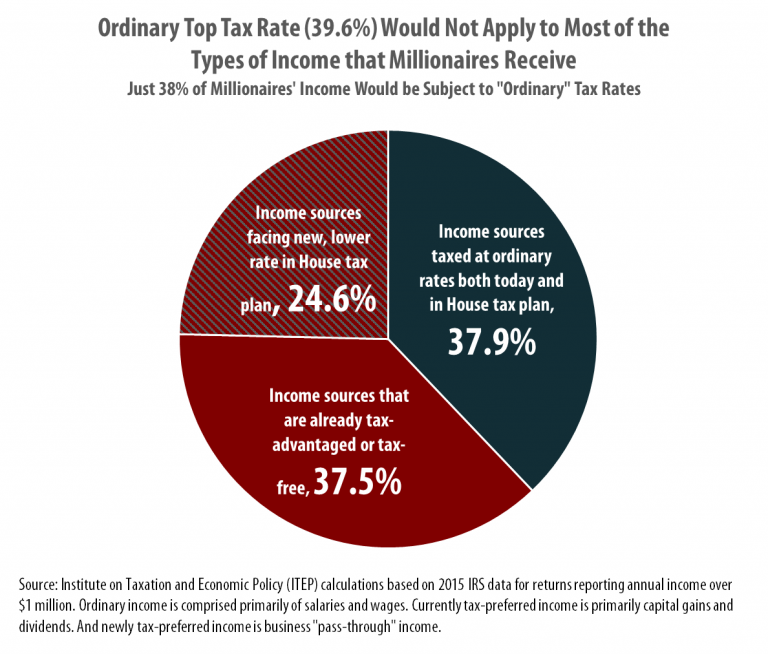
House Tax Plan Will Keep 39.6% Top Rate, But That Won’t Matter for Most Types of Income Going to the Rich
• By Carl Davis
In recent days, news that House tax writers will not seek to cut the top personal income tax rate below 39.6 percent on taxable income above $1 million has led some to question whether the newest iteration of the Trump-GOP tax plan will provide a major windfall to the wealthy—a fact that has so far been widely understood. Unfortunately, this second-guessing is unnecessary.

The Framework’s Tax Increases and Tax Cuts by State
• By Steve Wamhoff
As our report on the Trump-GOP tax framework explained, in nine states plus the District of Columbia, more than a fifth of households would pay higher taxes under the framework.

GOP Tax Plan Will Mainly Benefit Millionaires Even If Top Rate Remains 39.6 Percent
• By Steve Wamhoff
The Trump-GOP taxframework would reduce the top personal income tax rate from 39.6 percent to 35 percent, but now lawmakers are discussing keeping the top personal income tax rate at 39.6 percent for those with taxable income of more than $1 million. This modification would barely change the proposal’s overall impact.

The Jig Is Up: Republican Budget Resolution Finally Admits That Deficit Will Soar Under GOP Tax Plan
• By Alan Essig
For some lawmakers, annual deficits matter a lot—unless the nation is paying for tax cuts for the wealthy via deficit spending. Last night, Republican lawmakers demonstrated that previous grandstanding about the nation’s debt is much ado about nothing. The Senate approved a budget resolution on a party-line vote that would 1. fast-track legislation adding $1.5 trillion to the deficit over 10 years by cutting taxes, and 2. make it easy to enact this measure without…

The Dishonest Pitch for Trump-GOP Tax Cuts
• By Richard Phillips
Real tax reform would mean raising more revenue to make public investments and increasing the progressivity of the tax code. Many conservatives strongly disagree with this and insist that a substantial tax cut for the wealthiest Americans will grow the economy. Rather than engage in this policy debate based on policy ideals and principles, President Trump, other White House officials and GOP leaders have peppered their sales pitch for tax cuts with false claims about…
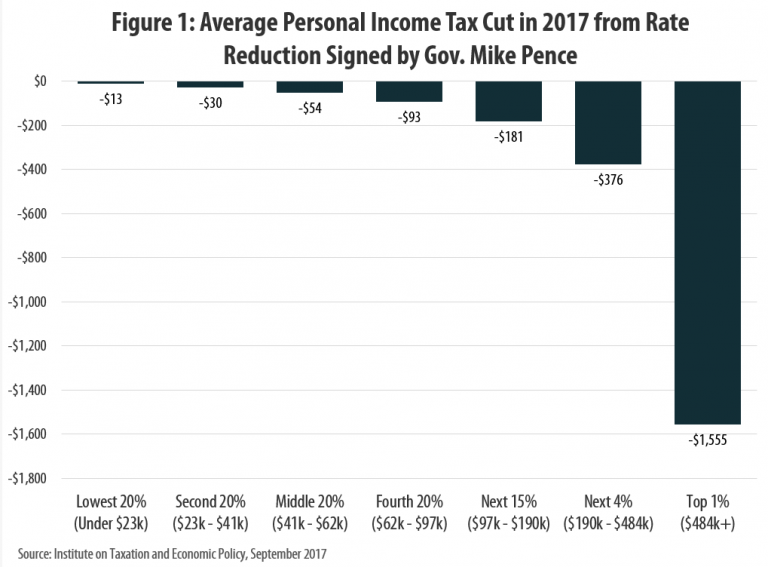
Indiana’s Tax Cuts Under Mike Pence Are Not a Model for the Nation
• By Carl Davis
In announcing a new tax cut framework this week in Indianapolis that was negotiated with House and Senate leaders, President Trump claimed that “Indiana is a tremendous example of the prosperity that is unleashed when we cut taxes and set free the dreams of our citizens …. In Indiana, you have seen firsthand that cutting taxes on businesses makes your state more competitive and leads to more jobs and higher paychecks for your workers.”
Trump Proposals Would Reduce the Share of Taxes Paid by the Richest 1%, Raise It for Everyone Else
• By Steve Wamhoff
The tax proposals released by the Trump Administration in April would reduce the share of total federal, state and local taxes paid by America’s richest 1 percent while increasing the share paid by all other income groups. This clearly indicates that the tax system would be less progressive under the president’s approach.
Arkansas Advocates for Children and Families: The Trump Tax Plan: What Would It Mean for Arkansas?
• By ITEP Staff
Who benefits and who loses under the Trump tax plan? An analysis by the Institute on Taxation and Economic Policy (ITEP) estimates that Arkansas would fare worse under the plan compared to other states. Relative to our share of the U.S. population, we would be one of the 12 states receiving the lowest share of the total Trump tax cut.
New Mexico Voices for Children: The Trump Tax Plan Isn’t ‘Reform.’ Here’s Why:
• By ITEP Staff
In April the Trump administration released a sketchy outline of their half-baked ideas for tax changes. An analysis by the Washington, D.C.-based Institute for Taxation and Economic Policy (ITEP) of that back-of-the-envelope ‘plan’ found that nearly half (48 percent) of Trump’s proposed tax cuts would go to millionaires. Millionaires make up only 0.5 percent of the U.S. population.

Trump (Sort of) Used Our Data on Corporate Tax Avoidance, But He Missed the Point
• By Matthew Gardner
On Wednesday, reporters waiting to write about President Trump’s much-ballyhooed tax reform speech in Missouri received a fact sheet from the White House informing them that, “Fortune 500 corporations are holding more than $2.6 trillion in profits offshore to avoid $767 billion in Federal taxes, according to the Institute on Taxation and Economic Policy.”
New Mexico Voices for Children: Trump Tax Plan Does Little for NM’s Middle Class
• By ITEP Staff
Average New Mexicans would not benefit much from President Trump’s tax reform proposal, which would give the biggest tax breaks to New Mexico’s millionaires. That’s according to a report released recently by the Institute on Taxation and Economic Policy (ITEP).
Maryland Center on Economic Policy: Trump Tax Framework Would Give Away Trillions in Tax Breaks to Millionaires
• By ITEP Staff
The Trump administration and congressional leaders are gearing up to overhaul the federal tax code this fall. While many of the details remain fuzzy, one thing is clear: the administration’s top priority is to hand out big tax breaks to millionaires.

GOP Leaders Tout Corporate Tax Cuts at Boeing and AT&T, Companies that Already Have Single-Digit Tax Rates
• By Matthew Gardner
House Speaker Paul Ryan plans to visit a Boeing factory in Washington State tomorrow to promote the GOP’s ideas for tax reform, which include a deep cut in the corporate tax rate, while House Ways and Means Chairman Kevin Brady is bringing the same message today to employees of AT&T in Dallas. What is unclear is how much lower taxes for these companies can possibly go.
Maine Center for Economic Policy: Maine Millionaires Primary Recipients of Proposed Trump Tax Breaks
• By ITEP Staff
New analysis from the Institute on Taxation and Economic Policy (ITEP) shows Maine’s millionaires would get an average tax cut of $135,220 under President Trump’s proposed tax plan. Maine millionaires represent only 0.3 percent of all Maine households, yet would receive more than a quarter of all tax breaks.
Nearly Half of Trump’s Proposed Tax Cuts Go to People Making More than $1 Million Annually
• By ITEP Staff
A tiny fraction of the U.S. population (one-half of one percent) earns more than $1 million annually. But in 2018 this elite group would receive 48.8 percent of the tax cuts proposed by the Trump administration. A much larger group, 44.6 percent of Americans, earn less than $45,000, but would receive just 4.4 percent of the tax cuts.
Art Laffer and Stephen Moore’s Misleading Case for the Trump Tax Cuts
• By Nick Buffie
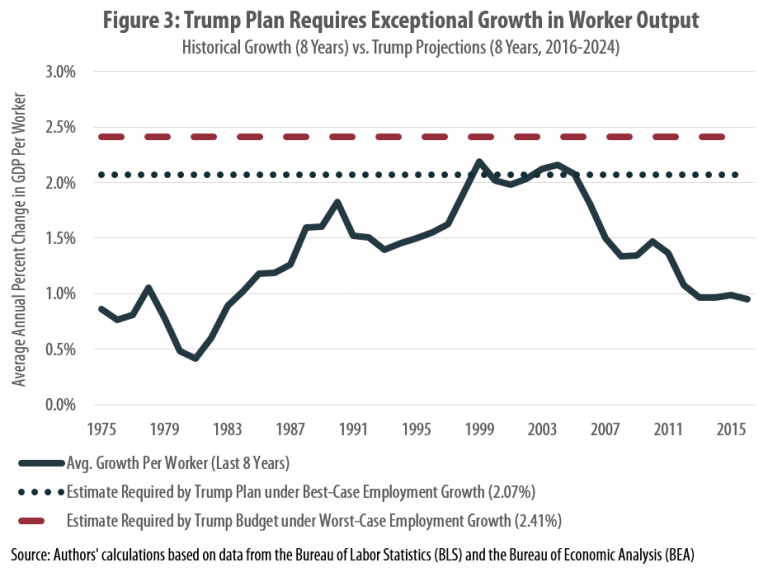
Art Laffer and Stephen Moore recently penned an op-ed in the Wall Street Journal in which they called on state and local policymakers to support the Trump tax cuts. They claimed that the Trump plan would provide a significant boost to state and local tax revenues, thereby allowing states with large budget deficits to “regain fiscal health.” State and local lawmakers should not be fooled by these claims. The reality is that Trump’s tax cuts…

GOP Leaders in Congress and the White House Set Out Goals for Tax Reform that Their Plans Fail to Meet
• By Alan Essig
Today Republican leaders in Congress and officials from the White House released a joint statement on tax reform, claiming that “the single most important action we can take to grow our economy and help the middle class get ahead is to fix our broken tax code for families, small business, and American job creators competing at home and around the globe.” Unfortunately, the proposals they have put forward so far do not address any such…

Trump Touts Tax Cuts for the Wealthy as a Plan for Working People
• By Steve Wamhoff
Unless the administration takes a radically different direction on tax reform from what it has already proposed, its tax plan would be a monumental giveaway to the top 1 percent. The wealthiest one percent of households would receive 61 percent of all the Trump tax breaks, and would receive an average of $145,400 in 2018 alone.
Florida Policy Institute: The Growing Divide: Federal Tax Plan Would Give Massive Tax Cuts to Wealthy Floridians as the Poorest Americans Continue to Struggle
• By ITEP Staff
The federal tax plan broadly outlined by the current administration would do very little to create opportunities for Floridians struggling to make ends meet. Instead, the tax plan would provide massive tax cuts for Florida’s highest income earners, accordingly to a recent report by the Institute on Taxation and Economic Policy (ITEP). Broadly outlined, the plan is likely to make an already unfair tax system that favors the wealthy even worse.

New Jersey Policy Perspectives: Trump Tax Plan: A Boon for the Wealthiest New Jerseyans
• By ITEP Staff
A federal tax package based on President Trump’s April outline would fail to deliver on its promise of mostly helping the middle class, instead showering most of its help to the richest 1 percent, according to a new 50-state analysis from the Institute on Taxation and Economic Policy released today.

Hope Policy Institute: Mississippi’s Wealthiest Get the Most Benefit under New Federal Tax Cut Proposal
• By ITEP Staff
New research from the Institute on Taxation and Economic Policy (ITEP) looks at the potential effects of a tax cut proposal from the Trump Administration on families in the 50 states. The tax cut proposal would reduce the tax rate on corporate income from 35 percent to 15 percent, would repeal the estate tax, replace the current income tax brackets with three brackets at 10 percent, 25 percent, and 35 percent, eliminate most itemized deductions,…

Kentucky Center for Economic Policy: Trump Tax Plan Would Be a Windfall for Only the Wealthiest Kentuckians
• By ITEP Staff
The wealthiest Kentuckians would be winners from the $4.8 trillion in federal tax cuts President Donald Trump has proposed, as shown by a new report from the Institute on Taxation and Economic Policy (ITEP). But as a poor state the tax cuts — coupled as they are with huge federal budget cuts to programs and […]
West Virginia Center on Budget & Policy: New Report Shows Trump Tax Plan Benefits Wealthy, Fails to Help Middle Class
• By ITEP Staff
A new analysis from the Institute on Taxation and Economic Policy reveals a federal tax reform plan based on President Trump’s April outline would fail to deliver on its promise of largely helping middle-class taxpayers, showering 61.4 percent of the total tax cut on the richest 1 percent nationwide. In West Virginia, the top 1 percent of the state’s residents would receive an average tax cut of $51,600 compared with an average tax cut of $720 for…
Economic Progress Institute: Trump Tax Plan Would Mostly Benefit Wealthiest Rhode Island Taxpayers
• By ITEP Staff
A new analysis from the Institute on Taxation and Economic Policy reveals a federal tax reform plan based on President Trump’s April outline would fail to deliver on its promise of largely helping middle-class taxpayers, showering 61.4 percent of the total tax cut on the richest 1 percent nationwide. In Rhode Island, the top 1 percent of the state’s residents would receive an average tax cut of $86,610 compared with an average tax cut of…
In addition to distributional analyses of existing and proposed tax law, ITEP provides policy recommendations for lawmakers to build a more equitable tax code, from progressive revenue-raising options to corporate tax reform to establishing a model for a wealth tax.

Institute on Taxation
and Economic Policy
ITEP is a non-profit, non-partisan tax policy organization. We conduct rigorous analyses of tax and economic proposals and provide data-driven recommendations to shape equitable and sustainable tax systems.
Subscribe to ITEP Emails
Tax research and policy news in your inbox.
Promote Fair Tax Policy
Your gift to ITEP promotes tax justice. With your help, we do research that supports taxing millionaires and billionaires, taxing big corporations and raising revenue for the things our people, our communities and our planet need.
Together, we can create a country with more economic justice, more racial justice, more climate justice… and more tax justice.