
New York
In New York 57.9 Percent of Trump’s Proposed Tax Cuts Go to People Making More than $1 Million
August 17, 2017 • By ITEP Staff
A tiny fraction of the New York population (0.6 percent) earns more than $1 million annually. But this elite group would receive 57.9 percent of the tax cuts that go to New York residents under the tax proposals from the Trump administration. A much larger group, 44.8 percent of the state, earns less than $45,000, but would receive just 3.6 percent of the tax cuts.
New York Times: Questions Emerge Over What Wisconsin Must Give for Foxconn Plant
August 11, 2017
Mr. Walker, who has made promises of job creation a centerpiece of his two terms in office, has pushed lawmakers to move quickly in approving the bill, which would offer Foxconn, a producer of flat-panel display screens for televisions and other consumer electronics, close to $3 billion in state tax credits. The subsidies for the […]
This week, Rhode Island lawmakers agreed on a budget, leaving only three states – Connecticut, Pennsylvania, and Wisconsin – without complete budgets. Texas, however, remains in special session and West Virginia could go back into another special session over tax issues. And in New York City, the mayor proposes a tax on the wealthy to […]
USA Today: In Some States, Sales Tax Holidays Lose Luster
August 4, 2017
For more than a decade after New York started the modern trend in 1997, the number of states with annual sales tax holidays grew steadily. But the count peaked at 19 in 2010, and this year’s tally is one fewer than last year. The Institute on Taxation and Economic Policy estimates that states lost $300 million […]
The New York Times: Wisconsin’s Lavish Lure for Foxconn: $3 Billion in Tax Subsidies
July 28, 2017
Big companies like Foxconn possess leverage to extract concessions from state governments that smaller firms cannot, said Carl Davis, research director at the nonpartisan Institute on Taxation and Economic Policy in Washington. “This is not a comprehensive strategy for economic development,” he said. “If Wisconsin were going to offer this kind of subsidy for every […]
50-State Analysis of Trump’s Tax Outline: Poorer Taxpayers and Poorer States are Disadvantaged
July 20, 2017 • By Alan Essig
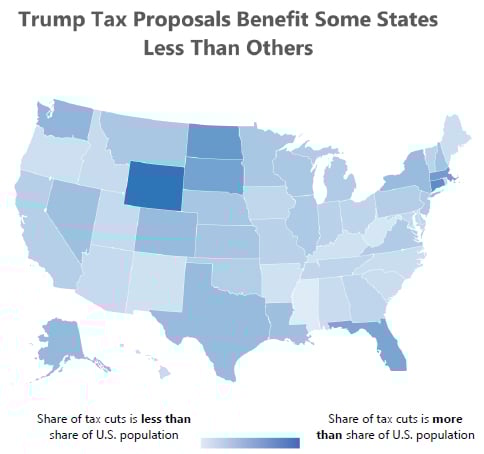
Not only would President Trump’s proposed tax plan fail to deliver on its promise of largely helping middle-class taxpayers, it also would shower a disproportionate share of the total tax cut on taxpayers in some of the richest states while southern and a few other states would receive a smaller share of the tax cut […]
Trump Tax Proposals Would Provide Richest One Percent in New York with 66.9 Percent of the State’s Tax Cuts
July 20, 2017 • By ITEP Staff
Earlier this year, the Trump administration released some broadly outlined proposals to overhaul the federal tax code. Households in New York would not benefit equally from these proposals. The richest one percent of the state’s taxpayers are projected to make an average income of $3,234,000 in 2018. They would receive 66.9 percent of the tax cuts that go to New York’s residents and would enjoy an average cut of $176,680 in 2018 alone.
Trump’s $4.8 Trillion Tax Proposals Would Not Benefit All States or Taxpayers Equally
July 20, 2017 • By Matthew Gardner, Steve Wamhoff
The broadly outlined tax proposals released by the Trump administration would not benefit all taxpayers equally and they would not benefit all states equally either. Several states would receive a share of the total resulting tax cuts that is less than their share of the U.S. population. Of the dozen states receiving the least by this measure, seven are in the South. The others are New Mexico, Oregon, Maine, Idaho and Hawaii.
Sales Tax Holidays: An Ineffective Alternative to Real Sales Tax Reform
July 12, 2017 • By ITEP Staff
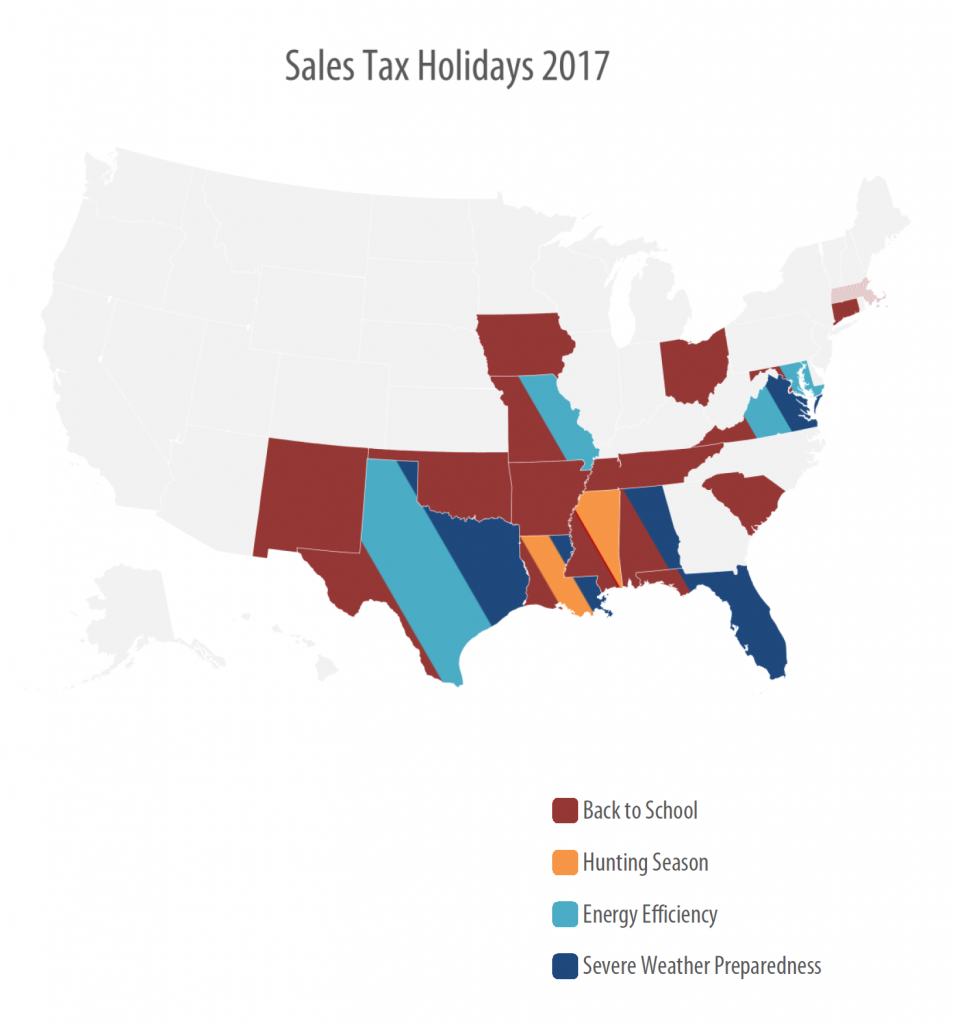
Sales taxes are an important revenue source, composing close to half of all state tax revenues. But sales taxes are also inherently regressive because the lower a family’s income, the more the family must spend on goods and services subject to the tax. Lawmakers in many states have enacted “sales tax holidays” (at least 16 states will hold them in 2017), to provide a temporary break on paying the tax on purchases of clothing, school supplies, and other items. While these holidays may seem to lessen the regressive impacts of the sales tax, their benefits are minimal. This policy brief…
Trump Budget Uses Unrealistic Economic Forecast to Tee Up Tax Cuts
June 29, 2017 • By Carl Davis
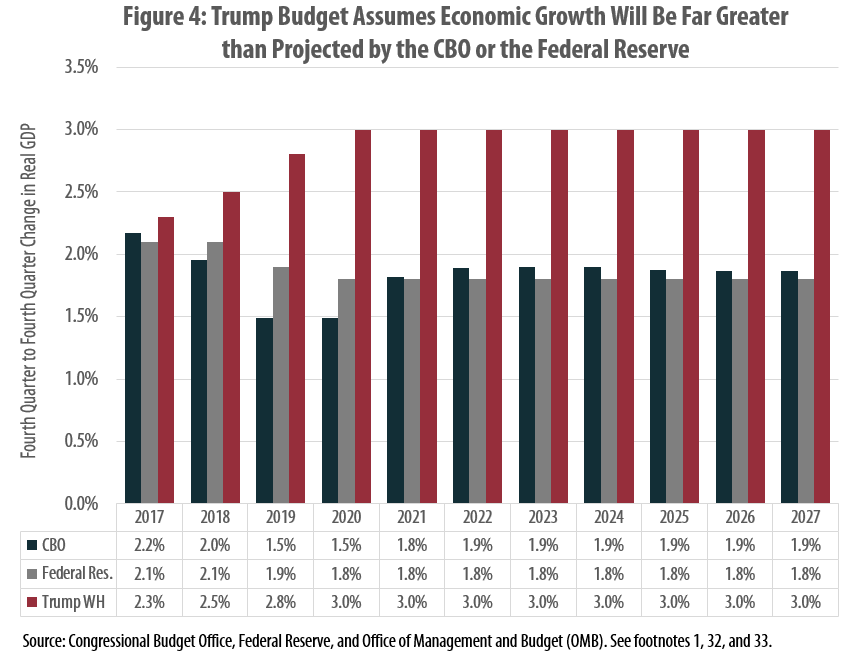
The Trump Administration recently released its proposed budget for Fiscal Year 2018. The administration claims that its proposals would reduce the deficit in nearly every year over the next decade before eventually achieving a balanced budget in 2027, but the assumptions it uses to reach this conclusion are deeply flawed. This report explains these flaws and their consequences for the debate over major federal tax changes.
Senate Health Care Reform Bill Just as “Mean” as the House Version
June 26, 2017 • By Alan Essig
The Congressional Budget Office today released its score of the Senate Health Care proposal and the news is not good. It’s no wonder a narrow group of 13 lawmakers cobbled together the bill behind closed doors. Now that the measure has seen the light of day, we know that it epitomizes Robin Hood in reverse policies by snatching health coverage from 22 million people by 2026 (15 million in 2018) while showering tax cuts on the already wealthy.
Which States Benefit from the Tax Cuts in the GOP Health Plan?
June 15, 2017 • By Steve Wamhoff
Congressional Republicans’ plans to repeal the two largest tax increases on individuals that were enacted as part of the Affordable Care Act (ACA) would disproportionately benefit residents of Connecticut, New York, the District of Columbia and 10 other states. The remaining states would receive a share of the tax cuts that is less than their share of the total U.S. population.
Steve Wamhoff
June 8, 2017 • By ITEP Staff

Steve is ITEP’s director of federal tax policy. In this role, he is responsible for setting the organization’s federal research and policy agenda. He is the author of numerous reports and analyses of federal tax policies as well as in-depth policy briefs that outline how the federal income tax and corporate tax code can be overhauled to improve tax fairness.
This week saw tax debates heat up in many states. Late-session discovered revenue shortfalls, for example, are creating friction in Delaware, New Jersey, and Oklahoma, while special sessions featuring tax debates continue in Louisiana, New Mexico, and West Virginia. Meanwhile the effort to revive Alaska's personal income tax has cooled off.
New York Times: In Some States, Donating to Private Schools Can Earn You a Profit
May 17, 2017
AASA and the liberal-leaning Institute on Taxation and Economic Policy examined programs in 17 states that send more than $1 billion a year to private schools via tuition tax credits, and concluded that private schools were benefiting from a “federally sanctioned voucher tax shelter” for wealthy taxpayers. The study called it a “get-rich scheme for […]
State Rundown 5/10: Spring Tax Debates at Different Stages in Different States
May 10, 2017 • By Meg Wiehe
This week saw a springtime mix of state tax debates in all stages of life. In West Virginia and Louisiana, debates over income tax reductions and comprehensive tax reform are full of vigor. Other debates that bloomed earlier are now settled, such as Florida‘s now-complete budget debate and the more florid debates over gas taxes […]
International Business Times: Who Ends Up Paying for the Gig Economy?
May 4, 2017
As the gig economy has grown, the tax gap has widened. Because of inconsistencies in sales tax policies, state and local governments across the U.S. may be missing out on $300 million in annual tax revenues from transportation network companies like Uber and Lyft, according to a March study from the non-profit Institute on Taxation […]
New York Daily News: Trump’s Tax Plan Ignores Campaign Promise to Help Middle Class
April 27, 2017 • By ITEP Staff
Nor do they jibe with his and his presidential transition team’s guarantee that there wouldn’t be a big tax cut for wealthy people — now-Treasury Secretary Steve Mnuchin promised on CNBC in late November that “there will be no absolute tax cut for the upper class” — or how it would be paid for. Trump […]
3 Percent and Dropping: State Corporate Tax Avoidance in the Fortune 500, 2008 to 2015
April 27, 2017 • By Aidan Davis, Matthew Gardner, Richard Phillips
The trend is clear: states are experiencing a rapid decline in state corporate income tax revenue. Despite rebounding and even booming bottom lines for many corporations, this downward trend has become increasingly apparent in recent years. Since our last analysis of these data, in 2014, the state effective corporate tax rate paid by profitable Fortune 500 corporations has declined, dropping from 3.1 percent to 2.9 percent of their U.S. profits. A number of factors are driving this decline, including: a race to the bottom by states providing significant “incentives” for specific companies to relocate or stay put; blatant manipulation of…
States are experiencing a rapid decline in state corporate income tax revenue, and the downward trend has become increasingly pronounced in recent years. Despite rebounding bottom lines for many corporations, a new ITEP report, 3 Percent and Dropping: State Corporate Tax Avoidance in the Fortune 500, 2008 to 2015,finds that effective tax rates paid by […]
New York Daily News: President Trump’s Tax Plan Ignores Campaign Promises to Help Middle Class, Reduce National Debt
April 26, 2017
Nor do they jibe with his and his presidential transition team’s guarantee that there wouldn’t be a big tax cut for wealthy people — now-Treasury Secretary Steve Mnuchin promised on CNBC in late November that “there will be no absolute tax cut for the upper class” — or how it would be paid for. Trump […]
Fiscal Policy Institute: Immigrant Youth Add $140 Million to New York Tax Revenues
April 25, 2017
The report, conducted by the Institute on Taxation and Economic Policy and co-released in New York by the Fiscal Policy Institute, focuses on the executive order known as Deferred Action for Childhood Arrivals, or DACA. The executive order first went into effect in 2012, and in New York State, of the estimated 820,000 undocumented immigrants, about 76,000 are eligible for DACA.
State Rundown 4/19: Alaska’s Long Income Tax Freeze May Be Thawing
April 19, 2017 • By ITEP Staff
This week Alaska‘s House advanced a historic bill to reinstate an income tax in the state, Oklahoma‘s House voted to cancel a misguided tax cut “trigger,” West Virginia‘s governor colorfully vetoed his state’s budget, tax reform debate kicked off in Louisiana, and gas tax updates were considered in South Carolina and Tennessee, among other tax-related news […]
Profitable Fortune 500 companies in a range of economic sectors have been remarkably successful in manipulating the tax system to avoid paying even a dime in tax on billions of dollars in U.S. profits. This ITEP report examines a select, diverse group of 15 corporations' tax situations to shed light on the widespread nature of corporate tax avoidance. As a group, these companies paid no federal income tax on $21 billion in profits in 2016, and they paid almost no federal income tax on $111 billion in profits over the past five years. All but one received federal tax rebates…
State Rundown 4/12: Season in Transition as Some States Close, Others Open Tax Debates
April 12, 2017 • By ITEP Staff
This week in state tax news we see Louisiana‘s session getting started, budgets passed in New York and West Virginia, Kansas lawmakers taking a rest after defeating a harmful flat tax proposal, and Nebraska legislators preparing for full debate on major tax cuts. Nevada lawmakers may make tax decisions related to tampons, diapers, marijuana, and […]
