It’s the first official week of summer, and while many of us are planning vacations, state lawmakers remain busy finalizing and debating tax proposals.
Budgets were signed in Illinois, Rhode Island, and Virginia – all three included new revenue. Virginia passed a final budget bill with compromises including a new energy consumption tax on data centers, and Illinois approved new taxes on social media companies, digital advertising, and decoupling from a federal giveaway – Qualified Small Business Stock (QSBS).
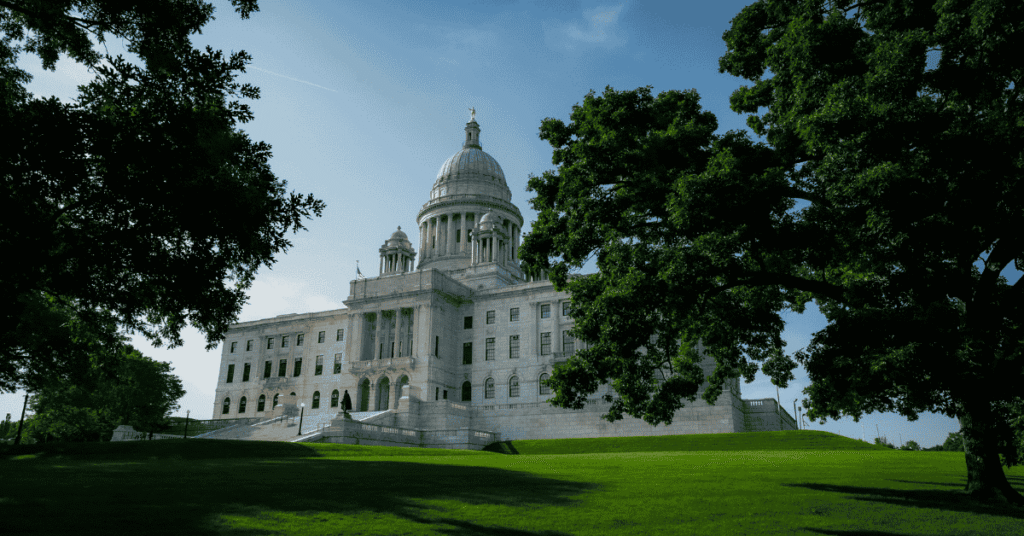
Meanwhile, Rhode Island joined the ranks of states with millionaires’ taxes and child tax credits upon Gov. Dan McKee’s signing of this year’s budget. A new 3 percent surcharge on income over $1 million (phasing in over three years) and new refundable child tax credit of $330 per child under age 18 were the centerpieces of the budget, in addition to decoupling from QSBS and the business interest limitation.
Major State Tax Proposals and Developments
- Gov. JB Pritzker of ILLINOIS signed the state budget into law. It includes new taxes on social media companies and digital advertising, as well as fantasy sports operators and sports betting. The budget also included decoupling from the federal QSBS exemption which almost exclusively benefits households with annual incomes over $1 million. – NEVA BUTKUS
- RHODE ISLAND Gov. Dan McKee signed the state’s annual budget into law. Major tax provisions include: a new phased-in surtax on high-income households; a new refundable child tax credit; and federal conformity decisions that will protect state revenue from federal action. Lawmakers also eliminated the age requirement that limited the Social Security income exemption from income taxes. – MILES TRINIDAD
- The VIRGINIA General Assembly advanced the state budget to Gov. Abigail Spanberger’s desk. The final proposal keeps the sales tax exemption in place for data centers while creating a first-in-the-nation data center energy consumption tax that is expected to generate $600 million over the next two years. It also increases the standard deduction to $9,200 for single filers and $18,400 for joint filers, establishes a retail cannabis market that will includes a 6 percent state sales tax and an option for localities to levy an additional tax of 1 to 3.5 percent, and allows localities to hold a referendum to increase sales taxes by 1 percent. – MILES TRINIDAD
- VERMONT Gov. Phil Scott signed property tax legislation to fully fund the Education Fund for 2027. The legislation also permanently expands the state’s property tax circuit breaker and provides a one-time increase to the state’s renter credit. The property tax circuit breaker boost increases the upper eligibility threshold from $47,000 to $50,000, the exemption of home value from $15,000 to $50,000, and the maximum credits from $2,400 to $2,600 for the municipal credit and $5,600 to $6,000 for the education property tax credit. The renter’s credit will increase from 10 to 12.5 percent of the annualized HUD county fair market rent. Gov. Scott also signed legislation that establishes a mileage-based user fee for battery electric vehicles. – MILES TRINIDAD
- The MASSACHUSETTS ballot measure to cut the state’s income tax rate by 1 percentage point will not appear on the ballot this November. The Supreme Court’s ruling argued that the summary was “significantly misleading and likely to influence voters.” – ELI BYERLY-DUKE
- The WYOMING Board of Estimates says it cannot certify the state’s property tax assessments because it claims a new cap of 4 percent on increases in assessments violates a requirement for assessment uniformity in the state constitution. – ELI BYERLY-DUKE
- On Tuesday, the U.S. Supreme Court issued an unanimous ruling on property tax foreclosure sales that protects the right of local governments to collect and enforce property taxes. Following an earlier case in Minnesota, a MICHIGAN taxpayer sued Isabella County over the county’s property tax auction that returned auction proceeds – but not theoretical market value – to the owner after taxes were settled. The Supreme Court affirmed that the county only owes the indebted taxpayer the auction proceeds and not the market value of the home.- RITA JEFFERSON
State Roundup
- Los Angeles, CALIFORNIA, City Council is moving forward with a plan to exempt all new multifamily apartment buildings from Measure ULA, the city’s mansion tax. To pass, voters would have to approve changes to the measure in November’s general election. The action from the city came after multiple studies found a decrease in the number of apartment buildings completed.
- COLORADO’s revenue forecast has temporarily improved, and lawmakers will face less cuts to services when finalizing the 2027-2028 budget. The forecast will not be enough, however, to activate the state’s Family Affordability Tax Credit and the boost to the state’s EITC which are used to refund revenue that exceeds the cap set by TABOR. The budget forecast is expected to deteriorate again when the state starts absorbing federal cuts to SNAP and Medicaid.
- FLORIDA’s ballot measure to phase out non-school property taxes is raising constitutional concerns. If passed by voters, those who own a home in Florida by the end of the year will qualify for the increased homestead exemption. New homeowners, beginning next year, would have to wait five years before qualifying.
- Cracks are forming in INDIANA over how to pay for the Chicago Bears’ stadium deal if the franchise chooses to relocate to the northwest corner of Indiana. A proposed 1 percent restaurant tax in Indiana’s Lake and Porter counties is being proposed to help fund the $1 billion deal, but it’s facing opposition from public and local elected officials.
- For the third consecutive year, the University of NEBRASKA will raise tuition, this time by 4.25%, while also cutting $8 million from its budget. And for the third consecutive month, Nebraska’s projected revenue shortfall has grown, now to $170 million, due to tax receipts coming in below projections and the legislature’s failure to make structural improvements when closing the shortfall it faced earlier this year.
- NEW JERSEY legislators say they have reached a budget deal. The measure would enhance the state’s Child Tax Credit and refocus the state’s Stay NJ property tax credit on middle- and lower-income seniors.
- NEW YORK City Mayor Zohran Mamdani and allies are preparing for their next push for additional progressive revenue to fill city shortfalls and provide new services like free childcare.
- NORTH CAROLINA Gov. Josh Stein signed legislation that will freeze property tax revaluations across the state for a year. The law requires counties with populations greater than 15,000 that conducted property reappraisals effective January 1, 2026, to use the previous schedule values until 2027.
- Anti-tax interests in WASHINGTON state are circulating petitions to eliminate the state’s new millionaires’ tax, but the repeal effort faces strong headwinds as the tax is popular and the revenue is already dedicated to needs that would be left unfunded without it.
What We’re Reading
- A new policy brief from ITEP discusses the Treasury Department’s proposed changes to what qualifies as a “federal public benefit”, which would prevent certain legal immigrant groups and DACA recipients from receiving the refundable portions of their federal EITC, CTC, and other credits. A companion brief also discusses how this change will impact state credits, particularly state EITCs.
- Governing discusses how data center developers are pitching and overpromising these projects to communities, and what questions government officials should be asking before signing deals to avoid spending $1.2 million in tax breaks per new job – which is what Virginia spent in fiscal year 2025.
- Next City explores how Atlanta is reshaping community development by making tax allocation districts more transparent, more accountable to the community, and prioritizing existing neighbors through anti-displacement and wealth creation programming.
- Oklahoma Voice analyzes recent data from the state on recipients of its tax credit vouchers for private schools, a program that costs over $255 million. They find that many recipients come from wealthy families, most already attended private schools, and almost none come from poor families.
If you like what you are seeing in the Rundown (or even if you don’t) please send any feedback or tips for future posts to Aidan Davis at aidan@itep.org. Click here to sign up to receive the Rundown via email.