
2,364 posts
Why California’s Cannabis Market May Not Tell You Much about Legalization in Your State
• By Carl Davis
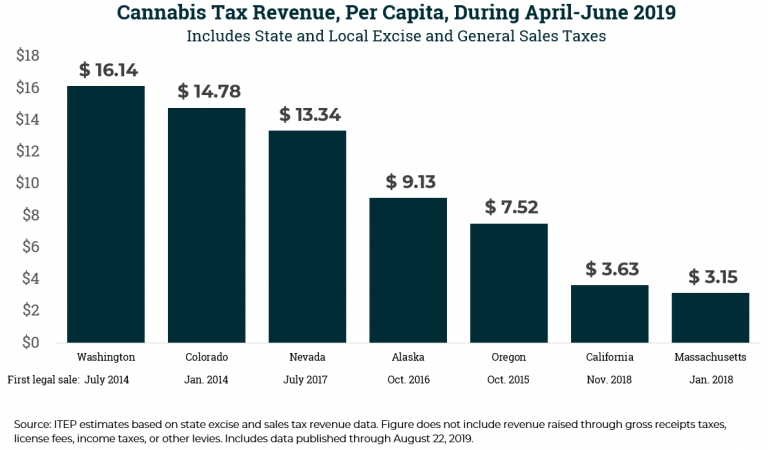
New tax data out of California, the world’s largest market for legal cannabis, tell a complicated story about the cannabis industry and its tax revenue potential. Legal cannabis markets take time to establish, and depending on local market conditions, the revenue states raise can vary significantly.
White House Considers Payroll Tax Cut that GOP Opposed During Obama Years
• By Steve Wamhoff
The Trump Administration is considering cutting the Social Security payroll tax to prevent an economic downturn, something that seemed more justified when enacted in the aftermath of the Great Recession—when congressional Republicans largely opposed it. Here are some things to remember about this tax.

Business Roundtable’s Newfound Devotion to Corporate Responsibility Doesn’t Include Paying Taxes
• By Matthew Gardner
If you squint really hard, the Business Roundtable’s newly declared fondness for “supporting the communities in which we work” could be read as an acknowledgment of the need for a tax system that can pay for needed services. But it’s not.
Which States Allow Deductions for Federal Income Taxes Paid?
• By ITEP Staff
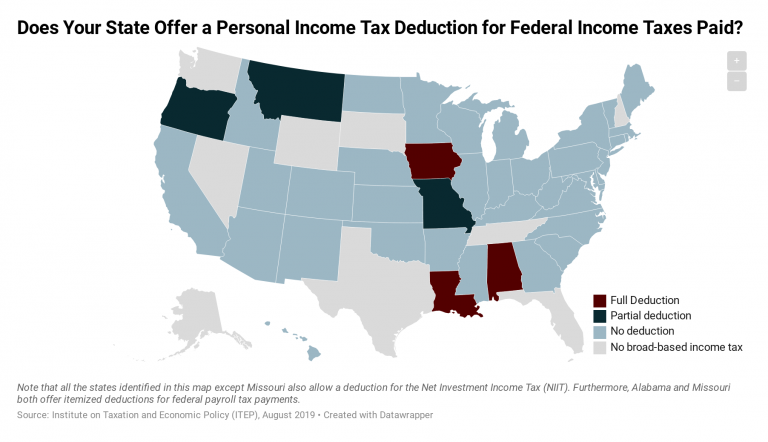
Six states allow an unusual income tax deduction for federal income taxes paid. These deductions are detrimental to state income tax systems on many fronts, as they offer large benefits to high-income earners and undercut the adequacy and stability of state income tax systems.

One Tax System for Most Americans, and a Second System for the Wealthiest
• By Matthew Gardner
Last year, the Walton family's fortune grew by $100 million a day. This level of wealth is particularly obscene in the context of the Walmart Corporation’s dark store strategy. The company works nationwide to reduce its property tax assessments, which, when successful, deprives local communities of revenue necessary to fund education, libraries, parks, public health and other services.
IRS’s SALT Workaround Regulations Should be Strengthened, Not Rejected
• By Carl Davis
Lawmakers are seeking to achieve a backdoor repeal of the $10,000 cap on deductions for state and local taxes paid (SALT) by invalidating recent IRS regulations that cracked down on schemes that let taxpayers dodge the cap. If successful, their efforts would drain tens of billions of dollars from federal coffers each year, with the vast majority of the benefits going to the nation’s wealthiest families.
Georgia Budget & Policy Institute: The Tax Cuts and Jobs Act in Georgia: High Income Households Receive Greatest Benefits
• By ITEP Staff
This report offers the first comprehensive look at how the Tax Cuts and Jobs Act of 2017 (TCJA), in combination with Georgia’s enacted response, will impact the state budget and families at every level of income from 2020–2025. In partnership with Step Up Savannah and the Institute on Taxation and Economic Policy (ITEP), a case […]
Policy Matters Ohio: Ohio Tax Shift Away From the Wealthy: The Pattern Repeats
• By ITEP Staff
The main tax measures in Ohio’s new budget bills will bring tax increases on average for lower- and middle-income taxpayers, while those at the top of the income scale on average will see cuts. Overall, the bottom 95% of taxpayers with annual income below $208,000 a year will average increases, while those in the top […]
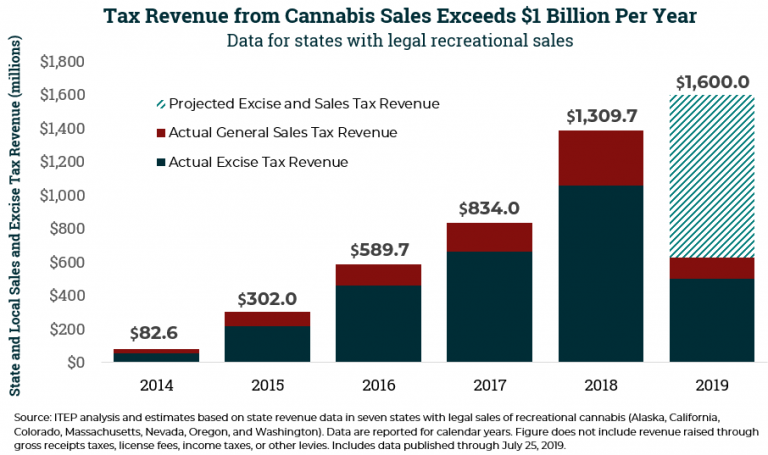
State and Local Cannabis Tax Revenue on Pace for $1.6 Billion in 2019
• By Carl Davis
Cannabis tax revenue is becoming more significant as legal sales grow. The tax is far from a budgetary panacea, but an ITEP analysis of revenue data reported by the seven states with legal cannabis sales underway suggests that excise and sales tax revenues from the sale of the drug could reach $1.6 billion this year.

Leadership Transition Announcement
• By ITEP Staff
Notes from Alan Essig, Executive Director of the Institute on Taxation and Economic Policy and Citizens for Tax Justice, and Joan Entmacher, Board Chair of the Institute on Taxation and Economic Policy, and Ed Jayne, Board Chair of Citizens for Tax Justice, announcing leadership transition.

Tax Cuts and Jobs Act: A Timeline
• By ITEP Staff
In December 2017, federal lawmakers hastily enacted the Tax Cuts and Jobs Act. So rushed was its passage that provisions of the legislative text were scrawled in the margins. Scroll through this timeline for an in-depth look at the Tax Cuts and Jobs Act and the impact since its passage.

Opportunity Zones Have Nothing to Do with Reparations, Except …
• By Jenice R. Robinson
Among other things, this blog highlights how federal, state and local policies systematically work to reinforce the racial wealth gap by, for example, using the tax code to redistribute the nation’s wealth to billionaire developers and keeping low-income people of color in a perpetual cycle of debt through fines and fees to fund local governments. Opportunity zones and the top-heavy 2017 tax law are emblematic of a long history of policymaking that advantages wealthy white…
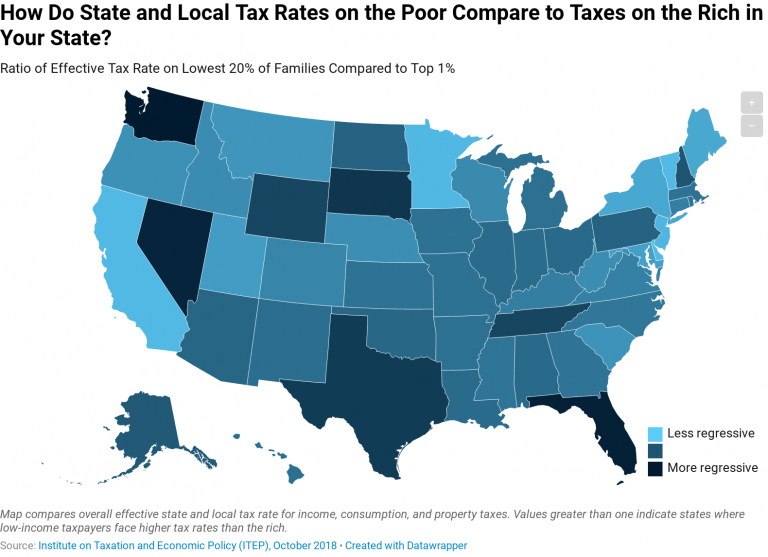
How Do Tax Rates on the Poor Compare to Taxes on the Rich in Your State?
• By ITEP Staff
No two state tax systems are the same, but 45 states have one thing in common: Low-income residents are taxed at a higher rate than the top 1 percent. Effective tax rates for the lowest 20 percent of families range from a high of 17.8 percent in Washington State to a low of 5.5 percent in Delaware.
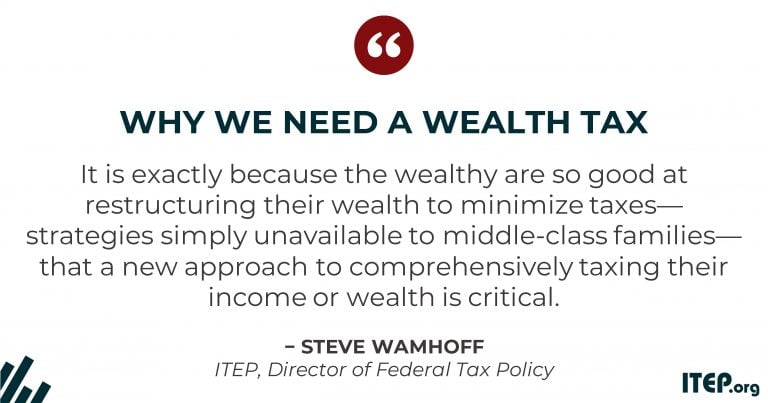
A Wealth Tax Might Be Easier to Implement than You Think
• By Steve Wamhoff
A direct federal tax on wealth, as described in a January report from ITEP and proposed by Sen. Elizabeth Warren, could raise substantial revenue to make public investments, curb rising inequality, and is supported by a large majority of Americans. But would it work? Recent research highlighted in a new academic paper outlines approaches that would make it easier than you might think.
State Rundown 7/26: The Dog Days of Tax
• By ITEP Staff
OHIO legislators passed a budget with unfortunate income tax cuts for high-income households. Other states turned their attention to unconventional ideas during their legislative off-seasons, for better and for worse. And there are many gems to be found in our “What We’re Reading” section below, including new research on the racial inequities that continue to pervade our communities and schools.

• By Meg Wiehe
We shouldn’t wait for Washington to tax the rich. We can begin at the state level. Examining the federal policy landscape is a logical place to start, but state policymakers are missing a key opportunity if they don’t join this national conversation and take a hard look at how their tax codes are affecting individuals […]

Election 2020: Tax Policy Essentials
• By ITEP Staff
The nation’s tax policies and their role in economic inequality are front and center during this election cycle. For those interested in how the nation can move toward a fairer tax system and or more detailed information about progressive tax policy ideas, ITEP created this quick guide.
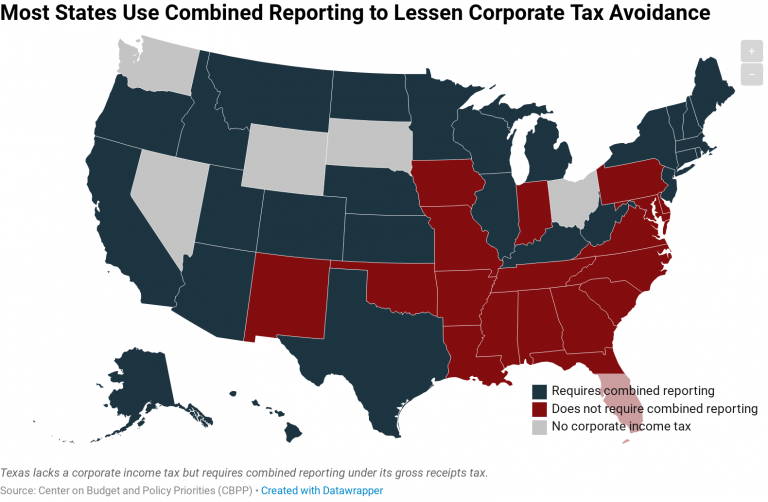
Combined Reporting Lessens Corporate Tax Avoidance at State Level
• By ITEP Staff
"Combined reporting" lessens the effectiveness of a tax avoidance scheme known as income shifting, in which large multi-state corporations dubiously claim that their income was earned in states with little or no corporate income tax.

Legislation to Block Corporate Inversions Is Still Needed
• By Steve Wamhoff
If a future Congress and president enact a real tax reform, one that requires corporations to pay their fair share and ends TCJA’s various corporate breaks for offshore profits, then companies will use inversions and other tactics to dodge taxes once again—if lawmakers let them. That’s why any real tax reform will include something like the Stop Corporate Inversions Act, introduced last week by Sens. Dick Durbin and Jack Reed to block inversions.

Many States Move Toward Higher Taxes on the Rich; Lower Taxes on Poor People
• By Meg Wiehe
Several states this year proposed or enacted tax policies that would require high-income households and/or businesses to pay more in taxes. After years of policymaking that slashed taxes for wealthy households and deprived states of revenue to adequately fund public services, this is a necessary and welcome reversal.
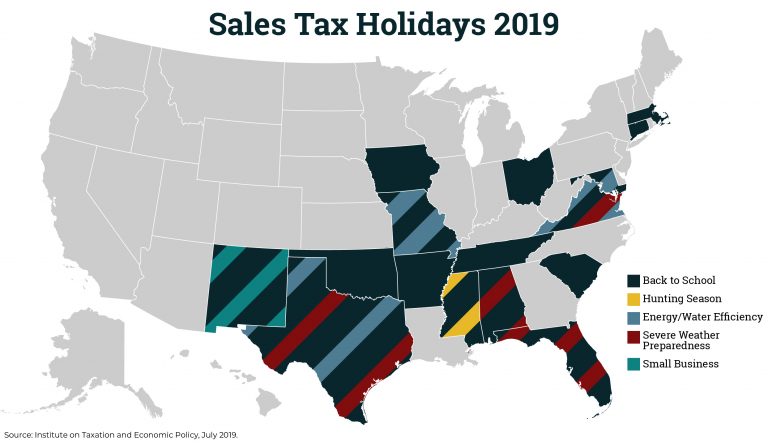
Is Your State Holding Sales Tax Holidays in 2019?
• By ITEP Staff
Lawmakers in many states have enacted “sales tax holidays” (16 states will hold them in 2019), to provide a temporary break on paying the tax on purchases of clothing, school supplies, and other items. While these holidays may seem to lessen the regressive impacts of the sales tax, their benefits are minimal. ITEP’s policy brief […]
Sales Tax Holidays: An Ineffective Alternative to Real Sales Tax Reform
• By Dylan Grundman O'Neill
Lawmakers in many states have enacted “sales tax holidays” (16 states will hold them in 2019), to provide a temporary break on paying the tax on purchases of clothing, school supplies, and other items. While these holidays may seem to lessen the regressive impacts of the sales tax, their benefits are minimal. This policy brief looks at sales tax holidays as a tax reduction device.

Sales Tax Holidays Are Outdated Gimmicks That Have Run Their Course
• By ITEP Staff
Just as the very first sales tax holiday for car sales did not fix the auto industry’s challenges, providing consumers a temporary reprieve on sales tax will not address families’ pocketbook concerns.

CommonWealth: Before the T Derailed, its Funding Got on the Wrong Track
• By ITEP Staff
Overall, funding for the Commonwealth during the last two decades has relied increasingly on sales taxes and regressive user fees, while cutting income tax rates. As a result, we have an upside-down tax system. Effectively, these taxes and fees make lower-income Massachusetts residents pay a higher percentage (10 percent) of their income in state and […]
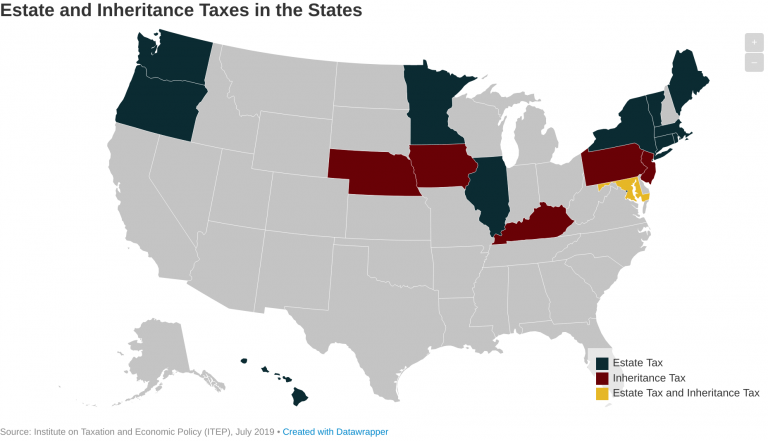
Does Your State Levy Estate and Inheritance Taxes?
• By ITEP Staff
States have been repealing estate taxes since the early 2000s. Now, just 17 states and the District of Columbia (D.C.) levy estate and/or inheritance taxes. Twelve states and D.C. levy estate taxes while six states levy inheritance taxes (Maryland levies both). These taxes have long been used not just to raise revenue for vital public services, but to promote equality of opportunity and reduce the transfer of concentrated wealth from one generation to the next.

Institute on Taxation
and Economic Policy
ITEP is a non-profit, non-partisan tax policy organization. We conduct rigorous analyses of tax and economic proposals and provide data-driven recommendations to shape equitable and sustainable tax systems.
Subscribe to ITEP Emails
Tax research and policy news in your inbox.
Promote Fair Tax Policy
Your gift to ITEP promotes tax justice. With your help, we do research that supports taxing millionaires and billionaires, taxing big corporations and raising revenue for the things our people, our communities and our planet need.
Together, we can create a country with more economic justice, more racial justice, more climate justice… and more tax justice.