
2,364 posts
SF Gate: These Bay Area Companies Paid Zero Federal Taxes in 2018
December 16, 2019
A new report by the Institute on Taxation and Economic Policy discovered that 91 of Fortune’s top 500 corporations paid no federal income taxes in 2018 — and many actually got money back. The report studied the first year companies were under the Tax Cuts and Jobs Act, signed by President Donald Trump in 2017. The act […]
Fox Business: Many Fortune 500 Companies Paid Half of Trump’s Lower Corporate Tax Rate in 2018: Study
December 16, 2019
President Trump’s sweeping 2017 tax reform law substantially lowered the corporate tax rate, yet a large proportion of Fortune 500 companies paid an effective rate that was nearly half of what was expected of them, new research shows. A number of companies — including Amazon to Starbucks and Chevron — appear to have evaded federal income taxes entirely in […]

More of the Same: Corporate Tax Avoidance Hasn’t Changed Much Under Trump-GOP Tax Law
• By Matthew Gardner
A new report from ITEP released today shows that, based on the first year of financial reports released by companies operating under the new tax law, tax avoidance appears to be every bit as much of a problem under the new tax system as it was before the Trump tax law took effect.
Fortune 500 Companies Avoided $73.9 Billion in Tax Under First Year of Trump Tax Law
• By Matthew Gardner
A comprehensive examination of Fortune 500 companies’ financial filings in 2018, the first year of the Tax Cuts and Jobs Act, finds that the law did nothing to curb corporate tax avoidance, with 91 companies paying $0 in taxes on U.S. income in 2018 and profitable companies overall paying a collective effective tax rate of 11.3 percent, which is barely more than half the 21 percent rate established by the tax law, the Institute on…
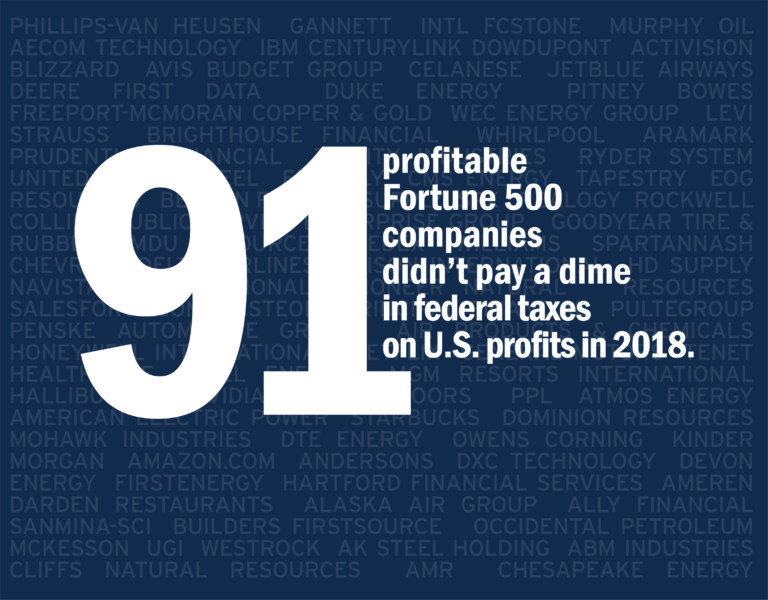
Corporate Tax Avoidance in the First Year of the Trump Tax Law
• By ITEP Staff, Lorena Roque, Matthew Gardner, Steve Wamhoff
Profitable Fortune 500 companies avoided $73.9 billion in taxes under the first year of the Trump-GOP tax law. The study includes financial filings by 379 Fortune 500 companies that were profitable in 2018; it excludes companies that reported a loss.
Washington Post: A New Report Hands Democrats a Major Weapon Against Trump
December 16, 2019
There is probably no more glaring example of President Trump’s massive betrayal of the economic populist nationalism that infused his campaign than the 2017 tax law. It isn’t just that he signed a massive tax cut that showered most of its benefits on the very highest earners after vowing to take on financial elites. It’s […]
NJ Spotlight: Pascrell, Other House Dems, Introduce Bill to Scrap Federal SALT Cap
December 12, 2019
For example, a new report from the Center on Budget and Policy Priorities estimated that 80% of the benefit of a SALT-cap repeal would go to just the top 5% of tax filers. That followed up on a report released last year by the Institute on Taxation and Economic Policy that estimated 60% of the benefits would […]
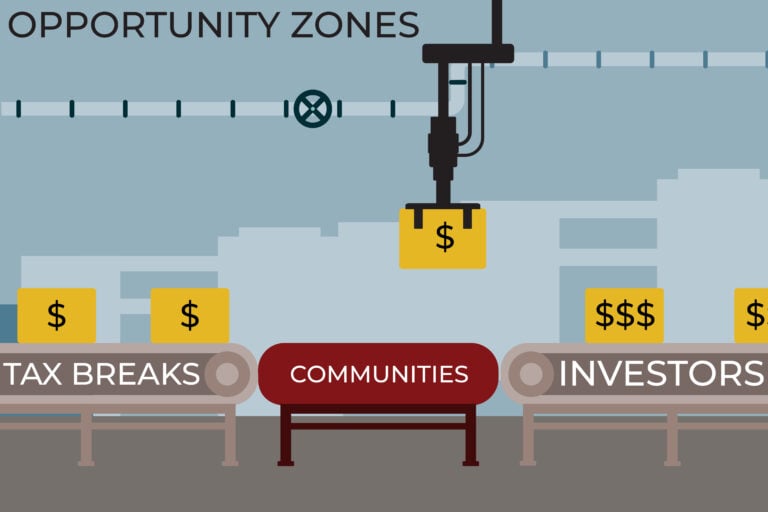
New ITEP Reports Call for the Repeal of Opportunity Zones and Urge States to Decouple
• By Lorena Roque
Two new ITEP reports lay bare the irreparable flaws of the federal Opportunity Zones program, created by the Tax Cuts and Jobs Act signed into law by President Trump in 2017.

Opportunity Zones Bolster Investors’ Bottom Lines Rather than Economic or Racial Equity
• By Lorena Roque
This policy brief provides an overview of how opportunity zones are designed and highlights some of the flaws of the policy, including the detrimental impact opportunity zones have on communities of color.
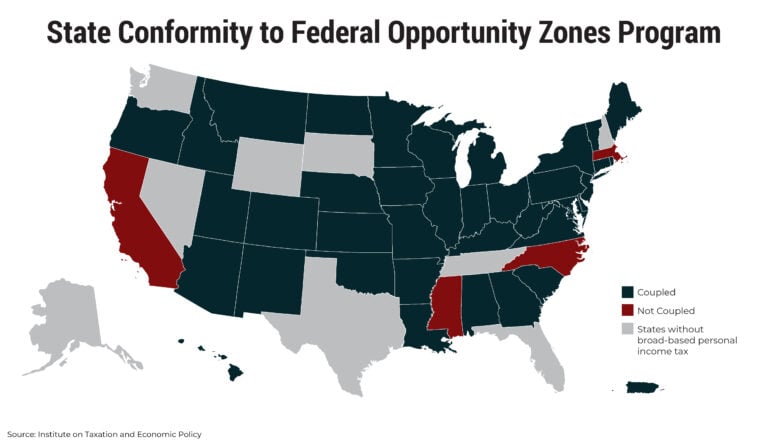
States Should Decouple from Costly Federal Opportunity Zones and Reject Look-Alike Programs
• By ITEP Staff
Post enactment of TCJA, lawmakers in most states needed to decide how to respond to the creation of this new program. Given the shortcomings of the federal Opportunity Zones program and its added potential costs to states, the most prudent course of action is three-pronged: States should move quickly to decouple; states should reject look-alike programs; and lawmakers should make investments directly into economically distressed areas.
House Democrats’ Latest Bill on SALT Deductions Would Mean Bigger Tax Cuts for the Rich
• By Steve Wamhoff
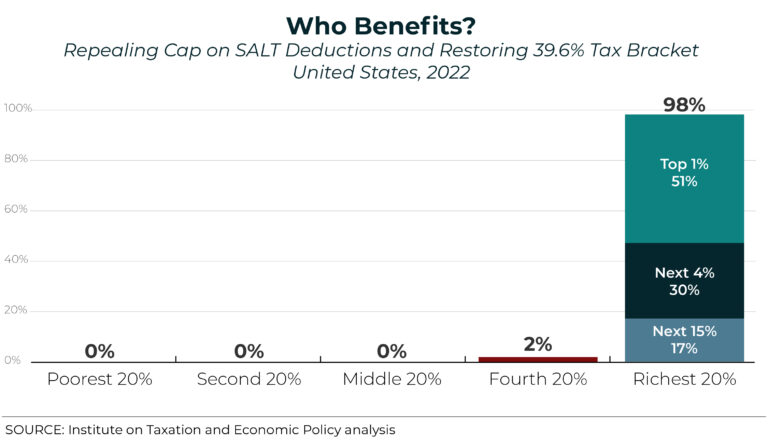
ITEP estimates show that if the House Democrats' proposal was in effect in 2022, it would have a net cost of $81 billion in that year alone. The estimates also show that 51 percent of the benefits would go to the richest 1 percent of taxpayers in the U.S. Clearly, lawmakers concerned about the SALT cap need to go back to the drawing board.

New Report from ITEP Explores the Stock Options Tax Dodge
• By Steve Wamhoff
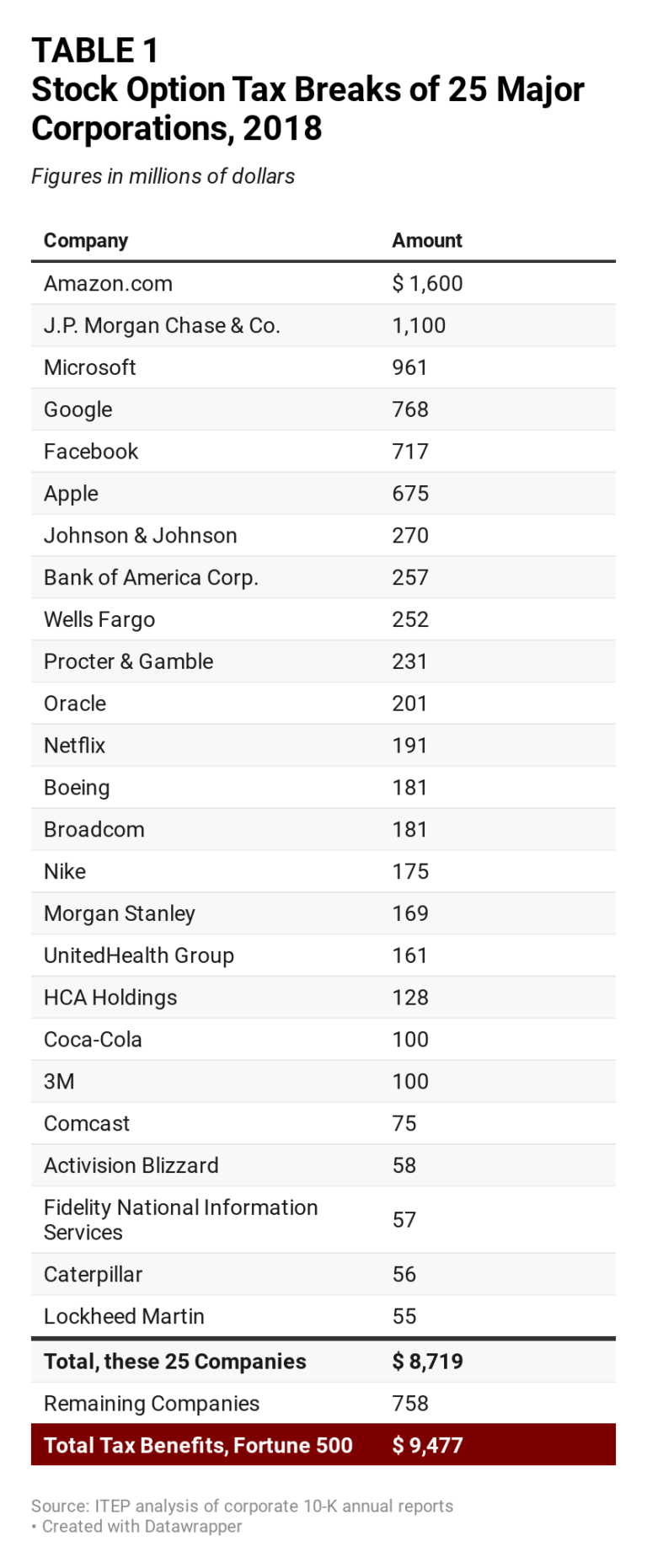
Earlier this year, Amazon and Netflix made headlines when ITEP reported findings that these and at least 58 other companies paid no federal income taxes in 2018. One of the tax breaks they use to manage this feat is related to stock options. Some companies saved hundreds of millions, and in some cases more than a billion dollars, in taxes in 2018 alone with this break. It’s time for Congress to eliminate the stock options…
How Congress Can Stop Corporations from Using Stock Options to Dodge Taxes
• By ITEP Staff
The stock option rules in effect today create a problem because they allow corporations to report a much larger expense for this compensation to the IRS than they report to investors. The result is that corporations can report larger profits to investors but smaller profits to the IRS, undermining the fundamental fairness of the tax system.

Legal Cannabis and a Tax Cut, Too
• By Carl Davis
A new ITEP report explains that an income tax cut for cannabis businesses embedded in the MORE Act is probably larger than the new 5 percent sales tax. This means that the average cannabis retailer—and its customers—could expect to pay LESS tax if the MORE Act is signed into law. Congress might have good reasons for structuring legalization this way, but it is an underappreciated aspect of the bill that should be made clearer as…
Cannabis Legalization: Tax Cut or Tax Hike?
• By Carl Davis
Understanding the full tax consequences of cannabis legalization requires evaluating not only the excise taxes proposed in most legalization bills, but also the effects on the federal income tax liability of cannabis businesses.
The News Tribune: Washington State Leaders Must Tax the Way to a Just Society
December 7, 2019
The inequalities in our state’s tax code are well known, and have gained us the ignoble designation of “the most unfair state and local tax system in the country.” This medal of dishonor from the Institute on Taxation and Economic Policy is based on ITEP’s assessment of how fairly the tax burden is spread among […]
Beacon: New Ad Highlights Collins’ Vote to Pass Tax Break for Wealthy Corporations
December 4, 2019
Marking two years since Senator Susan Collins cast a key vote in support of the 2017 Republican tax overhaul, the progressive 16 Counties Coalition launched a new ad on Monday highlighting corporations like Amazon and Prudential Financial that paid no corporate income taxes following the bill’s passage. In comparison, the ad notes, “one in four Mainers will eventually see their taxes […]
Fox Business: Biden to Unveil Tax Proposal Targeting Corporations, Wealthy
December 4, 2019
Under Biden’s plan, companies like Amazon, Netflix, General Motors, JetBlue and IBM, which reported net income of more than $100 million in the U.S. but paid zero or negative federal income taxes, would be hit with a 10 percent minimum levy on book income. The minimum tax, which Biden’s campaign expects to impact 300 companies, […]

Worker Relief and Credit Reform Act
• By ITEP Staff
Data available for download The Worker Relief and Credit Reform (WRCR) Act would replace the existing EITC. In most cases, the WRCR credit would be $4,000 for single people and $8,000 for married couples. Eligible taxpayers would be allowed a credit equal to the maximum amount or their earnings, whichever is less. People caring for […]
The News Tribune: How Did Tacoma Do Under Trump Tax Cuts? You Can Calculate it for Yourself
November 26, 2019
President Donald Trump has said it’s time to consider another tax cut — as evidence mounts that wealthier taxpayers in the Tacoma area and around the nation benefited a lot more than others from his first one. … Steve Wamhoff, director of federal tax policy at the Institute on Taxation and Economic Policy, pointed out that the […]
CNBC: Blue States File Appeal in Legal Battle Over SALT Tax Deductions
November 26, 2019
Whether the final rule will ultimately deter people from donating to these funds remains to be seen. “If you’re really passionate about private school vouchers in Georgia, you donate and you still get 100% of your donation back,” Carl Davis, research director at the Institute on Taxation and Economic Policy, told CNBC earlier. “You just […]
A Lump of Coal for 12 States Not Collecting Marketplace Sales Taxes this Holiday Season
• By Carl Davis
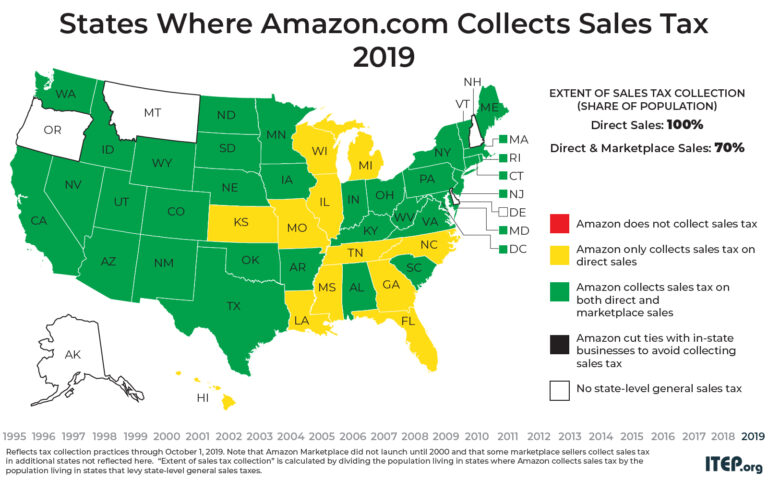
The last few years have brought major improvements in how states enforce their sales tax laws on purchases made over the Internet. Less than a decade ago, e-retailers almost never collected the sales taxes owed by their customers. The result was a multi-billion dollar drain on state coffers and a competitive disadvantage for local businesses. But this holiday season looks a bit different.
The Oracle: Big Corporate Tax Loopholes Strain Florida Budget
November 25, 2019
A 2019 report from the Institute on Taxation and Economic Policy, for instance, examined data from the IRS and Congressional Budget Office, estimating that Florida loses $1.1 billion annually from state corporate tax loopholes. $1.1 billion might seem small compared to the state’s $90 billion budget, but even small funding changes can have big impacts. The […]
Vanity Fair: “My Reserve Of F–Ks To Give Is Really Depleted”: How Teflon Tim Cook Gets Away With Enabling Donald Trump
November 25, 2019
Cook runs the biggest company on earth, with a current market cap of $1.16 trillion, and yet, according to the Institute on Taxation and Economic Policy, a nonprofit, nonpartisan tax-policy think tank, Apple has been playing America for billions in taxes for years. Read more
Business Insider: From Amazon To GM, Here Are all the Major Tech and Transportation Companies who Avoided Federal Income Tax Expenses Last Year
November 24, 2019
The Institute on Taxation and Economic Policy, a nonprofit think tank, analyzed SEC filings of Fortune 500 companies and identified 60 major corporations that didn’t report any federal income tax expenses in 2018. Of those, 11 do business in the tech or transportation industries. Read more

Institute on Taxation
and Economic Policy
ITEP is a non-profit, non-partisan tax policy organization. We conduct rigorous analyses of tax and economic proposals and provide data-driven recommendations to shape equitable and sustainable tax systems.
Subscribe to ITEP Emails
Tax research and policy news in your inbox.
Promote Fair Tax Policy
Your gift to ITEP promotes tax justice. With your help, we do research that supports taxing millionaires and billionaires, taxing big corporations and raising revenue for the things our people, our communities and our planet need.
Together, we can create a country with more economic justice, more racial justice, more climate justice… and more tax justice.