
2,364 posts
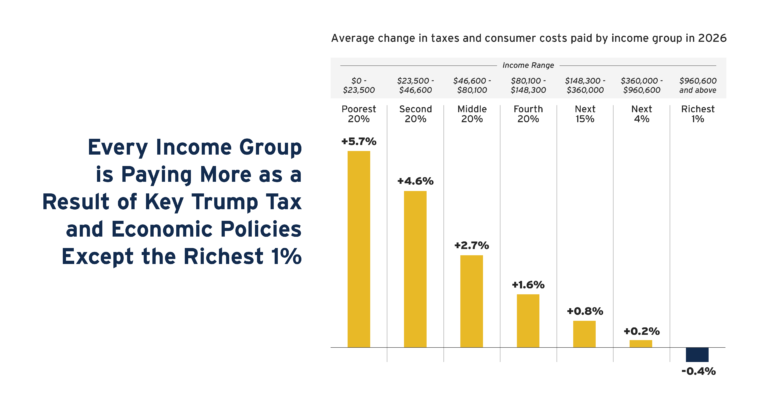
Impact of Key Trump Policies on Taxes and Costs: National and State Estimates
• By Steve Wamhoff
The major tax and economic policies of President Trump’s second term have increased taxes and household costs for most Americans except the richest 1%.

New Estimates of the Total Number of People and Children in Immigrant Families who Could Lose Eligibility for the Refundable Portions of the Earned Income Tax Credit and Child Tax Credit
• By Emma Sifre
Treasury and the IRS proposed a new rule that would further restrict eligibility for the refundable portions of four tax credits. The rule would affect primarily lawfully present immigrants authorized to work in the U.S. and their family members, including their children, the vast majority of whom are citizens.

Tallying Up the Impact of Florida’s Property Tax Ballot Measure on Local Communities
• By Neva Butkus
Florida voters will soon vote on Amendment 3, which would create a pathway for non-school property tax elimination in the state. If passed, the measure would cost local governments $13.7 billion in the first two years alone.

New Census Data Show Importance of Refundable Tax Credits and Need for Improvements
• By Joe Hughes
The Child Tax Credit actually moved fewer children out of poverty in 2025 than it did in 2024 prior to Congress passing the so-called "One Big Beautiful Bill Act" (OBBBA).

State Action on Child Tax Credits and Earned Income Tax Credits Since 2021
• By Neva Butkus
Since 2021, there has been a flurry of new and expanded state Child Tax Credits and Earned Income Tax Credits. This continued momentum speaks to the power and popularity of these credits and the need to boost the financial security of families and children across the country.

The Impact of Proposed New Tax Credit Restrictions for Immigrant Filers: An Updated Analysis of the DACA Recipient Population
• By Carl Davis, Erika Frankel, Emma Sifre
New Treasury Department public regulations would drastically reduce tax credit claims by DACA recipients and their families, among others. We find that 158,000 people in households with at least one DACA recipient will suffer financial harm, and that more than half of the impacted individuals are U.S. citizens.
Which States Allow Deductions for Overtime Pay in 2026?
• By ITEP Staff
The federal deductions for up to $25,000 in tipped income, for a similar amount of overtime pay, and for some auto loan payments have not been widely adopted by states. As of late June, just nine states are allowing the deduction for overtime.
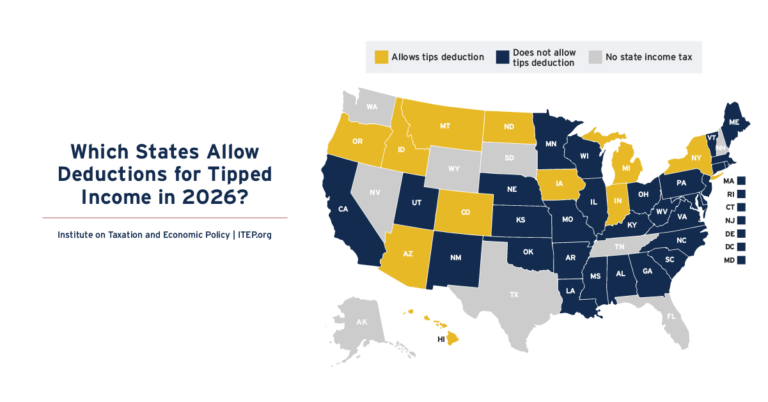
Which States Allow Deductions for Tipped Income in 2026?
• By ITEP Staff
The federal deductions for up to $25,000 in tipped income, for a similar amount of overtime pay, and for some auto loan payments have not been widely adopted by states. As of late June, only 10 states – a quarter of the states with personal income taxes — have decided to allow the tipped income deduction for tax year 2026.
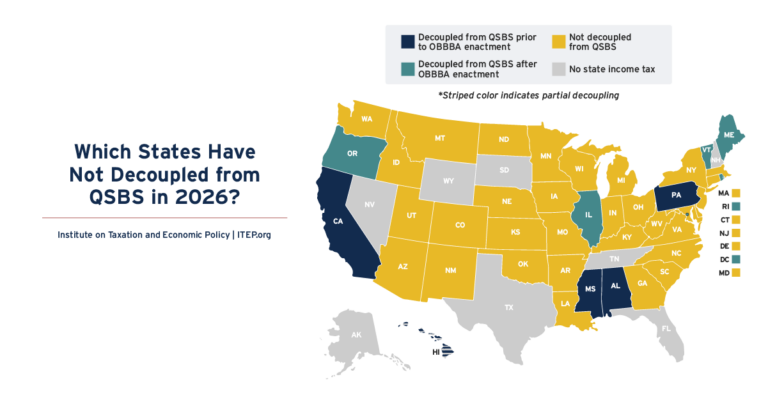
Which States Have Not Decoupled from QSBS in 2026?
• By ITEP Staff
QSBS allows millionaire investors to pay zero income tax on their profits.

Child Tax Credits and Child and Dependent Care Credits: What’s the Difference?
• By Maddie Brown Shirley
Three popular state tax credits support families with children: the Child Tax Credit (CTC, or child credit), the Child and Dependent Care Tax Credit (CDCTC, or dependent care credit), and the Earned Income Credit (EITC). While the EITC is intended to boost wages for low- and moderate-income workers and families, the CTC and CDCTC are […]

Trump Weighs Another Giveaway to the Wealthy With Capital Gains Indexing Ahead of Midterms
• By Jon Whiten
Trump is once again weighing a proposal to index capital gains taxes to inflation as part of a set of policy promises ahead of the midterm elections. It would amount to a massive new tax break for wealthy investors.
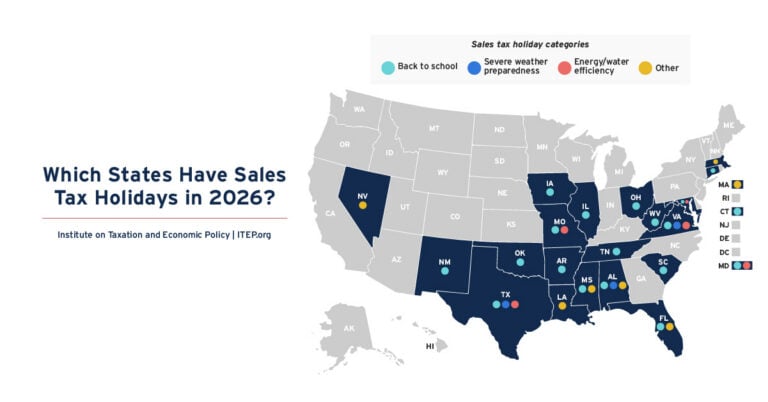
Which States Have Sales Tax Holidays in 2026?
• By ITEP Staff
Twenty states have sales tax holidays on the books in 2026, two more than last year. The combined annual cost to state and local budgets this year is estimated to be around $600 million.

IRS Cuts Could Cruise on Autopilot; New Bill Aims to Restore Funding to Help Taxpayers and Fight Tax Cheats
• By Sarah C. G. Christopherson
This fall, Congress could allow billions of dollars in IRS funding to disappear on autopilot. However, the Stop CHEATERS Act would restore the multi-year mandatory funding rescinded from the IRA and account for recent cuts to the IRS’s base budget.
Daily Press: Editorial: Tax-free weekends are bad policy but don’t tell Virginians
August 6, 2026
At a time when the price of nearly everything — from eggs and beef, to gasoline and electronics — is soaring, every little break can help a family stay on budget.
Idaho Center for Fiscal Policy: How the One Big Beautiful Bill’s Tax Changes Impact Idaho Families
• By ITEP Staff
The One Big Beautiful Bill Act (OBBBA) made major changes to public programs and the federal tax code. It included about $4.5 trillion in tax cuts, with most of the benefits going to higher-income households. To help pay for those tax cuts, the law also reduced funding for health care and food assistance and shifted some federal costs onto the states.

Missouri Voters Reject Amendment 5 and a Damaging Tax Shift onto Working Families
• By Eli Byerly-Duke, Jon Whiten
Yesterday Missouri voters rejected Amendment 5, declining to give lawmakers a blank check to raise or expand sales taxes, something some lawmakers sought to enable enormous income tax cuts for the state’s wealthiest households.
Nevada Current: Lombardo says he’s powerless to address affordability
August 4, 2026
The state of Washington, which, like Nevada has no income tax, gave taxpayers a tax credit to help them get by.
Bloomberg News: Microsoft’s US Taxes Drop, Revenue Jumps After Trump Cuts
August 3, 2026
"We know that Microsoft in particular and tech sector more generally are spending huge amounts of money in the last year, especially the last six or last three months, on artificial intelligence," said Matthew Gardner, a senior fellow at the left-leaning Institute on Taxation and Economic Policy. "It's super clear that data center capex is eligible for depreciation."

Economic Opportunity Institute: What the Millionaires Tax would mean for Washington
• By ITEP Staff
In fact, thanks to the legislation’s expansion of the state’s Working Families Tax Credit and elimination of sales taxes on several categories of items, 95% of Washington households will pay less in state taxes, according to an analysis by the Institute on Taxation and Economic Policy.
Bloomberg Tax: Weaker Minimum Book Tax Rules Save Meta, Qualcomm Billions
July 30, 2026
“It’s pretty clear these two things are potentially at odds,” said Matthew Gardner, senior fellow at the Institute on Taxation and Economic Policy. “The more Treasury tries to gut CAMT, the more the side-by-side agreement potentially falls apart.”
USA TODAY: States are relying more on sales taxes. Here’s why that matters
July 30, 2026
Over time, some states have slashed corporate and personal income taxes while also raising the sales tax rate. In 11 states, “all three of those things have happened,” said Sarah Austin, a senior analyst at ITEP and author of the report.
CBS Missouri: What would eliminating income tax mean for Missourians?
July 30, 2026
"The state isn't going to raise any money, but that doesn't mean it's going to be net neutral for each person," Eli Byerly-Duke, a state policy analyst at the Institute on Taxation and Economic Policy, said.
Senator Elizabeth Warren: Warren, King Seek Data on Tax Break for Ultra-Wealthy Expanded by Republicans in One Big Beautiful Bill
• By ITEP Staff
The QSBS exclusion allows investors who buy stock in a “qualified business” to write off as much as 100 percent of their capital gains when they sell that stock, in some cases delivering millions of dollars in tax breaks.

Microsoft Reports a 2.44 Percent Federal Tax Rate on a Record $101 Billion in Profits
• By Matthew Gardner
Microsoft avoided federal income tax on almost all of its U.S. income for fiscal year 2026. The company’s 2.44 percent federal tax rate on over $100 billion of U.S. income is largely attributable to tax breaks that were either created or expanded by Republican tax cuts enacted at the behest of President Donald Trump in 2017 and 2025.
State Rundown 7/29: The Misguided, Miserly Missouri Amendment to Eliminate the Income Tax
• By ITEP Staff
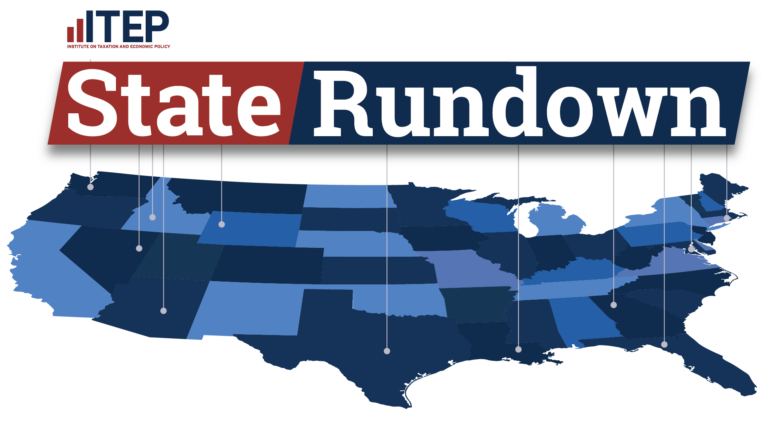
Missouri voters are facing a major decision at the ballot box next week on Amendment 5, which would amend the state constitution to allow lawmakers to eliminate the individual income tax and expand the state’s sales tax on any good or service to make up for lost revenue.

Institute on Taxation
and Economic Policy
ITEP is a non-profit, non-partisan tax policy organization. We conduct rigorous analyses of tax and economic proposals and provide data-driven recommendations to shape equitable and sustainable tax systems.
Subscribe to ITEP Emails
Tax research and policy news in your inbox.
Promote Fair Tax Policy
Your gift to ITEP promotes tax justice. With your help, we do research that supports taxing millionaires and billionaires, taxing big corporations and raising revenue for the things our people, our communities and our planet need.
Together, we can create a country with more economic justice, more racial justice, more climate justice… and more tax justice.