
District of Columbia
State Income Taxes and Racial Equity: Narrowing Racial Income and Wealth Gaps with State Personal Income Taxes
• By Carl Davis, Jessica Schieder, Marco Guzman
10 state personal income tax reforms that offer the most promising routes toward narrowing racial income and wealth gaps through the tax code.
State Rundown 9/29: Where There’s Smoke, There’s Revenue?
• By ITEP Staff
One of the few industries to excel during the economic downturn brought on by the pandemic has been the marijuana business, and lawmakers around the country are taking notice as they try to ensure that sales in their state are both legal and subject to tax...

Tax Changes in the House Ways and Means Committee Build Back Better Bill
• By ITEP Staff, Matthew Gardner, Steve Wamhoff
This report finds that the vast majority of these tax increases would be paid by the richest 1 percent of Americans and foreign investors. The bill’s most significant tax cuts -- expansions of the Child Tax Credit (CTC) and Earned Income Tax Credit (EITC) -- would more than offset the tax increases for the average taxpayer in all income groups except for the richest 5 percent.

Extending Federal EITC Enhancements Would Bolster the Effects of State-Level Credits
• By Aidan Davis
The EITC expansion targets workers without children in the home. In 2022 it would provide a $12.4 billion boost, benefiting 19.5 million workers who on average would receive an income boost of $730 dollars.

Frequently Asked Questions about Proposals to Repeal the Cap on Federal Tax Deductions for State and Local Taxes (SALT)
• By Carl Davis, ITEP Staff, Steve Wamhoff
Even though Democrats in Congress uniformly opposed the TCJA because its benefits went predominately to the rich, many Democratic lawmakers now want to give a tax cut to the rich by repealing the cap on SALT deductions.

New Report from ITEP Describes Options for Changing the SALT Cap without Repealing It
• By Steve Wamhoff
A new report from ITEP provides policy recommendations to modify the $10,000 cap on federal tax deductions for state and local taxes (SALT), which was signed into law by President Trump as part of the Tax Cuts and Jobs Act. Because the SALT cap mostly restricts tax deductions for the richest 5 percent of Americans, the best options are to leave the cap as is or replace […]
Options to Reduce the Revenue Loss from Adjusting the SALT Cap
• By Carl Davis, ITEP Staff, Matthew Gardner, Steve Wamhoff
If lawmakers are unwilling to replace the SALT cap with a new limit on tax breaks that raises revenue, then any modification they make to the cap in the current environment will lose revenue and make the federal tax code less progressive. Given this, lawmakers should choose a policy option that loses as little revenue as possible and that does the smallest amount of damage possible to the progressivity of the federal tax code.
State Rundown 8/18: End of Summer Tax Update
• By ITEP Staff
Summer is quickly (and sadly) coming to an end and if you’ve been away enjoying the great outdoors or off the grid, we’re here to help keep you up to date on what’s been happening on the tax front around the country...
Sales Tax Holidays: An Ineffective Alternative to Real Sales Tax Reform
• By Dylan Grundman O'Neill
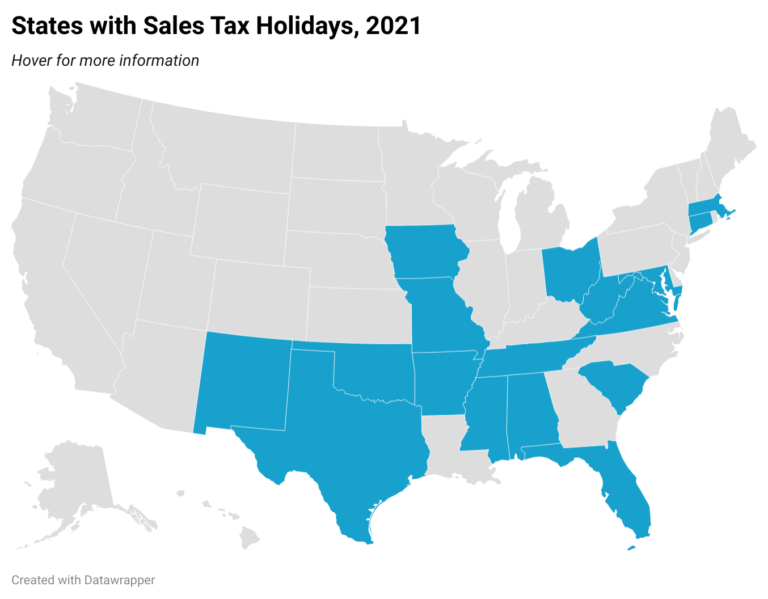
Policymakers tout sales tax holidays as a way for families to save money while shopping for “essential” goods. On the surface, this sounds good. However, a two- to three-day sales tax holiday for selected items does nothing to reduce taxes for low- and moderate-income taxpayers during the other 362 days of the year. Sales taxes are inherently regressive. In the long run, sales tax holidays leave a regressive tax system unchanged, and the benefits of…

DC Exemplifies Trend of Tax Justice Victories on the Ground Despite Distractions in the Sky
• By Dylan Grundman O'Neill
This month, we watched billionaire space-racers with skyrocketing fortunes literally rocket themselves into the sky to look down on us from the largest gap they could put between themselves and the people, communities, and institutions that made their fortunes possible. These events have put an exclamation point on one of the clearest lessons to come […]
State Rundown 7/21: States Go for Tax Policy Gold This Olympics Season
• By ITEP Staff
It’s Olympics season! As countries around the globe battle for first place in a plethora of sports and contests it’s as good a time as any to look around America to see which states deserve a gold medal in the ‘Equitable Tax Policy’ event...

DC Fiscal Policy Institute: NEW VIDEOS: Why DC’s Wealthiest Should Pay their Fair Share
• By ITEP Staff
The highest income residents in DC pay less as a share of their income than the rest of us. At the same time, low-income Black and brown DC residents have been economically devastated by the pandemic. Watch videos

State-Level EITC Victories in 2021
• By Aidan Davis
A growing group of state lawmakers are recognizing the extent to which low- and middle-income Americans are struggling and the ways in which their state and local tax systems can do more to ensure the economic security of their residents over the long run. To that end, lawmakers across the country have made strides in enacting, increasing, or expanding tax credits that benefit low- and middle-income families. Here is a summary of those changes and…
State Rundown 6/24: Late June State Fiscal Debates Unusually Active
• By ITEP Staff
Delayed legislative sessions and protracted federal aid debates have made for a busier June than normal for state fiscal debates. Arizona, New Hampshire, and North Carolina legislators, for example, are still pushing for expensive and regressive tax cuts in their states while they remain in session...
State Rundown 6/16: Progressive Tax Policy Keeps Racking Up Wins
• By ITEP Staff
Taxing rich households and large corporations to fund vital investments in education and other shared priorities has long been a winner in the eyes of the American public, and more recently has also enjoyed a string of victories in state legislatures and at the ballot box. That win streak continued this week as Arizona’s voter-approved tax surcharge on the rich and Seattle, Washington’s payroll tax on high-profit, high-salary businesses both survived court challenges, and Massachusetts…

The Rockefeller Foundation: The Untold Benefits of State EITCs on Child Welfare
• By ITEP Staff
With the passing of the American Rescue Plan in March, more than 5 million children are projected to be lifted out of poverty this year, cutting child poverty by more than half, through Earned Income Tax Credit (EITC) and Child Tax Credit (CTC) expansions. But what about state tax codes? What can states do to […]
Income Tax Increases in the President’s American Families Plan
• By ITEP Staff, Matthew Gardner, Steve Wamhoff
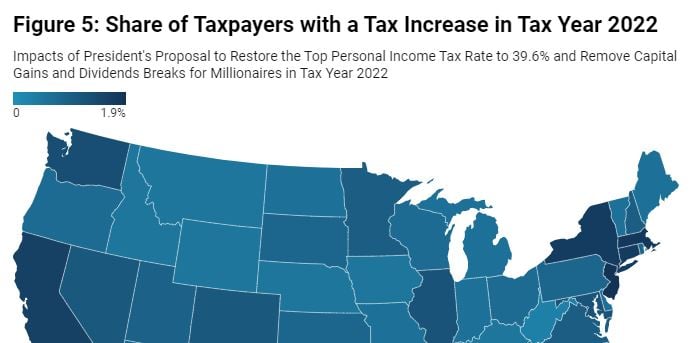
President Biden’s American Families Plan includes revenue-raising proposals that would affect only very high-income taxpayers.[1] The two most prominent of these proposals would restore the top personal income tax rate to 39.6 percent and eliminate tax breaks related to capital gains for millionaires. As this report explains, these proposals would affect less than 1 percent of taxpayers and would be confined almost exclusively to the richest 1 percent of Americans. The plan includes other tax…
State Rundown 5/20: You Learn Something New Every Tax Day
• By ITEP Staff
“Tax Day” was earlier this week but the debates, research, and advocacy that determine our taxes and how they are used take place every day of the year...
Nearly 20 Million Will Benefit if Congress Makes the EITC Enhancement Permanent
• By Aidan Davis
Overall, the EITC enhancement would provide a $12.4 billion boost in 2022 if made permanent, benefiting 19.5 million workers. It would have a particularly meaningful impact on the bottom 20 percent of eligible households who would receive more than three-fourths of the total benefit. Forty-one percent of households in the bottom 20 percent of earners would benefit, receiving an average income boost of 6.3 percent, or $740 dollars.
Effects of the President’s Capital Gains and Dividends Tax Proposals by State
• By ITEP Staff, Matthew Gardner, Steve Wamhoff
President Biden’s proposal to eliminate the lower income tax rate on capital gains (profits from selling assets) and stock dividends for millionaires would affect less than half of one percent (0.4 percent) of U.S. taxpayers if it goes into effect in 2022. The share of taxpayers affected would be less than 1 percent in every state.

Gentrification and the Property Tax: How Circuit Breakers Can Help
• By David Crawford
Property tax circuit breakers are effective because they provide property tax relief to families whose property taxes surpass a certain percentage of their income. If a family in a gentrifying area sees their property tax bill (or their rent) surge to an unaffordable level, a circuit breaker credit kicks in to offer relief. This targeted approach assists low- and middle-income families without significantly reducing overall tax revenue.

What to Expect from Biden and Congressional Democrats on Tax Increases for Individuals
• By Steve Wamhoff
The Biden administration has already provided details on its corporate tax proposals and in the next couple of weeks is expected to propose tax changes for individuals. Meanwhile, congressional Democrats have some ideas of their own. What should we expect?
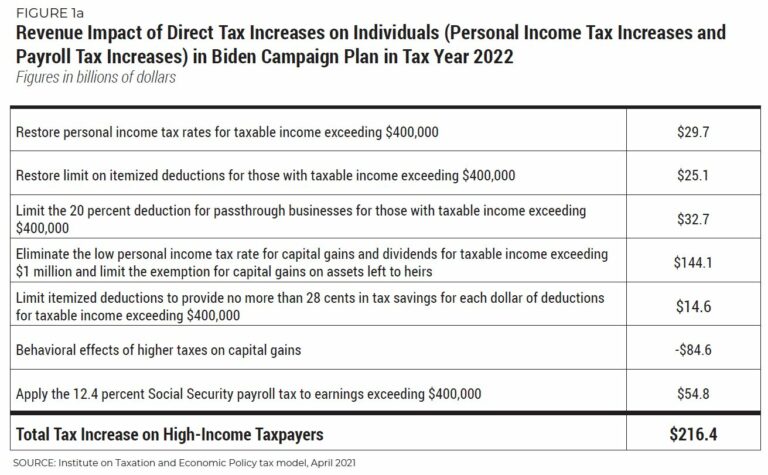
National and State-by-State Estimates of President Biden’s Campaign Proposals for Revenue
• By ITEP Staff, Matthew Gardner, Steve Wamhoff
During his presidential campaign, Joe Biden proposed to change the tax code to raise revenue directly from households with income exceeding $400,000. More precisely, Biden proposed to raise personal income taxes on unmarried individuals and married couples with taxable income exceeding $400,000, and he also proposed to raise payroll taxes on individual workers with earnings exceeding $400,000. Just 2 percent of taxpayers would see a direct tax hike (an increase in either personal income taxes,…

A Proposal to Simplify President Biden’s Campaign Plan for Personal Income Taxes and Replace the Cap on SALT Deductions
• By Steve Wamhoff
In this paper, we describe a tax policy idea that would simplify the proposals President Biden presented during his campaign to raise personal income taxes for those with annual incomes greater than $400,000. Our proposal would replace the cap on state and local tax (SALT) deductions with a broader limit on tax breaks for the rich that would raise more revenue than the personal income tax hikes that Biden proposed during his campaign. Our proposal…
State Rundown 4/1: Most States Resisting Foolish Tax Cut Games That Tear Revenues Apart
• By ITEP Staff
Supporters of tax fairness and adequate funding for public needs are hoping West Virginia’s income tax elimination effort turns out to be a prank, but most states are not fooling around with such harmful policies this year. For example...
