
2,364 posts
The Commonwealth Institute: Dream Act Would Boost Virginia Families, Communities, State Economy, and Tax Revenues; Revoking DACA Hurts All
• By ITEP Staff
There are 30,000 young immigrants who were potentially eligible for DACA and call Virginia home. They currently contribute a total of $29.3 million to local and state taxes annually through sales and excise taxes, property taxes and income tax. Read more here
NC Policy Watch: Devastating consequences if Congress fails to replace DACA in three months
• By ITEP Staff
State and local government coffers would also take a hit if Congress fails to pass the Dream Act, or another effective solution. The Institute for Taxation and Economic Policy estimates that current DACA recipients pay almost $58 million in state and local taxes, contributions which could grow to $78 million if the Dream Act were […]

Center for Public Policy Priorities: The National Dream Act: What’s at stake for Texas?
• By ITEP Staff
Researchers estimate that approximately 177,000 young Texas immigrants are potentially eligible for DACA, and they currently contribute a total of $241 million to local and state taxes annually through sales and excise taxes, property taxes and income tax. Without the national Dream Act, Texas can expect to lose at least $79 million in state and […]

Minnesota Budget Project: 4 Reasons DACA should be restored ASAP
• By ITEP Staff
DACA results in increased economic activity in our communities and increased tax revenues. DACA recipients in Minnesota contribute an estimated $15 million in state and local taxes annually. Read more here

Corker Claims Provisions Benefiting Him Could Not Have Changed His Vote Because He Never Read the Bill
• By Matthew Gardner
Many Republicans who had previously claimed to be deficit hawks have been cheerfully supportive of major tax-cutting legislation as it has moved forward this fall. But one Republican Senator, Bob Corker of Tennessee, has taken a defiant stance on the issue, insisting that “passing off increased debt to future generations” would be a deal-breaker for him. When the Senate passed its version of the tax plan last week, Corker was the only Republican to vote…
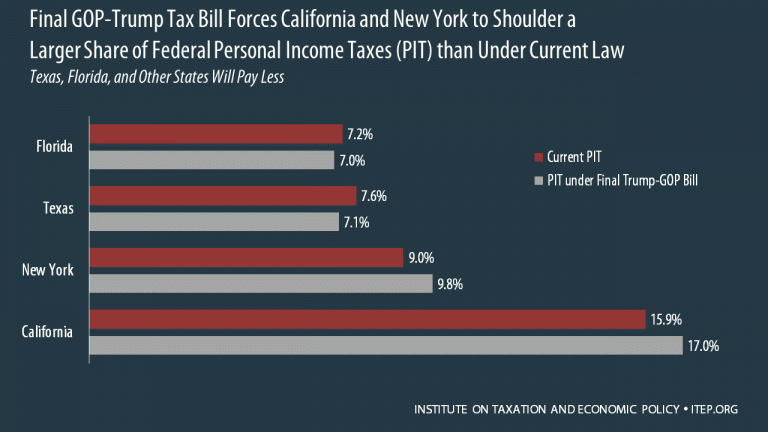
Final GOP-Trump Bill Still Forces California and New York to Shoulder a Larger Share of Federal Taxes Under Final GOP-Trump Tax Bill; Texas, Florida, and Other States Will Pay Less
• By Meg Wiehe
Residents of California and New York pay a large amount of the nation’s federal personal income taxes relative to their share of the population. As illustrated by the table below, the final GOP-Trump tax bill expected to be approved this week would substantially increase the share of total federal personal income taxes (PIT) paid by both states. Connecticut, Maryland, Massachusetts, and New Jersey would also see their share of federal PIT increase.
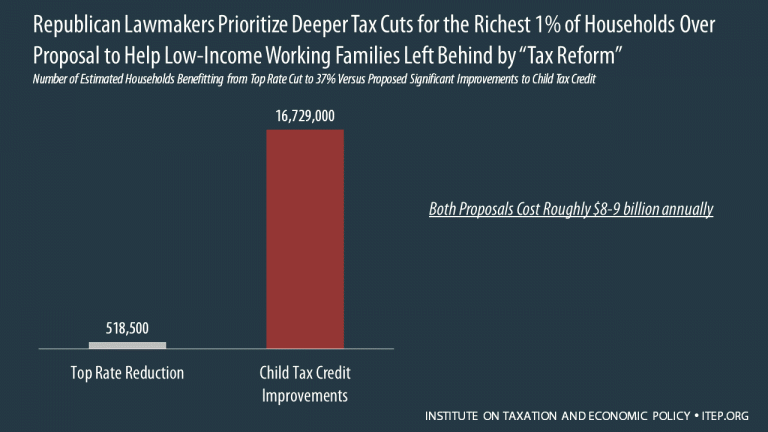
GOP Leaders Scrounge Up Money to Lower Top Tax Rate for the Rich But Not to Help Low-Income Working Families with Children
• By Meg Wiehe
Republican leaders who rejected a proposal to have corporations pay a single percentage point higher tax rate to benefit families with children have tapped the exact same source of savings to provide more breaks for the richest 1 percent of taxpayers. The table below compares the number and share of households nationally and in all 50-states who would benefit from the proposal to reduce taxes for working families with children versus the ”compromise” to cut…

All I Want for Christmas is a Clean DREAM Act
• By Misha Hill
As 2017 draws to close, Congress has yet to take legislative action to protect Dreamers. The young undocumented immigrants who were brought to the United States as children, and are largely working or in school, were protected by President Obama’s 2012 executive action, Deferred Action for Childhood Arrivals (DACA). But in September, President Trump announced that he would end DACA in March 2018. Instead of honoring the work authorizations and protection from deportation that currently…

Updated Tax Contributions of Young Undocumented Immigrants
• By ITEP Staff
In September 2017, US Citizenship and Immigration Services released updated enrollment data for the program Deferred Action for Childhood Arrivals (DACA). The updated data included estimates of the number of former DACA enrollees that were now legal permanent residents and those that failed to reapply or their reapplication was denied. The table below provides updated estimates of their tax contributions.

Charitable, Property Tax, and Mortgage Interest Deductions Would Be Wiped Out for Two-Thirds of Current Claimants Under Congressional Tax Plans
• By Carl Davis
In the ongoing debate over major federal tax legislation, there is significant focus on how House and Senate bills would eliminate the deduction for state income tax payments and cap the deduction for property taxes at $10,000 per year. At the same time, tax writers have retained deductions for charitable gifts and mortgage interest with what appear to be comparatively minor changes, at least at first glance.
Fiscal Policy Institute: Dream Act: What’s At Stake for New York
• By ITEP Staff
There are 76,000 young immigrants who were potentially eligible for DACA that call New York home. They currently contribute a total of $115 million to local and state taxes annually through sales and excise taxes, property taxes and income tax. Read more
A Corporate Tax Cut Would Benefit Coastal Investors, Not the Heartland
• By Carl Davis
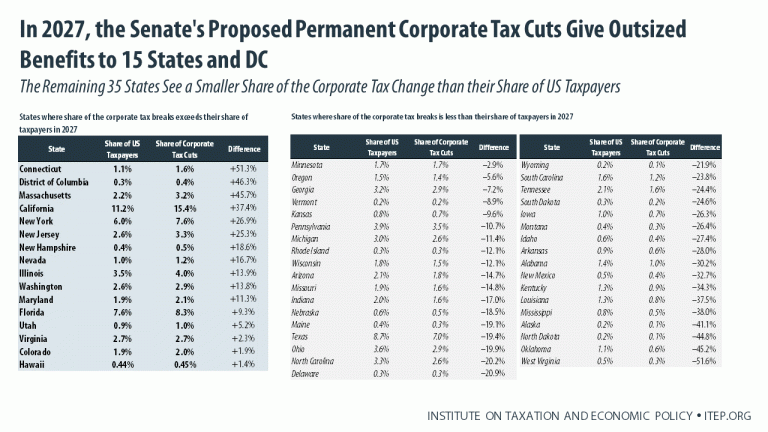
The centerpiece of the House and Senate tax plans is a major tax cut for profitable corporations that the American public does not want, and that will overwhelmingly benefit a small number of wealthy investors living in traditionally “blue” states. New ITEP research shows that poorer states such as West Virginia, Oklahoma, Alabama, and Tennessee would be largely left behind by a corporate tax cut, while the lion’s share of the benefits would remain with…
Six More Things to Know About the Senate Tax Plan
• By ITEP Staff
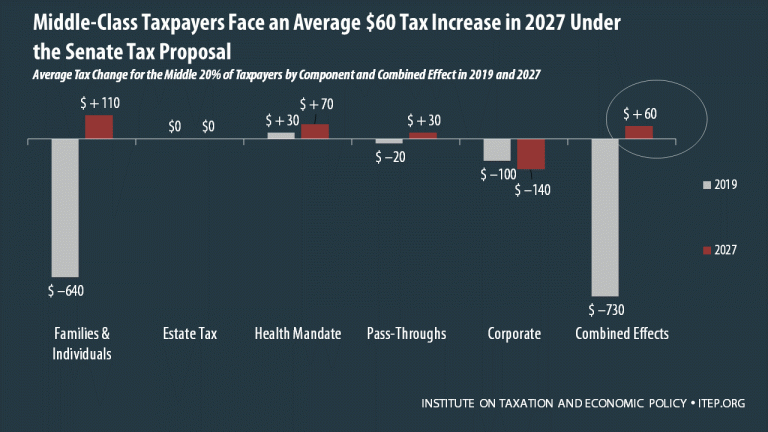
A recent ITEP study concluded that the tax bill before the Senate would raise taxes on at least 29 percent of Americans and cause the populations of 19 states to pay more in federal taxes in 2027 than they do today, while providing foreign investors with more benefits than American households. This report delves deeper by breaking out impacts of different components of the Senate tax plan on U.S. taxpayers in 2019 and 2027. This…

Senate Tax Plan Harms Low- and Middle-Income Kentuckians to Pay for Giveaways to Those at the Top
• By ITEP Staff
Senators will return to Capitol Hill next week after the Thanksgiving recess for a potential vote on their revised plan. According to estimates from the Institute on Taxation and Economic Policy (ITEP), the bottom 60 percent of Kentuckians, who make an average of $37,500 a year, will actually face more taxes from the plan with an average increase of $80 in 2027.
How the Revised Senate Tax Bill Will Affect North Dakota Residents’ Federal Taxes
• By ITEP Staff
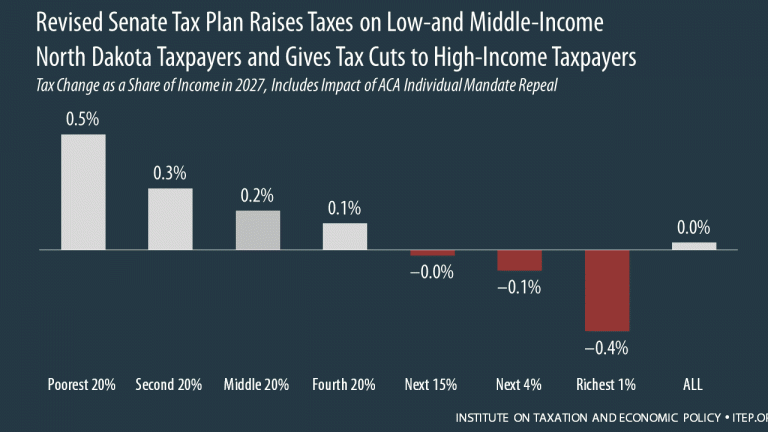
Updated November 18, 2017 The revised Senate tax plan approved by the Finance Committee on November 16th would raise taxes on many low- and middle-income families while bestowing immense benefits on wealthy Americans and foreign investors. See below for graphs showing these effects in North Dakota in 2027. Download the national and 50-state detailed tables for […]
Arizona Center for Economic Progress: Just Like the House GOP Plan, the Senate GOP Tax Plan Is Another Handout to the Wealthiest Households and Large Corporations
• By ITEP Staff
Newly published data shows that the new Senate GOP tax plan isn’t much better than the House GOP tax plan for the middle-class, small businesses, and lower-income Americans. The Institute on Taxation and Economic Policy analysis (https://itep.org/senatetaxplan/) shows that on average, the top 5% of Americans will receive around 50% of the tax cuts. Read […]

House Tax Bill Would Put Property Tax Deduction Out of Reach for Most Households
• By ITEP Staff
The House of Representatives is expected to vote this week on a bill that would reduce federal revenues by roughly $1.5 trillion over the next decade. Despite the bill’s high price tag, many households would pay more in federal tax if the bill is enacted, in large part because it slashes the deduction for state […]

Flawed Data from House Leadership Attempts to Hide Tax Hikes Under Proposal
• By Carl Davis
In a story published yesterday evening, Politico reported that House leaders have been “working to create customized data models” to show lawmakers that their constituents will not face a tax increase under the tax bill being debated in the House. On this point, House leaders have taken on an impossible task.
Arizona Center for Economic Progress: With Further Analysis Completed, It’s Time to Call the GOP Tax Plan What it Is: Welfare for the Wealthy
• By ITEP Staff
A 50-state analysis of the House tax plan released last week reveals that in Arizona the wealthiest 1% of Arizonans will receive the greatest share of the total tax cut in year one and their share would grow through 2027. And during that 10-year window, the value of the tax cut gets smaller and smaller for every […]

Trump Administration Might Propose a Long-Overdue Gas Tax Increase
• By Carl Davis
The Trump Administration is reportedly considering backing a 7-cent increase in the federal gas tax next year to pay for improvements in the nation's infrastructure. While most of the tax policy ideas coming from the administration in recent weeks would undermine the nation's ability to fund core public services, this one is a notable exception.
Trickle-Down Dries Up: States without personal income taxes lag behind states with the highest top tax rates
• By Carl Davis, Nick Buffie
Lawmakers who support reducing or eliminating state personal income taxes typically claim that doing so will spur economic growth. Often, this claim is accompanied by the assertion that states without income taxes are booming, and that their success could be replicated by any state that abandons its income tax. To help evaluate these arguments, this study compares the economic performance of the nine states without broad-based personal income taxes to their mirror opposites—the nine states…
Michigan League for Public Policy: Immigrant families in Michigan: A state profile
• By ITEP Staff
Michigan immigrants also contribute millions in tax revenue each year, and in doing so help pay for important public programs and infrastructure in the state. In 2015 for example, undocumented immigrants in Michigan paid approximately $86.6 million in state and local taxes. Young undocumented immigrants also contribute their share in taxes. In 2015, DACA-eligible immigrants […]
Tax Foundation Updates Its Problematic Wishlist for State Tax Policy
• By Carl Davis
This week the Tax Foundation published its 2018 State Business Tax Climate Index, or as University of Iowa economist Peter Fisher has nicknamed it, the “Waste of Time Index.”

Poverty is Down, But State Tax Codes Could Bring It Even Lower
• By Misha Hill
The U.S. Census Bureau released its annual data on income, poverty and health insurance coverage this week. For the second consecutive year, the national poverty rate declined and the well-being of America’s most economically vulnerable has generally improved. In 2016, the year of the latest available data, 40.6 million (or nearly 1 in 8) Americans were living in poverty.
State Tax Codes as Poverty Fighting Tools
• By ITEP Staff
Astonishingly, tax policies in virtually every state make it harder for those living in poverty to make ends meet. When all the taxes imposed by state and local governments are taken into account, every state imposes higher effective tax rates on poor families than on the richest taxpayers.

Institute on Taxation
and Economic Policy
ITEP is a non-profit, non-partisan tax policy organization. We conduct rigorous analyses of tax and economic proposals and provide data-driven recommendations to shape equitable and sustainable tax systems.
Subscribe to ITEP Emails
Tax research and policy news in your inbox.
Promote Fair Tax Policy
Your gift to ITEP promotes tax justice. With your help, we do research that supports taxing millionaires and billionaires, taxing big corporations and raising revenue for the things our people, our communities and our planet need.
Together, we can create a country with more economic justice, more racial justice, more climate justice… and more tax justice.