
Blog
1,395 posts

So-Called “Universal Savings Accounts” in Tax Cuts 2.0 Are a Giveaway to the Most Affluent Taxpayers
• By Steve Wamhoff
This week, House Republicans have taken up bills they call tax cuts “2.0.” Most of the attention, so far, has focused on the bill that extends—at great cost—the temporary parts of the Tax Cuts and Jobs Act (TCJA). But other legislation in the package contains provisions that make the whole deal even more tilted toward the richest households, including one that would create “Universal Savings Accounts.” Far from being universal, these new savings vehicles would…
State Rundown 9/26: States Cleaning Up from Florence, Gearing Up for November
• By ITEP Staff
Affordable housing efforts made news in Minnesota and Virginia this week, as tax breaks for homeowners and other victims of Hurricane Florence were made available in multiple states. Meanwhile, New Jersey is still looking into legalizing and taxing cannabis, and Wyoming continues to consider a corporate income tax. And gubernatorial candidates and ballot initiative efforts will give voters in many states much to consider in the November elections.
An Unhappy Anniversary: Federal Gas Tax Reaches 25 Years of Stagnation
• By Carl Davis
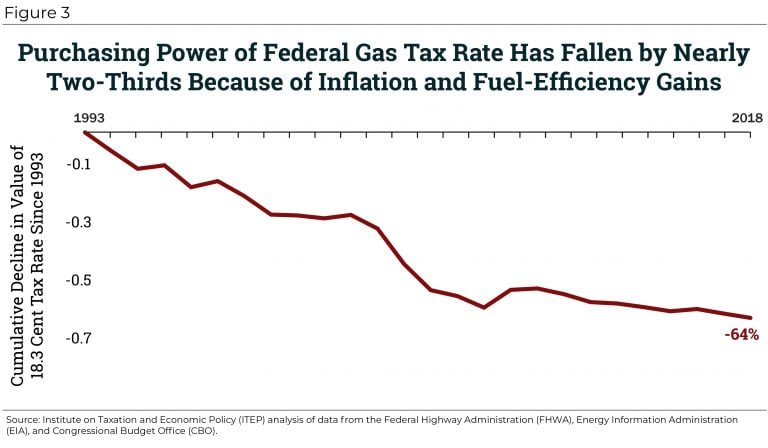
The federal gas tax was last raised on Oct. 1, 1993, the same year that the classic movie Groundhog Day was unveiled to the American public. In the film, Phil Connors (played by Bill Murray) gets caught in a time loop and spends decades reliving the same cold, February day in Punxsutawney, Penn. Those of us lamenting the 25-year stagnation of the federal gas tax can’t help but feel some of that same sense of…

Oxfam Report Finds Pharmaceuticals Profiteering Off Crises in Developing Countries
• By Peter Della-Rocca
The report indicates, pharmaceutical companies have taken steps to hide their profits in low-tax countries, sapping billions in revenue from the governments that invest in the science that drives their products and safeguard the patents that undergird their business. Pharmaceutical companies made use of a familiar battery of methods to exploit the international system this way, including inversions to disguise an American company as a foreign one and passing profits into low-tax jurisdictions through artificial…

State Tax Codes Can Help Mitigate Poverty and Impact of Federal Tax Cuts on Low- and Middle-Income Families
• By Misha Hill
The national poverty rate declined by 0.4 percentage points to 12.3 percent in 2017. According to the U.S. Census, this was not a statistically significant change from the previous year. 39.7 million Americans, including 12.8 million children, lived in poverty in 2017. Median household income also increased for the third consecutive year, but this was […]

IRS Reopens Tax Loophole Sought by Sen. Toomey, but it Won’t Work in Pennsylvania
• By Carl Davis
A recent IRS clarification, which appears to have been a pet project of Sen. Pat Toomey (R-PA), has been widely interpreted as reopening a loophole the agency had proposed closing just weeks earlier. But while the announcement creates an opening for aggressive tax avoidance in many states, Pennsylvania, ironically enough, isn’t one of them.
State Rundown 9/19: Don’t Call it a Comeback
• By ITEP Staff
The Rundown is back after a few-week hiatus, with lots of state fiscal news and quality research to share! Maine lawmakers found agreement on a response to the federal tax-cut bill, states continue to sort out how they’ll collect online sales taxes in the wake of the Wayfair decision, and policymakers in several states have been working on summer tax studies and other preparations for 2019 legislative sessions. Meanwhile, work on ballot measures and candidate tax plans to go before…

Observations from Census Data on Poverty and Income
• By Jenice R. Robinson
Today's poverty and income data show that income continues to concentrate at the top; in fact, the top 20 percent continue to capture 51.5 percent of income. Meanwhile, average income for the poorest 20 percent of households is less today than it was 18 years ago.

We Crunched Some Numbers to Show What Tax Reform for Working People Really Looks Like
• By ITEP Staff
Throughout President’s Trump’s presidential campaign and from his first day in office until now, his administration has favored and promoted policies that benefit the wealthy and corporations even as it claims to be the working people’s champion. If more recent economic data are a reflection of what we’ll see in the long-term due to the Trump Administration’s recent tax cuts, wealth will continue to accrue at the top while income remains stagnant or barely budges…
Repealing the Federal Tax Law’s Cap on State and Local Tax (SALT) Deductions Is No Improvement
• By Steve Wamhoff
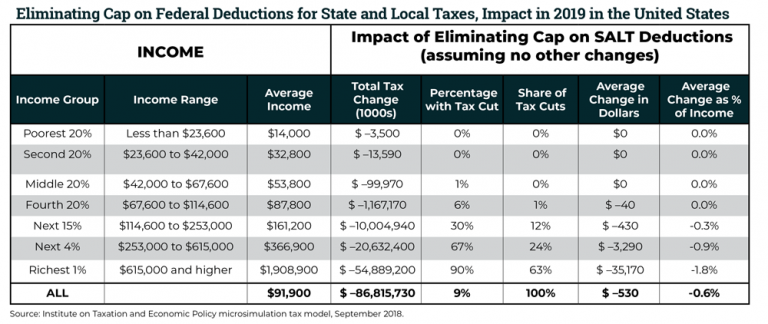
National and State-by-State Data Available for Download Nearly Two-Thirds of Benefits from Repealing the SALT Cap Would Go to the Richest 1 Percent Lawmakers who opposed the Tax Cuts and Jobs Act (TCJA), the federal tax law enacted by President Trump and his allies in Congress last December, rightfully pointed out that the law benefits […]

Latest GOP Tax Package Is Also Skewed Toward the Rich
• By Steve Wamhoff
ITEP's analysis found that when all the major provisions of TCJA are in effect, the richest fifth of households will receive 71 percent of the law’s benefits. It also found that if the temporary provisions are extended at through 2026, the richest fifth of households will receive 65 percent of the benefits of that extension that year.

New Study Confirms Offshore Earnings are Flowing into Stock Buybacks, Not Jobs and Investments
• By Richard Phillips
A new study by the Federal Reserve found that the evidence so far suggests that the new repatriation tax break has resulted in a surge in stock buybacks and little discernable impact in investment by its biggest beneficiaries, just as critics predicted.
State Rundown 8/22: Wayfair Fallout Could Hit the Pavement Soon
• By ITEP Staff
Arizona voters learned this week that they will have an opportunity this fall to restore school funding through a progressive tax measure. The effects of the Supreme Court’s Wayfair decision could soon be seen on Michigan and Mississippi roads, as leaders in both states have proposed devoting new online sales tax revenues to infrastructure needs. And new research highlighted in our “What We’re Reading” section discredits one-size-fits-all prescriptions for state economic growth such as supply-side…
State Rundown 8/16: November Ballots and 2019 Debates Coming into Focus
• By ITEP Staff
Even as the haze from western wildfires reduced visibility across the nation this week, voters got more clarity on what to expect to see on their ballots this fall, particularly in California (commercial property taxes and corporate surcharges), Colorado (income taxes for education), Missouri (gas tax update), and North Dakota (recreational cannabis). Meanwhile, although Virginia lawmakers won’t return until 2019, they got a preview of a clear-headed federal conformity plan they should strongly consider. And…
1964: Unconditional War on Poverty; 2018: Unconditional War on the Poor
• By Misha Hill
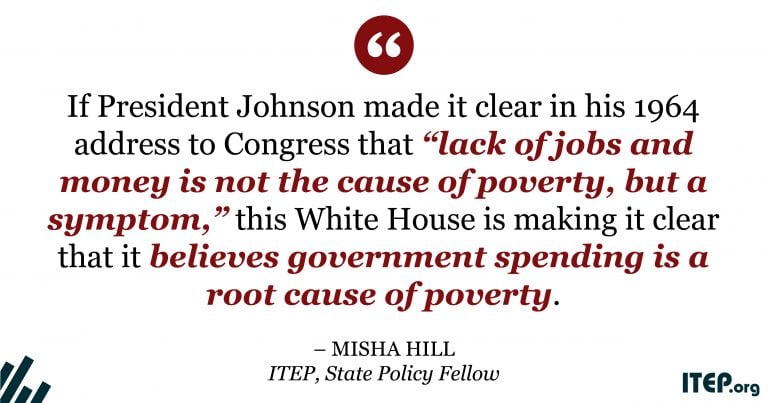
During his first State of the Union address in January 1964, Lyndon Baines Johnson declared a War on Poverty in response to a national poverty rate of more than 19 percent. The legislative result of this war was an early education program, expanded funding for secondary education, job training and work opportunity programs and the […]
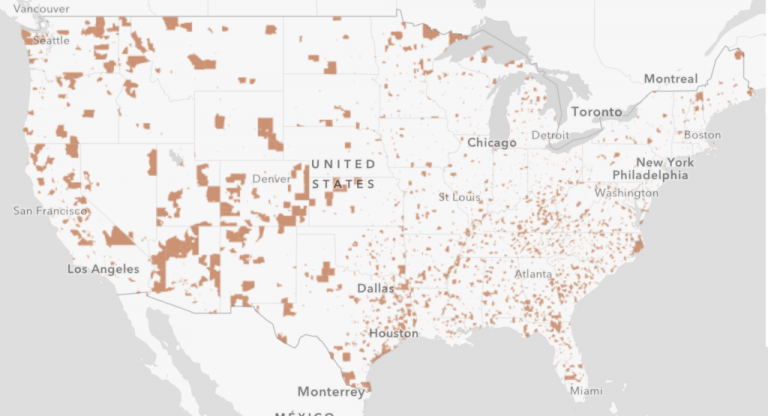
How Opportunity Zones Benefit Investors and Promote Displacement
• By ITEP Staff
The idea behind the new tax break is to provide an incentive for wealthy individuals to invest in the economies of struggling communities. Despite alleged intentions, it appears opportunity zones are turning into yet another windfall for wealthy investors and may encourage displacement of people in low-income areas, working against the provision’s intended goal.

Insult to Injury: Why Tax Cuts 2.0 Makes No Sense
• By ITEP Staff
In this illustrated breakdown of the Tax Cuts and Jobs Act (TCJA) and Tax Cuts 2.0, ITEP staff examine TCJA's role in growing income inequality, broken promises from corporations pledging to invest tax savings into workers and wages, and the embarrassment of riches flowing to the wealthiest Americans as a result of these “middle-class tax cuts.”
State Rundown 8/8: States Setting Rules for Upcoming Tax Decisions
• By ITEP Staff
August is often a season for states to define the parameters of tax debates to come, and that is true this week in several states: a tax task force in Arkansas is nearing its final recommendations; residents of Missouri, Montana, and North Carolina await results of court challenges that will decide whether tax measures will show up on their ballots this fall; and Michigan and South Dakota are taking different approaches to making sure they’re…
Updating Sales and Excise Taxes to Reflect Today’s Economy
• By ITEP Staff
Consumers’ growing interest in online shopping and “gig economy” services like Uber and Airbnb has forced states and localities to revisit their sales taxes, for instance. Meanwhile new evidence on the dangers and causes of obesity has led to rising interest in soda taxes, but the soda industry is fighting back. Carbon taxes are being discussed as a tool for combatting climate change. And changing attitudes toward cannabis use have spurred some states to move…
State Rundown 8/1: States Stay Busy During Summer “Break”
• By ITEP Staff
Although most state legislatures are out of session during the summer, the pursuit of better fiscal policy has no "off-season." Here at ITEP, we've been revamping the State Rundown to bring you your favorite summary of state budget and tax news in the new-and-improved format you see here. Meanwhile, leaders in Massachusetts and New Jersey have been hard at work in recent weeks and are already looking ahead their next round of budget and tax…
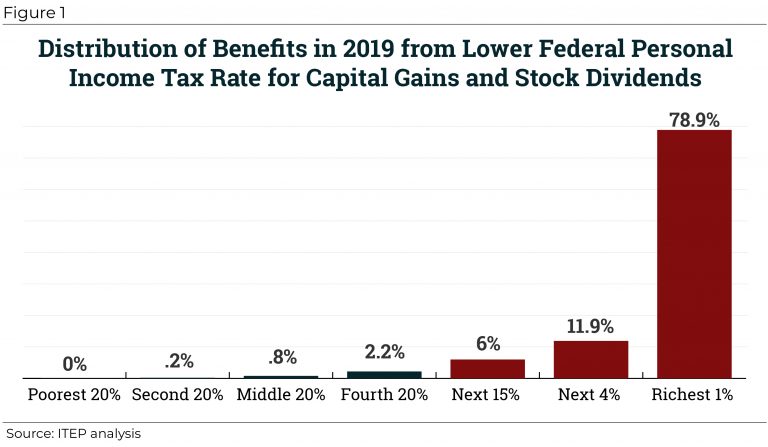
The Preferential Tax Treatment of Capital Gains Income Should Be Curbed, Not Substantially Expanded
• By Richard Phillips
For true believers in supply-side economics, however, one major flaw of the TCJA is that it did not further cut taxes for the wealthy by reducing capital gains tax rates. But now the Trump Administration is considering using executive action to remedy this by indexing capital gains to inflation for tax purposes.

The Fight for Education Funding: State Revenue Needs and Responses in 2018
• By Aidan Davis
States’ need for revenue and increased investment in key public services is not unique to this legislative session. But the extent of disinvestment—particularly in education—has been a driving force behind policy discussion and state legislative action this year. In many cases ill-advised tax cuts coupled with persistent school funding cuts led states to this common fate, initiating a powerful and growing trend. Here’s how lawmakers in a handful of state responded:
State Rundown 7/19: Wayfair Fallout and Ballot Preparation Dominate State Tax Talk
• By ITEP Staff
In the wake of the U.S. Supreme Court's recent Wayfair decision authorizing states to collect taxes owed on online sales, Utah lawmakers held a one-day special session that included (among other tax topics) legislation to ensure the state will be ready to collect those taxes, and a Nebraska lawmaker began pushing for a special session for the same reason. Voters in Colorado and Montana got more clarity on tax-related items they'll see on the ballot…

How to Fix the Broken International Corporate Tax Code
• By Richard Phillips
How should lawmakers fix the system? A new ITEP report breaks down how the international corporate tax code under the TCJA works, and how lawmakers can fix it. The report lays out three key principles for reform: equalize the rates, eliminate inversions, and create transparency.
18 States Will Take Holidays from Sound Tax Policy This Year
• By Dylan Grundman O'Neill
State sales tax holidays, our newly updated policy brief shows, are the equivalent of the bad kind of holiday vacation: tax policy that sounds nice at first but ultimately cuts corners, wastes money, precludes better options, and leaves states worse off than they would be without them. Unfortunately, while several states have wised up about sales tax holidays in recent years, 18 states will fall for the superficial attraction of these tax policy gimmicks in…
Blog Categories

Institute on Taxation
and Economic Policy
ITEP is a non-profit, non-partisan tax policy organization. We conduct rigorous analyses of tax and economic proposals and provide data-driven recommendations to shape equitable and sustainable tax systems.
Subscribe to ITEP Emails
Tax research and policy news in your inbox.
Promote Fair Tax Policy
Your gift to ITEP promotes tax justice. With your help, we do research that supports taxing millionaires and billionaires, taxing big corporations and raising revenue for the things our people, our communities and our planet need.
Together, we can create a country with more economic justice, more racial justice, more climate justice… and more tax justice.