
Blog
1,395 posts

New ITEP Report Examines the Tax Changes in the House Ways and Means Build Back Better Bill
• By Steve Wamhoff
The vast majority of these tax increases would be paid by the richest 1 percent of Americans and foreign investors. The bill’s most significant tax cuts -- expansions of the Child Tax Credit (CTC) and Earned Income Tax Credit (EITC) -- would more than offset the tax increases for the average taxpayer in all income groups except for the richest 5 percent.

House Ways and Means Provisions to Raise Revenue Would Significantly Improve Our Tax System But Fall Short of the President’s Plan
• By Steve Wamhoff
High-income people and corporations would pay more than they do today, which is a monumental change. But some wealthy billionaires like Jeff Bezos would continue to pay an effective rate of zero percent on most of their income, and American corporations would still have some incentives to shift profits offshore.
State Rundown 9/15: It’s a Little Too Quiet…
• By ITEP Staff
Though we can’t fault anyone for being distracted by the major stories of the day, we at ITEP remain committed to keeping you up to date on what’s happening in the tax world around you...
New Census Data Highlight Need for Permanent Child Tax Credit Expansion
• By Neva Butkus
The status quo was a choice, but the Census data released today shows that different policy choices can create drastically different outcomes for children and families. It is time for our state and federal legislators to put people first when it comes to recovery.

A Data-Driven Case for the CTC Expansion in the Ways & Means Committee’s Recent Proposal
• By Aidan Davis
The move toward permanent full refundability and inclusion of all immigrant children are crucial components of the future of the CTC. Together they will help ensure that the credit reaches the children most in need, making a vital dent in our nation’s unacceptably high rate of child poverty.

Extending Federal EITC Enhancements Would Bolster the Effects of State-Level Credits
• By Aidan Davis
The EITC expansion targets workers without children in the home. In 2022 it would provide a $12.4 billion boost, benefiting 19.5 million workers who on average would receive an income boost of $730 dollars.

Frequently Asked Questions about Proposals to Repeal the Cap on Federal Tax Deductions for State and Local Taxes (SALT)
• By Carl Davis, ITEP Staff, Steve Wamhoff
Even though Democrats in Congress uniformly opposed the TCJA because its benefits went predominately to the rich, many Democratic lawmakers now want to give a tax cut to the rich by repealing the cap on SALT deductions.

It’s Not About Farms: Don’t Let Lies Crush Biden’s Tax Plan
• By Steve Wamhoff
Several former Democratic members of Congress have joined a campaign to misrepresent President Biden’s proposal to close a huge tax loophole for wealthy people with capital gains. This proposed reform is the cornerstone of the president’s tax plan. If lawmakers fall for the lies, Biden's plan will collapse. Instead, they should do what is both popular and fair: enact the plan intact so that millionaires and billionaires no longer escape the federal income tax.
State Rundown 9/1: Labor Day Edition
• By ITEP Staff
Labor Day is around the corner and in the spirit of celebrating the achievements of workers around the country, we here at ITEP want to call attention to the states (and territories) that are using tax policy to support workers and residents alike...
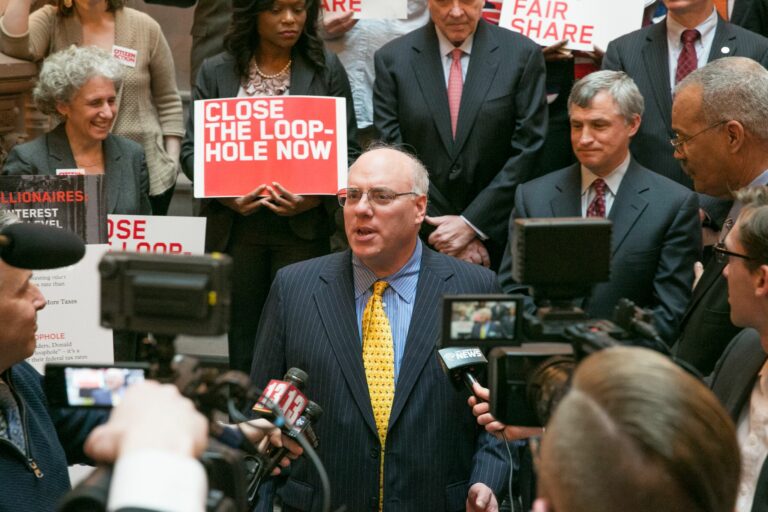
Millionaire Sounds Off on Calls to Lift SALT Deduction Cap
• By Reggie Rucker
We asked New York state resident Morris Pearl, former Blackrock executive and current chair of the Patriotic Millionaires, a few questions to hear straight from the mouth of a millionaire how the SALT cap and its proposed repeal would affect his life.

New Report from ITEP Describes Options for Changing the SALT Cap without Repealing It
• By Steve Wamhoff
A new report from ITEP provides policy recommendations to modify the $10,000 cap on federal tax deductions for state and local taxes (SALT), which was signed into law by President Trump as part of the Tax Cuts and Jobs Act. Because the SALT cap mostly restricts tax deductions for the richest 5 percent of Americans, the best options are to leave the cap as is or replace […]

Eliminating the State Income Tax Would Wreak Havoc on Mississippi
• By Kamolika Das
History has repeatedly shown that such policies harm state economies, dismantle basic public services, and exacerbate tax inequities.
State Rundown 8/18: End of Summer Tax Update
• By ITEP Staff
Summer is quickly (and sadly) coming to an end and if you’ve been away enjoying the great outdoors or off the grid, we’re here to help keep you up to date on what’s been happening on the tax front around the country...

State Experimentation with Sales Tax Holidays Magnifies Their Flaws
• By Dylan Grundman O'Neill
It’s back-to-school shopping season, so…everyone who buys a cell phone in Arkansas this weekend will do so sales-tax-free. For this whole week in Connecticut, and for the entire spring in New Mexico, the corporate owners of highly profitable multinational restaurant chains had the option to pocket their customers’ taxes rather than remit them to the state to fund vital public services, pass along those savings to their customers, or give a much-needed boost to their…

Good Climate Policy Is Good Economic Policy, Too
• By Ian Berlin
Congress is proving that there does not need to be a trade-off between good climate policy and good economic policy. Direct hires aside, an even bolder government-backed effort to secure the future of our planet could create as many as 25 million net new jobs at its peak, as well as 5 million permanent jobs, many of which deal directly with domestic infrastructure and cannot be outsourced. With the U.S. economy still down 5.7 million…

Why Local Governments Need an Anti-Racist Approach to Property Assessments
• By Ambika Sinha
Property taxes are among the oldest and most relied upon form of local taxes. Revenue raised from these taxes funds education, firefighting, law enforcement, street and infrastructure maintenance, and other essential services. Though all members of the community enjoy these public goods, homeowners of color, especially Black families, pay more as a share of home value in property taxes than their white counterparts.
State Rundown 8/4: Tis the Season…for Unnecessary Sales Tax Holidays
• By ITEP Staff
It’s beginning to look a lot like that time of year again. That’s right, it’s sales tax holiday season and states across the country are doing their best to induce spending that would probably occur regardless...

DC Exemplifies Trend of Tax Justice Victories on the Ground Despite Distractions in the Sky
• By Dylan Grundman O'Neill
This month, we watched billionaire space-racers with skyrocketing fortunes literally rocket themselves into the sky to look down on us from the largest gap they could put between themselves and the people, communities, and institutions that made their fortunes possible. These events have put an exclamation point on one of the clearest lessons to come […]
The Case for Biden’s Tax Agenda
• By ITEP Staff
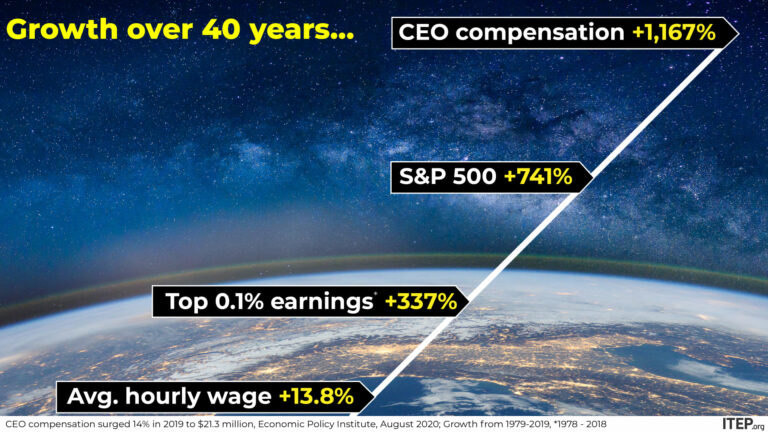
President Joe Biden’s “Build Back Better” plan is the most ambitious economic and social agenda since Lyndon B. Johnson’s Great Society. It would redirect policy priorities to create educational and economic opportunities for low- and middle-income people and require corporations and wealthy people to pay a fairer share of taxes.
State Rundown 7/21: States Go for Tax Policy Gold This Olympics Season
• By ITEP Staff
It’s Olympics season! As countries around the globe battle for first place in a plethora of sports and contests it’s as good a time as any to look around America to see which states deserve a gold medal in the ‘Equitable Tax Policy’ event...

Child Tax Credit Expansion Acknowledges There Is More We Can Do for Children
• By Aidan Davis
For the next six months, low-, middle- and upper-middle-income families with children are eligible to receive part of their 2021 Child Tax Credit (CTC) in advanced monthly payments. More than putting money in people’s pockets, this policy recognizes “the dignity of working-class families and middle-class families,” as President Biden said last week.

Opposition to Biden’s Tax Plan Has Nothing to Do with Small Businesses or Family Farms
• By Steve Wamhoff
Special interests lobbying against President Joe Biden’s tax agenda claim that his proposed corporate income tax rate hike will harm small businesses and that his proposed capital gains tax reforms will hurt family farms. Both claims are absurd attempts by powerful interests to pretend they are defending the little guy.

Washington Post Confirms that Corporations Are Bolder than Ever in Claiming Dubious Tax Breaks
• By Steve Wamhoff
IRS budget cuts starting in 2010 have forced the agency to reduce its audit rate for corporations with $20 billion or more in assets from 98 percent to 50 percent. The Washington Post found that during the decade, the amount of “uncertain tax benefits” claimed by corporations increased 43 percent, from $164 billion in 2010 to $235 billion in 2020.

The Last Dance for Billionaire Sports Owners?
• By Reggie Rucker
Comparing athletes to inanimate objects, of course, is incredibly degrading. It’s also standard fare in the sports talk world to compare athletes to stocks in which you want to buy low and trade high to maximize your returns—the greatest return usually being championship trophies. It wasn’t until ProPublica released its latest report, The Billionaire Playbook: How Sports Owners Use Their Teams to Avoid Millions in Taxes, that we were able to see so clearly how…

Experts Weigh in on the Payoffs of Advanced Child Tax Credit Payments
• By Jenice R. Robinson
During a Tuesday webinar (The Child Tax Credit in Practice: What We Know about the Payoffs of Payments) hosted by ITEP and the Economic Security Project, panelists explained why the expanded Child Tax Credit is a transformative policy that should be extended beyond 2021. They highlighted tax policy and anti-poverty research and discussed lessons learned from demonstration projects that have provided a guaranteed income to low-income families.
Blog Categories

Institute on Taxation
and Economic Policy
ITEP is a non-profit, non-partisan tax policy organization. We conduct rigorous analyses of tax and economic proposals and provide data-driven recommendations to shape equitable and sustainable tax systems.
Subscribe to ITEP Emails
Tax research and policy news in your inbox.
Promote Fair Tax Policy
Your gift to ITEP promotes tax justice. With your help, we do research that supports taxing millionaires and billionaires, taxing big corporations and raising revenue for the things our people, our communities and our planet need.
Together, we can create a country with more economic justice, more racial justice, more climate justice… and more tax justice.