
Georgia
How the Final GOP-Trump Tax Bill Would Affect Georgia Residents’ Federal Taxes
December 16, 2017 • By ITEP Staff
The final tax bill that Republicans in Congress are poised to approve would provide most of its benefits to high-income households and foreign investors while raising taxes on many low- and middle-income Americans. The bill would go into effect in 2018 but the provisions directly affecting families and individuals would all expire after 2025, with […]
The Final Trump-GOP Tax Plan: National and 50-State Estimates for 2019 & 2027
December 16, 2017 • By ITEP Staff
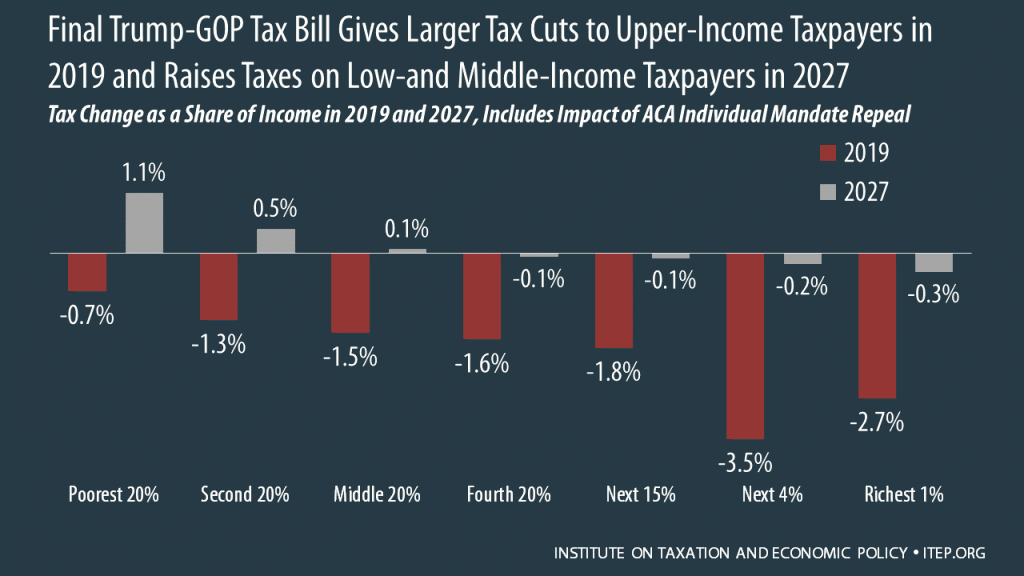
The final Trump-GOP tax law provides most of its benefits to high-income households and foreign investors while raising taxes on many low- and middle-income Americans. The bill goes into effect in 2018 but the provisions directly affecting families and individuals all expire after 2025, with the exception of one provision that would raise their taxes. To get an idea of how the bill will affect Americans at different income levels in different years, this analysis focuses on the bill’s impacts in 2019 and 2027.
Private Schools Donors Likely to Win Big from Expanded Loophole in Tax Bill
December 14, 2017 • By Carl Davis

For years, private schools around the country have been making an unusual pitch to prospective donors: give us your money, and you’ll get so many state and federal tax breaks in return that you may end up turning a profit. Under tax legislation being considered in Congress right now, that pitch is about to become even more persuasive.
Tax Bill Would Increase Abuse of Charitable Giving Deduction, with Private K-12 Schools as the Biggest Winners
December 14, 2017 • By Carl Davis
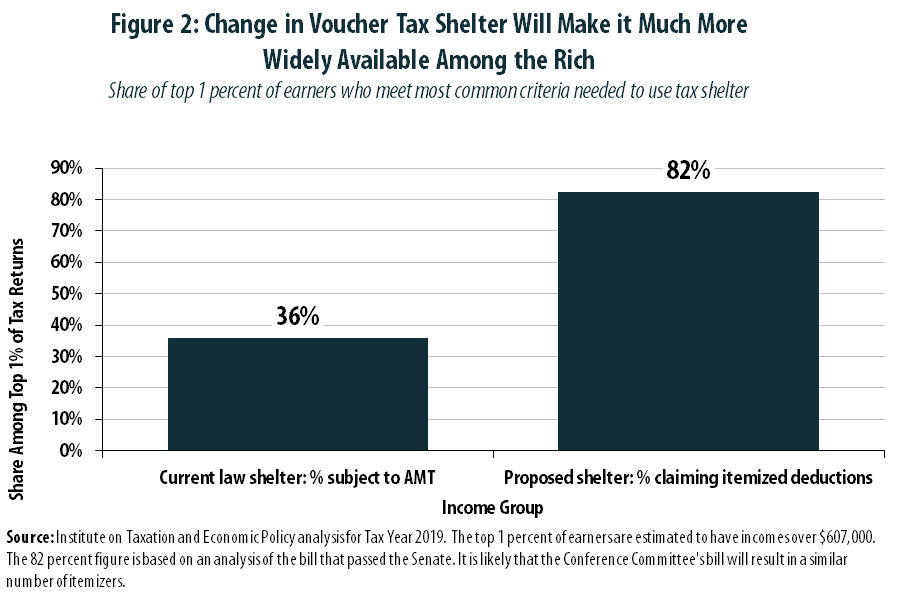
In its rush to pass a major rewrite of the tax code before year’s end, Congress appears likely to enact a “tax reform” that creates, or expands, a significant number of tax loopholes.[1] One such loophole would reward some of the nation’s wealthiest individuals with a strategy for padding their own bank accounts by “donating” to support private K-12 schools. While a similar loophole exists under current law, its size and scope would be dramatically expanded by the legislation working its way through Congress.[2]
How the House and Senate Tax Bills Would Affect Georgia Residents’ Federal Taxes
December 6, 2017 • By ITEP Staff
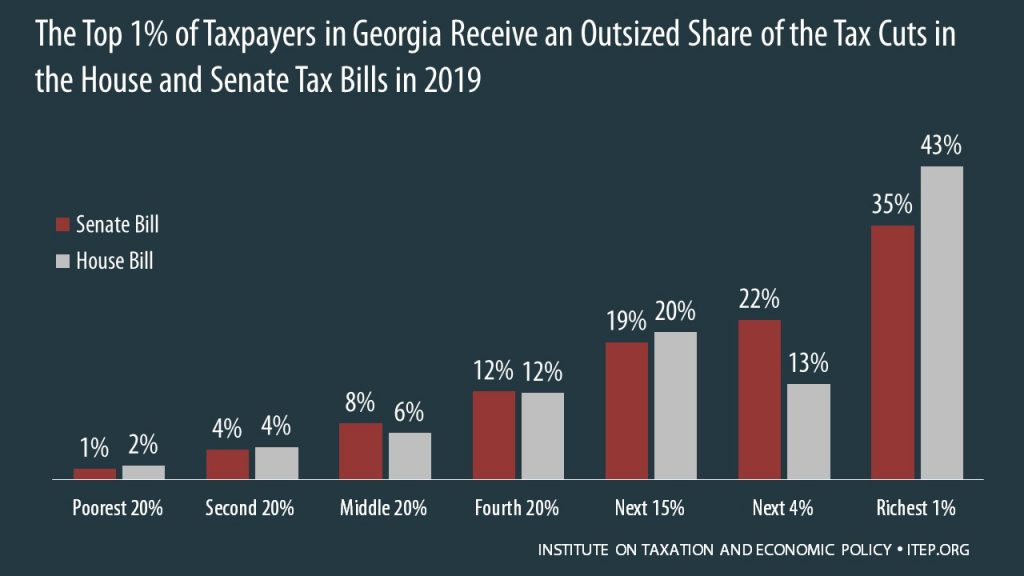
The House passed its “Tax Cuts and Jobs Act” November 16th and the Senate passed its version December 2nd. Both bills would raise taxes on many low- and middle-income families in every state and provide the wealthiest Americans and foreign investors substantial tax cuts, while adding more than $1.4 trillion to the deficit over ten years. The graph below shows that both bills are skewed to the richest 1 percent of Georgia residents.
National and 50-State Impacts of House and Senate Tax Bills in 2019 and 2027
December 6, 2017 • By ITEP Staff
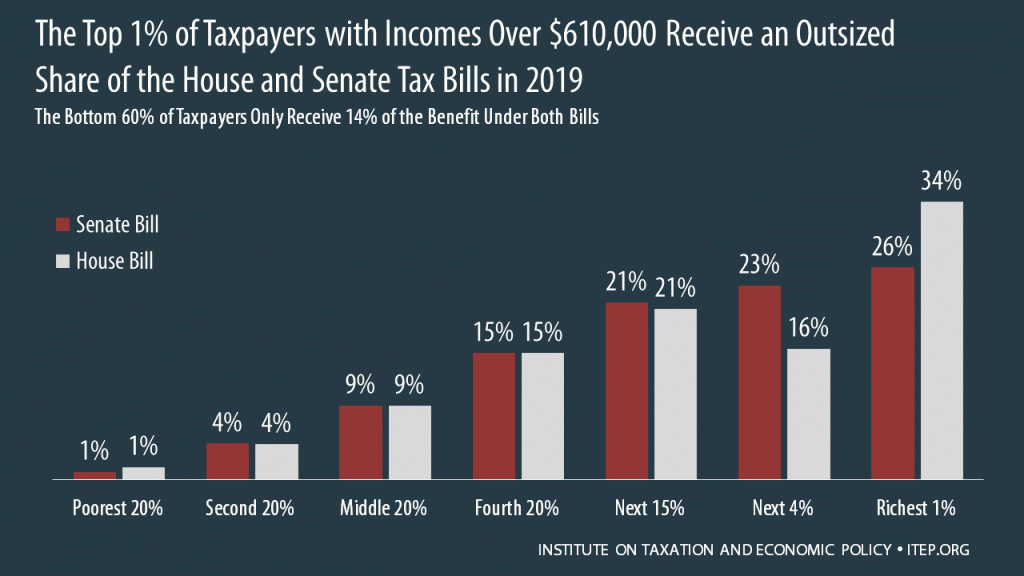
The House passed its “Tax Cuts and Jobs Act” November 16th and the Senate passed its version December 2nd. Both bills would raise taxes on many low- and middle-income families in every state and provide the wealthiest Americans and foreign investors substantial tax cuts, while adding more than $1.4 trillion to the deficit over ten years. National and 50-State data available to download.
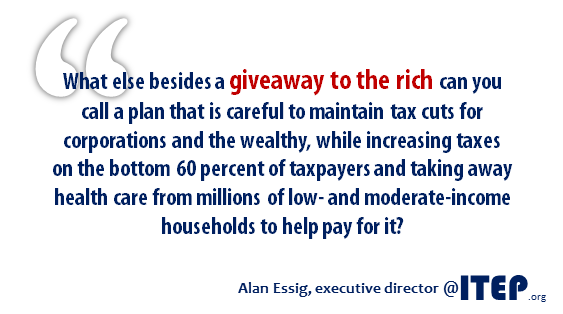
ITEP has analyzed each of the tax proposals advanced by the House and Senate in recent weeks. While some details have changed, the bottom line is the same: The plans would disproportionately benefit corporations and the wealthy. The Senate tax plan ITEP’s latest analysis examined the proposal that passed the Senate Finance Committee on Nov. […]
Revised Senate Plan Would Raise Taxes on at Least 29% of Americans and Cause 19 States to Pay More Overall
November 18, 2017 • By ITEP Staff
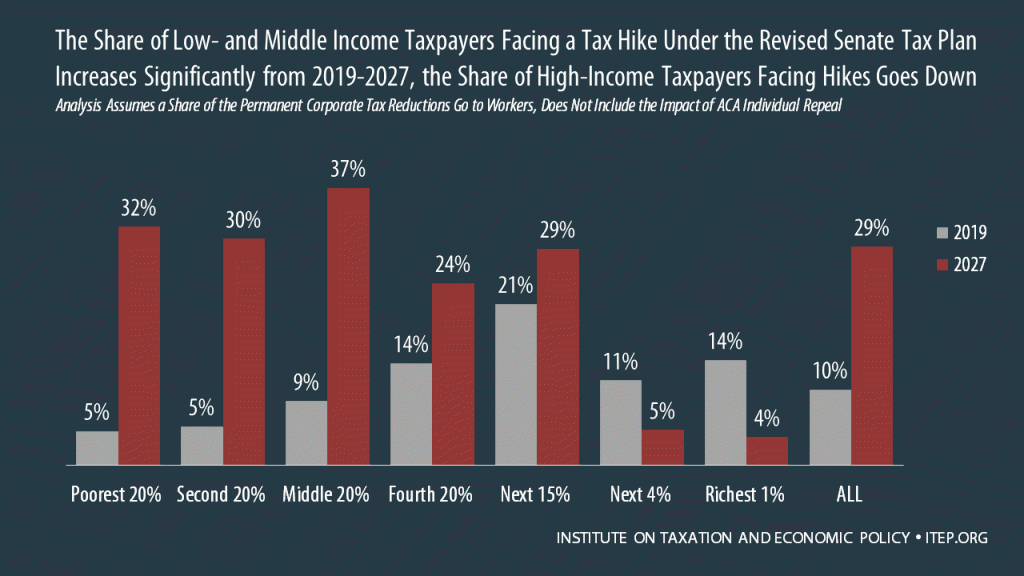
The tax bill reported out of the Senate Finance Committee on Nov. 16 would raise taxes on at least 29 percent of Americans and cause the populations of 19 states to pay more in federal taxes in 2027 than they do today.
How the Revised Senate Tax Bill Would Affect Georgia Residents’ Federal Taxes
November 14, 2017 • By ITEP Staff
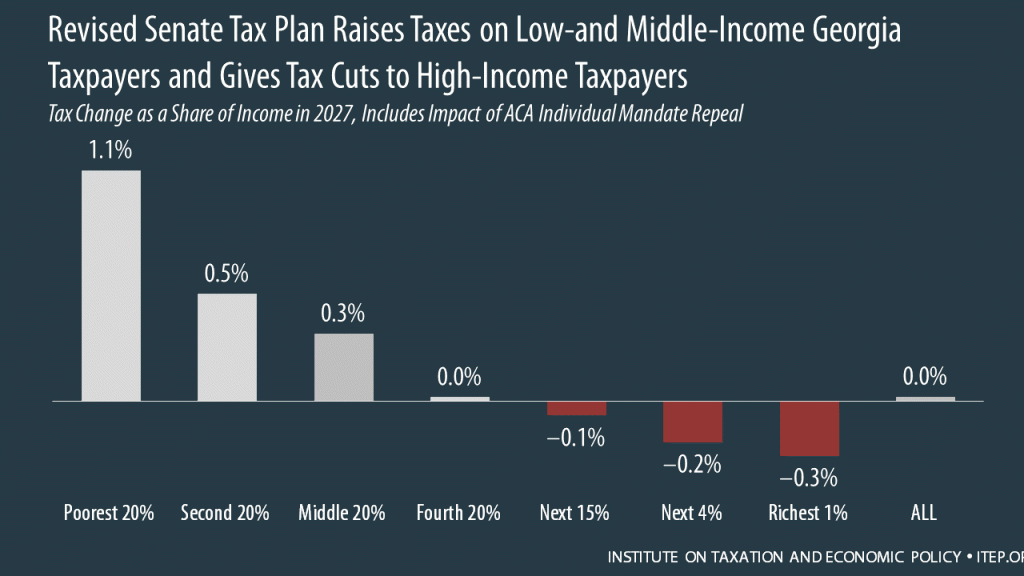
The Senate tax bill released last week would raise taxes on some families while bestowing immense benefits on wealthy Americans and foreign investors. In Georgia, 60 percent of the federal tax cuts would go to the richest 5 percent of residents, and 19 percent of households would face a tax increase, once the bill is fully implemented.
Senate Tax Plan Reserves Greatest Benefit for Richest Americans, Millions Face an Increase
November 13, 2017 • By ITEP Staff
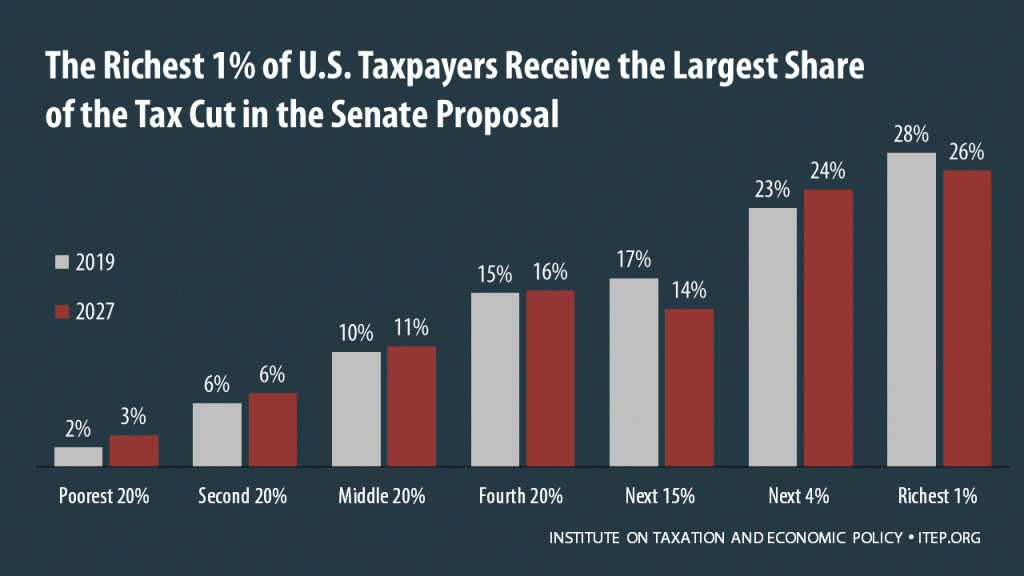
A 50-state analysis of the Senate tax proposal finds that not only would greatest share of benefits go to the richest Americans, but also more than one in 10 taxpayers would face a tax hike, with a large number of those taxpayers residing in states where residents pay higher state and local taxes.
House Tax Bill Would Put Property Tax Deduction Out of Reach for Most Households
November 13, 2017 • By ITEP Staff

The House of Representatives is expected to vote this week on a bill that would reduce federal revenues by roughly $1.5 trillion over the next decade. Despite the bill’s high price tag, many households would pay more in federal tax if the bill is enacted, in large part because it slashes the deduction for state […]
How the House Tax Proposal Would Affect Georgia Residents’ Federal Taxes
November 6, 2017 • By ITEP Staff
The Tax Cuts and Jobs Act, which was introduced on November 2 in the House of Representatives, includes some provisions that raise taxes and some that cut taxes, so the net effect for any particular family’s federal tax bill depends on their situation. Some of the provisions that benefit the middle class — like lower tax rates, an increased standard deduction, and a $300 tax credit for each adult in a household — are designed to expire or become less generous over time. Some of the provisions that benefit the wealthy, such as the reduction and eventual repeal of the estate…
Analysis of the House Tax Cuts and Jobs Act
November 6, 2017 • By Matthew Gardner, Meg Wiehe, Steve Wamhoff
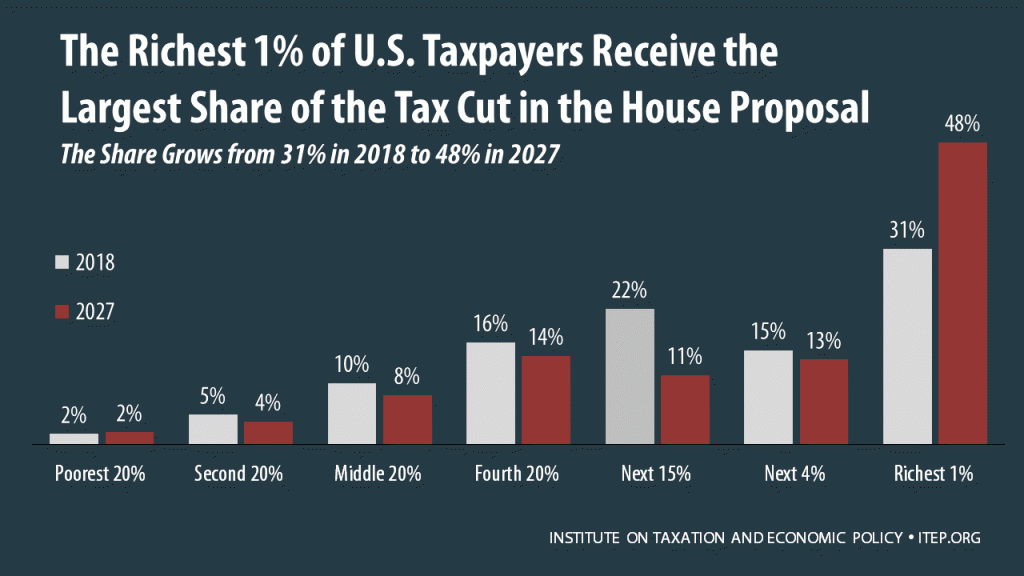
The Tax Cuts and Jobs Act, which was introduced on Nov. 2 in the House of Representatives, would raise taxes on some Americans and cut taxes on others while also providing significant savings to foreign investors.
Bloomberg: GOP Tax Plan Seen Hurting Middle Class in N.Y., 8 Other States
October 5, 2017 • By ITEP Staff
The ITEP report concludes that many of the most affected people would be middle-income and upper-middle income taxpayers. For example, in Maryland, about one-third of those making from $48,700 to $73,700 would face a tax hike, while 41 percent of those between $73,700 and $126,500, would face an increase, the study says. And almost 65 […]
50-State Analysis: GOP-Trump Tax Proposal Would Give the Store Away to the Wealthy, Exacerbate the Income Divide
October 4, 2017 • By Alan Essig
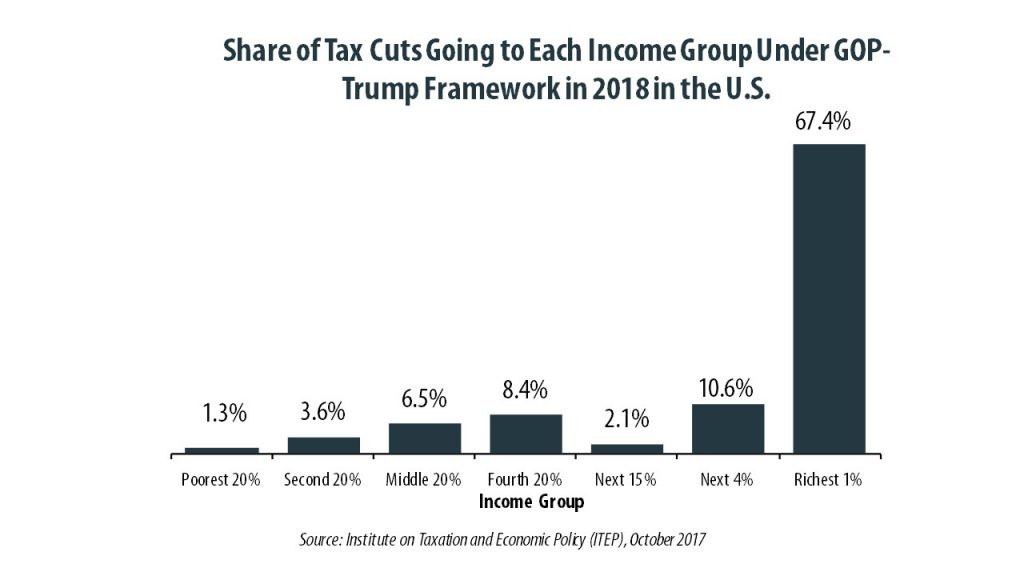
A 50-state analysis of the GOP tax framework reveals the top 1 percent of taxpayers would receive a substantial tax cut while middle- and upper-middle-income taxpayers in many states would pay more, the Institute on Taxation and Economic Policy said today. The GOP continues to tout its tax plan as “beneficial to the middle class.” […]
Benefits of GOP-Trump Framework Tilted Toward the Richest Taxpayers in Each State
October 4, 2017 • By Steve Wamhoff
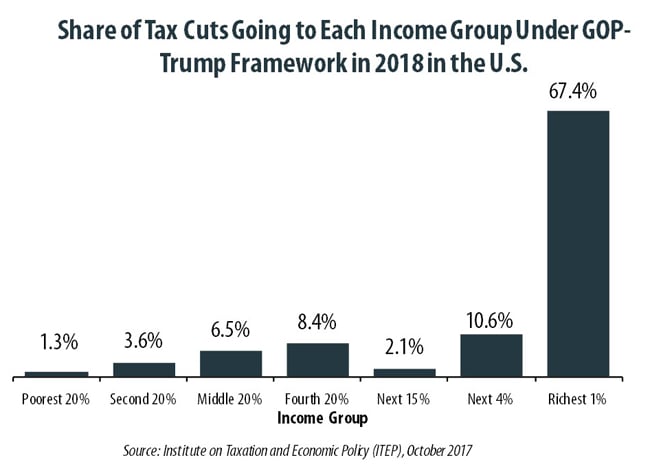
The “tax reform framework” released by the Trump administration and Congressional Republican leaders on September 27 would affect states differently, but every state would see its richest residents grow richer if it is enacted. In all but a handful of states, at least half of the tax cuts would flow to the richest one percent of residents if the framework took effect.
GOP-Trump Tax Framework Would Provide Richest One Percent in Georgia with 74.8 Percent of the State’s Tax Cuts
October 4, 2017 • By ITEP Staff
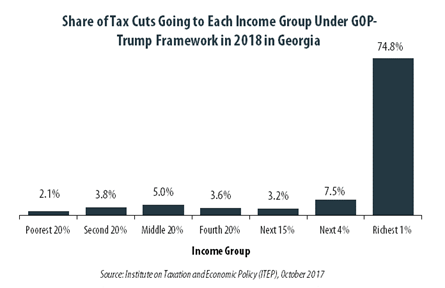
The “tax reform framework” released by the Trump administration and congressional Republican leaders on September 27 would not benefit everyone in Georgia equally. The richest one percent of Georgia residents would receive 74.8 percent of the tax cuts within the state under the framework in 2018. These households are projected to have an income of at least $552,200 next year. The framework would provide them an average tax cut of $83,070 in 2018, which would increase their income by an average of 4.0 percent.

Astonishingly, tax policies in virtually every state make it harder for those living in poverty to make ends meet. When all the taxes imposed by state and local governments are taken into account, every state imposes higher effective tax rates on poor families than on the richest taxpayers.
The Oklahoman: Tax Holiday Debate Splits Those on the Left
August 31, 2017
The liberal Institute on Taxation and Economic Policy has been among those urging repeal of sales tax holidays. In Georgia, the liberal Georgia Budget and Policy Institute promoted repeal. In an interview with Governing magazine, Wesley Tharpe, research director of the Georgia Budget and Policy Institute, appeared dismissive of the savings the holiday provided low-income […]
Chicago Tribune: Put the Brakes on GOP’s Backdoor Voucher Idea
August 24, 2017
Donors to the scholarship funds are also allowed to count that donation as a standard charitable donation for federal income tax purposes, meaning, as one Georgia agency that distributes to schools enthuses on its website, “You will end with more money than when you started.” And the higher your tax bracket, the higher your risk-free […]
Nearly Half of Trump’s Proposed Tax Cuts Go to People Making More than $1 Million Annually
August 17, 2017 • By ITEP Staff
A tiny fraction of the U.S. population (one-half of one percent) earns more than $1 million annually. But in 2018 this elite group would receive 48.8 percent of the tax cuts proposed by the Trump administration. A much larger group, 44.6 percent of Americans, earn less than $45,000, but would receive just 4.4 percent of the tax cuts.
In Georgia 50.0 Percent of Trump’s Proposed Tax Cuts Go to People Making More than $1 Million
August 17, 2017 • By ITEP Staff
A tiny fraction of the Georgia population (0.6 percent) earns more than $1 million annually. But this elite group would receive 50.0 percent of the tax cuts that go to Georgia residents under the tax proposals from the Trump administration. A much larger group, 50.0 percent of the state, earns less than $45,000, but would receive just 5.6 percent of the tax cuts.
2017 marked a sea change in state tax policy and a stark departure from the current federal tax debate as dubious supply-side economic theories began to lose their grip on statehouses. Compared to the predominant trend in recent years of emphasizing top-heavy income tax cuts and shifting to more regressive consumption taxes in the hopes […]
States May Be Finally Learning Their Lesson on Back-To-School Sales Tax Holidays
July 21, 2017 • By Dylan Grundman O'Neill
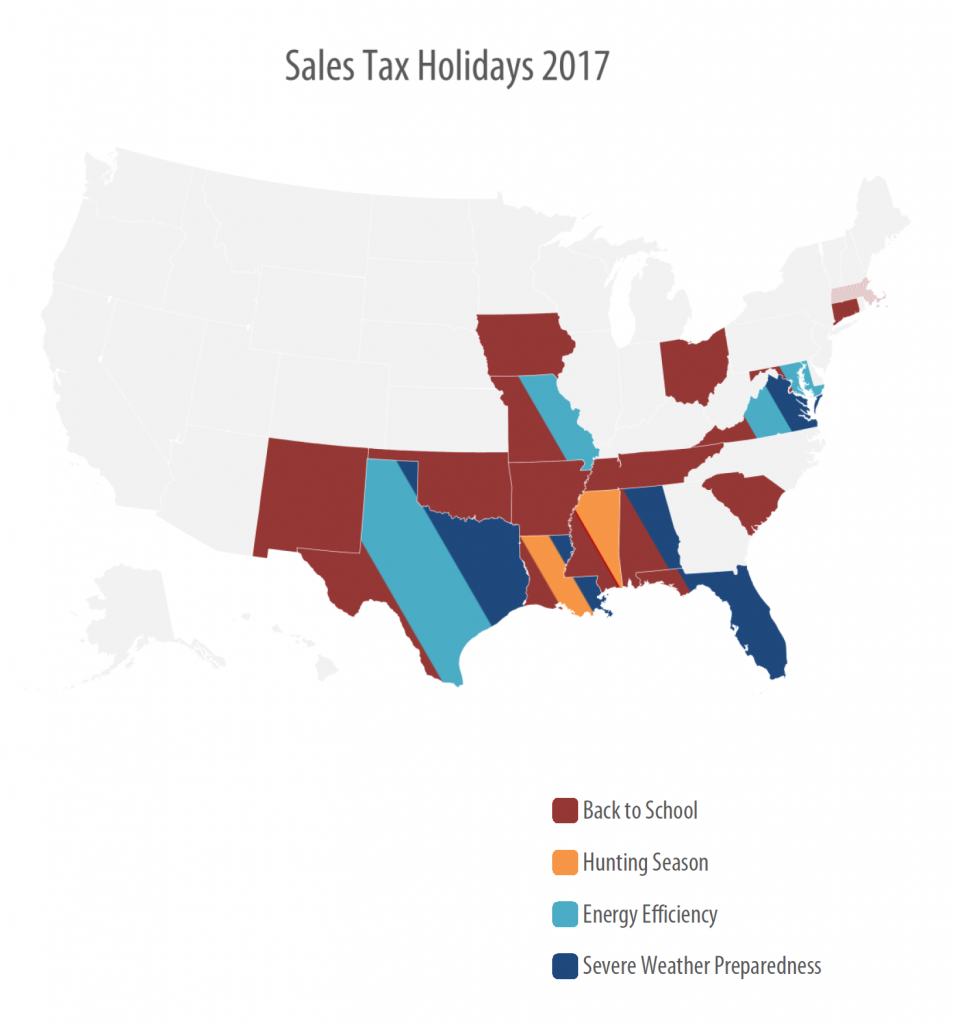
State lawmakers face a dilemma when it comes to sales tax holidays, an attractive and popular policy that nonetheless proves to be a poor choice compared to developing thoughtful, targeted tax policies or investing in well-executed public services. Luckily, word seems to be getting out that the costs associated with these holidays far outweigh their purported benefits.
Trump Tax Proposals Would Provide Richest One Percent in Georgia with 58.5 Percent of the State’s Tax Cuts
July 20, 2017 • By ITEP Staff
Earlier this year, the Trump administration released some broadly outlined proposals to overhaul the federal tax code. Households in Georgia would not benefit equally from these proposals. The richest one percent of the state’s taxpayers are projected to make an average income of $1,892,900 in 2018. They would receive 58.5 percent of the tax cuts that go to Georgia’s residents and would enjoy an average cut of $120,130 in 2018 alone.

Institute on Taxation
and Economic Policy
ITEP is a non-profit, non-partisan tax policy organization. We conduct rigorous analyses of tax and economic proposals and provide data-driven recommendations to shape equitable and sustainable tax systems.
Subscribe to ITEP Emails
Tax research and policy news in your inbox.
Promote Fair Tax Policy
Your gift to ITEP promotes tax justice. With your help, we do research that supports taxing millionaires and billionaires, taxing big corporations and raising revenue for the things our people, our communities and our planet need.
Together, we can create a country with more economic justice, more racial justice, more climate justice… and more tax justice.