
Blog
569 posts

How to Think About the Problem of Corporate Offshore Cash: Lessons from Microsoft
• By Matthew Gardner
For a corporation with deeply American roots, Microsoft seems remarkably unable to turn a profit here. Against all odds, the Redmond, Washington-based company continues to claim that virtually all its earnings are in foreign countries. Microsoft’s latest annual report, released earlier this week, shows that over the past two years, the company enjoyed worldwide income of almost $43 billion. It claims to have earned just 0.3 percent of that—$128 million—in the United States.

Trump Administration May Make Corporate Inversions Great Again
• By Richard Phillips
During the presidential campaign, Donald Trump called out companies engaging in corporate inversions saying that one proposed inversion was “disgusting” and that “politicians should be ashamed” for allowing it to happen. Despite this rhetoric, the Trump Administration is considering rolling back critical anti-inversion rules as part of its broad regulatory review of recently issued Treasury Department regulations.
Art Laffer and Stephen Moore’s Misleading Case for the Trump Tax Cuts
• By Nick Buffie
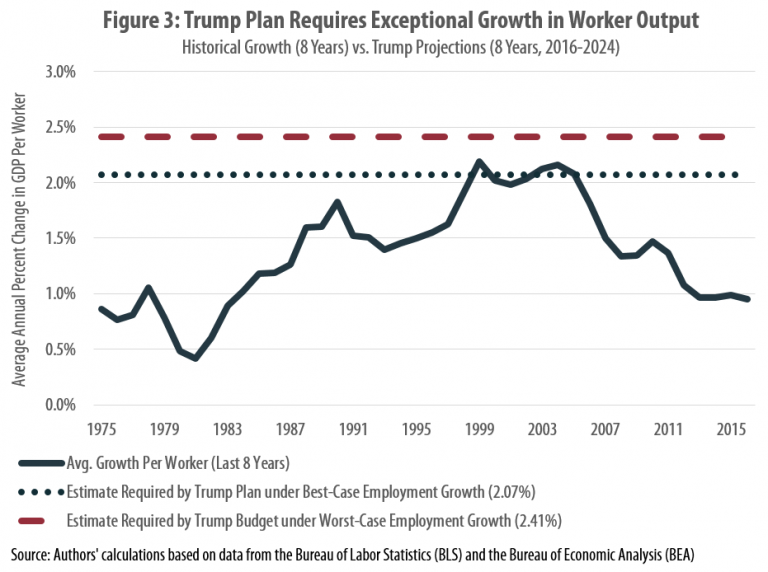
Art Laffer and Stephen Moore recently penned an op-ed in the Wall Street Journal in which they called on state and local policymakers to support the Trump tax cuts. They claimed that the Trump plan would provide a significant boost to state and local tax revenues, thereby allowing states with large budget deficits to “regain fiscal health.” State and local lawmakers should not be fooled by these claims. The reality is that Trump’s tax cuts…

GOP Leaders in Congress and the White House Set Out Goals for Tax Reform that Their Plans Fail to Meet
• By Alan Essig
Today Republican leaders in Congress and officials from the White House released a joint statement on tax reform, claiming that “the single most important action we can take to grow our economy and help the middle class get ahead is to fix our broken tax code for families, small business, and American job creators competing at home and around the globe.” Unfortunately, the proposals they have put forward so far do not address any such…

Reviving U.S. Manufacturing, One Cheesecake Factory at a Time
• By Matthew Gardner
In the latest example of how the tax code has been abused and distorted, the Cheesecake Factory is claiming the manufacturing tax deduction, apparently for manufacturing cheesecakes, burgers, and other treats.

Trump Touts Tax Cuts for the Wealthy as a Plan for Working People
• By Steve Wamhoff
Unless the administration takes a radically different direction on tax reform from what it has already proposed, its tax plan would be a monumental giveaway to the top 1 percent. The wealthiest one percent of households would receive 61 percent of all the Trump tax breaks, and would receive an average of $145,400 in 2018 alone.
Tax Avoidance: Nike “Just Did It” Again, Moving $1.5 Billion Offshore Last Year
• By Matthew Gardner
The Nike Corporation’s annual financial disclosure of income tax payments is always notable for two recurring trends: the Oregon-based company’s steady shifting of profits into offshore tax havens, and Nike’s apparent effort to conceal how it’s achieving this tax avoidance. This year’s report, released earlier this week, is no exception.

FedEx Pays Just 7.5% of Its Profits in Taxes While Pushing for a Lower Corporate Tax Rate
• By Matthew Gardner
The latest annual financial report released by shipping giant FedEx is yet another reminder that where you stand often depends on where you sit. The report shows that last year FedEx paid a 7.5 percent federal income tax rate on nearly $3.6 billion of U.S. pretax income and this low rate is due in part to accelerated depreciation, a provision in the tax code that allows the company to write off capital investments faster than…

Why We Need to End the Era of Anonymous Shell Corporations
• By Richard Phillips
What do terrorists, opioid and human traffickers, corrupt government officials and tax evaders have in common? They all depend on the secrecy provided by anonymous shell corporations to allow them to finance and profit from their crimes. Momentum is building in the House and Senate to pass legislation that would strike against illicit finance in the United States and around the world by bringing an end to the anonymity provided by U.S. incorporation.
CBO Just Shot Down Trump’s Economic Forecast
• By Carl Davis
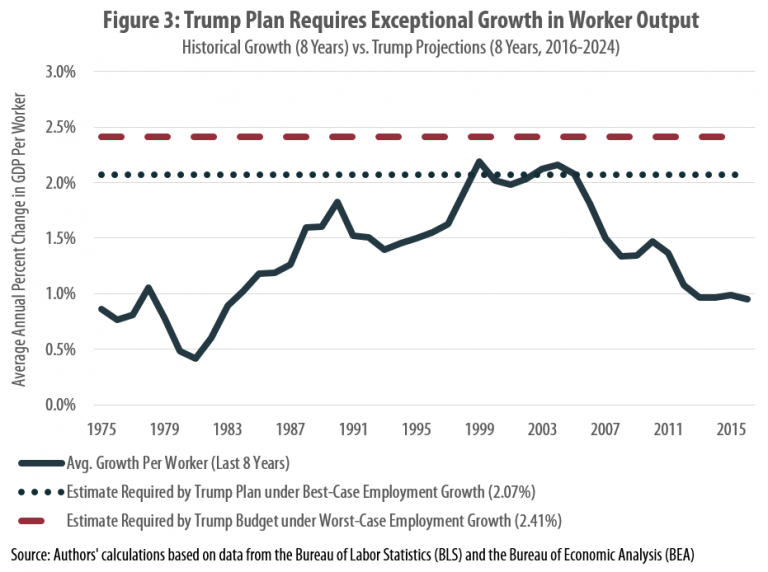
Last month, the Trump Administration released a budget proposal that relies on unrealistic projections of economic growth to create the illusion that it will balance the budget by 2027. By making the federal budget outlook appear more favorable than it actually is, the administration is seeking to bolster its case for enacting a multi-trillion-dollar tax cut. Fortunately, Congress has its own independent forecaster that just chimed in with a more rational assessment of the economy.

Inverter Mylan Finds Yet Another Way to Avoid Taxes
• By Richard Phillips
Rather than being known for its pioneering pharmaceuticals, Mylan is increasingly becoming infamous for its pioneering tax avoidance strategies. In 2015, Mylan used an inversion to claim that it is now based in the Netherlands for tax purposes. It is a Dutch company only on paper because ownership of the company was mostly unchanged and it continues to operate largely out of the United States. This maneuver has allowed the company to avoid millions in…

The GOP Health Plan Cuts Medicaid to Lower Taxes for the Richest 3 Percent
• By Alan Essig
The bill passed by the House of Representatives last month to repeal the Affordable Care Act (ACA) is the most unpopular legislation in decades. Lawmakers should reverse course and take the necessary time to put together legislation that would preserve or, better yet, improve access to health care. But this isn’t likely to happen because at its core, the American Health Care Act isn’t truly health care reform. It is tax cuts that disproportionately benefit…
Which States Benefit from the Tax Cuts in the GOP Health Plan?
• By Steve Wamhoff
Congressional Republicans’ plans to repeal the two largest tax increases on individuals that were enacted as part of the Affordable Care Act (ACA) would disproportionately benefit residents of Connecticut, New York, the District of Columbia and 10 other states. The remaining states would receive a share of the tax cuts that is less than their share of the total U.S. population.

The Best Way to Radically Simplify Tax Filing
• By Richard Phillips
One of the supposed selling points of the House GOP’s “Better Way” tax plan is that it will make the tax system so simple that you could do your taxes on a postcard. The reality, however, is that their promised postcard is a deception that would require numerous additional pages of worksheets to fill out. A better solution to making tax preparation simpler is called “return-free filing.” It does not just reduce your work to…

Kansas May Have Saved Us All
• By Steve Wamhoff
Sitting in the National Museum of American History in Washington, DC, hidden in the jumble of Americana like Thomas Jefferson’s desk, Michelle Obama’s inaugural gown and the ruby slippers worn in the Wizard of Oz, is a napkin with a drawing on it. Probably one of the least known exhibits in the museum, this napkin, quietly hiding behind glass lest some child wandering from a school group wipe his nose on it, has on several…

What a Populist Budget Proposal Really Looks Like
• By Richard Phillips
A truly populist budget would seek to ensure that middle- and low-income families have the resources that they need to get ahead, that the wealthy and corporations are paying their fair share in taxes, and that our country is making the public investments we need to ensure full employment and improve productivity over the long term. The Congressional Progressive Caucus’s (CPC) 2018 budget proposal would make real progress on all of these fronts.

Avocado Toast, iPhones, Billionairesplaining and the Trump Budget
• By Jenice R. Robinson
A couple weeks ago, a billionaire set the Internet ablaze when on 60 Minutes Australia he chided millennials to stop buying avocado toast and fancy coffee if they wanted to buy a home. The backlash was swift and deserved. Twenty- and early thirty-something people rightly took offense to the suggestion that they haven’t purchased homes […]

Congressional Hearing Highlights Problems with the Border Adjustment Tax
• By Richard Phillips
The debate over the so-called border adjustment tax (or BAT) took center stage this week when the House Ways and Means Committee held its first hearing on the topic. Despite strong support by the House Republican leadership and the Chairman of the Ways and Means Committee, Rep. Kevin Brady, the proposal faced an onslaught of criticism during the hearing from invited witnesses and members of both parties.
23 Million Uninsured Americans Is Too Great a Cost to Finance Tax Cuts for the Rich
• By Richard Phillips
The cost to give $1 trillion in tax cuts to the wealthy and corporations is 23 million uninsured Americans by 2026. This is the bottom-line take away from the much-awaited Congressional Budget Office (CBO) score of the American Health Care Act, which House Republicans rushed through the chamber and narrowly passed (217-213) in early May.

ITEP’s Commitment to Being a Voice for Low-, Moderate- and Middle-Income People in Tax Policy Debates
• By Alan Essig
A strong voice for working people in federal and state tax policy debates is absolutely critical. Sound, progressive tax policies make all the difference between high-quality educational systems or crowded classrooms with limited resources. They account for the difference between structurally sound roads and bridges or potholes and other crumbling infrastructure. At the federal level, good tax policy means raising enough revenue so the nation can adequately fund child care and early education, health care,…

Tax Avoiding Companies Well Represented at Tax Reform Hearing
• By Richard Phillips
Today the House Ways and Means Committee will hold its first tax reform hearing of 2017, which marks the official opening of the tax reform debate in Congress. True tax reform, if the committee sought to achieve it, could create more jobs and ensure companies are paying their fair share by cracking down on the massive offshore tax avoidance that companies engage in. Unfortunately, the panel of witnesses for today’s hearing is largely made up…

Investors and Corporations Would Profit from a Federal Private School Voucher Tax Credit
• By Carl Davis
A new report by the Institute on Taxation and Economic Policy (ITEP) and AASA, the School Superintendents Association, details how tax subsidies that funnel money toward private schools are being used as profitable tax shelters by high-income taxpayers. By exploiting interactions between federal and state tax law, high-income taxpayers in nine states are currently able […]

Representative John Delaney’s Bills Take the Wrong Approach on Funding Infrastructure
• By Richard Phillips
Lawmakers across the political spectrum recognize the need for additional spending to maintain and upgrade our nation’s transportation infrastructure. According to the Federal Highway Administration, there is a backlog of $836 billion in needed repairs and improvements to roads and bridges and an additional $90 billion backlog of public transit projects. Maryland Democratic Representative John […]
Key Resources for Digging into the Trump and GOP Tax Reform Agenda
• By ITEP Staff
President Donald Trump’s tax sketch released in late April is the starting point for federal tax reform discussions. For now, the sketch includes too few details to properly analyze its revenue and distributional impacts, but based on limited information, corporations and the wealthy stand to benefit most. Below are resources ITEP has produced on tax […]

Apple: A Case Study in Why a Tax Holiday for Offshore Cash is Indefensible
• By Matthew Gardner
The Apple corporation made waves earlier this week with its disclosure that its worldwide cash now exceeds $250 billion. Less noticed was a separate disclosure on Wednesday that the company’s offshore cash now exceeds $239 billion, meaning that more than 93 percent of the company’s cash is now held—at least on paper—abroad. This represents an […]
Blog Categories

Institute on Taxation
and Economic Policy
ITEP is a non-profit, non-partisan tax policy organization. We conduct rigorous analyses of tax and economic proposals and provide data-driven recommendations to shape equitable and sustainable tax systems.
Subscribe to ITEP Emails
Tax research and policy news in your inbox.
Promote Fair Tax Policy
Your gift to ITEP promotes tax justice. With your help, we do research that supports taxing millionaires and billionaires, taxing big corporations and raising revenue for the things our people, our communities and our planet need.
Together, we can create a country with more economic justice, more racial justice, more climate justice… and more tax justice.