
Inequality and the Economy
69 posts
Tax Proposals Expected to be in President Biden’s Budget Plan
• By Steve Wamhoff
President Biden discussed multiple tax proposals during the State of the Union address to Congress. Several of these proposals appeared in the budget plan he submitted to Congress last year, but at least two appear to be new proposals. Raise Corporate Tax Rate from 21 Percent to 28 Percent 10-Year Revenue Impact in President’s Previous […]

The Moore Case Before the U.S. Supreme Court Could Widen the Racial Wealth Gap
• By Brakeyshia Samms, Moore v. United States
Moore v. United States, already a cause for concern for tax lawyers, could create more barriers for racial equity advocates working to reverse the economic plight of many households of color.
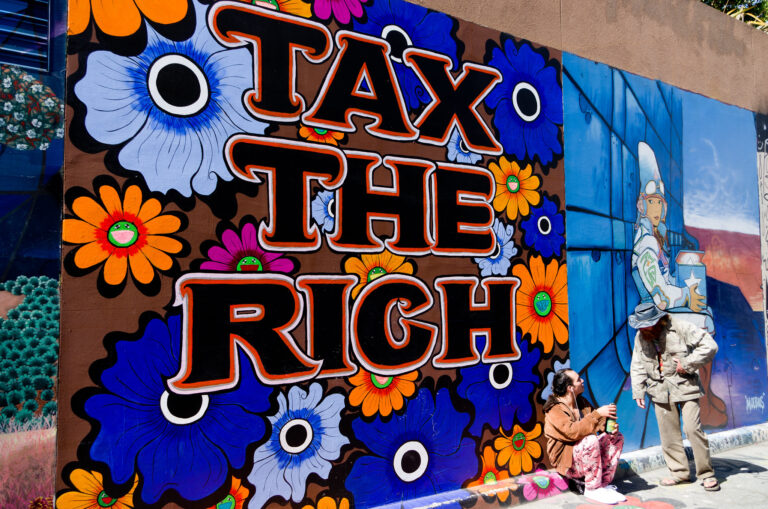
Worried About the Debt? Tax the Rich
• By Amy Hanauer
As one of the most prosperous countries in human history, we have enough resources for our collective needs. By better taxing corporations and the wealthiest, we can generate revenue to improve family security, strengthen our communities, and reduce the debt too.

“Fair Tax” Plan Would Abolish the IRS and Shift Federal Taxes from the Wealthy to the Rest of Us
• By Steve Wamhoff
The "Fair Tax" bill would impose a 30 percent federal sales tax on everything we buy – groceries, cars, homes, health care - and lead to a giant tax shift from the well-off to everyone else.

Biden’s Proposals Would Fix a Tax Code that Coddles Billionaires
• By Steve Wamhoff
Billionaires can afford to pay a larger share of their income in taxes than teachers, nurses and firefighters. But our tax code often allows them to pay less, as demonstrated by the latest expose from reporters at ProPublica using IRS data. According to their calculations, Betsy DeVos, the Education Secretary under former President Donald Trump, […]
Taxes Should be Part of the State of the Union Agenda
• By Amy Hanauer
President Biden should elevate his tax and revenue proposals which remain essential if we are to pay for environmental restoration, health priorities and peacekeeping, the front-burner items that may dominate the speech.

Federal Tax Reform Would be a Step in the Right Direction for Millennials of Color
• By Brakeyshia Samms
Currently, millennials of color are worse off than their parents when it comes to wealth expectations. So, if one of the goals of federal policymakers is to reduce racial income and wealth disparities, the proposals outlined are a good start. Tax reforms included in the budget package making its way through Congress would help by boosting incomes and making raising children more affordable—two things that would help millennials of color thrive in today’s economy.

The Role of Census Data in Policy and Racial Equity
• By Emma Sifre
The Census has changed the way it asks questions in the past and can choose to do so again in the future. As the Biden administration makes data a central part of its plan to achieve greater racial equity, it has an opportunity to implement research-backed changes that will improve our understanding of race and ethnicity in the United States, and in turn, our ability to draw meaningful conclusions about how our tax laws impact…

Investment Income and Racial Inequality
• By Emma Sifre, ITEP Staff, Joe Hughes
Congress has a historic opportunity to fix the way the preferential treatment of investment income widens the racial wealth gap and to strive toward a racially equitable tax code.

Limiting Tax Breaks for Capital Gains Would Mitigate the Racial Wealth Gap
• By Joe Hughes
The racial wealth and income gaps are the results of centuries of government policies favoring the accumulation of wealth among white communities while marginalizing communities of color. Policy solutions that are race-forward, meaning they remedy past and ongoing racial inequities, can also address broader social inequities.

State Income Tax Reform Can Bring Us Closer to Racial Equity
• By Carl Davis, ITEP Staff, Marco Guzman
To pave the way for a more racially equitable future, states must move away from poorly designed, regressive policies that solidify the vast inequalities that exist today.

When Tax Breaks for Retirement Savings Enrich the Already Rich
• By Steve Wamhoff
Members of Congress frequently claim they want to make it easier for working people to scrape together enough savings to have some financial security in retirement. But lawmakers’ preferred method to (ostensibly) achieve this goal is through tax breaks that have allowed the tech mogul Peter Thiel to avoid taxes on $5 billion. This is just one of the eye-popping revelations in the latest expose from ProPublica.

Inclusive Child Tax Credit Reform Would Restore Benefit to 1 Million Young ‘Dreamers’
• By Marco Guzman
As the Biden administration maps out the next steps in America’s response to the coronavirus pandemic—through what is now being called the American Families Plan—it should make sure a proposed expansion of the Child Tax Credit (CTC) includes undocumented children who have largely been left out of federal relief packages this past year. Prior to 2017 Tax Cut and Jobs Act, all children regardless of their immigration status received the credit as long as their…

Not Worth Its SALT: Tax Cut Proposal Overwhelmingly Benefits Wealthy, White Households
• By Carl Davis, ITEP Staff, Jessica Schieder
A previous ITEP analysis showed the lopsided distribution of SALT cap repeal by income level. The vast majority of families would not benefit financially from repeal and most of the tax cuts would flow to families with incomes above $200,000. This report builds on that work by using a mix of tax return and survey data within our microsimulation tax model to estimate the distribution of SALT cap repeal across race and ethnicity. It shows…
A Proposal to Simplify President Biden’s Campaign Plan for Personal Income Taxes and Replace the Cap on SALT Deductions
• By Steve Wamhoff
In this paper, we describe a tax policy idea that would simplify the proposals President Biden presented during his campaign to raise personal income taxes for those with annual incomes greater than $400,000. Our proposal would replace the cap on state and local tax (SALT) deductions with a broader limit on tax breaks for the rich that would raise more revenue than the personal income tax hikes that Biden proposed during his campaign. Our proposal…

The High Cost of Corporate Tax Avoidance (Webinar)
• By Amy Hanauer, ITEP Staff, Matthew Gardner
When communities thrive, so do corporations. But when profitable corporations build their empires by exploiting the tax code, it is workers, the environment and our communities—not CEOs or shareholders—that are harmed. Amazon posted its highest U.S. profit ever for 2020, an unprecedented year defined by a pandemic. Yet the company sheltered more than half its profits from corporate taxes—legally. While the company may be one of the most recognizable tax avoiders, it's not an outlier.

Senator Warren Introduces Federal Wealth Tax Legislation
• By Steve Wamhoff
With the onslaught of news about billionaire wealth soaring while low- and moderate-income families have trouble making ends meet, a federal wealth tax makes good economic and fiscal sense—and the public supports it. One poll found that 64 percent of respondents favor the idea, including a majority of Republicans.

Of Shiny Objects and Scapegoats
• By Jenice R. Robinson
While the moneyed elite were dangling shiny objects, scapegoating Black and brown people, denigrating immigrants, and financing studies to convince us that poor people are the problem, they were concurrently securing policies that cut taxes primarily for the rich and profitable corporations, deregulated industry, weakened unions and attacked voting rights. This and more allowed the rich to amass even more wealth and power.

Adequately Funding the IRS Would Be One Small Step Toward Racial Equity in the Tax Code
• By Jenice R. Robinson
IRS Commissioner Charles Rettig vowed to work with Congress to explore how the federal tax system contributes to the racial wealth gap. There are at least two ways this can happen: tax policies enacted by Congress and IRS enforcement of these policies.

Trump Administration Stops Pretending to Care About the Economy with Its Capital Gains Tax Proposal
• By Steve Wamhoff
Proponents of capital gains tax breaks have always offered a weak argument that they encourage investment and thereby grow the economy. But the Trump administration is now floating a temporary capital gains tax break, which is supported by no argument at all. It would only reward investments made in the past while doing nothing to encourage new investment.

Which Workers Wouldn’t Be Helped by a Payroll Tax Cut?
• By Jessica Schieder, Lorena Roque
New data released today estimates 20.5 million jobs were lost in the month of April alone. Workers not currently receiving paychecks would be left out of any benefits provided by a payroll tax cut.

COVID-19 and the Case for Race-Forward Economic Policy Prescriptions
• By Jenice R. Robinson
Unconscious bias runs deep. Legislative proposals to assuage the exploding economic crisis are advancing and changing quickly, but initial GOP proposals are consistent with the nation’s long history of ostensibly race-neutral policies that are discriminatory in their outcomes.

Taxes in a Time of Coronavirus
• By Amy Hanauer
Some problems can only be solved when public officials have the resources to act. Today’s public health crisis is that kind of problem. Unfortunately, the Trump administration’s deep tax cuts leave our health infrastructure knee-capped, just when we need it most.
The Latest Wildly Misleading Argument Against Taxing the Rich
• By Steve Wamhoff
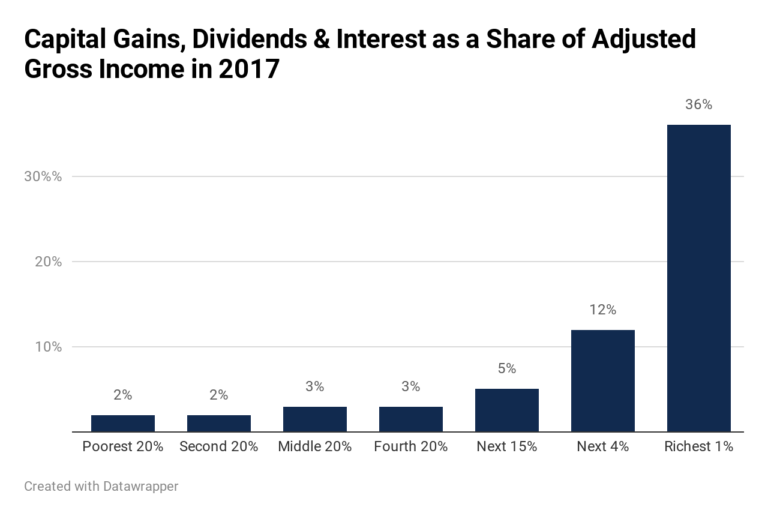
Anti-tax activists’ convoluted claims that the rich pay too much in taxes broke new ground with an op-ed published last week in the Wall Street Journal. Penned by former Texas Sen. Phil Gramm and John Early, a former official of the Bureau of Labor Statistics, the piece is particularly misleading. The so-called evidence in support of their argument against raising taxes on the rich fails to correctly calculate effective tax rates.

2021 Trump Budget Continues 40-Year Trickle-Down Economic Agenda
• By Jenice R. Robinson
The 2017 Tax Cuts and Jobs Act may as well have been called the Promise for Austerity Later Act.
ITEP analyzes the overall fairness of the current tax system and proposals to change it. We help lawmakers and the public decide what tax policies will create the kind of economy Americans want and examine how public policy perpetuates economic inequality. See ITEP’s most recent analysis of the total tax system Who Pays Taxes in America in 2024 and ITEP’s explainer on the need for progressive tax revenue.

Institute on Taxation
and Economic Policy
ITEP is a non-profit, non-partisan tax policy organization. We conduct rigorous analyses of tax and economic proposals and provide data-driven recommendations to shape equitable and sustainable tax systems.
Subscribe to ITEP Emails
Tax research and policy news in your inbox.
Promote Fair Tax Policy
Your gift to ITEP promotes tax justice. With your help, we do research that supports taxing millionaires and billionaires, taxing big corporations and raising revenue for the things our people, our communities and our planet need.
Together, we can create a country with more economic justice, more racial justice, more climate justice… and more tax justice.