
Inequality and the Economy
69 posts

White House Council of Economic Advisers Crows about Lowest-Income Americans Being Infinitesimally “Wealthier”
• By Matthew Gardner
When the White House Council of Economic Advisors last week tweeted that the poorest 50 percent of Americans’ wealth is growing 3 times faster than the wealth of the top 1 percent, we were skeptical. As it turns out, the CEA’s tweet is a reminder that the poorest 50 percent wealth grew twice as fast during Barack Obama’s second term than it has under Trump, but to this day remains far below its pre-recession share…

Time to Throw Cucumbers
• By Steve Wamhoff
A basic understanding and idea of fairness is a trait we share with intelligent primates, which is precisely why more than two years ago as Congress was debating the Tax Cuts and Jobs Act, the American public disapproved of the tax bill.
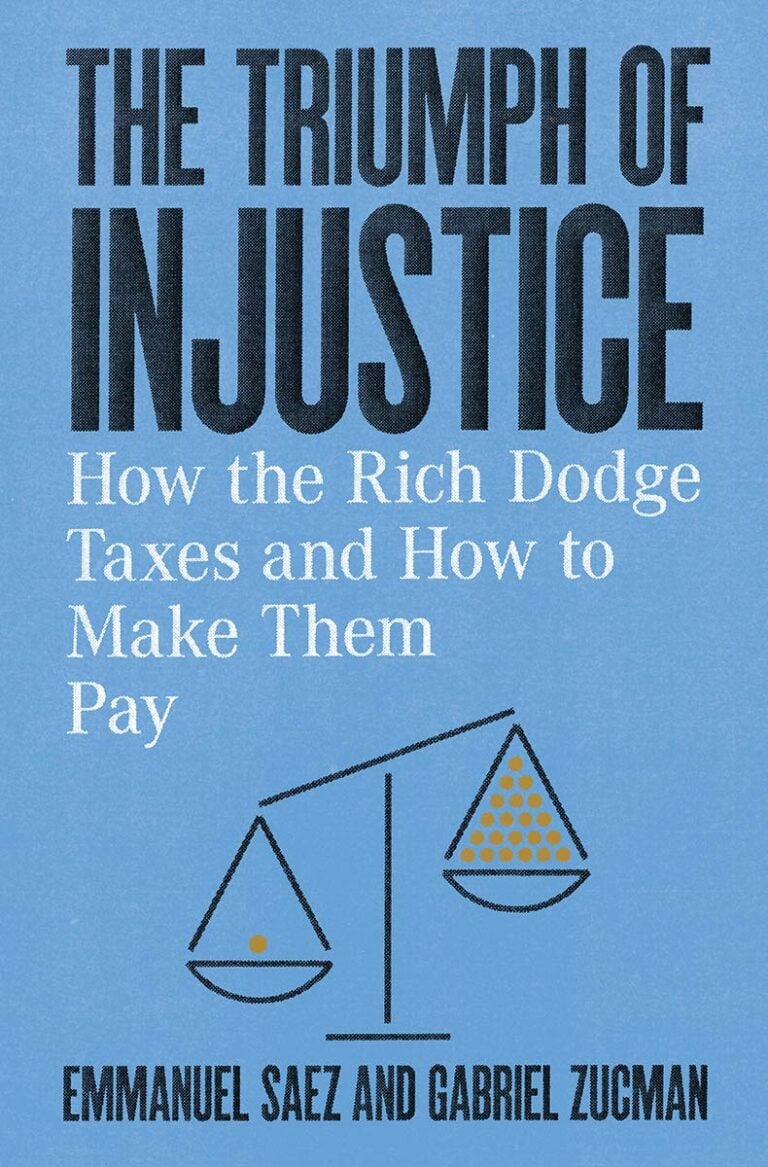
Emmanuel Saez and Gabriel Zucman’s New Book Reminds Us that Tax Injustice Is a Choice
• By Steve Wamhoff
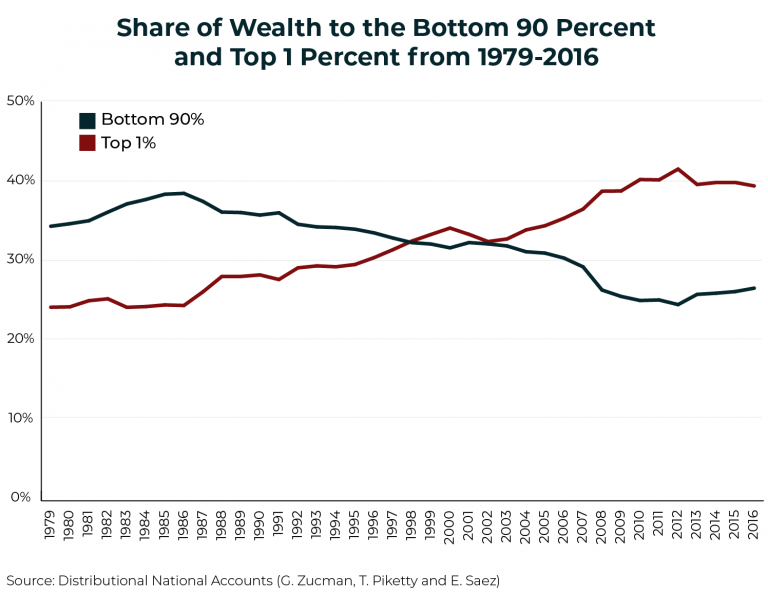
Cue Emmanuel Saez and Gabriel Zucman. In their new book, The Triumph of Injustice, the economists, who already jolted the world with their shocking data on exploding income inequality and wealth inequality, tell us to stop acting like we are paralyzed when it comes to tax policy. There are answers and solutions. And in about 200 surprisingly readable pages, they provide them.
How a Federal Wealth Tax Can Help the Economy
• By Steve Wamhoff
A New York Times article explained that proponents of a federal wealth tax hope to address exploding inequality but then went on to list the fears of billionaires and economic policymakers, finding that “the idea of redistributing wealth by targeting billionaires is stirring fierce debates at the highest ranks of academia and business, with opponents arguing it would cripple economic growth, sap the motivation of entrepreneurs who aspire to be multimillionaires and set off a…
The Nation’s Income Inequality Challenge Explained in Charts
• By Stephanie Clegg
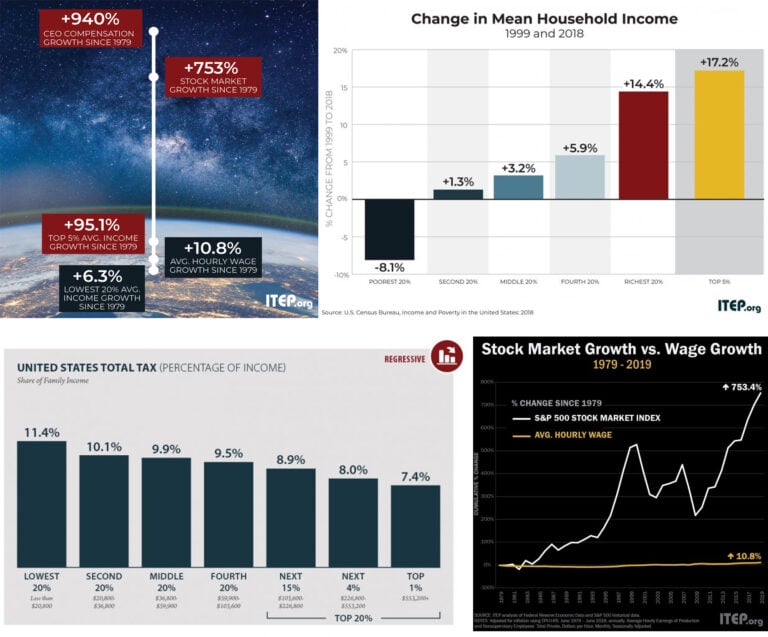
Income inequality has reached its highest level since the U.S. Census Bureau began tracking the measure more than 50 years ago, according to recent data. While recent Census data show modest increases in median household income and average hourly wages—numbers anti-tax politicians and pundits have used to deny rising inequality—a deeper look at some of the latest numbers reveals a decades-long trend of widening economic inequality.

How Tax Policy Can Help Mitigate Poverty, Address Income Inequality
• By ITEP Staff
Analysts at the Institute on Taxation and Economic Policy have produced multiple recent briefs and reports that provide insight on how current and proposed tax policies affect family economic security and income inequality.
Updated Estimates from ITEP: Trump Tax Law Still Benefits the Rich No Matter How You Look at It
• By Steve Wamhoff
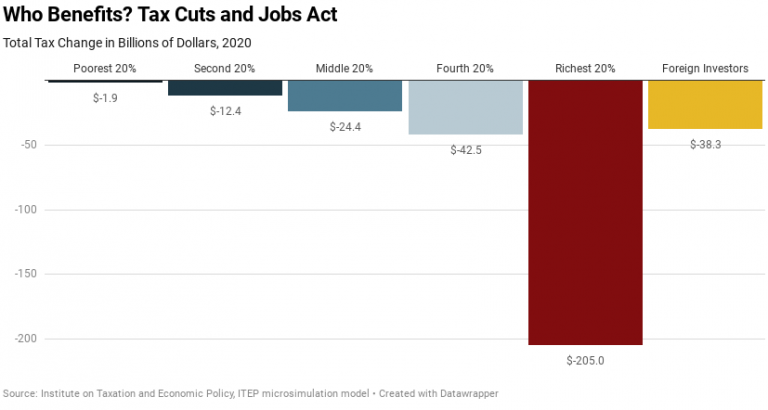
President Trump’s allies in Congress continue to defend their 2017 tax law in misleading ways. Just last week, Republicans on the House Ways and Means Committee stated that most “of the tax overhaul went into the pockets of working families and Main Street businesses who need it most, not Wall Street.” ITEP’s most recent analysis estimates that in 2020 the richest 5 percent of taxpayers will receive $145 billion in tax cuts, or half the…

Opportunity Zones Have Nothing to Do with Reparations, Except …
• By Jenice R. Robinson
Among other things, this blog highlights how federal, state and local policies systematically work to reinforce the racial wealth gap by, for example, using the tax code to redistribute the nation’s wealth to billionaire developers and keeping low-income people of color in a perpetual cycle of debt through fines and fees to fund local governments. Opportunity zones and the top-heavy 2017 tax law are emblematic of a long history of policymaking that advantages wealthy white…
Bootstraps Remain an Ineffective Tool for Combatting Poverty
• By Jenice R. Robinson
Policymakers and the public widely agree that economic inequality is the social policy problem of our age. It threatens the livelihoods of millions of children and adults, and it even threatens our democracy. Although some say Americans could fix it themselves by simply rolling up their sleeves, as a sub-headline in a March U.S. News and World Report column implied, the reality is different.
The Case For Progressive Revenue Policies
• By ITEP Staff
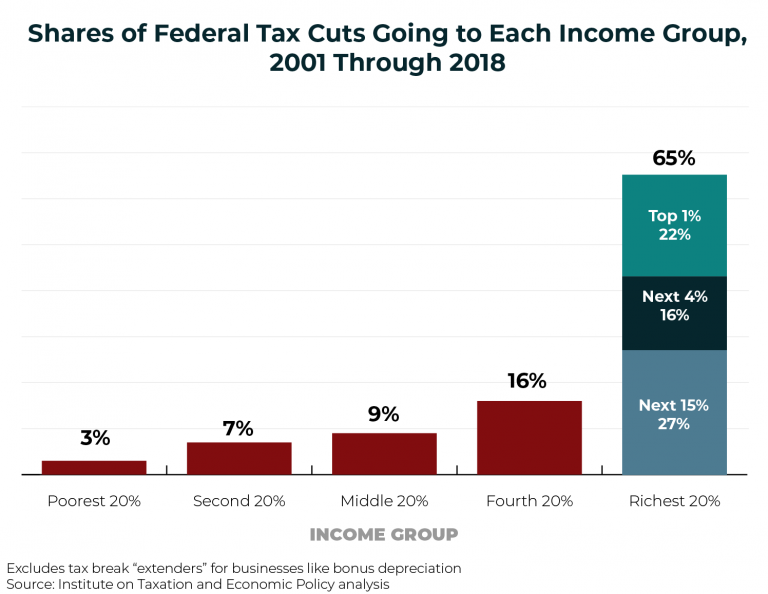
Income inequality is a national challenge. And inadequate federal revenue is a challenge that the nation will eventually have to reckon with. This chart book makes a strong case for why federal lawmakers should seriously consider progressive revenue-raising options.
Why We Should Talk about Progressive Taxes Despite Billionaires’ Objections
• By Jenice R. Robinson
It was the tone-deaf remark heard ‘round the world. Last week on CNBC’s Squawk Box, Commerce Secretary Wilbur Ross suggested that furloughed government employees who hadn’t been paid in a month could go to a bank and get a loan to make ends meet. This was not a gaffe. It’s hard to fathom how a […]

Observations from Census Data on Poverty and Income
• By Jenice R. Robinson
Today's poverty and income data show that income continues to concentrate at the top; in fact, the top 20 percent continue to capture 51.5 percent of income. Meanwhile, average income for the poorest 20 percent of households is less today than it was 18 years ago.
1964: Unconditional War on Poverty; 2018: Unconditional War on the Poor
• By Misha Hill
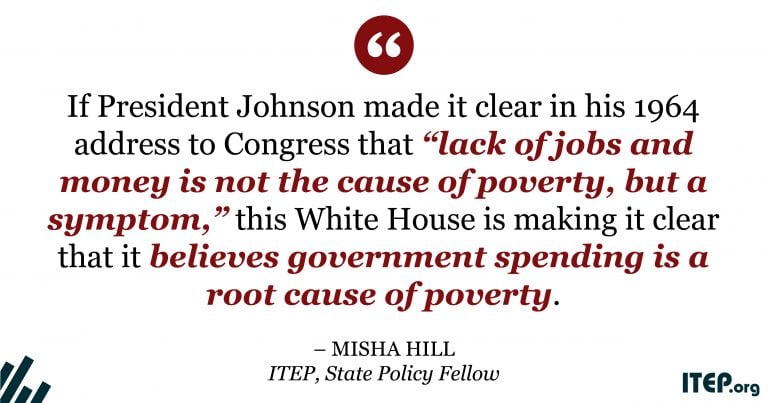
During his first State of the Union address in January 1964, Lyndon Baines Johnson declared a War on Poverty in response to a national poverty rate of more than 19 percent. The legislative result of this war was an early education program, expanded funding for secondary education, job training and work opportunity programs and the […]
Rigging the System and Poor Shaming (Rightly) Are Incompatible Political Strategies
• By Jenice R. Robinson
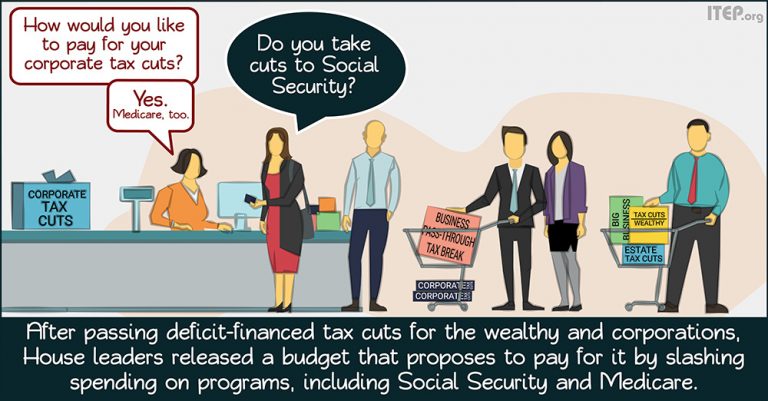
The absurdity of blaming poor and moderate-income people for their circumstances is close to running its course as an effective political tool, particularly as some elected officials more boldly assert their intent to cater to the whims of the wealthy. Take last year’s GOP-led drive to eliminate the Affordable Care Act (ACA), for example. House […]

Why We’re Not Eternally Grateful for $1,000 Crumbs
• By Jenice R. Robinson
Two narratives that intentionally obscure who benefits from the tax law are emerging. One focuses on the personal income tax cuts that will result in an increase in net take-home pay for many employees once their employers adjust withholding. Anecdotes abound of working people getting a $100 or more increase, after taxes, per paycheck, but the reality is that most workers will receive a lot less than that. Meanwhile, the wealthiest 1 percent of households…

They Can’t Help Themselves: GOP Leaders Reveal True Intent Behind Tax Overhaul
• By Jenice R. Robinson
The hand-written scrawls in the margins of the hastily written 500-page Senate tax bill had barely dried when lawmakers began to reveal the true motivation behind their rush to fundamentally overhaul the nation’s tax code.

The Bottom 40 Percent Has Grown Poorer, So Why Are Tax Cut Plans Focused on the Rich and Corporations?
• By Jenice R. Robinson
The bottom line is that the rich and corporations are doing fine. We don’t need legislative solutions that fix non-existent problems. Only in a world of alternative facts does the top 0.2 percent of estates need to be exempt from the estate tax, for example.
Census Data Reveal Modest Gains for Working People; GOP Tax Overhaul Could Reverse These Gains
• By Jenice R. Robinson
On the surface, census poverty and income data released Tuesday reveal the nation’s economic conditions are improving for working families. The federal poverty rate declined for the second consecutive year and is now on par with the pre-recession rate. For the first time, median household income surpassed the peak it reached in 1999 and is […]

Avocado Toast, iPhones, Billionairesplaining and the Trump Budget
• By Jenice R. Robinson
A couple weeks ago, a billionaire set the Internet ablaze when on 60 Minutes Australia he chided millennials to stop buying avocado toast and fancy coffee if they wanted to buy a home. The backlash was swift and deserved. Twenty- and early thirty-something people rightly took offense to the suggestion that they haven’t purchased homes […]
ITEP analyzes the overall fairness of the current tax system and proposals to change it. We help lawmakers and the public decide what tax policies will create the kind of economy Americans want and examine how public policy perpetuates economic inequality. See ITEP’s most recent analysis of the total tax system Who Pays Taxes in America in 2024 and ITEP’s explainer on the need for progressive tax revenue.

Institute on Taxation
and Economic Policy
ITEP is a non-profit, non-partisan tax policy organization. We conduct rigorous analyses of tax and economic proposals and provide data-driven recommendations to shape equitable and sustainable tax systems.
Subscribe to ITEP Emails
Tax research and policy news in your inbox.
Promote Fair Tax Policy
Your gift to ITEP promotes tax justice. With your help, we do research that supports taxing millionaires and billionaires, taxing big corporations and raising revenue for the things our people, our communities and our planet need.
Together, we can create a country with more economic justice, more racial justice, more climate justice… and more tax justice.