
2,364 posts
Huffington Post: Amazon Has Doubled Profit To $11 Billion But Will Pay $0 In Taxes In 2019: Report
February 14, 2019
The Institute on Taxation and Economic policy released its findings Wednesday after examining the company’s corporate filings. Amazon reported a $129 million federal income tax rebate for 2018, equaling a tax rate of negative 1 percent. (The federal corporate income tax rate is 21 percent.) “The fine print of Amazon’s income tax disclosure shows that this achievement is partly due to various unspecified ‘tax credits’ as well as a tax break for executive stock options,” the…
The New Yorker: New York City Activists Drive Out Amazon
February 14, 2019
Two rhyming bits of Amazon news. The first is that Amazon, according to a report from the Institute on Taxation and Economic Policy, was taxed at an effective rate of negative-one percent in 2018, having paid a federal income tax of zero dollars and having received a rebate from the federal government of a hundred and twenty-nine million dollars. During that year, the company nearly doubled its profits, from $5.6 billion to $11.2 billion.
The Hill: Hillicon Valley: New York says goodbye to Amazon’s HQ2 …
February 14, 2019
Amazon will not pay any federal income taxes for the second year in a row, according to a report released Wednesday. The Institute on Taxation and Economic Policy found that the online retailer, which reported $11.2 billion in profits in 2018, did not pay income tax because of unnamed “tax credits” in their disclosure.
Governing: With Amazon Out of New York, Some Lawmakers Seek Multistate Ban on Corporate Tax Breaks
February 14, 2019
Opponents of such deals cite data that suggest that tax incentives often aren’t worth what they cost governments. An Institute on Taxation and Economic Policy study noted that most giveaways simply move pieces on a chessboard, rather than create actual growth.
The Hill: Amazon to Pay $0 in Federal Income Taxes: Report
February 14, 2019
The Institute on Taxation and Economic Policy found that the online retailer, which reported $11.2 billion in profits in 2018, did not pay income tax because of unnamed “tax credits” in their disclosure. The company will reportedly receive a $129 million federal income tax rebate, effectively making their tax rate -1 percent.
New York Post: Amazon Paid No Federal Taxes Again
February 14, 2019
Instead, as first reported by the Institute on Taxation and Economic Policy, Amazon received a federal income tax rebate of $129 million, essentially amounting to a tax rate of negative 1 percent.
Urban Milwaukee: Republicans Discover the Middle Class
February 14, 2019
An analysis of all the tax breaks in Wisconsin from 2011 through 2016 by the Institute on Taxation and Economic Policy found the average tax reduction was $10,015 for the top 1 percent of taxpayers, and $1,806 for the next 4 percent of taxpayers versus $379 for the middle 20 percent of taxpayers and just $175 for the bottom 20 percent of taxpayers.
The Financial: $0 in Federal Income Taxes Will Be Payed by Amazon for the 2nd Year in a Row
February 14, 2019
Amazon, which doubled its profits and made more than $11 billion in 2018, won't pay any federal income taxes for the second year in a row, the Institute on Taxation and Economic Policy has reported.
San Francisco Chronicle: Amazon Will Pay $0 in Federal Taxes This Year — Here’s How the $793 Billion Company Gets Away With It
February 14, 2019
Amazon will not pay federal income tax for the second year in a row, according to the Institute on Taxation and Economic Policy, despite being a company currently worth $793 billion. President Trump has criticized the company for this, yet he reduced the corporate tax rate, making it even easier for large companies to pay less.

The Illusion of Race-Neutral Tax Policy
• By Alan Essig, Carl Davis, Jenice R. Robinson, Meg Wiehe, Misha Hill, Steve Wamhoff
It is well known that the bulk of the federal tax cuts flowed to the highest-earning households, who received the largest tax cut both in terms of real dollars and also as a share of income. But as our analysis with Prosperity Now reveals, solely examining the tax law in the context of class misses a bigger-picture story about how the nation’s public policies not only perpetuate widening income and wealth inequality, they also preserve…
Maine Free Press: Mills Budget Provides More School Funding, Fails to Fully Fund Revenue Sharing & Keeps LePage’s Tax Cuts
February 14, 2019
The liberal-leaning Maine Center for Economic Policy (MECEP) praised Mills for her support for Medicaid expansion, but criticized the proposal for failing to reverse LePage’s income tax cuts for the wealthy. Last year, MECEP and the Institute on Taxation and Economic Policy (ITEP) released a report that found that tax cuts passed during the LePage administration will cost the state $864 million in revenue this biennium. About half of the tax breaks went to the…
Daily Mail: REVEALED: Amazon pays NOTHING in federal corporate taxes for the second year running despite doubling its profits to more than $11billion
February 14, 2019
In last year's filing Amazon similarly paid no corporate income taxes on its $5.6billion earnings. The Institute on Taxation and Economic Policy revealed the negative tax rate was the result of unspecified 'tax credits' and other benefits.

Fact-Checking on Trump Tax Law Needs a Fact Check
• By Carl Davis
The Tax Cuts and Jobs Act (TCJA), enacted by President Trump and Congressional Republicans at the end of 2017, has caused quite a bit of confusion, and a recent “Fact Checker” column by the Washington Post’s Glenn Kessler does not help. TCJA created real problems that can't be resolved without real tax reform. To begin that process fact checkers, lawmakers, and everyone else need to be clear about what TCJA did, and did not, do…

Fear, Not Facts: Netflix Misleads Media Reporting on Corporate Tax Avoidance
• By Matthew Gardner
In an age when even the most incontrovertible facts are routinely dismissed as “fake news,” reporting on corporate taxes can be a daunting challenge for members of the media. ITEP’s recent analysis of the income tax disclosures made by Netflix in its annual financial report last week provide an excellent reminder of this.

SALT Deduction Cap Should be Reformed, Not Repealed
• By Steve Wamhoff
On Monday a group of Senators and Representatives from the Northeast announced their latest proposal to repeal the cap on deductions for state and local taxes (SALT), this time offsetting the costs by restoring the top personal income tax rate to 39.6 percent. This is an improvement over previous proposals to repeal the cap on SALT deductions without offsetting the costs at all. But the new approach does not improve our tax system overall. Instead,…
ORT: 2017 Tax Reform Helps Corporations The Most. Who Knew?
February 13, 2019
The Tax Reform bill of 2017 was supposed to close loopholes which had allowed corporations to avoid paying taxes, but a study by Matt Gardner, Senior Fellow at the Institute on Taxation and Economic Policy (ITEP), of Netflix has shown that it reduced corporate taxes without closing the loopholes. He talks to Jan Miyasaki about the issues and how the trend to shift tax burden to the poor continues.
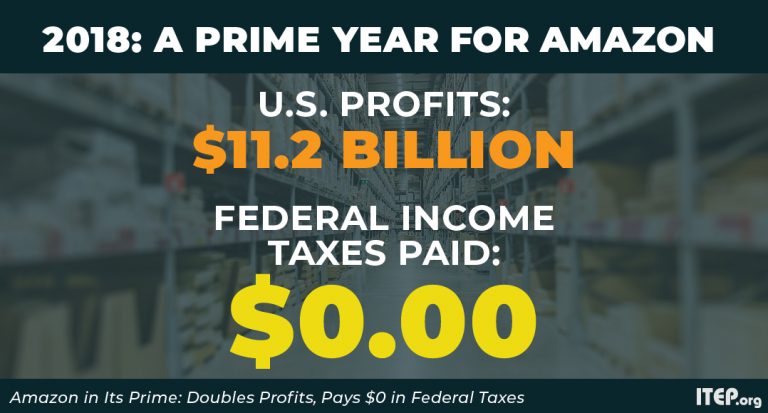
Amazon in Its Prime: Doubles Profits, Pays $0 in Federal Income Taxes
• By Matthew Gardner
Amazon, the ubiquitous purveyor of two-day delivery of just about everything, nearly doubled its profits to $11.2 billion in 2018 from $5.6 billion the previous year and, once again, didn’t pay a single cent of federal income taxes.
MassBudget: Why Highest Incomes in Massachusetts Receive Most Tax Benefits from Charitable Deduction
• By ITEP Staff
Our Commonwealth does best when all people experience rising prosperity. But for several decades, the wealth and income of the top 1 percent of households has grown briskly while others have been left behind. While there are many reasons for this trend, one contributing factor is the way the federal tax deduction for charitable giving […]
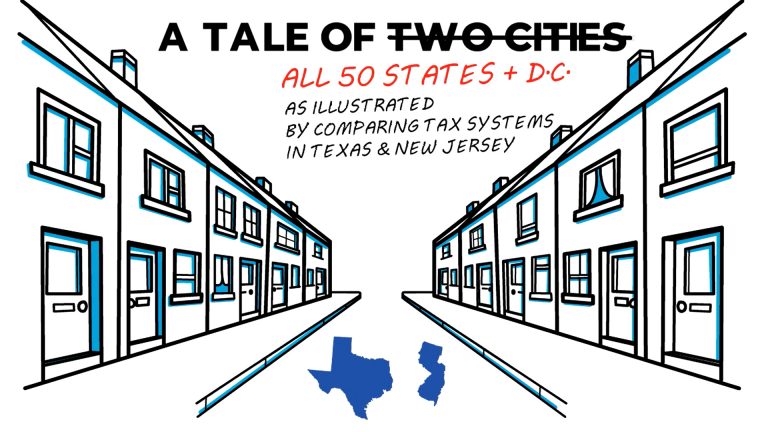
A Tale of Two States: How State Tax Systems Perpetuate Income Inequality
• By ITEP Staff
To explain how state tax systems make income inequality worse, we compared tax systems in New Jersey and Texas which, before taxes, have similar levels of income inequality. This comparison provides an example of how policymakers’ decisions affect the economic wellbeing of their constituents.
Trends We’re Watching in 2019
• By ITEP Staff
This year is full of opportunity for state policymakers and advocates seeking to improve upside-down tax systems and generate needed funding for shared priorities. In a series of blog posts, ITEP staff summarize key trends we are watching in statehouses this year, with special attention to the many efforts underway to reduce racial and economic inequities and better prepare state budgets for the next recession and reduced federal investments. Along the way, we’ll also draw…
Trends We’re Watching in 2019: Attempting to Double Down on Failed Trickle-Down Regressive Tax Cuts
• By Lisa Christensen Gee
It’s always troubling for those concerned with adequate and fair public finance systems when states prioritize tax cuts at the cost of divesting in important public priorities and exacerbating underlying tax inequalities. But it’s even more nerve-racking when it happens on the eve of what many consider to be an inevitable economic downturn.
Trends We’re Watching in 2019: Cannabis Tax Implementation and Reform
• By Carl Davis
Few areas of state tax policy have evolved as rapidly as cannabis taxation over the last few years. The first legal, taxable sale of recreational cannabis in modern U.S. history did not occur until 2014. Now, just five years later, a new ITEP report estimates that recreational cannabis is generating more than $1 billion annually in excise tax revenues and $300 million more in general sales tax dollars.
Trends We’re Watching in 2019: Consumption Taxes: the Good, Bad and the Ugly
• By ITEP Staff
Consumption taxes are a significant source of state and local revenue, and we expect that lawmakers will continue to adjust state consumption tax levies to adapt to budget needs and a changing economy.
Trends We’re Watching in 2019: Addressing Lingering Federal Conformity Questions and Opportunities
• By Dylan Grundman O'Neill
In our last update on state responses to the federal tax cut (Tax Cuts and Jobs Act, or TCJA), we noted that several states were waiting until 2019 to make their final decisions, giving them additional time to (hopefully) respond in ways that improve their fiscal situations and upside-down tax codes. The TCJA is affecting the 2018 federal taxes people are filing now, in some cases adding urgency and/or confusion to these debates.
Trends We’re Watching in 2019: Raising Revenue and Spending Surpluses to Prioritize Critical Public Investments
• By Lisa Christensen Gee
A second notable trend in 2019 is states raising revenue to address longstanding needs and states allocating their surpluses to invest in critical public priorities such as early childhood programs, education and other human services.

Institute on Taxation
and Economic Policy
ITEP is a non-profit, non-partisan tax policy organization. We conduct rigorous analyses of tax and economic proposals and provide data-driven recommendations to shape equitable and sustainable tax systems.
Subscribe to ITEP Emails
Tax research and policy news in your inbox.
Promote Fair Tax Policy
Your gift to ITEP promotes tax justice. With your help, we do research that supports taxing millionaires and billionaires, taxing big corporations and raising revenue for the things our people, our communities and our planet need.
Together, we can create a country with more economic justice, more racial justice, more climate justice… and more tax justice.