
2,364 posts

Letter to IRS on Section 1001 Regulation in 2023-2024 Priority Guidance Plan
• By ITEP Staff
Read as PDF Re: Recommendation for Inclusion of Section 1001 Regulation in 2023-2024 Priority Guidance Plan To Whom It May Concern, We are writing to respectfully urge that the IRS return to the work it left unfinished in 2019 when it issued final regulations on “Contributions in Exchange for State or Local Tax Credits” (RIN: […]
State Rundown 6/7: The Budget Race Continues
• By ITEP Staff
Across the country, the marathon budget season has held pace, with a steady stream of bills continuing to cross the finish line...

The Real Impact of State Tax Cuts
• By Aidan Davis
This op-ed was originally published by Route Fifty and co-written by ITEP State Director Aidan Davis and Center on Budget and Policy Priorities Senior Advisor for State Tax Policy Wesley Tharpe. There’s a troubling trend in state capitols across the country: Some lawmakers are pushing big, permanent tax cuts that primarily benefit the wealthy and […]
Debt-Limit Deal’s Provision to Let Tax Cheats Off the Hook Will Increase the Deficit
• By Jon Whiten
The latest debt-limit bill in Congress includes a provision to claw back important IRS funding meant to crack down on wealthy tax cheats. This cut in funding would actually increase the deficit while continuing the rig the system in favor of the most well-off.
State Rundown 6/1: State Revenue Highs and Lows
• By ITEP Staff
Short-sighted tax cuts continue to make their way to Governors’ desks this week. In Florida, Gov. DeSantis signed a $1.3 billion tax cut package with $550 million of the tax cuts from sales tax holidays, alone. The Nebraska legislature also sent $6.4 billion in tax cuts to Gov. Pillen’s desk which includes an enormous personal income tax cut that will reduce taxes on the top 1 percent by tens of thousands of dollars.

Congress Should Consider Attaching Work Requirements to the Biggest Tax Break for the Rich
• By Steve Wamhoff
Instead of focusing on low-income people who are already mostly employed or facing significant barriers to employment, lawmakers who want to encourage labor force participation should revisit existing tax breaks subsidizing wealthy individuals who live off their assets rather than work.
State Rundown 5/25: The North Star State Leads the Way on Tax Fairness
• By ITEP Staff
As we approach the midpoint of 2023, it’s a good time to look back at the progress states have made in the name of tax fairness and equity...
Circuit Breakers and Other Income-Based Property Tax Programs in 2023
• By ITEP Staff
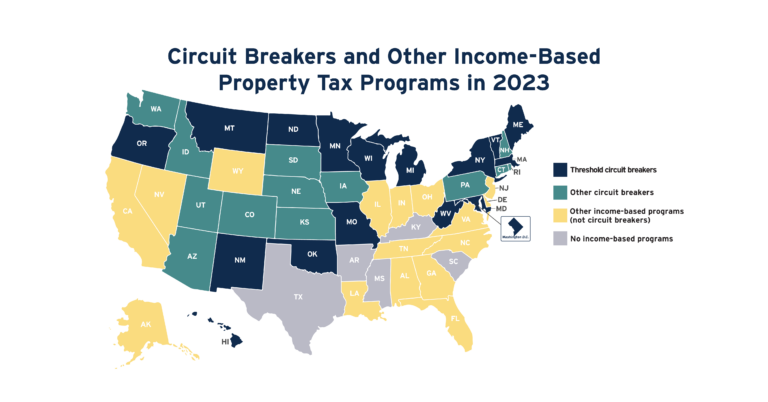
No tax cut offers a more targeted solution to property tax affordability problems than circuit breaker credits. This is because circuit breakers are the only tools for reducing property taxes that measure the affordability of property taxes relative to families’ ability to pay. Circuit breakers protect families from property tax “overload” much like how traditional […]
State Rundown 5/18: Credits, Cuts, and Corporate Revenue Raisers
• By ITEP Staff
This past week, in statehouses around the country, tax policy decisions are moving fast as budgets were signed and budget plans were released and passed...

States are Talking About the Wrong Kind of Property Tax Cuts
• By Brakeyshia Samms, Carl Davis
Concerns over property tax affordability have been at the forefront this year as housing prices have climbed and property tax bills have often increased along with them. As lawmakers mull a range of property tax cuts, circuit breakers are the best possible approach—and these policies are receiving far too little attention in the states.

Preventing an Overload: How Property Tax Circuit Breakers Promote Housing Affordability
• By Brakeyshia Samms, Carl Davis
Circuit breaker credits are the most effective tool available to promote property tax affordability. These policies prevent a property tax “overload” by crediting back property taxes that go beyond a certain share of income. Circuit breakers intervene to ensure that property taxes do not swallow up an unreasonable portion of qualifying households’ budgets.
State Rundown 5/10: Momentum on State Tax Credits Continues to Build
• By ITEP Staff
This week, in states across the country the momentum to center improvements to family economic security remains strong...
Congress Should Raise Taxes on the Rich, But That’s a Totally Separate Issue from the Debt Ceiling
• By Steve Wamhoff
Congress absolutely should raise taxes on the rich and on corporations to generate revenue and improve the fairness of our tax code. President Biden has several proposals to do exactly that. But this is an entirely separate question from whether we should raise the debt ceiling to honor the debts the nation has already incurred and avoid an economic apocalypse.
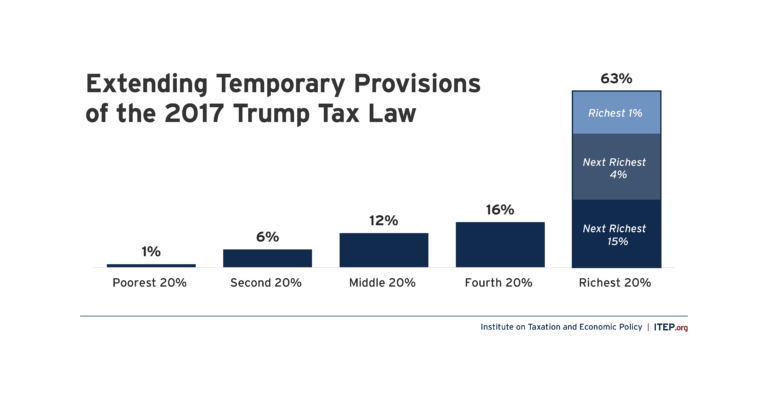
Extending Temporary Provisions of the 2017 Trump Tax Law: National and State-by-State Estimates
• By Joe Hughes, Matthew Gardner, Steve Wamhoff
The push by Congressional Republicans to make the provisions of the 2017 Tax Cuts and Jobs Act permanent would cost nearly $300 billion in the first year and deliver the bulk of the tax benefits to the wealthiest Americans.
State Rundown 5/3: Policy Debates Unfold from Capitol to Capital
• By ITEP Staff
While the conversations on the debt ceiling heat up in the nation's capital, debates on state tax policy also continue to unfold in capitol buildings across the nation...

Kansas Avoids Flat Tax Proposal: Narrow Victory a Cautionary Tale for Other States
• By Brakeyshia Samms
Kansas lawmakers failed to override Gov. Laura Kelly’s veto of a damaging flat tax package. In doing so, the state narrowly avoided traveling again down the same disastrous yet well-worn path of deep income tax cuts. States across the country can learn from Kansas’s experience by rethinking tax policy decisions and broader statewide priorities.
State Rundown 4/27: Health, Wealth, and State Tax Policy
• By ITEP Staff
This week the importance of state tax policy is center stage once again...
State Rundown 4/19: Revenue Discussions Heat Up Like the Temperature
• By ITEP Staff
Tax season has ended for most filers, but the topic remains a hot one in states around the country...
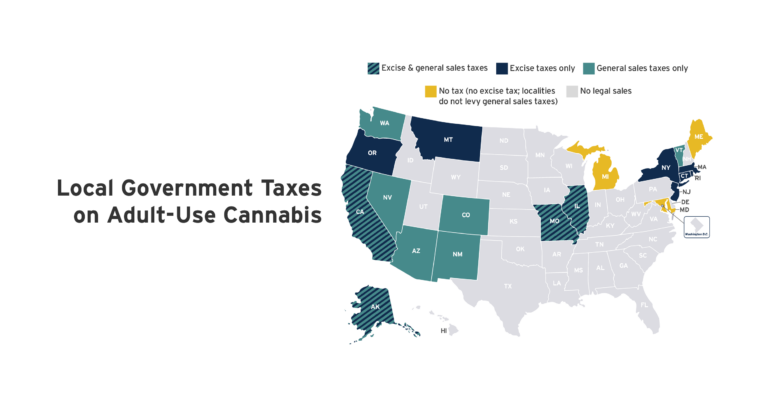
How is Adult-Use Cannabis Taxed by Your Local Government?
• By Carl Davis, Eli Byerly-Duke
Twenty states have legalized the sale of cannabis for general adult use. Cannabis taxes vary considerably depending on local authority. Some states allow local governments to levy standalone excise taxes applying narrowly to cannabis purchases. Most local excise taxes on cannabis are levied in states that do not permit local governments to levy general sales taxes.
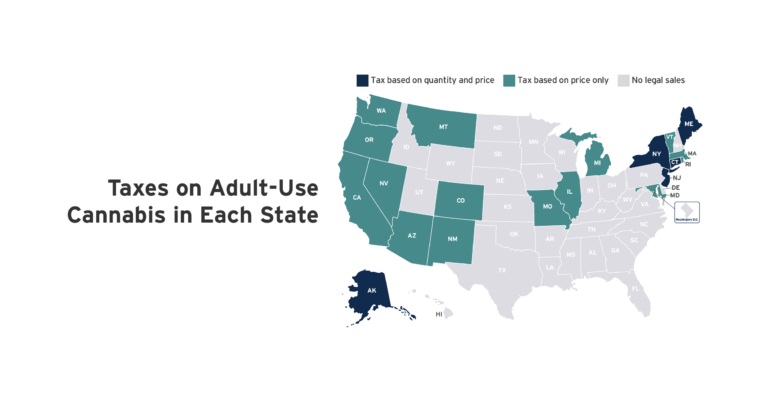
How is Adult-Use Cannabis Taxed in Your State?
• By Carl Davis, Eli Byerly-Duke
Twenty states have legalized cannabis sales for general adult use. Every state allowing legal sales applies a cannabis tax based on the product’s quantity, its price, or both. ITEP research indicates that taxes based on quantity will be more sustainable over time because prices are widely expected to fall as the cannabis industry matures.

Why is My Refund So Much Smaller This Year? Only the Good (Tax Credits) Die Young.
• By Joe Hughes
This year millions of American families are finding that their refunds are much smaller than last year—or that they even owe taxes back to the government—because of the expiration of the expanded Child Tax Credit and Earned Income Tax Credit that were in effect in 2021. The lapse of the expanded credits affects a majority of the middle class, but lower-income households are particularly likely to feel the sting.
State Rundown 4/12: Tax Day 2023 – A Good Reminder of the Impact of Our Collective Investments
• By ITEP Staff
With Tax Day quickly approaching it’s worth taking some time to reflect not just on tax forms (though those are important!), but also on the current state of state tax policy...

Deep Public Investment Changes Lives, Yet Too Many States Continue to Seek Tax Cuts
• By Aidan Davis
When state budgets are strong, lawmakers should put those revenues toward building a stronger and more inclusive society for the long haul. Yet, many state lawmakers have made clear that their top priority is repeatedly cutting taxes for the wealthy.

8 Things to Know About State Taxes
• By Jon Whiten
As Tax Day approaches, it’s worth thinking about not only the taxes that we individually pay but the overall condition of our tax code as well. State tax codes, while perhaps less discussed than the federal system, are critically important. Depending on how they are designed, state taxes can improve or worsen economic and racial […]
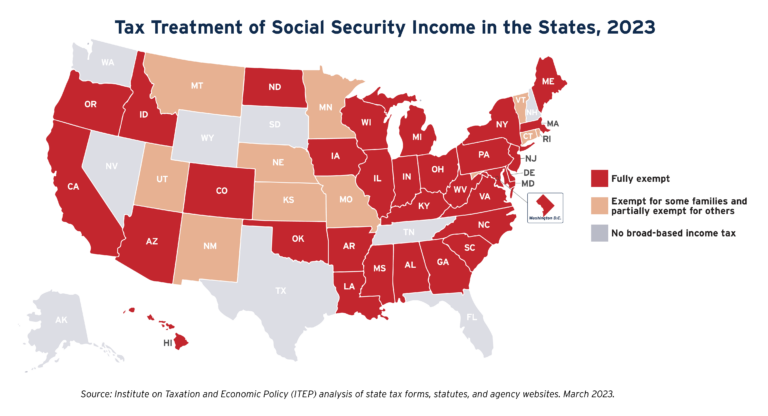
What Income Tax Subsidies Do States Offer to Seniors?
• By ITEP Staff
Every state with a personal income tax offers tax subsidies for seniors that are unavailable to younger taxpayers. The best academic research suggests that the median state asks senior citizens to pay about one-third less in personal income tax than younger families with similar incomes. The majority of these subsidies are costly and poorly targeted. […]

Institute on Taxation
and Economic Policy
ITEP is a non-profit, non-partisan tax policy organization. We conduct rigorous analyses of tax and economic proposals and provide data-driven recommendations to shape equitable and sustainable tax systems.
Subscribe to ITEP Emails
Tax research and policy news in your inbox.
Promote Fair Tax Policy
Your gift to ITEP promotes tax justice. With your help, we do research that supports taxing millionaires and billionaires, taxing big corporations and raising revenue for the things our people, our communities and our planet need.
Together, we can create a country with more economic justice, more racial justice, more climate justice… and more tax justice.