
2,364 posts

National Taxpayer Advocate: Infusion of New IRS Funding a ‘Gamechanger’ for Taxpayers
• By Jon Whiten
A new report from the National Taxpayer Advocate – part of an independent oversight arm inside the IRS – found that the agency struggled in 2022 with timely processing of tax returns and refunds, responding to taxpayer correspondence quickly, and answering phone calls. It expects these issues to improve in 2023, thanks in part to the influx of $80 billion in new funding from last year’s Inflation Reduction Act, which the Advocate’s office calls a…

GAO Report Confirms: Trump Tax Law Cut Corporate Taxes to Rock Bottom
• By Steve Wamhoff
A new report from the Government Accountability Office finds the average effective federal income tax rate paid by large, profitable corporations fell to 9 percent in the first year the Trump tax law was in effect, and the share of such companies paying nothing at all rose to 34 percent that year.
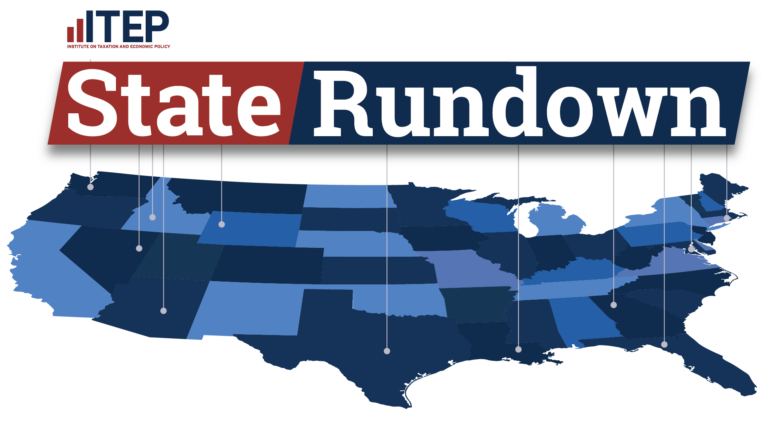
State Rundown 1/11: Governors Ready to Talk Tax in 2023 State Addresses
• By ITEP Staff
Governors have begun their annual trek to the podium in statehouses across the U.S. to lay out their visions for 2023, and so far, taxes look like they will play a major role in debates throughout state legislative sessions...

“Fair Tax” Plan Would Abolish the IRS and Shift Federal Taxes from the Wealthy to the Rest of Us
• By Steve Wamhoff
The "Fair Tax" bill would impose a 30 percent federal sales tax on everything we buy – groceries, cars, homes, health care - and lead to a giant tax shift from the well-off to everyone else.
State Rundown 1/5: State Taxes Coming in Hot in New Year
• By ITEP Staff
The new year often brings with it new goals and a desire to take on complex problems with a fresh perspective. Unfortunately, that doesn’t always apply to state lawmakers when considering tax policy...

Trump’s Tax Shenanigans Show Need for Real Reforms
• By Amy Hanauer
Congress should unite around a basic principle that Republican, Democratic, and independent voters support: the wealthiest, whether they are presidents, CEOs, or just rich heirs, should pay their fair share. Using Trump's tax maneuvering as a guidebook could make the tax code much fairer for all of us.

The European Union Moves Forward on Global Minimum Tax. Time for the U.S. to Follow.
• By Joe Hughes
The European Union has reached unanimous agreement to implement a global minimum tax beginning in 2024. With the EU and UK fully on board, it's time for Congress to follow suit and implement the plan negotiated by the Biden administration. Doing so would improve the corporate tax system here and around the world while making the United States economy stronger and more competitive.
ITEP’s Top 5 Charts of 2022
• By Jon Whiten
Covering federal, state, and corporate tax work, here are our top 5 charts of 2022. It’s worth noting that the biggest tax news of 2022 – the adoption of a federal 15 percent corporate minimum tax in the Inflation Reduction Act – should make some of these charts look much better after the new law is implemented.
State Rundown 12/15: State Priorities for 2023 Begin to Take Shape
• By ITEP Staff
State leaders have begun to release budget projections for 2023 and a familiar theme has emerged once again: big revenue surpluses, which have many state lawmakers pushing for another round of tax cuts despite the monumental challenges that we as a country face that call for sustainable revenues...

Guide to a Potential Year-End Tax Bill in Congress
• By Steve Wamhoff
Any tax legislation enacted before this Congress ends should prioritize policies that have a proven track record of helping workers and children rather than policies that cut taxes for corporations or for individuals who are already well-off. It's not clear right now whether lawmakers will do that - or whether they will enact any tax legislation at all before the year ends, but here we take a look at the key tax issues that lawmakers…

Lawmakers Seek to Extend Tax Break for “Research” that Corporations Use to Develop Frozen Foods, New Beer Flavors, Casino Games and Tax Avoidance
• By Steve Wamhoff
If Congress creates a tax break to encourage businesses to conduct research that benefits society, should Netflix be eligible for it? There is no shame in binge-watching Stranger Things or Bridgerton or The Crown, but how many of us really think Netflix deserves a tax break for whatever “research” the company did to provide this […]
State Rundown 11/30: ‘Lame Duck’ December Could Have Major Tax Implications
• By ITEP Staff
As federal lawmakers begin their lame duck deliberations, the revival of the expanded child tax credit remains a strong possibility...

State Child Tax Credits and Child Poverty: A 50-State Analysis
• By Aidan Davis
Regardless of future Child Tax Credit developments at the federal level, state policies can supplement the federal credit to deliver additional benefits to children and families. State credits can be specifically tailored to meet the needs of local populations while also producing long-term benefits for society as a whole
State Rundown 11/10: Midterm Madness
• By ITEP Staff
As states continue to tally the remaining votes and the news stories roll out at a breakneck pace, the unofficial results of the 2022 midterm elections have brought with it significant changes across the state tax policy landscape...

Election Day in the States: Voters Deliver Important Victories for Tax Justice
• By Jon Whiten
Voters in Massachusetts and Colorado raised taxes on their wealthiest residents to fund schools, public transportation and school lunches for kids while making their tax codes more equitable. And voters in West Virginia defeated a proposal to deeply cut taxes, mostly for businesses, and drain the coffers of county and local governments.
Twenty-Three Corporations Saved $50 Billion So Far Under Trump Tax Law’s “Bonus Depreciation” that Many Lawmakers Want to Extend
• By Matthew Gardner, Steve Wamhoff
Nearly two dozen of America’s largest corporations together received roughly $50 billion in tax breaks from 2018 through 2021 under a Trump tax law provision that many lawmakers now want to extend. Corporate lobbyists are even asking Congress to extend this “accelerated depreciation” tax break as part of a possible year-end tax bill.

Key Republicans Say Negligible Decline in Economic Growth Outweighs Enormous Drop in Child Poverty
• By Joe Hughes
The expanded Child Tax Credit reduced child poverty dramatically and immediately. There is no debate or murkiness on this. Some lawmakers have decided that cutting child poverty in half is not worth the cost if it means an ambiguous and negligible decline in GDP growth. This view is not just cruel, it is bad economics.
State Rundown 11/2: Midterms on the Mind
• By ITEP Staff
Next Tuesday, voters will head to the polls to not only elect local and national leaders, but also let their voices be heard on a range of tax policy issues that could improve or worsen their state tax codes...

Tax Foundation’s ‘State Business Tax Climate Index’ Bears Little Connection to Business Reality
• By Carl Davis, Matthew Gardner
The big problem with the Index is that it peddles a solution that not only falls short of the goal of generating business investment, but one that actively harms state lawmakers’ ability to provide the kinds of public goods – like good schools and modern, efficient transportation networks – that businesses need and want.
Measures on the November Ballot Could Improve or Worsen State Tax Codes
• By Jon Whiten
In a couple of weeks, voters in a handful of states will weigh in on several tax-related ballot measures that could make state tax codes more equitable and raise money for public services, or take states in the opposite direction, making tax systems less fair and draining state coffers of dollars needed to maintain critical […]

Eli Byerly-Duke
• By ITEP Staff
Eli is a State Analyst who monitors trends in state tax policy and conducts long-term research. His focus is principally on the border South and California. Prior to joining ITEP in 2022, Eli researched spatial economic inequality and local budgets at Brookings Metro with particular attention to local use of federal funds.

Miles Trinidad
• By ITEP Staff
Miles provides research and monitors state tax policy to support state researchers and advocates. Before joining ITEP in 2022, Miles worked in the office of Rep. Peter DeFazio for more than three years. As a legislative assistant, his work included drafting a windfall profits tax on oil companies to prevent corporate profiteering from global crises […]
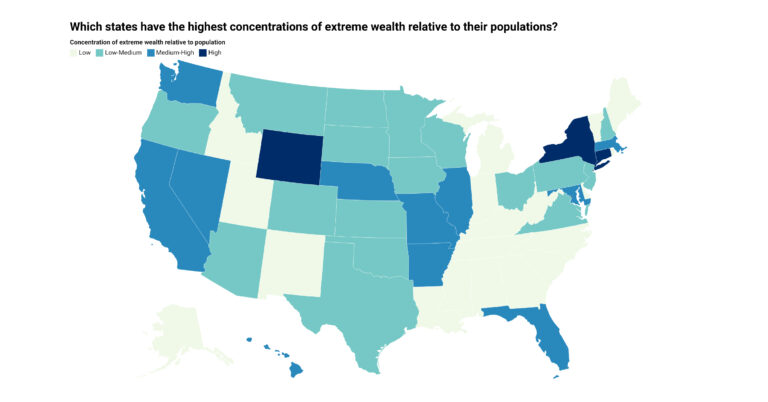
Extreme Wealth by State, 2022
• By ITEP Staff
More than one in four dollars of wealth in the U.S. is held by a tiny fraction of households with net worth over $30 million. This extreme wealth is geographically concentrated, with the top 10 states accounting for more than 70 percent of nationwide extreme wealth and with New York and California alone accounting for nearly a third.
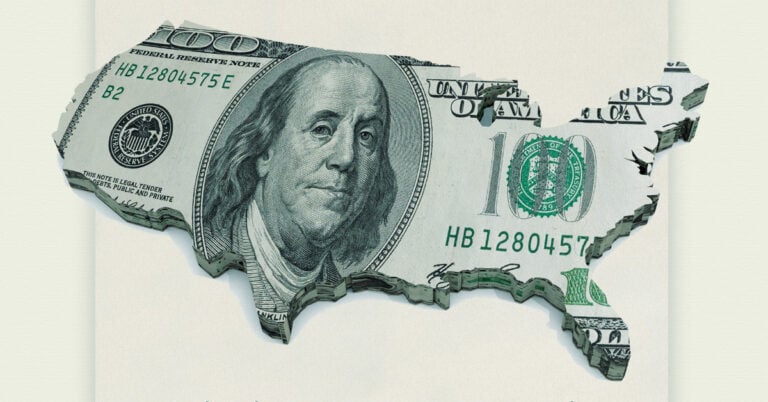
The Geographic Distribution of Extreme Wealth in the U.S.
• By Carl Davis
More than one in four dollars of wealth in the U.S. is held by a tiny fraction of households with net worth over $30 million. Nationally, we estimate that wealth over $30 million per household will reach $26 trillion in 2022 with roughly one-fifth of that amount ($4.5 trillion) held by billionaires.
State Rundown 10/5: Forecasting Ain’t Easy
• By ITEP Staff
Although the weather is beginning to cool down in parts of the country, the same cannot be said for many state economies, which are still running hot. That, however, doesn’t mean that the good times are guaranteed to last...

Institute on Taxation
and Economic Policy
ITEP is a non-profit, non-partisan tax policy organization. We conduct rigorous analyses of tax and economic proposals and provide data-driven recommendations to shape equitable and sustainable tax systems.
Subscribe to ITEP Emails
Tax research and policy news in your inbox.
Promote Fair Tax Policy
Your gift to ITEP promotes tax justice. With your help, we do research that supports taxing millionaires and billionaires, taxing big corporations and raising revenue for the things our people, our communities and our planet need.
Together, we can create a country with more economic justice, more racial justice, more climate justice… and more tax justice.