
ITEP's Research Priorities
- 2025 tax debate
- Blog
- Cannabis Taxes
- Corporate Taxes
- Corporate Taxes
- Earned Income Tax Credit
- Education Tax Breaks
- Estate Tax
- Federal Policy
- Fines and Fees
- Georgia
- Immigration
- Income & Profits
- Income Taxes
- Inequality and the Economy
- ITEP Work in Action
- Local Income Taxes
- Local Policy
- Local Property Taxes
- Local Refundable Tax Credits
- Local Sales Taxes
- Maps
- Media Quotes
- News Releases
- OBBBA
- Other Revenues
- Personal Income Taxes
- Property & Wealth
- Property Taxes
- Property Taxes
- Publications
- Refundable Tax Credits
- Sales & Excise
- Sales, Gas and Excise Taxes
- Sales, Gas and Excise Taxes
- SALT Deduction
- Select Media Mentions
- Social Media
- Staff
- Staff Quotes
- State Corporate Taxes
- State Policy
- State Reports
- States
- Tax Analyses
- Tax Basics
- Tax Credits for Workers and Families
- Tax Credits for Workers and Families
- Tax Guide
- Tax Principles
- Tax Reform Options and Challenges
- Taxing Wealth and Income from Wealth
- Toolkits
- Trump Tax Law
- Trump Tax Policies
- Trump Tax Policies
- Trump-GOP Tax Law
- Video
- Webinar
- Who Pays?
States Should Opt Into IRS Direct File as the Program is Made Permanent
May 30, 2024 • By Jon Whiten
While there is plenty of room to expand Direct File at the federal level, states can take matters into their own hands and bring this benefit to their residents by opting into the program.

There are a variety of factors that affect teacher pay. But one often overlooked factor is progressive tax policies that allow states to raise and provide the funding educators and their students deserve.
Iowa Flat Tax Shows Why Such Policies Are a Problem Everywhere
May 9, 2024 • By Eli Byerly-Duke

As Iowa lawmakers change the state’s graduated personal income tax to a single flat rate, they are designing a state tax code where the rich will pay a lower rate overall than families with modest means.
Corporate Taxes Before and After the Trump Tax Law
May 2, 2024 • By Matthew Gardner, Michael Ettlinger, Spandan Marasini, Steve Wamhoff

The Trump tax law slashed taxes for America’s largest, consistently profitable corporations. These companies saw their effective tax rates fall from an average of 22.0 percent to an average of 12.8 percent after the Trump tax law went into effect in 2018.
Matt Resseger
April 24, 2024 • By ITEP Staff

Matt Resseger is a Senior Economist at ITEP, where he began working in April 2024. Prior to joining ITEP, Matt served as Senior Economist at the Boston Planning and Development Agency, bringing economic analysis and modeling to planning and policy questions throughout the city. Matt’s work in Boston spanned research on the city’s housing and […]
Tax History Matters: A Q&A with Professor Andrew Kahrl, Author of ‘The Black Tax’
April 24, 2024 • By Brakeyshia Samms

In his new book, The Black Tax: 150 Years of Theft, Exploitation, and Dispossession in America, Professor Andrew Kahrl walks readers through the history of the property tax system and its structural defects that have led to widespread discrimination against Black Americans.
TurboTax Maker Puts a Pink Spin on Exploitative Financial Products
April 22, 2024 • By Amy Hanauer
This op-ed originally appeared in MSNBC Tax preparation behemoth Intuit (maker of TurboTax) recently unveiled a new campaign branding itself as a feminist company. “When it comes to the complexities of the tax code, women encounter distinct challenges,” reads a post on the company’s official blog, “and here at Intuit, we’re committed to empowering prosperity for […]

Key Findings For families of modest means, California is not a high-tax state. California taxes are close to the national average for families in the bottom 80 percent of the income scale. For the bottom 40 percent of families, California taxes are lower than states like Florida and Texas. The highest earners usually pay higher […]
Fairness Matters: A Chart Book on Who Pays State and Local Taxes
April 11, 2024 • By ITEP Staff
State and local tax codes can do a lot to reduce inequality. But they add to the nation’s growing income inequality problem when they capture a greater share of income from low- or moderate-income taxpayers. These regressive tax codes also result in higher tax rates on communities of color, further worsening racial income and wealth divides.
America's tax system is just barely progressive, and not nearly as progressive as many suggest or as progressive as it could be. There is plenty of room for lawmakers to improve the progressivity of the tax code to combat economic, wealth, and racial inequality.
Five Things to Know About Tax Foundation’s Critique of Maryland’s Worldwide Combined Reporting Proposal
April 1, 2024 • By Carl Davis, Matthew Gardner
Maryland lawmakers are considering enacting worldwide combined reporting (WWCR), also known as complete reporting. This policy offers a more accurate, and less gameable, way to calculate the amount of profit subject to state corporate tax. Enacting WWCR in Maryland would represent a huge step toward eliminating state corporate tax avoidance as it neutralizes a wide […]
Congress Should Enhance – Not Diminish – IRS Capability this Tax Season
March 28, 2024 • By Joe Hughes
While funding cuts to the IRS may have been necessary as a political matter to avoid harmful agency shutdowns, they are severely misguided as a policy matter. By all serious accounts, cuts to IRS funding increase the deficit due to uncollected taxes – mostly from big businesses and the very wealthy.
Every child deserves the opportunity to succeed in society – and tax policy has a huge role to play in making that happen. Better tax policy can help prepare our young children with skills to become successful and thriving adults.
Governors and legislative leaders in a dozen states have made calls to fully eliminate their taxes on personal or corporate income, after many states already deeply slashed them over the past few years. The public deserves to know the true impact of these plans, which would inevitably result in an outsized windfall to states’ richest taxpayers, more power in the hands of wealthy households and corporations, extreme cuts to basic public services, and more deeply inequitable state tax codes.
Ahead of the ‘Bring Chicago Home’ Vote, Remember That Local Mansion Taxes are Tried and Tested
March 14, 2024 • By Andrew Boardman, Kamolika Das

As Chicago and other localities look for ways to shore up resources for critical public investments, it's important to remember that over a dozen cities and counties have already benefited from policies like mansion taxes.
Local Mansion Taxes: Building Stronger Communities with Progressive Taxes on High-Value Real Estate
March 14, 2024 • By Andrew Boardman

More than one dozen cities and counties levy progressive taxes on high-price real estate transactions — sometimes called mansion taxes — and over a dozen more are considering such policies. By asking buyers and sellers with greater financial means to contribute more to the common good, these policies are equipping communities with resources to make progress on critical challenges of local and national concern.
Revenue-Raising Proposals in President Biden’s Fiscal Year 2025 Budget Plan
March 12, 2024 • By Steve Wamhoff

President Biden’s most recent budget plan includes proposals that would raise more than $5 trillion from high-income individuals and corporations over a decade. Like the budget plan he submitted to Congress last year, it would partly reverse the Trump tax cuts for corporations and high-income individuals, clamp down on corporate tax avoidance, and require the wealthiest individuals to pay taxes on their capital gains income just as they are required to for other types of income, among other reforms.
Some states have improved tax equity by raising new revenue from the well-off and creating or expanding refundable tax credits for low- and moderate-income families in recent years. Others, however, have gone the opposite direction, pushing through deep and damaging tax cuts that disproportionately help the rich. Many of these negative developments are quantified in […]

President Biden discussed multiple tax proposals during the State of the Union address to Congress. Several of these proposals appeared in the budget plan he submitted to Congress last year, but at least two appear to be new proposals. Raise Corporate Tax Rate from 21 Percent to 28 Percent 10-Year Revenue Impact in President’s Previous […]
Local Policy Analyst
March 7, 2024 • By ITEP Staff

ITEP seeks a Local Policy Analyst or Senior Policy Analyst to advance equitable and adequate tax policy in cities, towns, and counties across the country.
Tax Cuts Fail Again in Kansas and Wisconsin; Lawmakers Should Pivot to Proven Investments
March 6, 2024 • By Neva Butkus
The governors of both Kansas and Wisconsin recently stood up to legislators who tried to push through costly tax cuts that would overwhelmingly benefit the most well-off. Lawmakers in those states and others should shift their focus from expensive, top-heavy tax cuts to tried and true policies that help middle-class and low-income families.
While many state lawmakers have spent the past few years debating deep and damaging tax cuts that disproportionately help the rich, more forward-thinking lawmakers have improved tax equity by raising new revenue from the well-off and creating or expanding refundable tax credits for low- and moderate-income families.
Corporate Tax Avoidance in the First Five Years of the Trump Tax Law
February 29, 2024 • By Matthew Gardner, Spandan Marasini, Steve Wamhoff

The Trump tax law overhaul cut the federal corporate income tax rate from 35 percent to 21 percent, but during the first five years it has been in effect, most profitable corporations paid considerably less than that.
IRS Commissioner, New GAO Report Highlight Importance of Proper IRS Funding
February 16, 2024 • By Joe Hughes
A new GAO report and Commissioner Werfel’s testimony highlight the value and necessity of a well-funded and functioning IRS. Most families and businesses do their best to pay taxes accurately and on time. The nation benefits from a modern revenue agency that can make this process as easy and simple as possible and identify complex tax schemes that deprive the country of revenues.
House SALT Proposal is Expensive, Unneeded, and Poorly Designed
February 2, 2024 • By Joe Hughes
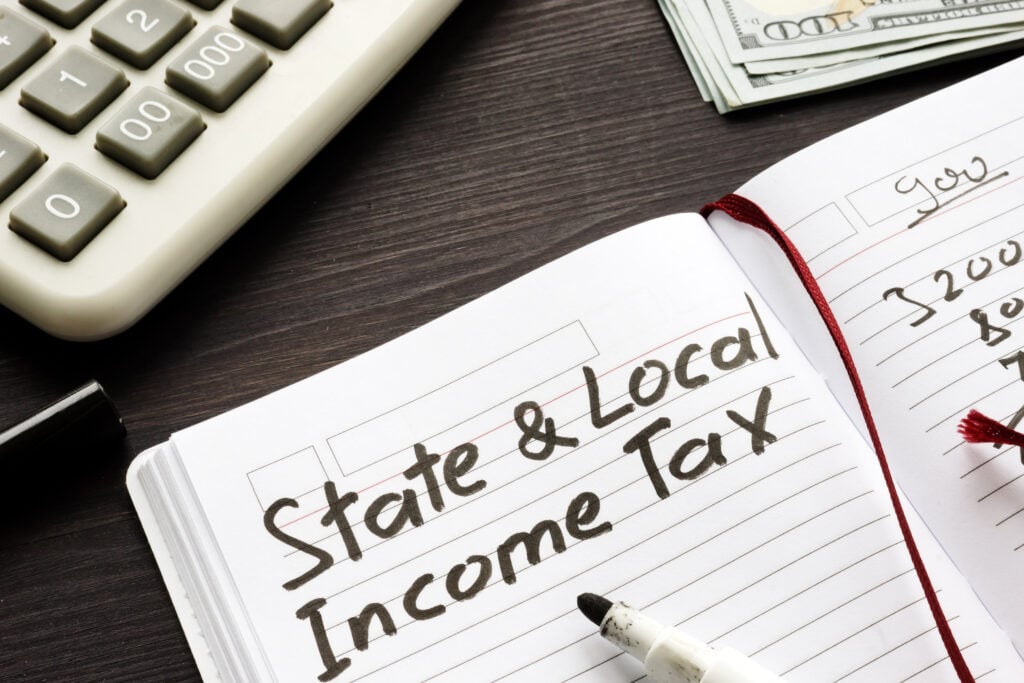
The SALT Marriage Penalty Elimination Act passed by the House Rules Committee on February 1 is costly, decreasing tax revenue by about $8 billion in 2023. It also mostly only helps taxpayers who are already well off.

Institute on Taxation
and Economic Policy
ITEP is a non-profit, non-partisan tax policy organization. We conduct rigorous analyses of tax and economic proposals and provide data-driven recommendations to shape equitable and sustainable tax systems.
Subscribe to ITEP Emails
Tax research and policy news in your inbox.
Promote Fair Tax Policy
Your gift to ITEP promotes tax justice. With your help, we do research that supports taxing millionaires and billionaires, taxing big corporations and raising revenue for the things our people, our communities and our planet need.
Together, we can create a country with more economic justice, more racial justice, more climate justice… and more tax justice.