
2,364 posts
Newsweek: Republican Governor to Propose Scrapping Income Tax
December 3, 2025
The Institute on Taxation and Economic Policy (ITEP) said that eliminating a state’s income tax, anywhere, benefits wealthy people over lower-income residents. Read more.
PBS/NPR Southwest Florida: Eliminating Property Taxes Would Make Florida’s ‘Worst in the U.S.’ Regressive System Even Worse
December 3, 2025
The Sunshine State has the most “regressive” tax structure of all 50 states, according to a recent study by a national tax analysis organization. That means the wealthy pay a lower percentage of their income in taxes while the poor and middle class pay more. Read more.
Kentucky Center for Economic Policy: Building a Kentucky Workers Can Afford
• By ITEP Staff
The working class drives prosperity, and it’s time for an agenda in Frankfort that puts them first. From the state’s rural counties to our biggest cities, it’s Kentuckians—whether white, Black or brown—who make it all go. Supported by the right policies, ones that reward their efforts and prioritize their concerns, more Kentuckians could work in […]
Washington Post: Corporations To Claim $16B From Retroactive GOP Tax Break, Federal Report Says
December 2, 2025
Corporations are expected to claim $16 billion in new tax breaks this year for purchases they had already made and put into use before the July passage of the Republican tax law. Read more.
Action Center on Race & the Economy: Pay Us What You Owe Us: Concrete State Solutions to Re-Fund Our Communities
• By ITEP Staff
We are in the midst of what many are deeming the largest transfer of wealth in U.S. history from Black, brown and poor communities to the ultra-wealthy. The Institute on Taxation and Economic Policy (ITEP) estimates that Trump’s 2025 federal tax cuts will result in the richest 1% receiving $117 billion in tax cuts in […]
Institute for Policy Studies: FACT SHEET: Federal Policy Threatens Women and Children with Poverty
• By ITEP Staff
The Trump administration continues to enact harmful policies, like those contained in HR.1, which make massive cuts to education, health care, food assistance, and housing programs, to give tax cuts to the rich. The poverty rate is bound to continue to increase in the next few years. As a result, women and children will face […]

Re-Examining 529 Plans: Stopping State Subsidies to Private Schools After New Trump Tax Law
• By Miles Trinidad, Nick Johnson
The 2025 federal tax law risks making 529 plans more costly for states by increasing tax avoidance and allowing wealthy families to use these funds for private and religious K-12 schools.
St. Louis Post-Dispatch: Eliminating Missouri’s Income Tax Would Do Nothing but Shift Costs to the Poor
November 18, 2025
Those tempted by the allure of ditching that significant state tax bill every April 15 should insist their political representatives adhere to Kehoe’s own stated criterion for such a change: that the resulting tax policies “will make sense to everybody.” It’s difficult to see how this proposal would make sense for any but the state’s […]
Georgia Budget and Policy Institute: Breaking the Bank: Eliminating the State Income Tax Harms Most Georgians and Increases the Cost of Living
• By ITEP Staff
Eliminating Georgia’s income tax would represent the largest transfer of wealth from working and middle-class families to high income individuals and corporations in state history. Doing so would dramatically push Georgia’s budget out of balance, given that the income tax has been the state’s single largest source of revenue since 1982. Read more.
Economic Policy Institute: Raising Taxes on the Ultrarich
• By ITEP Staff
The public has supported raising taxes on the ultrarich and corporations for years, but policymakers have not responded. Small increases in taxes on the rich that were instituted during times of Democratic control of Congress and the White House have been consistently swamped by larger tax cuts passed during times of Republican control. Read more.
The Commonwealth Institute: Policy Choices to Protect and Increase Investment in Virginia Communities
• By ITEP Staff
To make sure every community in Virginia is a good place to live, work, and raise a family, we must invest in quality public education, health care, affordable housing, access to food, and other important services and supports. Read more.

Don’t Hold Your Breath Waiting for a Tariff Dividend from Trump
• By Steve Wamhoff
Trump gives a promise, with absolutely no plan, to give $2,000 to every American using tariff revenue.
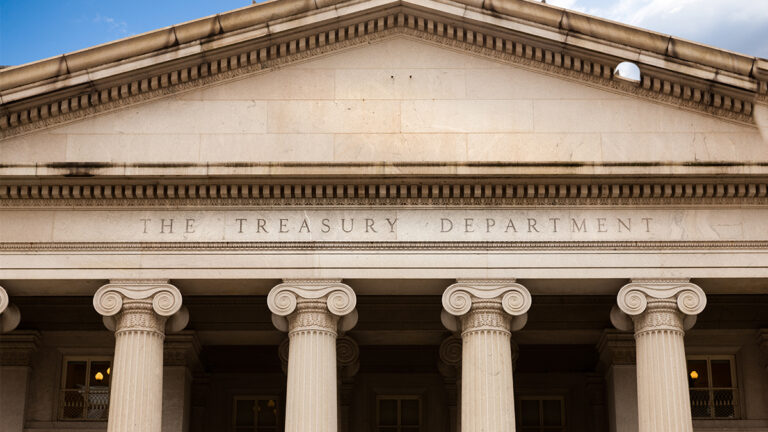
Trump Goes Outside the Law to Give Even More Tax Cuts to the Wealthy
• By Steve Wamhoff
Trump's Treasury is overstepping far beyond its constitutional role by giving unlegislated tax cuts to the wealthy.
Kentucky Center for Economic Policy: State and Federal Tax Cuts of the Last Decade Are Giving an Enormous Windfall to the Wealthiest Kentuckians
• By ITEP Staff
In 2026, Kentucky’s richest 5% will receive $3.4 billion from tax cuts enacted over the last decade. That’s revenue no longer available to meet people’s needs. Kentucky workers, meanwhile, are facing stagnant and inadequate wages and a growing cost of living crisis that will get worse if state budget cuts are enacted. Read more.
The New Republic: Trump’s Quiet Giveaway to His Big Business Cronies
November 12, 2025
An ITEP study of the 296 most consistently profitable companies in the S&P 500 and Fortune 500 found that between 2013 and 2021 these companies’ profits grew by 44 percent even as their tax bills fell by nearly half. Read more.
The Guardian: How Could Zohran Mamdani Pay for His Bold Agenda for New York? We Broke it Down
November 10, 2025
Mamdani’s ideas are very popular and would solve basic problems. Democrats now hold large majorities in the legislature, and some see economic and political pathways to making the proposals reality. Read more.
Wall Street Journal: Trump’s Tax Cuts are Exposing Companies to Biden’s Tax Hike
November 10, 2025
Large companies are running into a problem as they try to claim some of the tax cuts that the Republican Congress passed this summer: They can’t escape the corporate tax increase that Democrats passed three years ago. Read more.
Idaho Center for Fiscal Policy: Conforming With Recent Federal Tax Changes Will Result in Over $284.4 Million in Annual Revenue Loss in Idaho
• By ITEP Staff
To prioritize Idaho businesses and protect revenue for public services, the Center recommends remaining decoupled from (1) bonus depreciation, and decoupling from (2) qualified production property deduction, (3) research and experimentation (R&E) cost recovery, (4) relaxed interest deductibility cap, and (5) deduction of foreign derived intangible income. Read more.
USA Today: Would Mamdani’s ‘Millionaire Tax’ Chase the Rich out of New York City?
November 6, 2025
Higher taxes don’t generally prompt wealthy people to move, said Kamolika Das, local policy director at the Institute on Taxation and Economic Policy… Read more.
State and Local Policymakers Can Resist Austerity Even Amid Historic Federal Retreat
• By Kamolika Das
The progressivity of the federal tax code has been waning. State and local policymakers should respond by protecting their revenue bases, promoting equity, and safeguarding vulnerable communities from harmful budget cuts.
Spotlight on Poverty and Opportunity: Cities Could Slash Child Poverty With Tax Credits, Analysis Finds
November 6, 2025
A new report by the Center on Poverty and Social Policy at Columbia University and the Institute on Taxation and Economic Policy (ITEP) uses data from 14 cities to show how local Child Tax Credits could augment federal and state efforts to reduce child poverty by as much as 50 percent. Read more.
In 2025, Voters Said Yes to Public Resources and Community Investments
• By Rita Jefferson
Important tax measures were on the ballot this week, and the outcomes are clear: many voters support new state and local spending to support critical services in their communities.
Wall Street Journal: The Economics Behind Zohran Mamdani’s Biggest Plans
November 5, 2025
Zohran Mamdani coasted to victory in the New York City mayoral race with a platform focused on making the city more affordable. He has promised ambitious social programs like universal child care and more affordable housing, with plans to fund his agenda primarily through higher taxes on businesses and on New York City’s highest earners. Read […]
Oxfam: UNEQUAL: The Rise of a New American Oligarchy and the Agenda We Need
• By ITEP Staff
This past year has been indelibly shaped by concentrated wealth and power. The 10 richest U.S. billionaires got $698 billion wealthier, and the arrival of the world’s first trillionaire grew more imminent. The Trump administration—largely with the support of the Republican-controlled Congress—has moved with staggering speed and scale to carry out a relentless attack on […]
Virginia Public Radio: What a “Wealth Proceeds Tax” Could Look Like in Virginia
November 3, 2025
Tax the rich. That’s the idea behind the wealth proceeds tax, which would hit things like dividends, interest and capital gains. A new report from the Institute on Taxation and Economic Policy says a three percent wealth proceeds tax in Virginia would generate about a billion dollars of new revenue. Read more.

Institute on Taxation
and Economic Policy
ITEP is a non-profit, non-partisan tax policy organization. We conduct rigorous analyses of tax and economic proposals and provide data-driven recommendations to shape equitable and sustainable tax systems.
Subscribe to ITEP Emails
Tax research and policy news in your inbox.
Promote Fair Tax Policy
Your gift to ITEP promotes tax justice. With your help, we do research that supports taxing millionaires and billionaires, taxing big corporations and raising revenue for the things our people, our communities and our planet need.
Together, we can create a country with more economic justice, more racial justice, more climate justice… and more tax justice.