
2,364 posts
State Rundown 5/27: State Legislatures Step Back, Advocates Push Forward
• By ITEP Staff
As more and more state legislatures wrap up their sessions and we reflect on the whirlwind that is this past year, it’s easy to focus on the steps back that states like Oklahoma have taken and Nebraska, North Carolina, and Arizona are trying to take. We have had some significant wins in states over the course of the year, but not every development will be a good one. However, we know advocates are on the…
The Arizona Center for Economic Progress: Flat Tax Exacerbates Inequalities for Households of Color
• By ITEP Staff
Arizona’s elected leaders have created a tax code that is upside down and regressive– meaning that those with low incomes pay a much higher share of their income in taxes compared to Arizona’s highest income earners. Our state’s tax code is both a product of and perpetrator of stark racial inequities. The cumulation of Arizona’s […]

How Biden’s Plan Would Crack Down on Wealthy Tax Evaders
• By Steve Wamhoff
The Treasury Department released a report explaining what the administration’s tax enforcement plan would do—and how it fits into the president’s overall plan to collect more revenue from profitable corporations and individuals making more than $400,000 a year.
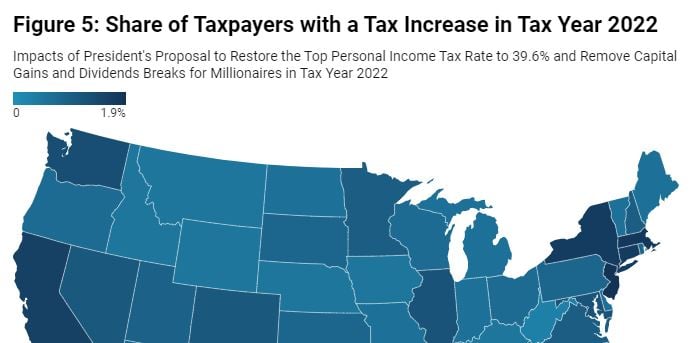
Income Tax Increases in the President’s American Families Plan
• By ITEP Staff, Matthew Gardner, Steve Wamhoff
President Biden’s American Families Plan includes revenue-raising proposals that would affect only very high-income taxpayers.[1] The two most prominent of these proposals would restore the top personal income tax rate to 39.6 percent and eliminate tax breaks related to capital gains for millionaires. As this report explains, these proposals would affect less than 1 percent of taxpayers and would be confined almost exclusively to the richest 1 percent of Americans. The plan includes other tax…

Emma Sifre
• By ITEP Staff
Emma Sifre joined ITEP in 2021. As a Senior Data Analyst, Emma supports ITEP’s microsimulation model and conducts research on the different effects of tax policy changes on race, income, and geography. Prior to joining ITEP, Emma researched domestic social policy at the Congressional Research Service.
New Hampshire Fiscal Policy Institute: Elimination of the Interest and Dividends Tax Would Disproportionately Benefit High-Income Individuals
• By ITEP Staff
A new analysis of the proposed elimination of New Hampshire’s Interest and Dividends Tax shows nearly nine out of every ten dollars of the tax reduction would flow to the top 20 percent of income earners in New Hampshire, and almost half of the benefits would flow to the top one percent of income earners. […]

IRS Clock Runs Out, Saving 14 Large Companies $1.3 Billion
• By ITEP Staff, Matthew Gardner, Steve Wamhoff
Each year, corporations publicly state that some of the tax breaks they claim are unlikely to withstand scrutiny from tax authorities. And each year, corporations report that they will keep some of the dubious tax breaks they declared in previous years simply because the statute of limitations ran out before tax authorities made any conclusions. This suggests that, perhaps because of cuts to its enforcement budget, the IRS is not even investigating corporations that publicly…

State and Local Lessons on Tax Day 2021
• By ITEP Staff
Take a minute on this Tax Day to reflect on all that you survived, accomplished, and contributed to the collective good this past year, and be proud. There is always more work to be done to build the communities we desire, and paying your share is what allows that work to continue.
Research That Presents an Airtight Case for Taxing the Rich
• By ITEP Staff
Taxes not only provide revenue so we can have a functioning government, they also shape broader society. Currently economic inequality is one of the most pressing challenges of our time. ITEP has produced research over the years that shows the nation’s overall tax system (local, state and federal combined) is barely progressive. With real tax reform that centers ordinary people, tax policy can help create a more equitable society.
AZ Central: Flat tax plan could decimate Arizona revenue, benefit a few. Don’t buy it
May 17, 2021
This is not a tax plan that will benefit most Arizonans. According to an analysis of the plan by the Institute on Taxation and Economic Policy, 53% of the tax cuts would go to the wealthiest 1% of taxpayers, while the bottom 80% would receive only 8% of the tax cuts. Read more
Massachusetts Budget & Policy Center: Ending the Tax Penalty Against Working Immigrants: MA Should Follow Other States Extending EITC to Immigrant Tax Filers
• By ITEP Staff
The Earned Income Tax Credit (EITC) is a key program for reducing poverty in the United States. Together with the federal Child Tax Credit, these low-income federal credits lifted 7.5 million households above the poverty line in 2019, more than any other program except Social Security. In Massachusetts, the EITC provides support to more than […]
Business Insider: Jeff Bezos’ support for Biden’s corporate tax hike means nothing if Amazon can still dodge paying their fair share in taxes
May 16, 2021
This number should not come as a shock; some of the most profitable companies – often those that represent the future of the economy – have long looked for ways to skirt their tax bill. A recent study by the Institute on Taxation and Economic Policy, for example, found that 55 of the largest corporations […]
Mississippi Today: Mississippi could help long-neglected poor with Rescue Plan payments
May 16, 2021
For instance, those earning less than $16,100 pay 10.2% of their income on state and local taxes, primarily because of Mississippi’s high sales tax rate, which includes the 7% tax on groceries. Those in the middle — earning between $43,000 and $77,500 pay — pay 9.2% of their income on state and local taxes, while […]
Associated Press: IRS to the rescue? Tax audits eyed for infrastructure cash
May 15, 2021
The Internal Revenue Service has estimated the tax gap is $440 billion per year. But IRS Commissioner Charles Rettig stunned his audience at a recent Senate hearing when he offered a new number: about $1 trillion annually. The old estimates don’t take into account the recent boom in income made by self-employed “gig” workers, which […]
State Tax Codes & Racial Inequities: An Illinois Case Study
• By Lisa Christensen Gee
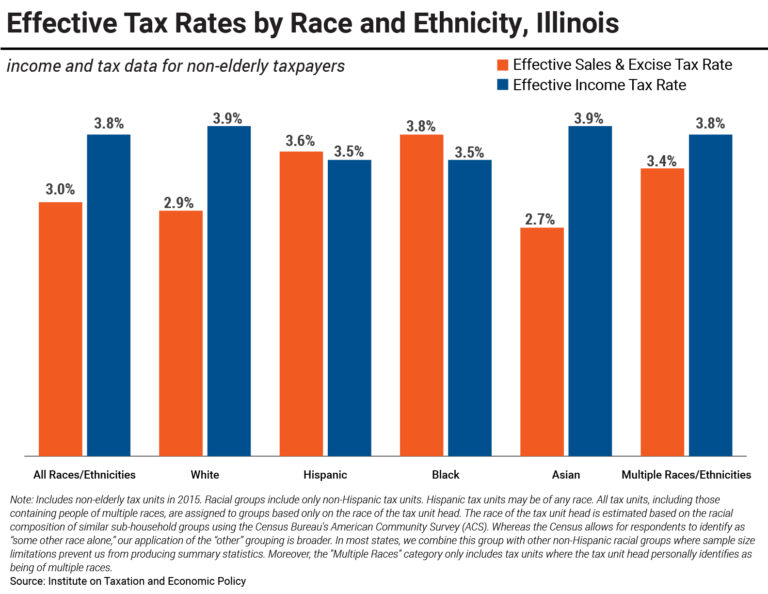
Earlier this year, ITEP released a report providing an overview of the impacts of state and local tax policies on race equity. Against a backdrop of vast racial disparities in income and wealth resulting from historical and current injustices both in public policy and in broader society, the report highlights that how states raise revenue to invest in disparity-reducing investments like education, health, and childcare has important implications for race equity.
Jacobin: In Washington State, the Left Won a Major Victory for Taxing the Rich
May 14, 2021
Last week, Washington State passed a capital gains tax aimed at the state’s ultra-wealthy. The tax is historic because Washington, despite its progressive reputation, until now had the worst tax code in the nation when it comes to fairness, behind Texas, Florida, and South Dakota. A landmark 2018 report by the Institute on Taxation and […]
Nearly 20 Million Will Benefit if Congress Makes the EITC Enhancement Permanent
• By Aidan Davis
Overall, the EITC enhancement would provide a $12.4 billion boost in 2022 if made permanent, benefiting 19.5 million workers. It would have a particularly meaningful impact on the bottom 20 percent of eligible households who would receive more than three-fourths of the total benefit. Forty-one percent of households in the bottom 20 percent of earners would benefit, receiving an average income boost of 6.3 percent, or $740 dollars.
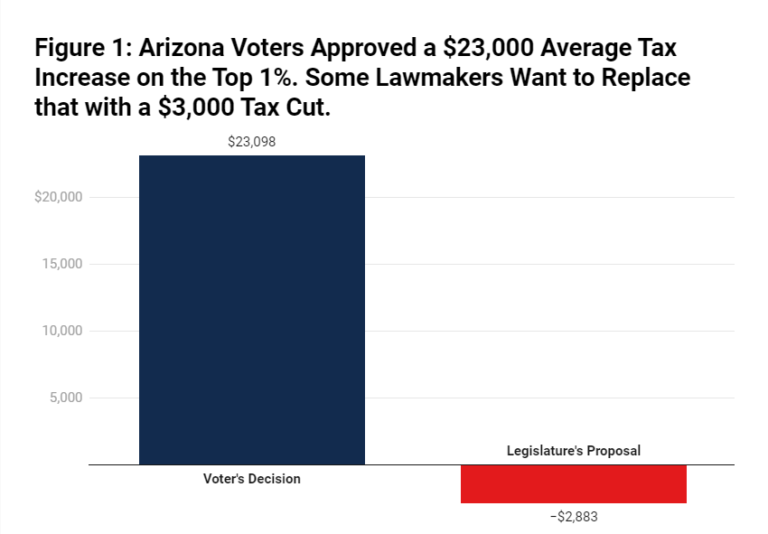
Arizonans Voted to Tax the Rich. Now Lawmakers Want to Undo Most of That.
• By Carl Davis
In 2018, Arizona teachers took part in a national wave of teacher walkouts, protesting inadequate education funding and some of the lowest teacher pay in the nation—direct results of the state’s penchant for deep tax cuts and its decision to levy some of the lowest tax rates in the country on high-income families.

Open Sky Policy Institute: LB 64: A costly measure that is unlikely to impact retiree migration
• By ITEP Staff
LB 64, a bill slated for second-round debate on today’s legislative agenda, is a costly measure that would give wealthy retirees a sizable tax break under the premise of keeping them from fleeing to other states. Few retirees, however, are likely to flee regardless of what happens to our tax code and those who do […]
Effects of the President’s Capital Gains and Dividends Tax Proposals by State
• By ITEP Staff, Matthew Gardner, Steve Wamhoff
President Biden’s proposal to eliminate the lower income tax rate on capital gains (profits from selling assets) and stock dividends for millionaires would affect less than half of one percent (0.4 percent) of U.S. taxpayers if it goes into effect in 2022. The share of taxpayers affected would be less than 1 percent in every state.
Open Sky Policy Institute: Policy brief — LB 432: A big tax cut for corporations
• By ITEP Staff
LB 432, which will soon be up for debate on select file, would give a sizable tax cut to corporations and their shareholders. The vast majority of the tax cut would go out of state and the revenue losses created by the bill would threaten services that Nebraskans need. Read more
Open Sky Policy Institute: Policy Brief — LR 11CA presents a dangerous, untested proposal
• By ITEP Staff
Under the proposed 10.64% tax rate, and with the allowance, the Institute on Taxation and Economic Policy (ITEP) finds that all income groups would receive a tax cut on average, with the exception of the second-lowest quintile — those with incomes between $24,000 and $38,800 — who would pay 2.4% more of their income in […]
Forbes: President Biden’s Capital Gains Tax Plan
May 5, 2021
So, what’s the problem? What could be the downside of raising the taxes on a small portion of Americans to help needy children and kids go to college? Just 0.7% of households would face a tax hike, according to the Institute on Taxation and Economic Policy, with almost the entire burden being felt by the richest […]
Washington Governor’s Office: Inslee signs economic justice legislation to help working families
• By ITEP Staff
Gov. Jay Inslee today signed an economic justice legislative package, including the Working Families Tax Credit and the capital gains excise tax, that starts the process of making Washington’s upside-down tax system fairer and more equitable. Read more

Idaho Center for Fiscal Policy: House Bill 389 and Idaho’s Property Tax Circuit Breaker
• By ITEP Staff
House Bill 389 is a complicated bill that would affect many different components of the Idaho property tax statute. Revenue from property taxes, both for real property and business personal property, support local public services – such as roads, courts, and schools. Property taxes are regressive, meaning they fall harder on lower-income Idahoans than others. […]

Institute on Taxation
and Economic Policy
ITEP is a non-profit, non-partisan tax policy organization. We conduct rigorous analyses of tax and economic proposals and provide data-driven recommendations to shape equitable and sustainable tax systems.
Subscribe to ITEP Emails
Tax research and policy news in your inbox.
Promote Fair Tax Policy
Your gift to ITEP promotes tax justice. With your help, we do research that supports taxing millionaires and billionaires, taxing big corporations and raising revenue for the things our people, our communities and our planet need.
Together, we can create a country with more economic justice, more racial justice, more climate justice… and more tax justice.