
ITEP's Research Priorities
- 2025 tax debate
- Blog
- Cannabis Taxes
- Corporate Taxes
- Corporate Taxes
- Earned Income Tax Credit
- Education Tax Breaks
- Estate Tax
- Federal Policy
- Fines and Fees
- Georgia
- Immigration
- Income & Profits
- Income Taxes
- Inequality and the Economy
- ITEP Work in Action
- Local Income Taxes
- Local Policy
- Local Property Taxes
- Local Refundable Tax Credits
- Local Sales Taxes
- Maps
- Media Quotes
- News Releases
- OBBBA
- Other Revenues
- Personal Income Taxes
- Property & Wealth
- Property Taxes
- Property Taxes
- Publications
- Refundable Tax Credits
- Sales & Excise
- Sales, Gas and Excise Taxes
- Sales, Gas and Excise Taxes
- SALT Deduction
- Select Media Mentions
- Social Media
- Staff
- Staff Quotes
- State Corporate Taxes
- State Policy
- State Reports
- States
- Tax Analyses
- Tax Basics
- Tax Credits for Workers and Families
- Tax Credits for Workers and Families
- Tax Guide
- Tax Principles
- Tax Reform Options and Challenges
- Taxing Wealth and Income from Wealth
- Toolkits
- Trump Tax Law
- Trump Tax Policies
- Trump Tax Policies
- Trump-GOP Tax Law
- Video
- Webinar
- Who Pays?
Most Senate Democrats Join Republicans in Calling for Corporate Tax Break
May 6, 2022 • By Steve Wamhoff

The vast majority of Senate Democrats joined their Republican colleagues in approving a new corporate tax break related to research in legislation that contains no offsetting corporate tax increases.
Revenue-Raising Proposals in President Biden’s Fiscal Year 2023 Budget Plan
April 26, 2022 • By Steve Wamhoff

President Biden's latest budget plan includes proposals that would raise $2.5 trillion in new revenue. While many of these reforms appeared in his previous budget, some of them are brand new, such as his proposal to prevent basis-shifting in partnerships and his Billionaires Minimum Income Tax.
President Biden’s Proposed Billionaires’ Minimum Income Tax Would Ensure the Wealthiest Pay a Reasonable Amount of Income Tax
April 6, 2022 • By Steve Wamhoff

The Billionaires’ Minimum Income Tax included in President Biden's budget plan would limit an unfair tax break for capital gains income and complement proposals the president has offered previously to limit other tax breaks for capital gains.
New ITEP Report Explains How the Biden Administration Can Act on Its Own to Fix Our Tax Code
March 25, 2022 • By Steve Wamhoff

The Biden administration should revise regulations from the TCJA to enforce the law as it was written and passed by Congress, not as big banks and multinational corporations have lobbied for it to be enforced.
Excess Profits Tax Proposals Meet the Moment, But Lawmakers Should Keep Their Eye on Fundamentally Fixing Our Corporate Tax
March 25, 2022 • By Steve Wamhoff
New corporate tax proposals address the current situation, but ultimately leaders in Washington must fix federal law to tax all corporate profits and stop the tax dodging that is rampant today.
Revenue-Raising Proposals in the Evolving Build Back Better Debate
January 25, 2022 • By Steve Wamhoff

The United States needs to raise more tax revenue to fund investments in the American people. This revenue can be obtained with reforms that would require the richest and wealthiest Americans to pay their fair share to support the society that makes their fortunes possible.
Latest Proposal from Senate Democrats Would Bar the Rich from SALT Cap Relief
December 7, 2021 • By Steve Wamhoff

Richest taxpayers would receive $0 benefit under new compromise compared with 51 percent of the benefit of House-passed SALT provision DOWNLOAD NATIONAL AND STATE-BY-STATE ESTIMATES In the latest chapter of the saga over SALT, some Senate Democrats are discussing a new compromise that would amend the House-passed provision providing relief from the SALT cap to […]
New Report from ITEP Describes Options for Changing the SALT Cap without Repealing It
August 26, 2021 • By Steve Wamhoff

A new report from ITEP provides policy recommendations to modify the $10,000 cap on federal tax deductions for state and local taxes (SALT), which was signed into law by President Trump as part of the Tax Cuts and Jobs Act. Because the SALT cap mostly restricts tax deductions for the richest 5 percent of Americans, the best options are to leave the cap as is or replace […]
Supreme Court Would Provide Massive Tax Cut for the Rich if It Strikes Down Affordable Care Act
October 13, 2020 • By Steve Wamhoff

If the Supreme Court strikes down the Affordable Care Act (ACA), as argued for by the Trump administration and the president’s nominee to the court, Amy Coney Barrett, one under-appreciated result will be a tax break of roughly $40 billion annually for about 3 percent of Americans, who all have incomes of more than $200,000.
National and State-by-State Estimates of House-Passed Improvements in Tax Credits for Workers and Children
June 18, 2020 • By Steve Wamhoff
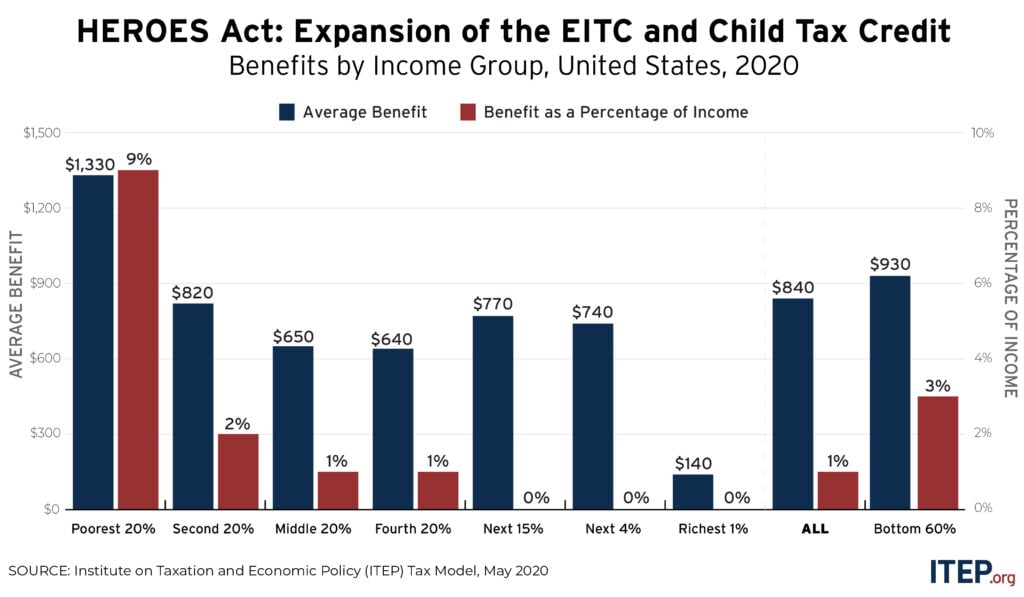
Among other important provisions, the HEROES Act includes reforms to the Earned Income Tax Credit (EITC) and Child Tax Credit (CTC) to make these tax credits more effective in helping working people and helping parents afford the costs of raising children.
New ITEP Report on Depreciation Breaks: The Most Important Tax Giveaway that People Don’t Know About
November 19, 2018 • By Steve Wamhoff

Many Americans sense that the tax code is riddled with unnecessary and costly breaks for big business, but if asked to name one, few would reply “accelerated depreciation.” While they may seem arcane, tax breaks like “full expensing” and other types of accelerated depreciation are among the central problems in our tax code. A new report from ITEP makes the case that any serious tax reform would repeal or sharply curb these provisions.
So-Called “Universal Savings Accounts” in Tax Cuts 2.0 Are a Giveaway to the Most Affluent Taxpayers
September 27, 2018 • By Steve Wamhoff
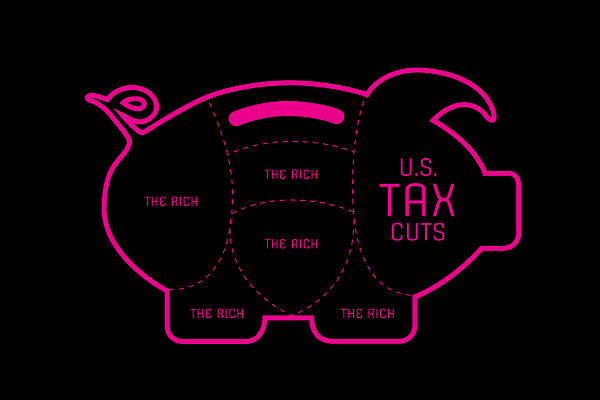
This week, House Republicans have taken up bills they call tax cuts “2.0.” Most of the attention, so far, has focused on the bill that extends—at great cost—the temporary parts of the Tax Cuts and Jobs Act (TCJA). But other legislation in the package contains provisions that make the whole deal even more tilted toward the richest households, including one that would create “Universal Savings Accounts.” Far from being universal, these new savings vehicles would benefit the same high-income households that enjoy the bulk of the tax cuts from TCJA.
Repealing the Federal Tax Law’s Cap on State and Local Tax (SALT) Deductions Is No Improvement
September 11, 2018 • By Steve Wamhoff
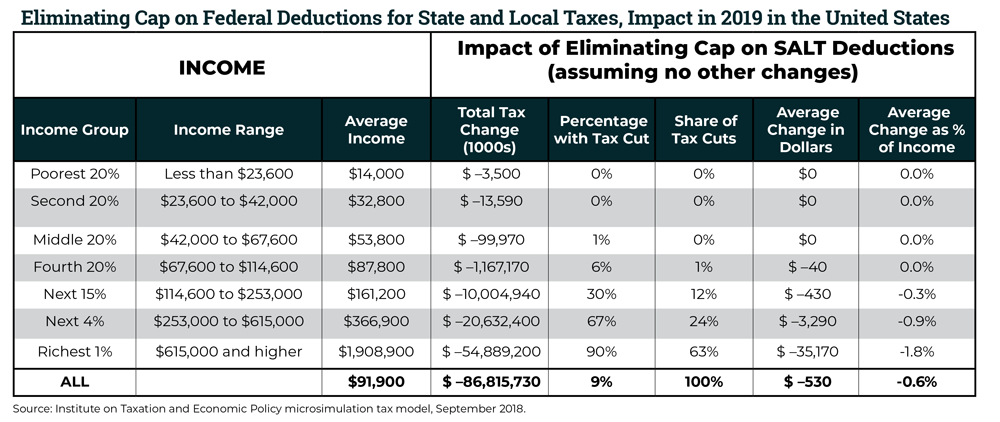
National and State-by-State Data Available for Download Nearly Two-Thirds of Benefits from Repealing the SALT Cap Would Go to the Richest 1 Percent Lawmakers who opposed the Tax Cuts and Jobs Act (TCJA), the federal tax law enacted by President Trump and his allies in Congress last December, rightfully pointed out that the law benefits […]

ITEP's analysis found that when all the major provisions of TCJA are in effect, the richest fifth of households will receive 71 percent of the law’s benefits. It also found that if the temporary provisions are extended at through 2026, the richest fifth of households will receive 65 percent of the benefits of that extension that year.
House Republicans’ Not-So-New Tax Plan: Crumbs for Working People 2.0
July 24, 2018 • By ITEP Staff

Media Contact Rep. Kevin Brady, the top tax-writer in the House of Representatives, today called on his colleagues to make permanent the temporary provisions that were enacted as part of the Tax Cuts and Jobs Act (TCJA). These provisions, which will otherwise expire at the end of 2025, mostly benefit the richest households. As illustrated […]
New Report Highlights Growing Tax Breaks for Wealthy Real Estate Investors Like Donald Trump
July 5, 2018 • By Steve Wamhoff

Following is a statement by Steve Wamhoff, the director of federal tax policy at the Institute on Taxation and Economic Policy, regarding the report released today by Democrats on the House Oversight and Government Reform Committee addressing tax breaks for real estate developers in the new tax law. “The conclusion of this report should surprise […]

Institute on Taxation
and Economic Policy
ITEP is a non-profit, non-partisan tax policy organization. We conduct rigorous analyses of tax and economic proposals and provide data-driven recommendations to shape equitable and sustainable tax systems.
Subscribe to ITEP Emails
Tax research and policy news in your inbox.
Promote Fair Tax Policy
Your gift to ITEP promotes tax justice. With your help, we do research that supports taxing millionaires and billionaires, taxing big corporations and raising revenue for the things our people, our communities and our planet need.
Together, we can create a country with more economic justice, more racial justice, more climate justice… and more tax justice.