
2,364 posts
State Rundown 9/18: Special Tax Session Results? “Reply Hazy, Try Again”
• By ITEP Staff
As the dust settles...

Extending Temporary Provisions of the 2017 Trump Tax Law: Updated National and State-by-State Estimates
• By Steve Wamhoff
The TCJA Permanency Act would make permanent the provisions of the Tax Cuts and Jobs Act of 2017 that are set to expire at the end of 2025. The legislation would disproportionately benefit the richest Americans. Below are graphics for each state that show the effects of making TCJA permanent across income groups. See ITEP’s […]
Voucher Boondoggle: House Advances Plan to Give the Wealthy $1.20 for Every $1 They Steer to Private K-12 Schools
• By Carl Davis
The U.S. House Ways & Means Committee has advanced a new school voucher bill. H.R. 9462—the Educational Choice for Children Act of 2024—would create an unprecedented tax incentive designed to fund private, mostly religious, K-12 schools.
State Earned Income Tax Credits Support Families and Workers in 2024
• By Neva Butkus
Nearly two-thirds of states (31 plus the District of Columbia and Puerto Rico) have an Earned Income Tax Credit. These credits boost low-paid workers’ incomes and offset some of the taxes they pay, helping lower-income families achieve greater economic security.
State Child Tax Credits Boosted Financial Security for Families and Children in 2024
• By Neva Butkus
Fifteen states plus the District of Columbia provide Child Tax Credits to reduce poverty, boost economic security, and invest in children. This year alone, lawmakers in three states – Colorado, New York, and Utah – expanded their Child Tax Credits while lawmakers in the District of Columbia created a new credit that will take effect in 2025.
Expanded Child Tax Credit is Key to Reducing Child Poverty, New Census Data Illustrate
• By Jon Whiten
From 2021-2023, child poverty has more than doubled from 5.2 to 13.7 percent. The latest Census data make clear that lawmakers have the tools to help millions of children and their families – and it’s beyond time they take action.
State Rundown 9/5: Property Tax Policy Continues to Make Headlines
• By ITEP Staff
Property tax bills are undeniably a concern for many low- and moderate-income households across the nation...
Which States Have Joined IRS Direct File?
• By ITEP Staff
The IRS has opened its free tax filing service called Direct File to every state for the 2025 tax filing season. Direct File was made possible by President Biden’s Inflation Reduction Act, which provided new resources for the IRS to improve customer service and ensure taxpayers claim the benefits and deductions for which they are […]

Steven Moore Sanchez
• By ITEP Staff
As Development Manager, Steven manages ITEP’s fundraising strategy and activities, helping to grow and sustain the organization. Prior to joining ITEP, Steven served as Development Coordinator at the National Low Income Housing Coalition, where he managed relations with donor partners and collaborated closely with senior staff on development activities. He previously worked as a Development […]
Here’s a Tip: Keep the Taxation of Tips As-Is
• By Joe Hughes
The no tax on tips idea isn't a new one, but it's always been abandoned because it's practically impossible to do without creating new avenues for tax avoidance. Despite its embrace by the candidates from both major parties, this policy idea would do little to help the roughly 4 million people who work in tipped occupations while creating a host of problems.
State Rundown 8/8: States Laying the Groundwork for Future Tax Battles
• By ITEP Staff
Whether they’re in a special session, gearing up for one, or prepping for 2025, states around the country are focusing on important tax fights...
Minnesota Stands Out for Its Moderately Progressive Tax Code
• By Carl Davis
Minnesota stands apart from the rest of the country with a moderately progressive tax system that asks slightly more of the rich than of low- and middle-income families. Recent reforms signed by Gov. Tim Walz have contributed to this reality.

Sales Tax Holidays Miss the Mark When it Comes to Effective Sales Tax Reform
• By Marco Guzman
Nineteen states have sales tax holidays on the books in 2024. These suspensions combined will cost states and localities over $1.3 billion in lost revenue this year. Sales tax holidays are poorly targeted and too temporary to meaningfully change the regressive nature of a state’s tax system.
State and Local Tax Contributions by Undocumented Immigrants
• By ITEP Staff
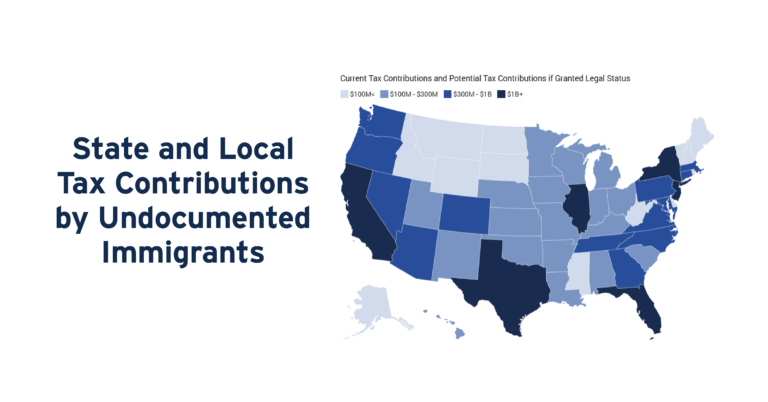
Undocumented immigrants pay taxes that help fund public infrastructure, institutions, and services in every U.S. state. Nearly 39 percent of the total tax dollars paid by undocumented immigrants in 2022 ($37.3 billion) went to state and local governments.

Tax Payments by Undocumented Immigrants
• By ITEP Staff
Undocumented immigrants paid $96.7 billion in federal, state, and local taxes in 2022. Providing access to work authorization for undocumented immigrants would increase their tax contributions both because their wages would rise and because their rates of tax compliance would increase.
Which States Improved Child Tax Credits and EITCs in 2024?
• By Neva Butkus
Four states expanded or boosted refundable tax credits for children and families, and the District of Columbia is poised to create a new Child Tax Credit. These actions — in Colorado, Illinois, New York, Utah, and D.C. — continue the recent trend of improving the well-being of children and families with refundable tax credits.
State Rundown 7/25: Summertime Hits Different in Different States
• By ITEP Staff
State lawmakers will have a lot to discuss when they compare notes on how they spent their summer vacations this year...

Five Tax Takeaways from 2024 State Legislative Sessions
• By Aidan Davis
Major tax cuts were largely rejected this year, but states continue to chip away at income taxes. And while property tax cuts were a hot topic across the country, many states failed to deliver effective solutions to affordability issues.

Corporate Tax Breaks Contribute to Income and Racial Inequality and Shift Resources to Foreign Investors
• By Emma Sifre, Steve Wamhoff
Corporate tax cuts and corporate tax avoidance worsen income and racial inequality in our country. Most of the benefits flow to foreign investors and the richest 20% of Americans.
State Rundown 7/11: Mansion Taxes in the Spotlight
• By ITEP Staff
While Massachusetts legislators recently dropped a real estate transfer tax from their major housing bill, the District of Columbia council sent a budget to the mayor that includes a mansion tax that would increase the tax rate on properties valued over $2.5 million. Meanwhile, lawmakers in New Jersey and South Carolina continue to, respectively, raise and reduce needed revenues.
Reality Interrupts the Fever Dream of Income Tax Elimination in Kentucky
• By Eli Byerly-Duke
Keeping the Kentucky income tax on a march to zero would mean tax hikes for working families or widespread cuts to education, health care, and other public services. Reversing course is certainly the wiser course of action.
State Rundown 6/26: Summer Special Sessions Are In, Anti-tax Ballot Initiatives Out
• By ITEP Staff
Many families are heading out on summer vacations, but legislators across the country are heading back to statehouses for special sessions...

States Should Enact, Expand Mansion Taxes to Advance Fairness and Shared Prosperity
• By Carl Davis, Erika Frankel
The report was produced in partnership with the Center on Budget and Policy Priorities and co-authored by CBPP’s Deputy Director of State Policy Research Samantha Waxman.[1] Click here to use our State Mansion Tax Estimator A historically large share of the nation’s wealth is concentrated in the hands of a few, a reality glaring in […]

Rita Jefferson
• By ITEP Staff
Rita Jefferson is a Senior Analyst focused on local tax systems. Her work focuses on the taxation of real estate, progressive taxes for local governments, and protecting local tax autonomy. Prior to joining ITEP in 2024, she worked for the Cook County Treasurer’s Office on research related to property taxation, tax collection, and municipal debt. […]
Property Tax Circuit Breakers Can Help States Create More Equitable Tax Codes
• By Brakeyshia Samms
Well-designed property tax circuit breaker programs allow states to reduce the impact that property taxes have on the upside-down tilt of their tax codes.

Institute on Taxation
and Economic Policy
ITEP is a non-profit, non-partisan tax policy organization. We conduct rigorous analyses of tax and economic proposals and provide data-driven recommendations to shape equitable and sustainable tax systems.
Subscribe to ITEP Emails
Tax research and policy news in your inbox.
Promote Fair Tax Policy
Your gift to ITEP promotes tax justice. With your help, we do research that supports taxing millionaires and billionaires, taxing big corporations and raising revenue for the things our people, our communities and our planet need.
Together, we can create a country with more economic justice, more racial justice, more climate justice… and more tax justice.